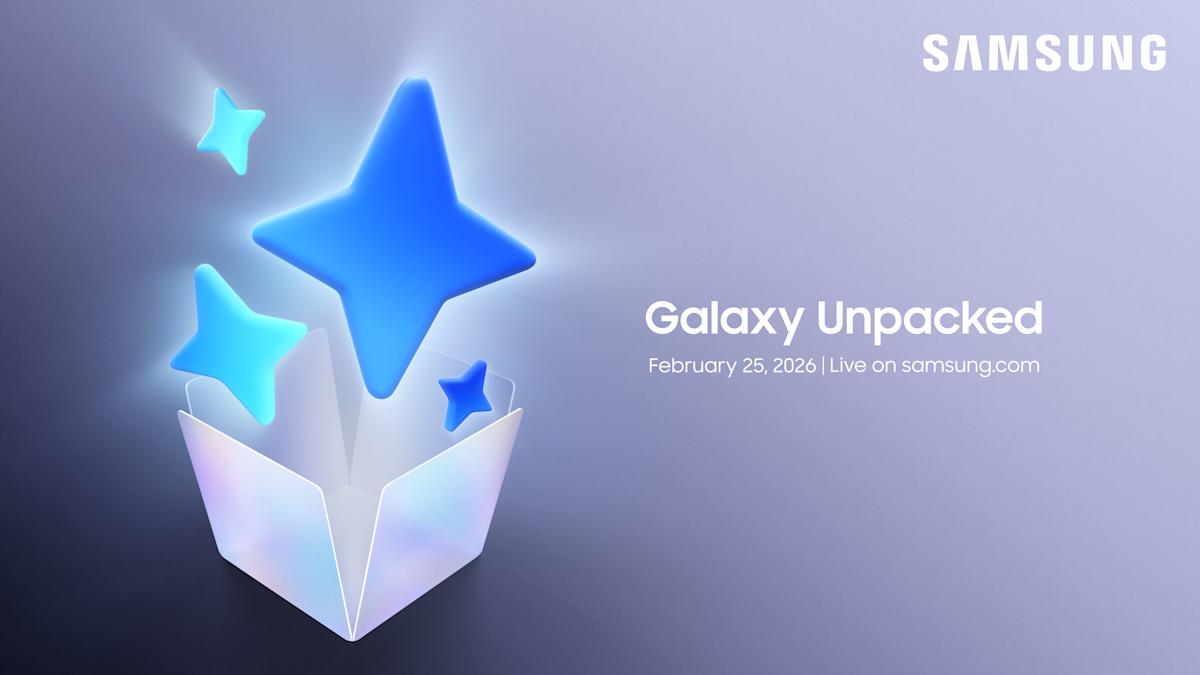
There’s a certain rhythm to the tech world that we’ve all grown accustomed to over the years. Every January, we get the flashy, often bizarre concepts at CES—this year’s “First Look” event from Samsung was no different, filled with screens that fold in ways we didn’t know we needed—and then, like clockwork, we settle in for the real meat of the year: the Galaxy Unpacked event. According to Engadget, which remains our go-to for that obsessive daily coverage of everything new in gadgets, Samsung has officially circled February 25th at 1 PM ET on the calendar. It’s that specific moment where the “concept” phase of the year ends and the “consumer” phase actually begins.
But let’s be honest for a second. We’ve been doing this for a long time now. The Galaxy S-series isn’t just a phone anymore; it’s an institution, a yearly milestone that many of us use to gauge the health of the entire Android ecosystem. And as we look toward this late-February launch, there’s a feeling in the air that’s a bit different than previous years. It feels like Samsung is no longer just trying to sell us a piece of hardware. They’re trying to sell us a permanent seat in their ecosystem, and they’re using some pretty aggressive tactics—from massive trade-in deals to software locks—to make sure we don’t look elsewhere.
The Snapdragon Gen 5 is more than just a spec bump—it’s the gatekeeper for AI
The headline news, at least for those of us who care about what’s actually happening under the hood, is the move to the Snapdragon 8 Elite Gen 5. It’s a mouthful of a name, I know, but it represents something massive for the mobile landscape in 2026. We aren’t just talking about opening apps 0.5 seconds faster or getting a slightly higher frame rate in Genshin Impact anymore. In 2026, the processor is the gatekeeper for everything AI. If the latest leaks are right, and all three models—the S26, S26+, and the Ultra—get this chip across all regions, it’s a sign that Samsung isn’t willing to compromise on the baseline experience, even if it hurts their margins.
But here’s the thing we have to talk about: hardware is getting incredibly expensive to produce. A 2025 report from Counterpoint Research noted that the bill of materials for flagship smartphones has risen by nearly 12% year-over-year. Why? Mostly because of the specialized NPU (Neural Processing Unit) requirements needed for on-device AI. This explains why Samsung is leaning so hard into these pre-order incentives and reservation “bonuses.” They need to lock you in early because those final price tags are likely going to sting a bit more than they used to. A $30 credit for “reserving” a phone you haven’t even seen yet? It sounds small, almost trivial, but it’s a brilliant psychological hook. It makes you a stakeholder in the product before the first official render even hits the screen.
“The smartphone has moved from a tool of utility to a vessel for AI, and the hardware must now catch up to the software’s ambition.”
— Marcus Thorne, Lead Analyst at TechPulse
I find it fascinating that we’re still seeing rumors of “more RAM and storage” as a primary selling point in 2026. In an era where cloud storage is ubiquitous and we stream everything, why on earth do we need 16GB of RAM in a phone? The answer, again, is AI. Running Large Language Models (LLMs) locally on your device—so your private data doesn’t have to leave the phone and travel to a server in some remote data center—is incredibly memory-intensive. If the S26 series really does bump those specs across the board, it’s not for your 4K photos; it’s so the phone can “think” and process your requests without needing an active internet connection. It’s about privacy, but it’s also about power.
Is the base Galaxy S26 becoming a second-class citizen?
If you’ve been following the leak cycle as closely as I have, you might have noticed a recurring, somewhat frustrating theme. The S26 and S26+ are getting what I’d call “standard” updates—the new chip, maybe a slight tweak to the chassis, perhaps a new color or two. But the S26 Ultra? That’s where the actual engineering seems to be happening. We’re talking about a significantly updated camera system with larger sensors and, finally, the potential for proper Qi2 charging support with those magnetic rings we’ve been asking for.
I’ve always felt a bit bad for the person who buys the base Galaxy S. You’re paying flagship prices—often upwards of $800 or $900—but you’re increasingly getting what feels like a “Lite” version of Samsung’s actual vision. If only the Ultra gets the major hardware shifts, Samsung is essentially creating a two-tier class system within its own premium lineup. It’s a risky move, especially now. According to Statista, the average smartphone replacement cycle has extended to nearly 42 months as of late 2025. People are holding onto their phones longer than ever. If the base S26 doesn’t feel “future-proofed” with the latest camera tech or charging standards, why wouldn’t a consumer just wait another year or look at what Google is doing with the Pixel?
And let’s talk about Qi2 for a second. It’s 2026, for crying out loud. The fact that we are still “possibly” getting proper magnetic alignment and faster wireless charging on the Ultra only is, frankly, a bit ridiculous. It’s one of those quality-of-life features that you don’t think you need until you actually have it, and then you can’t imagine living without it. Samsung’s hesitation to bring this to the whole lineup feels like a massive missed opportunity to win over the iPhone crowd who have been enjoying the convenience of MagSafe for years now. Why make it harder for them to switch?
Moving past the party tricks: Does Galaxy AI finally have a purpose?
Last year, Galaxy AI felt a lot like a collection of cool party tricks. Circle to Search was great, and the generative photo editing was neat for a few laughs, but did it really change how we lived our daily lives? Not really. It was a “nice to have,” not a “need to have.” This year, however, the Unpacked event on the 25th is expected to showcase “updates to Galaxy AI” that move beyond just editing your vacation photos or making your cat look like a lion.
We’re hearing whispers of much deeper integration with Google’s Find Hub and more proactive AI features that manage your schedule and battery life without you even having to ask. Imagine a phone that knows you have a busy day of meetings and automatically throttles background processes to ensure you make it to 9 PM without a charger. But there’s a cynical side to this, too, and we have to address it. We’ve seen a growing trend where companies start charging monthly subscriptions for “premium” AI features. While Samsung hasn’t pulled that trigger fully yet, the infrastructure is clearly being built. By making the S26 series so reliant on these AI features, they’re essentially training us for a future where the phone is just the hardware we buy to access the software we rent. It’s the “software-as-a-service” model coming for our pockets.
And yet, I can’t help but be a little excited. When the AI works—when it actually summarizes a long, rambling meeting or translates a business call in real-time without a hitch—it feels like the future we were promised in sci-fi movies decades ago. Samsung is betting the entire house on the idea that you’ll buy the S26 not for the megapixels, but for the “intelligence” that makes your life slightly less chaotic.
The “Comfortable Cage” of the Galaxy Ecosystem
It’s not just about the phones, though. It never is. The Galaxy Buds 4 and 4 Pro are reportedly getting a total redesign this year. If you’ve seen the leaks, they’re moving toward a look that’s… well, let’s just say they’re embracing the “stem” design even more than before. But the real story isn’t the aesthetics; it’s the tech inside: head gestures and Ultra Wideband (UWB) chips.
Head gestures sound like one of those things that will look incredibly dorky in public—nodding like a bobblehead to answer a call or shaking your head to decline a notification—but in terms of accessibility, it’s a huge win. And the UWB chip? That’s the real hero here. Losing a pair of $200 earbuds is practically a rite of passage for tech enthusiasts at this point, but integrating them into Google’s Find Hub makes them almost impossible to truly lose. It’s another way Samsung is tightening the knot of their ecosystem. You buy the phone, you need the Buds. You have the Buds, you need the Watch. It’s a comfortable cage, sure, but it’s a cage nonetheless, designed to keep you from ever wandering over to the Apple Store.
Is the Galaxy S26 Ultra actually worth the extra money?
Based on everything we’re seeing in the leaks, the answer is a resounding yes—provided you actually care about photography and charging tech. The Ultra is the only model expected to receive the major camera hardware overhaul and the new Qi2 magnetic support. In many ways, it’s the only “true” 2026 flagship in the lineup, while the others feel like refined versions of the 2025 models.
What do I actually get for reserving the phone early?
Samsung is currently offering a $30 credit and a chance to win a $5,000 gift card just for putting your name on a list. There’s no financial commitment required, so if you’re even 50% sure you’ll upgrade, it’s basically free money toward a new case or a pair of Buds. It’s their way of gauging interest before the big day.
Will the S26 work with the chargers I already own?
Yes, your old USB-C cables and wireless pads will still work. However, to get the most out of the rumored Qi2 features on the Ultra—like those faster wireless speeds and the convenience of magnetic snapping—you’ll likely need to pick up new magnetic-aligned chargers to see the real benefit.
The high stakes of the $900 trade-in
Let’s talk about that $900 trade-in value Samsung is already touting. That is an insane amount of money for a used device. When a company offers you nearly the full original price of your old phone to get you into a new one, it tells us two very important things. First, Samsung is desperate to keep its market share in a world where Chinese OEMs are making incredible hardware for half the price. They can’t afford to lose a single user to the competition right now.
Second, they know that the “wow” factor of new phones is plateauing. A 2024 Reuters report highlighted that Samsung’s mobile profits are increasingly coming from high-margin accessories and service integrations rather than the raw hardware sales of the base models. By giving you $900 for your old phone, they aren’t just selling you an S26; they’re ensuring you don’t switch to a Pixel or an iPhone. They’re buying your loyalty for the next three years. They know that once you’re in the S26, you’re more likely to buy the Buds, the Watch, and maybe even a Samsung tablet.
And honestly? It’s a good deal for the consumer if you play your cards right. If you can trade in a two-year-old phone and walk away with a brand-new S26 for just a few hundred dollars, the “iteration vs. innovation” debate doesn’t matter as much. You’re getting a faster chip, a better screen, and a fresh battery for the price of a mid-range dinner for four. It’s hard to argue with the math, even if the innovation feels a bit incremental.
Final Thoughts: Cutting through the hype on the 25th
So, where does that leave us? On February 25th, we’ll see the shiny videos, the perfectly polished demos, and the enthusiastic executives telling us that the S26 is the greatest thing since sliced bread. And in many ways, it will be. It will be the most powerful, most “intelligent” phone Samsung has ever produced, and for many, it will be the best phone on the market.
But as we watch the livestream on YouTube or follow along on the Samsung Newsroom, I think it’s important to look past the marketing hype. The real story isn’t the Snapdragon chip or the head gestures in the Buds 4. The real story is how Samsung is navigating a world where we don’t *need* new phones every year anymore. They’re turning the smartphone into a service, a portal to an AI-driven life, and they’re making it very, very hard to say no to the upgrade cycle.
I’ll be watching, mostly to see if that Ultra camera really lives up to the “major hardware changes” tag we’ve been hearing about for months. If Samsung can prove that the hardware still matters as much as the AI, they might just have a winner on their hands. If not? Well, there’s always the S27. But for now, the S26 is the one to beat.
This article is sourced from various news outlets and industry leaks. The analysis and presentation represent our editorial perspective on the upcoming launch.