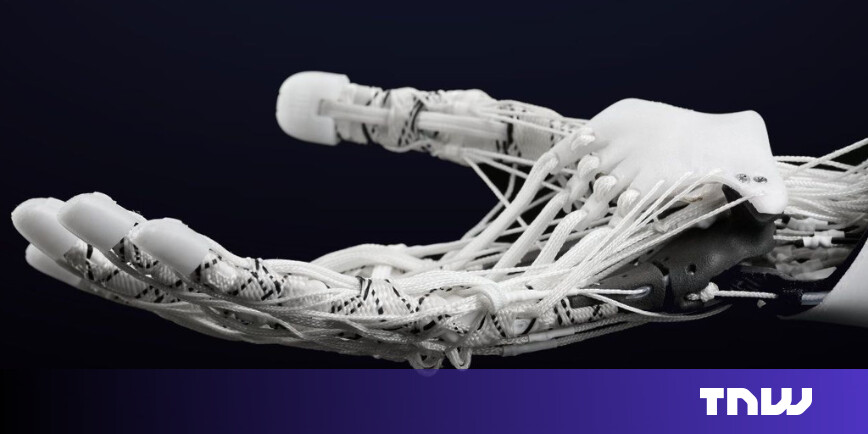
Let’s be honest: for the better part of the last three years, the tech world has been almost pathologically obsessed with the “brain” of the machine. We’ve poured staggering amounts of capital—billions, really—into Large Language Models, neural networks, and increasingly sophisticated computer vision systems. But in our rush to build a digital consciousness, we’ve often overlooked a pretty glaring problem: a genius-level brain is effectively useless if the body it inhabits is a clunky, expensive, and fragile mess of 19th-century mechanical principles. It’s like trying to run the latest high-end software on a steam engine. However, something just shifted in the European ecosystem that completely changes the narrative. According to The Next Web, a Budapest-based startup called Allonic recently pulled off a $7.2 million pre-seed round that didn’t just break local records—it fundamentally broke the established rules of how we think about deep tech in Europe.
We’re finally moving past the “AI Wrapper” obsession—and honestly, it’s about time
I’ve spent a lot of my time lately talking to founders who are, quite frankly, exhausted by the “SaaS-ification” of everything. There’s a very real fatigue that sets in when you see yet another “AI for spreadsheets” or “AI for email drafting” startup land a massive valuation, while the people actually trying to build physical, tangible things are told to come back when they’ve somehow conjured up a million dollars in recurring revenue. It’s a frustrating double standard. That’s why Allonic’s raise is so significant. Led by Visionaries Club and supported by a heavy-hitting roster of angel investors from the likes of OpenAI and Hugging Face, this round signaled that the adults in the room are finally, finally looking at the hardware layer. It’s a bold move, mostly because hardware is—and always has been—incredibly difficult to get right. It’s messy, it’s capital-intensive, it involves the nightmare of global supply chains, and you absolutely cannot “patch” a snapped actuator with a quick push to GitHub on a Friday afternoon.
But here’s the reality we have to face: we’ve reached a ceiling with traditional robotics assembly. If you’ve ever had the chance to see the guts of a standard industrial robot, you know it’s a terrifying labyrinth of screws, cables, sensors, and rigid linkages. It’s overly complex, which is exactly why robots remain so expensive and why they’re still mostly confined to high-end automotive assembly lines where the margins can justify the cost. Allonic decided to stop trying to marginally optimize the existing assembly line and instead chose to reinvent how the robot is actually born. By the time we hit early 2026, the ripples of this “hardware-first” mentality have started to fundamentally change the way European VCs look at their portfolios. They’re realizing that the digital brain needs a physical vessel that is just as revolutionary as the code running inside it.
Why “knitting” a robot is fundamentally smarter than bolting one together
When you dig into it, the core of the Allonic story isn’t just about the money; it’s about the technology they’re calling “3D Tissue Braiding.” Think about it like this: instead of a team of highly specialized technicians painstakingly connecting hundreds of individual wires and bolting together heavy metal plates over weeks, Allonic’s system essentially weaves the robot’s “muscles” and “nervous system” together in one continuous, automated operation. The result is an endoskeleton wrapped in a complex, integrated web of fibers, elastics, and embedded wiring. It feels more biological than mechanical, and honestly, that’s exactly why it works so well. It’s mimicking the efficiency of nature rather than the rigidity of the Industrial Revolution.
This isn’t just some cool parlor trick designed to wow people at trade shows, either. There’s a massive economic driver behind it. According to a 2024 International Federation of Robotics report, the global stock of operational industrial robots hit a record 4.3 million units, yet the sheer cost of deployment remains a massive, almost insurmountable barrier for small to medium-sized enterprises. By automating the actual physical construction of the robot body, Allonic has effectively slashed the “barrier to entry” for hardware. When you can weave a robot body in a single operation, you’re not just saving a bit of time; you’re making the entire supply chain for robotics infinitely more resilient. No more waiting for three dozen different specialized parts from four different continents just to finish one arm. You just need the raw materials and the machine to weave them.
And let’s be real, the timing of this couldn’t have been better. By the time Allonic launched its initial pilots in electronics manufacturing last year, the industry was absolutely desperate for more flexible, adaptable automation. We’ve long since moved past the era where a robot does one single repetitive thing for ten years. In today’s market, we need robots that can be adapted and repurposed quickly, and a braided, flexible body is far more adaptable than a rigid steel one. It’s the difference between wearing a heavy suit of armor and an athletic base layer—one protects you but limits you, while the other moves with you and enhances your natural capabilities.
“The physical layer of robotics has been the forgotten child of the AI revolution. We spent all our time teaching machines how to think, but we forgot to give them bodies that could actually keep up.”
— Anonymous Industry Analyst, 2025
Budapest isn’t just an “outsourcing” hub anymore—it’s where the actual future is being built
There was a time, not so long ago, when Central and Eastern Europe (CEE) was essentially seen as the place you went if you wanted cheap engineering talent to build someone else’s dream. You’d outsource your backend development or your QA testing to Budapest or Warsaw, save a few bucks, and call it a day. Allonic’s $7.2 million round—which, by the way, is the largest pre-seed in Hungarian history—officially killed that tired old narrative. This wasn’t “outsourced” innovation; this was the source itself. It was a primary explosion of creativity and technical prowess coming directly from the heart of the region.
The fact that Visionaries Club and angels from the world’s most prestigious AI labs put their capital into a Budapest-based hardware play is a massive, undeniable vote of confidence in the region’s industrial DNA. Hungary has a long, storied history of engineering excellence that often gets overshadowed by the flashier, more PR-heavy software hubs in London or Berlin. But when it comes to deep industrial innovation, there’s a certain “scrappiness” in CEE that you just don’t often find in the pampered hallways of Silicon Valley. These teams are used to building with fewer resources and tighter constraints, which makes them incredibly efficient and focused when the big checks finally do arrive. They know how to make every dollar—or Euro—stretch further.
But let’s look at the broader numbers to get some real perspective on why this matters. According to Statista, European deep tech funding reached approximately $15 billion in 2023, but hardware-centric startups still faced a significantly steeper climb to secure funding than their SaaS counterparts. For a Hungarian startup to command this kind of capital at such an early stage suggests that the “geography of ambition” is finally flattening out. Investors are finally starting to realize that the next industrial giant is just as likely to emerge from the banks of the Danube as it is from a garage in Palo Alto. The talent is there; the capital is just finally catching up.
The “asset-light” dream is dying, and the “Hard Tech” vibe shift is here to stay
I think what we’re witnessing here is a genuine “vibe shift” in the global investment landscape. For the last decade, the holy grail for investors was “asset-light.” Everyone wanted companies that didn’t own anything, didn’t build anything physical, and could scale to infinity with the click of a button and a few more AWS servers. But the world has become a lot more complicated, and frankly, a lot more fragile since then. Trade tensions, global supply chain collapses, and the sudden, urgent need for domestic manufacturing have made “asset-heavy” companies look a lot more attractive than they used to. There’s a new appreciation for the tangible.
Allonic is, in many ways, a stress test for Europe’s industrial future. If we can’t back the companies that actually build the tools of production, we’re essentially just renting our future from whoever does. The investors in this round—names like Day One Capital, Prototype, and SDAC Ventures—aren’t just betting on a cool-looking robot; they’re betting on a sovereign industrial capability for the continent. They’re betting that Europe can move from merely exporting ideas and regulations to actually shaping the physical tools that global industries run on. It’s about taking back control of the physical stack.
And it’s not just about the robots themselves, though they are impressive. It’s about the “means of production” in a very literal sense. If Allonic’s 3D Tissue Braiding becomes the industry standard, the entire economics of manufacturing shifts on its axis. We’re talking about moving from “mass production” of identical items to “mass customization” at a hardware level. That’s the kind of “messy, slow, and expensive” problem that actually changes the world in the long run, and it’s heartening to see that European capital is finally showing the bravery required to chase it. It’s a departure from the “play it safe” mentality that has sometimes held the region back.
What exactly is 3D Tissue Braiding?
It’s a proprietary, groundbreaking manufacturing process developed by the team at Allonic that replaces traditional, labor-intensive mechanical assembly. Instead of bolting together hundreds of individual parts, the system weaves specialized fibers, elastics, and wiring directly over a structural skeleton in one continuous, automated process. This creates a robot body that is not only more durable and flexible but also significantly cheaper to produce at scale.
Why did OpenAI and Hugging Face employees invest?
While Allonic is fundamentally a hardware company, its success is absolutely crucial for the future of the AI industry. We’ve reached a point where advanced AI models need more sophisticated, agile physical bodies to interact effectively with the real world. These “angel” investors recognize that the primary bottleneck for AI isn’t just about compute power anymore—it’s the physical hardware that actually executes the intelligence in a physical space.
Is Hungary becoming a new tech hub?
It certainly looks that way. Allonic’s record-breaking funding round is part of a much larger, exciting trend where Central and Eastern Europe are transitioning from being talent pools for Western outsourcing to becoming centers of original, high-capital industrial innovation. With its strong engineering heritage and a new influx of venture capital, Budapest is increasingly seen as a global leader in the “Deep Tech” space.
Don’t get me wrong, hardware is still a brutal grind—but there’s no going back now
As we look back at this from the vantage point of February 2026, it’s becoming increasingly clear that the Allonic pre-seed round was a major turning point for the industry. But let’s not get ahead of ourselves or sugarcoat the reality—building hardware is still a relentless, daily grind. The company has already successfully completed its initial pilots in electronics manufacturing, which is a huge milestone, but scaling those successes to humanoid robotics or heavy industrial automation is a multi-year journey fraught with challenges. There will be failures, there will be mechanical setbacks that seem impossible to solve, and there will always be skeptics who argue that it’s easier and safer to just stick with the status quo.
But the truth is, the “status quo” in robotics is a dead end. We simply cannot have a world of autonomous assistants and ubiquitous automation if each unit costs $200,000 and breaks every time it accidentally bumps into a wall. We need the “tissue” approach. We need the flexibility and the resilience that comes with it. And more than anything, we need the courage to keep investing in the “messy” parts of the tech stack—the parts that involve grease, fibers, and physical friction.
If the current pattern holds, Europe won’t just be the place that regulates AI and sets the rules for the digital world; it will be the place that actually builds the machines that AI lives in. Allonic isn’t just a funding story or a press release; it’s a manifesto for a new kind of European tech scene—one that isn’t afraid to get its hands dirty and weave the future, one fiber at a time. It’s a powerful reminder that sometimes, to truly move forward, you have to be willing to rebuild everything from the inside out, starting with the very fabric of the machines themselves. It’s a long road, but for the first time in a long time, it feels like we’re heading in the right direction.
This article is sourced from various news outlets. Analysis and presentation represent our editorial perspective on the shifting landscape of deep tech and robotics.