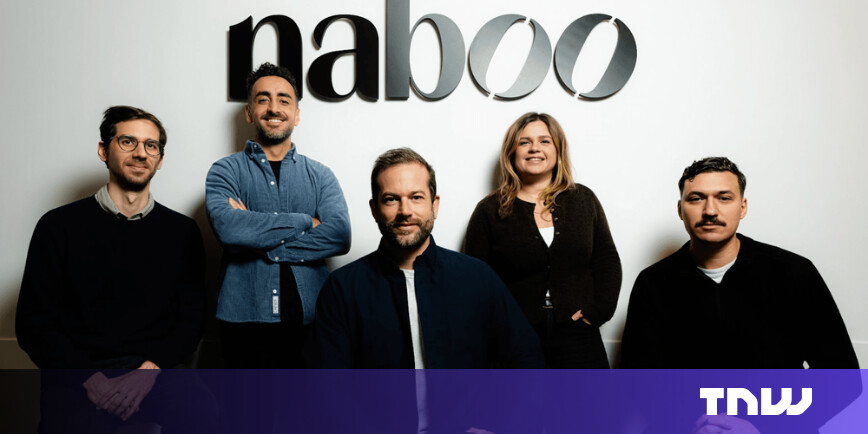
It really wasn’t that long ago—though in tech years, it feels like a lifetime—that trying to organize a corporate offsite was basically like trying to coordinate a three-ring circus while wearing a blindfold. I remember those days vividly. You’d have seventeen tabs open: one for the hotel blocks, another for the catering menu, four or five for various transportation options, and a Slack thread that was slowly descending into madness as the finance team debated whether the budget actually allowed for an “artisanal coffee break” or if everyone was just getting lukewarm carafes of brown water. It was a chaotic mess of sprawling spreadsheets, “best guesses,” and a whole lot of crossed fingers. But as we find ourselves here in February 2026, that era of manual, hair-pulling chaos is finally, mercifully, fading into the background. And the reason why is becoming increasingly clear. According to The Next Web, the Paris-born startup Naboo has just closed a massive $70 million Series B round. And here’s the thing: they aren’t just trying to help you book a nicer conference room. They’re looking to own the entire “operating layer” of how companies actually spend their money on events. It’s a big bet, and honestly? It’s a fascinating one.
This latest round was led by Lightspeed Venture Partners, and if that name sounds familiar, it’s because they’re the same heavy hitters who backed the AI powerhouse Mistral back in 2023. They clearly have a type: high-growth, technically sophisticated platforms that solve massive, structural problems. This funding comes almost exactly one year after Naboo’s successful €20m Series A, which tells you everything you need to know about their trajectory. It’s a blistering pace of growth, even by the standards of the mid-2020s. But what’s really interesting to me isn’t just the sheer number of zeros on the check. It’s the fundamental shift in how we’re starting to view “corporate fun.” We’ve finally moved past the outdated idea that event planning is just some peripheral HR task to be handled in someone’s “spare time.” In the eyes of Naboo and its investors, this is now a strategic procurement function. And let’s be honest with ourselves—it’s about time someone treated it with that kind of seriousness. For too long, we’ve treated the logistics of human connection as an afterthought, and Naboo is betting $70 million that those days are over.
When the sheer mess of event planning meets the cold, hard precision of an algorithm
For decades, the global events market has been this weirdly resilient, $400 billion beast that just seemed to refuse to be tamed by software. It remained stubbornly fragmented and manual for a simple reason: it’s incredibly hard to automate the nuance of human gatherings. How do you teach a computer to understand the “vibe” of a room or the logistical nightmare of forty people arriving from six different time zones? But Naboo has spent the last three years proving that AI can actually handle the logistics of these events far better than any harried office manager ever could. Since they launched back in 2022, they’ve built a platform that manages the entire lifecycle of an event, from the initial venue booking to the complex web of supplier coordination. It isn’t just a fancy directory or a glorified search engine; it’s more like a central brain that understands the complex, often invisible interplay between travel, finance, and operations. It’s the kind of thing you don’t realize you need until you see it working.
And boy, is it working. After Naboo opened its London office in 2025, the UK quickly skyrocketed to become their biggest market outside of France. It seems that British and European enterprises were absolutely hungry for a way to stop the “leakage” of decentralized spending. Think about how it usually goes: everyone in a company is booking their own small team dinners, local workshops, or “quick” offsites on a dozen different corporate credit cards. By the time the finance department tries to reconcile it all, they’ve lost their collective minds. Naboo provides that elusive “all-in-one” transparency that turns a fragmented, expensive mess into a single, controllable data stream. It’s the kind of visibility that makes CFOs sleep better at night, and in this economy, that’s worth its weight in gold. They’re essentially taking the “guesswork” out of the equation and replacing it with a dashboard that actually makes sense.
“The bigger shift goes beyond events. Naboo is betting that the next wave of enterprise AI won’t just analyze data; it will quietly reshape how money is spent.”
Editorial Analysis of Naboo’s Strategic Vision
When you step back and look at the sheer scale of what we’re talking about, it’s staggering. According to a 2024 report by Statista, the global business travel and events market has not only recovered to its pre-pandemic levels but has actually surpassed them, recently hitting over $1.2 trillion in total expenditure. That is a lot of hotel rooms, a lot of flights, and a whole lot of catering platters. When you’re dealing with numbers that large, even a tiny 1% or 2% increase in efficiency—driven by AI-powered procurement—isn’t just a “nice to have” feature. It’s a massive, sustainable competitive advantage. Naboo is sitting right at the intersection of this massive market recovery and the ongoing AI revolution, and they are playing their hand perfectly. They aren’t just riding a trend; they are building the infrastructure that the trend requires to survive.
The “hidden” budget: Why Naboo is actually chasing the money your CFO can’t see
If you sit down and talk to any CFO for more than ten minutes, they’ll eventually bring up the concept of “tail spend.” It’s that long, annoying tail of small, unmanaged purchases that usually fall right through the cracks of the big, fancy procurement tools. In the finance world, this is often dismissively called “Class C” spending. It’s the $500 catering bill for a Tuesday lunch, the $1,000 hotel block for a small product team, or the $200 spent on decorations for a retirement party. Individually, these charges are tiny—barely a blip on the radar. But collectively? They are a total nightmare. A study by the Everest Group suggests that tail spend typically accounts for about 20% of a company’s total spend, but here’s the kicker: it involves a staggering 80% of its suppliers. It’s a massive amount of administrative friction for a relatively small percentage of the budget, and most companies just ignore it because it’s too hard to fix.
This is where Naboo’s real genius starts to show. They are essentially using corporate events as a brilliant Trojan horse to enter the much broader world of tail spend management. By proving they can handle the immense complexity of a multi-day event—with all its moving parts and unpredictable variables—they are showing enterprises that they can handle *any* kind of decentralized spending. It’s a move that I find incredibly clever. Once you’ve successfully automated the booking of a 50-person retreat in the middle of the French countryside, managing the purchase of office supplies or specialized software licenses feels like a walk in the park. Naboo is effectively building a unified, AI-driven view of the money that usually just disappears into the bureaucratic cracks of a company’s budget. They’re making the invisible visible, and in the world of corporate finance, that is a superpower.
But beyond the spreadsheets and the bottom lines, there’s a very real human element here, too. We’ve all been that person—the one waiting three weeks for a reimbursement because we had to use a personal card for a team lunch or a last-minute supply run. It’s annoying, it’s frustrating, and it makes you feel like the company doesn’t value your time. By centralizing all of this through an AI platform, Naboo isn’t just helping the company save a few bucks; they’re actively removing the friction that makes corporate life feel like a slow, bureaucratic slog. It’s one of those rare, beautiful instances where “enterprise software” actually makes the day-to-day employee experience better, rather than adding another layer of complexity to deal with. It’s about giving people their time back so they can actually do the jobs they were hired for.
Crossing the Atlantic: Why a French startup is suddenly the gold standard for Manhattan boardrooms
With this fresh $70 million sitting in the bank, Naboo is officially moving past its European roots and setting its sights on something bigger. They’ve just launched a new hub in New York City, which marks a serious, heavy-duty commitment to the US market. It’s a bold move, certainly, but it’s also a completely necessary one. Multinational clients don’t want to deal with one system for their Paris office and a completely different one for their team in Manhattan. They want—and frankly, they need—a single, global operating layer that can handle the headaches of different currencies, varying tax laws, and the very different cultural expectations for what a “good” event actually looks like. You can’t just copy-paste a French retreat onto an American team and expect it to work; the software needs to understand those nuances.
I find it absolutely fascinating to see a French company leading the charge in this specific space. For a long time, the prevailing narrative in tech was that Europe was great at building the technology, but the US was the only place that could actually scale the business. Naboo is completely flipping that script. They’ve taken a uniquely European problem—operating in complex, fragmented markets with dozens of different languages and regulations—and they’ve built a solution so robust and adaptable that it’s now becoming the gold standard for American enterprises. It’s a real testament to the maturing tech ecosystem in Paris, which has quietly become a legitimate rival to London and Berlin over the last few years. There’s a level of sophistication coming out of France right now that the rest of the world is finally starting to notice.
And we really have to talk about the timing here. We’re in early 2026. The world has fully embraced hybrid work as the new normal, which, paradoxically, has made in-person events *more* important than they’ve ever been. When teams only see each other in the flesh every few months, those gatherings have to be absolutely perfect. There’s zero room for logistical failures or “okay” experiences. Companies are increasingly willing to pay for a platform that guarantees a seamless experience because the stakes of a “bad” offsite are so much higher than they used to be. It’s not just a party anymore; it’s the primary way culture is built and maintained in a remote-first world. If you mess up the offsite, you mess up the culture. It’s that simple.
Can AI truly replace the human touch, or are we just dreaming?
Of course, there’s always going to be a healthy bit of skepticism when we talk about AI taking over something as inherently “human” as event planning. People naturally wonder: Will the AI really understand that the marketing team prefers quiet, contemplative spaces with lots of natural light, while the sales team wants to be right in the heart of the action with a high-energy vibe? Naboo’s big bet is that the AI doesn’t actually need to have “taste” in the traditional sense—it just needs to have an incredible amount of data. By analyzing thousands of past events, user feedback, and specific preferences, the platform can make recommendations that are statistically more likely to succeed than a human’s “gut feeling” or a lucky guess. It’s about using data to enhance intuition, not replace it.
Will Naboo actually replace traditional event planners?
I don’t think so—at least not entirely. Instead, it’s replacing the 80% of the job that everyone hates: the tedious logistics, the endless booking emails, the invoicing nightmares, and the constant tracking of expenses. This actually frees up professional planners to focus on the creative side of the business—the theme, the content, the speakers, and the actual human connection—while the AI handles the “procurement” heavy lifting in the background. It’s a partnership, not a replacement.
Why exactly did Lightspeed lead this specific round?
If you look at their history, Lightspeed clearly sees Naboo as more than just a clever event tool. By targeting “tail spend” and those pesky “Class C” purchases, Naboo is positioning itself as a vital, indispensable piece of the modern enterprise finance stack. It’s very similar to how they viewed Mistral—not just as a chatbot, but as a foundational piece of the AI stack. They’re betting on the infrastructure, not just the interface.
Looking ahead, Naboo’s targets for the near future are nothing if not incredibly ambitious. They are aiming to triple their revenue within this calendar year (2026) and have set their sights on hitting over $1 billion in total business volume by 2027. That is a staggering number of hotel rooms, conference centers, and catering platters. But in a world where efficiency has become the new North Star for every CEO and CFO on the planet, I wouldn’t be the one to bet against them. If they can successfully bridge the gap between “booking a party” and “strategic financial management,” they won’t just be another successful startup—they’ll be the new global standard for how modern, distributed companies actually operate. They are solving a problem that is as old as business itself, but they’re doing it with the tools of the future.
Ultimately, the rise of Naboo tells us something much deeper about the state of AI as we move through 2026. We’ve finally moved past the “wow, look, the robot can write a mediocre poem” phase of the revolution. We’re now firmly in the “the robot just saved our company $2 million in unmanaged travel expenses” phase. It’s a lot less flashy, perhaps, and it won’t make as many headlines as a viral AI image, but it’s far more impactful for the way we actually live and work. The next time you find yourself at a perfectly organized company retreat, take a second to look around. The most important guest at the table might just be the algorithm running silently in the background, making sure the coffee is hot, the rooms are ready, and the budget is perfectly balanced. Welcome to the future of the corporate party.
This article is sourced from various news outlets and industry reports. The analysis and presentation provided here represent our editorial perspective on the shifting landscape of enterprise technology.