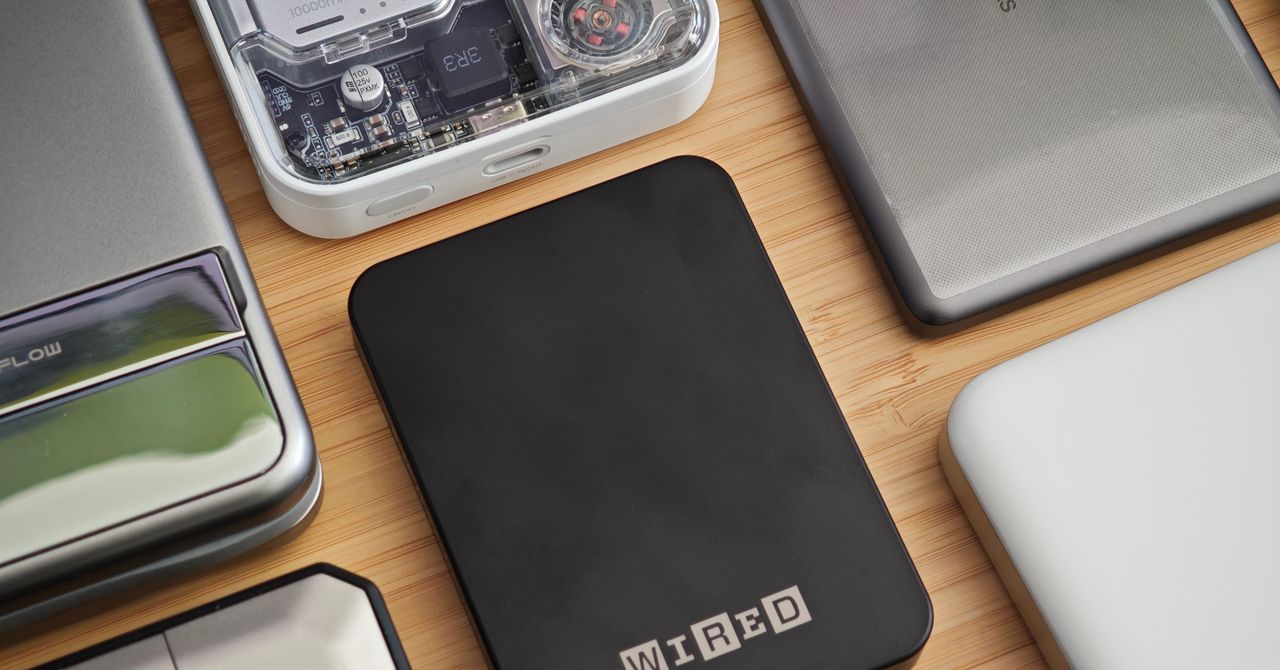
I remember—and it really wasn’t that long ago—when the phrase “bringing a charger” meant something entirely different. It usually involved reaching into the dark, crumb-filled bottom of a backpack to untangle a three-foot nest of white rubber cables. It was a ritual of pure frustration, honestly. But standing here in February 2026, that whole ordeal feels like a lifetime ago. We’ve finally reached that tipping point where the physical port on our phones is starting to feel like a legacy feature, much like the headphone jack before it. According to WIRED, the landscape of portable power has shifted dramatically, moving away from the “plug and pray” era toward a much more elegant, magnetic reality. It’s a shift that’s been coming for a while, but seeing it actually take over the mainstream is something else entirely.
The tech world generally moves at breakneck speed, but the way we actually juice up our devices has undergone a particularly quiet, almost stealthy revolution. It all really started with Apple’s MagSafe back in 2020, which felt like a “cool if you have an iPhone” gimmick at the time. But it’s the arrival and subsequent maturation of the Qi2 standard that has truly democratized the experience for everyone else. Whether you’re rocking the latest iPhone 17 or the Google Pixel 10 Pro XL, that satisfying “snap” of a magnetic battery pack has become the universal sound of a phone getting its second wind. And honestly? It’s about time we stopped fumbling in the dark with cables that only work at a specific angle.
Why We’re Still Obsessed With Battery Life (Even With 2026 Tech)
You’d think that with every new chip being marketed as “30% more efficient” than the one that came before it, we’d finally stop worrying about our batteries. But we don’t. We never do. Instead, we just use that extra headroom to run more intensive AR apps, higher-refresh-rate screens that never seem to dim, and AI features that are constantly churning away in the background. It’s a cycle. A 2024 Statista report found that 82% of consumers still cite battery longevity as the most critical factor when purchasing a new smartphone. We are hungrier for power than we’ve ever been, which is exactly why the power bank hasn’t died off; it has just evolved into something much more integrated into our daily lives.
The old way of using a portable charger was, let’s be real, incredibly clunky. You’d have this heavy brick in your pocket, a cable snaking out to your phone, and you’d have to hold both in this weird, sandwich-like grip that made texting almost impossible. MagSafe changed that for the iPhone crowd, but Qi2 has finally brought that same level of convenience to the rest of the world. It’s not just about the magnets, though. It’s about the perfect alignment. We’ve all had that experience where we placed a phone on a wireless pad at night only to wake up to a 4% battery because the coils were half an inch off. It’s infuriating. Magnets effectively solve that piece of human error.
“MagSafe is simply more convenient. It eliminates the fumbling and the failure points of traditional wireless charging by ensuring the coils are perfectly aligned every single time.”
— WIRED Editorial Review
The 25W Leap: When Wireless Finally Stopped Being the Slow Alternative
For a long time, wireless charging was strictly the “slow” option. It was what you used overnight on your nightstand, but if you were in a rush to get to a meeting or catch a flight, you always reached for the USB-C cable. That changed last year with the introduction of the Qi2 25W update. Now, devices like the iPhone 17 and the Pixel 10 Pro XL can pull power wirelessly at rates that actually rival many standard wall bricks. We’re talking about 25 watts of magnetic power. That is a massive, transformative leap from the 7.5-watt trickle we were forced to settle for just a couple of years ago. It means you can actually get a meaningful charge in twenty minutes without being tethered to a wall.
But here’s the editorial reality we have to face: speed always comes with a cost, and in the world of physics, that cost is heat. According to the Wireless Power Consortium (WPC), magnetic alignment can improve charging efficiency by up to 30% compared to those old-school non-magnetic pads, but it’s still not a perfect 100%. Some of that energy is always going to be lost as heat. When you’re pushing 25W through a magnetic puck stuck to the back of a glass phone, things are going to get warm. This is why brands like Sharge and Anker are now building active cooling fans or sophisticated thermal management systems into their latest packs. If you’re shopping for a power bank today, please, don’t just look at the capacity; look at how it handles the heat. A hot battery is a slow battery, and it’s definitely not a healthy one.
The Great Wall Has Fallen: How Android Finally Found Its Snap
It’s been fascinating, and honestly a bit of a relief, to watch the Android ecosystem finally catch up. For years, if you wanted that magnetic “snap” experience, you had to jump through hoops—either buying a specialized case or sticking one of those awkward metal rings to the back of your Galaxy or Pixel. But with the Pixel 10 series finally embracing Qi2 natively, the wall between Apple and Android accessories has effectively crumbled into dust. I’ve been testing these packs with a Pixel 10 Pro XL lately, and the experience is completely seamless. It’s a weirdly beautiful thing to finally be able to borrow a friend’s MagSafe charger regardless of what operating system you’re running. No more “Oh, I don’t have a Lightning cable” or “I only have USB-C” excuses.
This interoperability is really the unsung hero of 2026. We are finally moving toward a world where “iPhone accessories” and “Android accessories” are just “phone accessories.” It’s better for the consumer, and it’s certainly better for the environment, as we can finally stop buying platform-specific e-waste every time we switch brands. But a quick word of advice from someone who’s tested way too many of these: if you’re using a case, make sure it’s Qi2 or MagSafe compatible. Even a thin piece of standard plastic can drastically reduce that 25W speed down to a crawl, or worse, cause the battery pack to work overtime and overheat while trying to punch through the material.
Does magnetic charging ruin my battery health?
The short answer is: not directly. The magnets themselves are totally harmless to your phone’s internals. However, the heat generated by wireless charging—especially the high-speed 25W variety—can accelerate battery degradation over several years if you aren’t careful. If you’re really worried about longevity, try to use wired charging for those big, 0-to-100% top-ups at home and save the magnetic puck for convenience when you’re on the go.
Can I use a Qi2 charger with an older iPhone?
Yes, absolutely. Apple was actually ahead of the curve here and updated the iPhone 12 and newer models via software to support the Qi2 standard. You won’t get the blazing new 25W speeds on those older models (which are still capped at the original 15W), but the magnetic connection will work perfectly, and you’ll get all the alignment benefits.
Is wired charging officially dead?
Hardly. Wired charging is still the king when it comes to raw speed and efficiency. A 2025 industry analysis noted that wired connections still retain about 95% efficiency, while even the best wireless systems hover around 75-80%. If you’re at 1% and you only have ten minutes before you have to leave the house, use a cable. It’s still the fastest way to move electrons.
The Hidden Cost of Convenience: Efficiency, Heat, and Doing Better
We really need to have a serious talk about the “efficiency gap.” While we all love the convenience of snapping a battery to our phones and going about our day, wireless charging is inherently more wasteful than using a wire. In a world that is increasingly (and rightly) focused on energy consumption, using 20-30% more power just to avoid the “hassle” of a cable is, by definition, a luxury. Is it a luxury we’re willing to pay for? Clearly, the answer is a resounding yes. But as power bank manufacturers compete for our dollars, the ones who win my recommendation are those focusing on efficiency—reducing the energy lost to the air and the heat you feel in your hand.
I’ve spent the last few weeks living with the latest Sharge and Anker models, and the difference between a high-quality build and a cheap one is palpable. The high-end models feel cool to the touch even when they’re fast-charging your device. The cheaper, off-brand versions you find in those airport kiosks? They get hot enough to make your phone throttle its performance within ten minutes. If you’re going to invest in the Qi2 ecosystem, please, don’t cheap out. You’re not just buying a battery; you’re buying a sophisticated thermal management system for your $1,000 smartphone. It’s worth the extra twenty bucks.
Living in the Snap: Why I’m Never Going Back to Cables
Looking back at the original WIRED testing from a few years ago, it’s clear that the magnetic power bank has moved from being a “nice-to-have” accessory to an essential part of the modern EDC (Everyday Carry). We’ve stopped asking *if* a phone has magnets and started asking *how fast* they are. The convenience of being able to slap a battery on your phone while walking through a new city, using GPS, and taking photos, without a single cable tangling in your pocket or snagging on your jacket, is a quality-of-life upgrade that’s incredibly hard to give up once you’ve experienced it.
And as we move further into 2026, expect these batteries to get thinner, faster, and even smarter. We might even see a day—maybe sooner than we think—where the USB-C port disappears entirely, leaving us with a smooth, hole-less chassis. Until then, these Qi2 and MagSafe packs are the perfect bridge to a truly wireless future. They aren’t just gadgets; they’re the practical solution to the one problem tech hasn’t quite solved yet: our insatiable, never-ending need for more time away from the wall outlet. And for now, that “snap” is the best solution we’ve got.
This article is sourced from various news outlets. Analysis and presentation represent our editorial perspective.