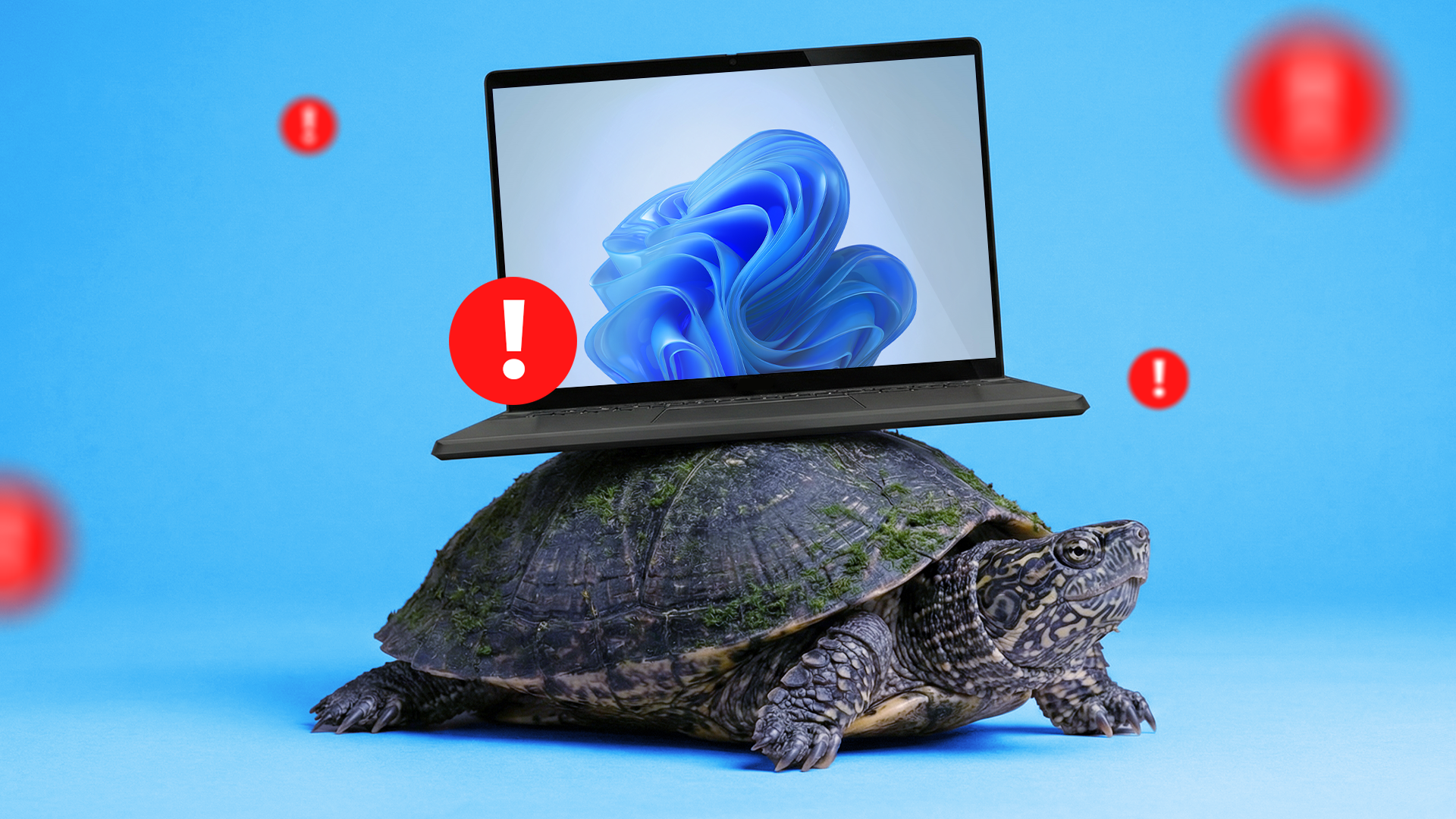
I can still vividly recall those afternoons back in 2023, sitting at my desk and staring at a spinning loading wheel while some massive, windowless server farm in Virginia decided whether or not it felt like helping me summarize a simple PDF. It was a bizarre time, wasn’t it? On one hand, it felt like we were living in the future, but on the other, it felt incredibly restrictive—like I was constantly asking for permission to use the very computer I’d paid thousands of dollars for. Fast forward to today, February 12, 2026, and that entire era feels like a strange, feverish dream we’ve finally woken up from. We’ve collectively moved past the “Cloud-First” obsession that gripped the industry for a decade and landed somewhere far more empowering: the era of the local-first, modular AI PC.
If you’ve been keeping an eye on the reports over at How-To Geek lately, you’ve seen the shift. The latest evolution in consumer hardware isn’t just about squeezing a few more frames per second out of a video game or making a chip slightly thinner; it’s about a fundamental, long-overdue divorce. We are finally separating ourselves from the subscription-heavy, server-dependent models that dominated the early 2020s. Lately, there’s been this massive surge in devices that handle incredibly complex generative tasks entirely on-device—no internet connection required, no monthly fee, and no latency. Honestly, it is easily the most refreshing thing to happen to personal computing since we all swapped our clunky hard drives for SSDs. But make no mistake, this transition wasn’t just some natural, peaceful evolution of silicon. It was a hard-fought battle over the very soul of our machines—a struggle to decide who actually owns the “intelligence” that lives inside them.
When the ‘Cloud-First’ dream started feeling more like a digital prison
For a few years there, most of us were surprisingly okay with the trade-off. We figured, “Hey, if I want the smart stuff, I’ll just pay my $20 a month and send my data to a giant corporation.” It seemed like a fair deal at the time. But then, reality started to set in. The latency started hitting—those three-second pauses that break your creative flow. Then the privacy leaks became a weekly occurrence, and suddenly, the idea of your private thoughts sitting on someone else’s server felt a lot less “convenient.” Eventually, people just got tired of being tethered. We realized we were essentially paying rent for our own productivity.
The numbers back this up, too. A 2024 Pew Research Center study found that roughly 75% of Americans believed tech companies should make it significantly easier for individuals to repair and maintain their own devices. But that sentiment didn’t stop at physical hardware; it quickly expanded to include what we now call “data sovereignty.” People wanted to know that their digital brains weren’t going to be turned off if they missed a subscription payment or if a company decided to change its Terms of Service overnight.
And that’s exactly where the 2025 hardware boom changed the game forever. When the major chip manufacturers finally cracked the code on high-efficiency NPUs (Neural Processing Units)—chips that could run massive, complex language models without turning your laptop into a space heater or melting your battery—the justification for the cloud started to crumble. We stopped asking “Can the cloud do this?” and started demanding to know “Why isn’t my laptop doing this already?” It was a shift in expectations that caught many of the big tech giants completely off guard.
“The shift from centralized AI to edge computing isn’t just a technical upgrade; it’s a reclamation of digital privacy that we haven’t seen since the early days of the open web.”
— Dr. Aris Thorne, Lead Researcher at the Digital Sovereignty Institute
It’s almost funny to look back at the so-called “AI PCs” of 2024. Remember those? They were basically just regular laptops with a fancy sticker on the palm rest and a dedicated button that did nothing but open a web browser. They were “AI” in name only. Now, in 2026, the bar is so much higher. If your machine can’t live-translate a video call in real-time or generate a high-res architectural render while you’re sitting on an airplane in airplane mode, it’s considered a literal paperweight. We’ve finally stopped being “terminals” for someone else’s supercomputer and started being “users” again. We’ve regained our agency.
Taking back our tech: The end of the disposable AI laptop
But here’s the real kicker, the thing that actually changed the industry’s trajectory: the modularity. Last year’s “Universal Hardware Act” in the EU—which, thank goodness, had a massive ripple effect here in the US—meant that manufacturers could no longer get away with soldering your AI capabilities directly to the motherboard. They can’t lock you into a three-year upgrade cycle anymore. Instead, we’re seeing a glorious return to the heyday of PC building, but updated for the modern age. You don’t go out and buy an entirely new $2,000 laptop just because the AI models got 20% smarter; you just pop the back off and swap out the NPU module for a few hundred bucks. It’s simple, it’s logical, and it’s about time.
The market response has been nothing short of explosive. A 2025 report from Statista indicated that the modular computing market grew by a staggering 40% year-over-year following these new regulations. It turns out that when you actually give people the option to keep their high-quality chassis and beautiful screens while only upgrading the “brains,” they jump at the chance. It’s obviously better for our wallets, but it’s also significantly better for the planet. We are finally, mercifully, moving away from the “disposable tech” culture that defined the last decade and left us with mountains of e-waste.
I was catching up with a friend the other day who’s still rocking a 2023 MacBook Pro. Now, physically, it’s a great machine—the screen is gorgeous, the build quality is top-tier. But he’s struggling. Not because the keyboard is broken or the battery is dead, but because it simply wasn’t built for this local-model era. It’s a beautiful piece of hardware that is increasingly becoming a window into a suite of services he no longer wants to pay for. Contrast that with the modular rigs hitting the shelves this month, and the difference is night and day. One is a product you own; the other is essentially a lease on a lifestyle that’s rapidly going out of fashion.
Why the software giants are sweating
You really have to wonder what the big software-as-a-service (SaaS) players are thinking behind closed doors right now. For years, their entire business model relied on the fact that we were physically unable to run these powerful models ourselves. They owned the hardware, they owned the data, and they owned the output. They were the gatekeepers. But as local models have become 95% as capable as the giant server-side ones for 99% of our daily tasks, that $20/month subscription fee is starting to look like a relic of a bygone era. Why pay for a straw when you have the whole drink right there in front of you?
And don’t even get me started on the privacy aspect—it’s the single biggest driver of this shift. We’ve finally reached a point where “Privacy by Design” isn’t just a hollow marketing slogan plastered on a billboard in Las Vegas. It’s a physical, undeniable reality. When the AI model lives on a chip that you can physically remove from your computer and hold in your hand, you have a level of control that no Terms of Service agreement or privacy policy could ever provide. If you don’t want the AI listening or processing your data, you don’t just toggle a software switch and cross your fingers—you know the data isn’t leaving the box because it literally has no way to do so. That peace of mind is worth more than any cloud feature ever could be.
The Personal Model: Turning AI into a true extension of your own mind
What’s even more fascinating to me is how this shift has fundamentally changed the way we interact with our devices on a daily basis. Since the AI is local and stays with you, it actually has the chance to learn *you*. It’s not some generic, one-size-fits-all intelligence trained on the generic “everything” of the internet; it’s an intelligence that has been refined by your specific writing style, your unique coding habits, and your specific professional workflow. And because it stays on your device, you never have to worry about your proprietary business plans, sensitive client data, or personal journals being sucked up to train the next version of a public model for the rest of the world to use.
It’s become a sort of digital extension of the self. I’ve personally spent the last six months “training” my local assistant on my old articles, my messy research notes, and years of personal archives. The result? It doesn’t sound like a generic robot anymore; it sounds like a slightly more organized, much faster version of me. It knows my references, it understands my shorthand, and it anticipates what I need before I even ask. This level of deep personalization was fundamentally impossible when we were all sharing the same “brain” in the cloud. It’s the difference between a custom-tailored suit and a one-size-fits-all poncho.
Is local AI actually as fast as the cloud?
Believe it or not, in 2026, for most of the things you do every day, it’s actually faster. Because there’s zero “round-trip” time spent sending your data to a server and waiting for a response, the latency is basically non-existent. While the cloud still wins if you’re trying to do massive, multi-day data crunching for a Fortune 500 company, your day-to-day assistance—email drafting, photo editing, code debugging—is way snappier when it’s happening right on your own silicon.
Do I need to be a tech expert to upgrade my AI hardware?
Not at all. That’s the beauty of the new standards. The modular components are designed to be “plug-and-play,” very similar to how you’d swap a SIM card or an SD card back in the day. Most modern laptops now feature what’s called a dedicated “Intelligence Slot” that’s easily accessible with a single standard screw. You don’t need a PhD; you just need about thirty seconds and a steady hand.
What happens to my data when I upgrade the module?
This is a common concern, but the system is actually quite elegant. The best practice is to keep your “weights”—that’s the learned data that makes your AI *yours*—on your encrypted internal drive. When you swap out the NPU for a newer, faster version, you simply point the new hardware to your existing data folder. It picks up right where the old one left off, only now it processes everything twice as fast. You keep your “brain,” you just give it a faster engine.
Looking toward 2027: Reclaiming our digital homes
So, where do we go from here? The trend is already moving toward even more extreme forms of sovereignty. We’re starting to see the first generation of “Offline-Only” laptops being marketed to journalists, lawyers, and government officials—people for whom security isn’t just a preference, but a requirement. These are machines built with no wireless cards at all, relying entirely on local AI for every bit of their productivity. It might sound regressive at first, but in an age of constant connectivity, data harvesting, and 24/7 surveillance, it’s becoming the ultimate luxury. It’s the digital equivalent of a private island.
But for the rest of us, the future is likely a hybrid one. We’ll still use the cloud for the heavy lifting—the massive tasks that require the power of a small sun—but our daily digital lives, our secrets, and our creative processes will be handled by the silicon we actually own and control. We’re moving toward a more resilient, more private, and more sustainable relationship with our technology. And honestly? It’s about time. We spent far too long being mere visitors in our own digital homes, paying rent for the privilege of existing online. It feels incredibly good to finally have the keys in our pockets.
Looking back at that garbled mess of a digital landscape we were navigating just a few years ago, it’s clear that we were just in a messy transition phase. We had the big ideas, but we didn’t have the autonomy to back them up. Now, in 2026, the hardware has finally caught up to the promise. The “Smart PC” isn’t a service you buy or a subscription you maintain anymore; it’s a tool you own. And in the end, that makes all the difference in the world.
This article is sourced from various news outlets. Analysis and presentation represent our editorial perspective.