You know that specific, heavy kind of silence that starts to settle into a home when a family member begins to drift away? It’s not the quiet of an empty house, but rather the expectant, suffocating stillness of a life being slowly and painfully rearranged. It usually starts with something small—a misplaced set of car keys, a forgotten anniversary, or a confused look during a routine conversation. But eventually, it leads to that gut-wrenching moment where a daughter realizes she has become a complete stranger in her father’s eyes. We’ve all seen it happen, or we’ve lived through it ourselves, or at the very least, we’ve spent late nights lying awake fearing it. Neurodegeneration isn’t just a cold medical diagnosis on a chart; it’s a slow-motion heist of the human identity, stealing memories and personality bit by bit until there’s nothing left but a shell.
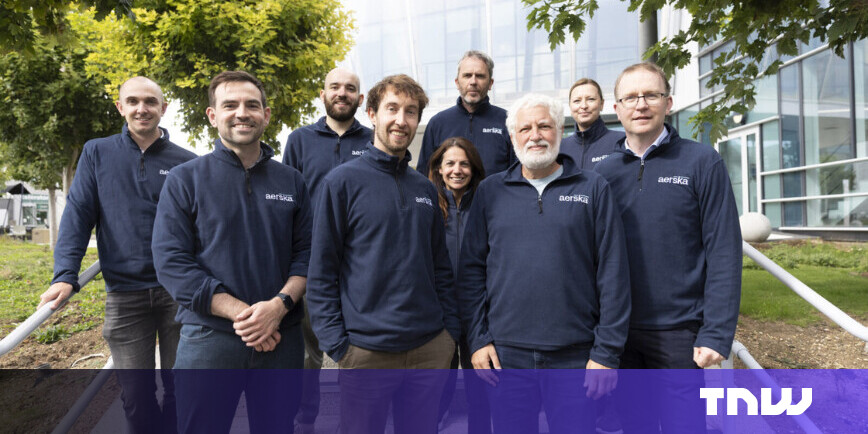
That’s why, when I saw the report from The Next Web about a Dublin-based biotech firm called Aerska, it felt like more than just another business headline. The company recently secured $39 million in funding to tackle the one thing that has made these diseases feel so invincible for decades: the delivery problem. Now, “delivery” sounds like a boring logistics issue you’d hear people discussing at a shipping warehouse or an Amazon fulfillment center, but in the high-stakes world of neurology, solving delivery is essentially the holy grail. Here’s the crazy part: we’ve actually had the “keys” to stop some of these diseases for a while now, sitting in petri dishes in labs across the world. The problem is that we haven’t been able to get those keys through the front door of the brain. Aerska isn’t just looking for a new key; they are trying to pick the lock.
The Exclusive Bouncer Standing Guard Over Your Mind
To really grasp why a $39 million investment is such a massive deal in this space, you have to understand the Blood-Brain Barrier (BBB). Think of your brain as the most exclusive, high-security club in the entire world. It’s got a security system so tight and so sophisticated that it makes the Pentagon’s defenses look like a backyard garden fence. This barrier is actually a masterpiece of biological engineering—it’s essential because it keeps toxins, nasty bacteria, and all the random molecular debris floating in your blood from messing with your delicate neurons. It’s your brain’s personal Secret Service. But for doctors and scientists trying to save a life? It’s a giant, persistent headache.
For decades, we’ve managed to develop some truly incredible drugs. We have treatments that can “switch off” the genetic triggers for Alzheimer’s or Parkinson’s when they’re tested in a controlled environment like a petri dish. But the second you put those same drugs into a human body, the BBB stops them dead in their tracks. It doesn’t care that the drug is there to help or that the patient is desperate; it just sees a foreign object and says, “Sorry, you’re not on the list.” This is exactly why so many promising treatments—billions of dollars’ worth of research—have failed during human trials over the years. We were essentially trying to put out a raging fire inside a locked, reinforced vault by spraying a garden hose on the outside of the building. It doesn’t matter how much water you have if you can’t get it to the flames.
Aerska’s approach, which has earned the backing of industry heavyweights like EQT Life Sciences and age1, isn’t about trying to smash that door down. People have tried that before using invasive surgeries or direct injections into the brain tissue, but those methods are incredibly risky and, let’s be honest, absolutely terrifying for the patients involved. Instead, Aerska is developing a way to “disguise” the medicine. The goal is to let the treatment catch a ride through the bloodstream and cross the barrier naturally, almost like a Trojan horse that the bouncer actually wants to let in. It’s a systemic approach—a simple injection that’s smart enough to know exactly where it needs to go. If they actually pull this off, the entire paradigm of brain medicine doesn’t just shift; it changes forever.
“The science to switch off bad genes already exists. The hard part is the delivery vehicle. We aren’t just looking for a cure; we’re looking for a way to get the cure to the patient without breaking the patient in the process.”
— Editorial Analysis of the Biotech Frontier
The RNA Revolution: Why We’re Finally Moving Beyond Managing Symptoms
Let’s take a second to talk about the “cargo” that Aerska is so desperate to deliver: RNA interference (RNAi). For a long, long time, the best we could do for people suffering from neurodegenerative diseases was to manage the fallout. We gave patients drugs to help mask the tremors or to temporarily boost memory, but the underlying disease just kept marching forward, relentless and unchecked. It was like trying to fix a massive, sinking ship by bailing out the freezing water with a tiny teaspoon. You might stay afloat for a few more minutes, but the outcome was always the same.
RNAi is a different beast entirely because it goes “upstream.” Instead of trying to deal with the toxic proteins once they’ve already cluttered up the brain like trash in an alleyway, RNAi tells the body to stop manufacturing those proteins in the first place. It’s essentially a genetic “off” switch. And honestly, we don’t have time to mess around with teaspoons anymore. According to a 2023 World Health Organization report, more than 55 million people worldwide are currently living with dementia, and that number is expected to triple by 2050 as our population ages. We need to fix the actual hull of the ship, and we need to do it now.
By focusing on the genetic drivers of diseases like Alzheimer’s and Parkinson’s, Aerska is positioning itself right at the center of a massive shift in biotech. We are finally moving away from the era of “symptom management” and toward “disease modification.” But I have to emphasize this again: none of that high-tech genetic wizardry matters if the RNA molecules can’t get past that blood-brain barrier. That’s why that $39 million isn’t just “more money for research”—it’s a highly targeted strike at the single biggest bottleneck in modern medicine. It’s an investment in the bridge, not just the destination.
The Business of Staying Sharp: Why “Healthspan” is the New Immortality
If you spend any time reading tech news, you’ve probably heard a lot of talk about “longevity.” You’ve seen the wild headlines about Silicon Valley billionaires spending millions of dollars on experimental treatments just to live to 150. But as we move into 2026, the conversation is starting to feel a lot more grounded. Investors are becoming significantly less interested in the “immortality” hype and are focusing much more on what we call “healthspan.”
Healthspan is a simple but profound concept: it’s the number of years you live with your faculties and your health actually intact. It’s the difference between living to 90 years old in a specialized care facility where you don’t know where you are, and living to 90 while still being able to recognize your grandkids, tell your old stories, and walk to the park on a sunny afternoon. The economic reality is just as staggering as the human one. A 2025 report from the Alzheimer’s Association noted that the total cost of care for people with dementia in the U.S. alone has now surpassed $370 billion annually. The financial burden on our society is immense, but the human burden—the loss of connection and dignity—is something you can’t even put a price on.
Aerska is, at its core, a “healthspan” company. Their goal isn’t necessarily to make us live forever; it’s to ensure that the years we do have aren’t stolen from us by the slow, cruel erosion of the mind. It’s a pragmatic, deeply human goal that resonates far beyond the lab. And it’s exactly why European investors are finally putting some real muscle behind Dublin-based startups. We’re witnessing a real maturation of the EU tech scene, where “high-risk, high-impact” biotech is no longer just an American playground for the folks in Boston or San Francisco.
Why is the blood-brain barrier such a massive hurdle for RNA medicines specifically?
It mostly comes down to physics and chemistry. RNA molecules are relatively large and carry a strong negative charge, which makes them the “wrong shape and size” to squeeze through the incredibly tightly packed cells that make up the brain’s protective barrier. Without a specialized, high-tech delivery system to act as a guide, these molecules are simply filtered out of the system long before they ever get close to their target neurons.
What makes this $39M funding round for Aerska so significant in the current market?
It’s about more than just the dollar amount, though $39 million is certainly nothing to sneeze at. The significance lies in the lead investors—EQT Life Sciences and age1. Their involvement represents a major shift toward backing systemic delivery platforms rather than just betting on individual drugs. It’s a strategic bet on the “infrastructure” of brain medicine, which could eventually be used to deliver dozens of different treatments.
Big Ambitions from a Dublin Lab: Can Europe Lead the Way?
I think it’s really worth pointing out that Aerska is based in Dublin. For the longest time, the “big” biotech breakthroughs were almost exclusively concentrated in hubs like Boston’s Kendall Square or the Bay Area. But the European ecosystem has been quietly and steadily building its own narrative. According to a 2024 Statista report, venture capital investment in European biotech has shown some pretty remarkable resilience, even when other tech sectors like SaaS or crypto started to cool off. There’s a growing sense that the continent is finding its true niche in “hard science”—the kind of work that requires years of lab time and deep expertise rather than just building another app.
But let’s be real for a minute: in the grand scheme of drug development, $39 million is really just a drop in the bucket. It usually takes billions of dollars and a decade of work to bring a single drug to the market. This specific round of funding is earmarked for “preclinical development and early clinical steps.” In plain English? That means they are still very much in the woods. They still have to prove that their “special pass” through the brain’s security gate doesn’t cause any unintended side effects. They have to prove it’s safe. They have to prove it works in real, living humans, not just in a controlled lab setting or a computer model. The stakes couldn’t be higher, and the margin for error is razor-thin.
The history of neurology is, unfortunately, littered with the corpses of “promising” startups that had great ideas but were eventually humbled by the sheer, overwhelming complexity of the human brain. We’ve been disappointed before. But there’s something about this current wave of RNA research that feels different. We aren’t just guessing and hoping as much as we used to. We have better imaging technology, more precise genetic sequencing, and now, thanks to companies like Aerska, we’re developing much better delivery vehicles to get the medicine where it actually needs to go.
Final Thoughts: It’s About More Than Just a Lab Result
At the end of the day, we shouldn’t let ourselves get too bogged down in the venture capital jargon or the complex molecular biology. When you strip away the charts and the technical white papers, what Aerska is really selling is dignity. They are selling the possibility that the “slow erosion” of neurodegeneration doesn’t have to be an inevitable part of the human experience. They’re fighting for a future where a diagnosis doesn’t mean the end of a person’s story.
Imagine a world where a diagnosis of Alzheimer’s isn’t a slow-motion death sentence for your personality. Imagine a world where we can treat the brain with the same directness and ease that we treat a common infection—with a simple, smart injection that goes exactly where it needs to go without any guesswork. We aren’t there quite yet, and $39 million certainly won’t get us all the way to the finish line. But it’s a start. And in a field where we’ve been banging our heads against the blood-brain barrier for over a century, finding a new way to pick the lock is something that is absolutely worth celebrating.
The road ahead is undoubtedly long, and the science is incredibly hard. There will be setbacks, and there will be skeptics. But for the families sitting at those kitchen tables tonight, watching a loved one slowly fade into the fog, every single dollar invested in “delivery” is a dollar invested in hope. And that’s the kind of return on investment that you’ll never be able to fully capture on a spreadsheet.
This article is sourced from various news outlets. Analysis and presentation represent our editorial perspective.