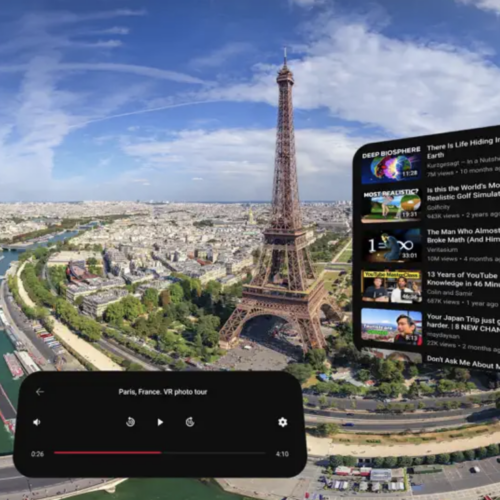
I was sitting in a local coffee shop back in the tail end of 2023, just watching the world go by, and it struck me: every single person there—and I mean every single one—was completely hunched over a glowing rectangle. It was that classic, almost rhythmic “tap-tap-swipe” dance we all did with our thumbs back then. We were essentially tethered to the notification dot, reacting to every buzz like Pavlov’s dogs. But standing here now, in February 2026, looking back at that scene feels like looking at a photo of someone using a rotary phone or a fax machine. It’s ancient history. If you’ve been following the latest deep dives from outlets like Ars Technica, you know the narrative has shifted entirely. The “app economy” as we spent fifteen years knowing it isn’t just slowing down—it’s officially in the rearview mirror. We’ve sprinted past the “there’s an app for that” phase of human history and landed squarely in the era of “my agent handled it.”
It’s been a bit of a head-spinner getting to this point, hasn’t it? For over a decade, we meticulously organized our entire lives into these little colorful squares on a home screen. We had a travel app for flights, a banking app for the mortgage, a fitness app to tell us we weren’t running enough, and probably three different delivery apps just to get a lukewarm, mediocre burrito to our front door. But then came last year’s release of the unified agentic frameworks, and the whole game board got flipped over. Now? I don’t even remember the last time I opened a dedicated airline app to book a flight. I just tell my device that I need to be in London by Thursday afternoon for a meeting. My agent then goes to work: it negotiates with the airlines, cross-references my personal calendar, checks my seat preferences, and handles the payment before I’ve even finished my first morning espresso. To be honest, it doesn’t even feel like I’m “using software” anymore. It feels like I have a incredibly competent, very discreet chief of staff living in my pocket.
The Death of the Interface: Why We’re Trading Pixels for Pure Intent
This shift we’re living through isn’t just a matter of convenience or saving a few clicks; it’s a tectonic change in how we actually interact with the digital world. Think about it: we used to have to learn the specific “language” of every single app we downloaded. We had to figure out where each developer hid the settings, how their specific checkout flow worked, and—usually—where they buried the “cancel subscription” button. Today, that dynamic has completely reversed. The software is finally learning our language. We’re living in what experts are calling the “Intent Economy,” and it has absolutely turned the traditional UI/UX industry on its head. I mean, why do I need a beautiful, high-fidelity interface if I’m never actually looking at it? If my AI agent is the one doing the heavy lifting by interacting directly with a service’s API, the pixels on the screen become almost irrelevant. The logic under the hood is what matters now.
And if I’m being honest, it’s about time. We were hitting “app fatigue” years before the technology actually caught up to our frustration. I remember a 2024 Gartner study that really signaled the beginning of the end; it found that traditional app downloads saw their first ever double-digit decline right as these “super-agents” started consolidating services into a single, conversational layer. People were just exhausted. We were tired of creating new accounts, tired of managing sixty different subscriptions, and tired of the clutter. We were desperate for a bridge, and the LLM-powered agents that matured throughout 2025 gave us exactly that. They became the universal translator for our digital lives, sitting between us and the chaos of the internet.
“The interface of the future is no interface at all. We are moving toward a world where technology anticipates needs rather than waiting for commands.”
— Dr. Aris Thorne, Lead Researcher at the Institute for Autonomous Systems (2025)
But let’s pause for a second and be real—this isn’t just about making our lives easier or our mornings more productive. There is a massive, high-stakes power struggle happening in the background while we’re all enjoying our automated flight bookings. When you stop opening the Uber app or the Expedia app and start relying on a Google, Apple, or OpenAI agent to make those choices for you, who is actually calling the shots? The “walled gardens” of the 2010s haven’t disappeared; they’ve just evolved into what I like to call “intelligent moats.” If my agent chooses one airline over another because of a backend partnership or a data-sharing agreement I’m not even aware of, am I really the one making the decision? It’s a bit of a sticky situation, and to be frank, it’s one we’re still trying to untangle as a society.
Beyond the Hype: What the Data Says About Our New Digital Reality
If you think I’m just being hyperbolic about how fast this is happening, you really need to look at the hard data. A Statista report from late 2025 found that a whopping 68% of smartphone users now interact with their devices primarily through voice or intent-based agents, rather than manually opening third-party applications. That is a staggering jump from where we were just two years ago. We’ve collectively made a choice: we’d rather trust an algorithm to sift through the noise and find us the best deal than spend forty minutes of our lives scrolling through browser tabs. It’s the ultimate trade-off of the modern age—we’re giving up a bit of our privacy and direct agency in exchange for the priceless gift of time.
And speaking of time, let’s talk about what we’re actually gaining. A 2025 Pew Research Center survey revealed that the average person is saving roughly 4.5 hours a week by delegating what they call “administrative” life tasks to AI agents. We’re talking about things like scheduling doctor appointments, filing expense reports that used to take all Sunday afternoon, or managing complex grocery lists based on meal plans. That’s nearly half a full work day reclaimed every single week. But it makes me wonder—and I think about this a lot—what are we actually doing with that extra time? Are we finally being more creative? Are we spending it with our families? Or are we just filling that newly cleared space with even more content, fed to us by the very same agents that saved us the time in the first place? It’s a bit of a circular trap, isn’t it?
The Privacy Paradox: Living in an Agent-First World
This is where things start to get a little uncomfortable, at least for me. For an AI agent to be truly, life-changingly useful, it has to know everything about you. I’m not just talking about your favorite color. It needs access to your emails, your bank statements, your real-time location history, and even your physiological data from your wearable devices. It needs to know that you’re grumpy when you haven’t had eight hours of sleep and that you’re significantly more likely to overspend on Amazon when you’re feeling stressed after work. We’ve essentially traded the “cookies” of the old web era for “full-brain access” in the agent era. It’s a total surrender of data for the sake of total convenience.
I’ve noticed lately that a lot of my friends don’t even seem to care anymore. They’re so enamored by the fact that their phone “just knows” to order more oat milk or laundry detergent before they even realize they’re running low that they don’t stop to think about the incredibly detailed psychological profile being built on them in the cloud. But as an editor who has watched this tech space evolve for years, it definitely gives me pause. We are building a world where the AI knows us better than we know ourselves. And while that’s undeniably great for our productivity stats, it’s a bit terrifying when you think about the concept of the “private self.” What’s left of us that isn’t indexed and predicted?
The New Gatekeepers: Who Actually Wins the Agent War?
The digital landscape of 2026 is currently dominated by maybe three or four major players who effectively own the “Agent Layer.” At this point, the hardware you carry doesn’t even matter as much as it used to—whether you’re wearing smart glasses, a lapel pin, or a legacy smartphone, the real magic is in the model running the show. This has created a weird, slightly cold vacuum for smaller developers. If you’re a startup founder today, you aren’t building an “app” to be featured on a store; you’re building a “skill” or a “plugin” for the major agents. You’ve gone from being a shop owner to being a tenant in someone else’s massive digital city. You play by their rules, or you don’t get found.
But I suppose there’s a silver lining in all this. This massive shift has forced companies to actually provide tangible value rather than just trying to hijack your attention for ad revenue. If an agent is the one making the choice, it isn’t swayed by a flashy UI, a catchy jingle, or a celebrity endorsement. It’s looking at the cold, hard facts: price, user ratings, and logistical efficiency. In a weird way, we’ve moved toward a more meritocratic digital economy, even if that economy is being mediated by a “black box” of code that we don’t fully understand. It’s a very strange, very sterile kind of efficiency, but it’s where we are.
Are apps completely dead now?
I wouldn’t say they’re completely dead, but their role has definitely shifted into a niche. We still rely on “canvas” style apps for heavy creative work—think high-end video editing, complex architectural design, or deep-level coding. But for 90% of what we do every day, the standalone app has been replaced by “agentic actions” that happen within a single, unified interface. The era of the general-purpose app is over.
How do agents handle my money without me getting scammed?
It’s actually become quite sophisticated. Most agents now utilize secure, one-time virtual cards or direct API integrations with your bank. You generally set up “guardrails”—for instance, you might give your agent a $50 limit for unplanned, routine purchases. Anything larger or outside your normal spending patterns requires a quick biometric verification (like a thumbprint or face scan) before the transaction goes through. It’s surprisingly secure, though it does require a lot of initial trust.
Looking Ahead: Finding the Human Element in an Automated Life
So, where does all of this actually leave us? We’re living in a world that is undeniably smoother, faster, and significantly less frustrating than it was even five years ago. I certainly don’t miss the days of “forgetting my password” for the tenth time or sitting on hold for forty minutes to talk to customer service. Now, my agent just talks to their agent, and the problem usually vanishes into thin air. It’s a miracle of modern engineering, and I’m grateful for it every day. And yet, I can’t help but feel a little bit of nostalgia for the friction. There was something uniquely human about the struggle of doing things ourselves—the manual process of discovery, the accidental finds, the effort of navigation.
But then again, maybe that’s just my “old-school” 2020s brain talking. The younger generation—the kids who have had an AI “tutor” or companion since they were five years old—they don’t see this as a loss of agency or a surrender of control. They see the agent as an extension of themselves, as natural as a limb. And as we move deeper into 2026, the line between where “we” end and “the agent” begins is only going to get blurrier. Honestly? At the end of the day, I’m just glad I don’t have to manually organize my own folders or file my own taxes anymore. That alone was probably worth the revolution.
This article is sourced from various news outlets. Analysis and presentation represent our editorial perspective.