For the longest time—and I’m talking over fifteen years here—it really felt like Metal Gear Solid 4: Guns of the Patriots was destined to go down with the ship. Specifically, the sinking ship that was the original PlayStation 3 hardware. If you wanted to experience the final, heart-wrenching chapter of Solid Snake’s saga at any point over the last decade and a half, your options were pretty bleak: you either kept a dusty, loud PS3 hooked up to your living room TV, or you spent hours diving into the often-frustrating, resource-heavy world of high-end PC emulation. It was a gatekept masterpiece. But, thankfully, that all changed last year. As CNET originally reported, Konami finally broke the seal, dragging this legendary title onto modern platforms as the absolute crown jewel of the Metal Gear Solid Master Collection Vol. 2.
I still vividly remember sitting through that State of Play back in late 2024 when they first teased the collection. You could practically hear the collective sigh of relief from the gaming community vibrating through the internet. This wasn’t just another cynical, low-effort cash-grab remaster; it felt more like a high-stakes rescue mission. We’re talking about a massive piece of digital history that had been held hostage by the PS3’s notoriously difficult “Cell” architecture for nearly twenty years. Now that the collection has been in our hands since its launch on August 27, 2025, it’s worth taking a second to look back at why this specific release was such a massive technical hurdle to clear—and why its story is actually more relevant today than it was back in 2008.
Why the PS3’s “Cell” Architecture Was a Digital Dead End (And How We Finally Escaped It)
To really get why it took until 2025 to see a proper remaster of MGS4, you have to understand the absolute nightmare that was the PlayStation 3’s internal organs. Sony’s third console was a powerhouse, sure, but it was powered by the Cell Broadband Engine—a piece of hardware so complex and proprietary that developers at the time famously compared it to trying to solve a Rubik’s Cube while riding a unicycle on a tightrope. MGS4 wasn’t just a game that happened to be on the PS3; it was built from the ground up to exploit every single quirk and hidden pathway of that specific processor. It wasn’t just “made for PS3”; the console’s limitations and strengths were woven into the game’s very DNA.
For years, the industry rumor mill was convinced that the source code for MGS4 was such a tangled, messy web of PS3-specific optimizations that porting it would be impossible without a complete, ground-up remake. It felt like a lost cause. Consider this: a 2023 study by the Video Game History Foundation found that a staggering 87% of classic video games released before 2010 are “critically endangered,” meaning they simply aren’t commercially available on modern hardware. For the longest time, MGS4 was the poster child for that depressing statistic. We were talking about a game that sold 6 million copies and defined a generation, yet it was effectively invisible to anyone who didn’t happen to own a console from 2006.
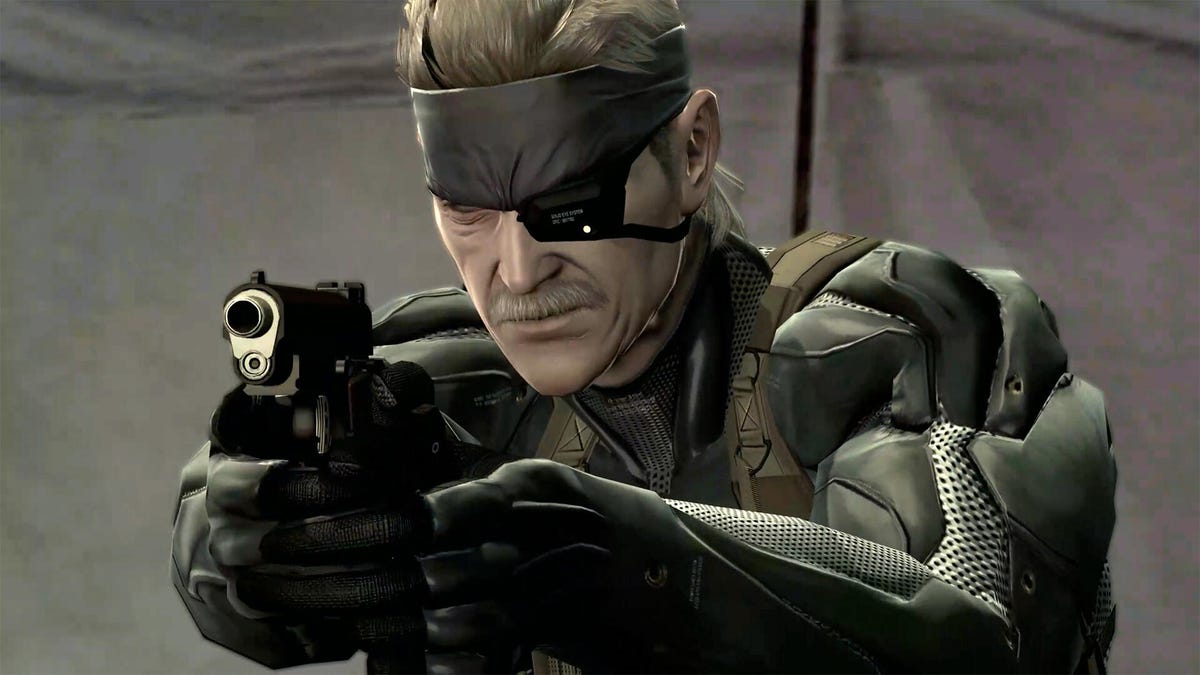
When Konami finally dropped the Master Collection Vol. 2 last August, they didn’t just give us a bump in resolution. They gave us a way to actually play a game that was rapidly becoming a myth to younger players. I have to tell you, seeing Old Snake in 4K at a rock-solid 60 frames per second on a PS5 is something many of us genuinely thought we’d never see in our lifetimes. It feels like a genuine prison break for one of the most ambitious, over-the-top narratives in the history of the medium. It’s the kind of technical preservation that we usually only dream of.
“The preservation of games like Metal Gear Solid 4 isn’t just about nostalgia; it’s about ensuring the medium’s most complex technical achievements aren’t lost to the march of hardware cycles.”
— Industry Preservation Advocate
Beyond Solid Snake: Why the Rest of the Collection Actually Matters
While MGS4 is the undeniable headliner—the one everyone is buying the ticket to see—the package Konami put together for $50 wasn’t just a single-game affair. We also got a beautifully remastered version of Metal Gear Solid: Peace Walker, which, in my humble opinion, is easily the most underrated entry in the entire series. Originally a PSP title, Peace Walker serves as the essential narrative bridge between the 1960s Cold War setting of MGS3 and the modern-day chaos of the later games. It’s the game that introduced the base-building and recruitment mechanics that would later define The Phantom Pain. Seeing it scaled up for a massive 4K screen with proper twin-stick controls? It makes it feel like a completely new experience, finally freed from the constraints of a handheld screen.
But the real “deep cut” for the hardcore fans—the kind of thing that makes you realize someone at Konami actually cares—was the inclusion of Metal Gear: Ghost Babel. If you’re a younger fan, there’s a good chance you missed this one entirely. It was a 2000 release for the Game Boy Color, of all things. Despite the massive hardware limitations of a handheld from the turn of the millennium, it managed to capture the “Solid” gameplay loop perfectly, using top-down graphics that felt like a love letter to the original NES and MSX2 games. It’s officially non-canon, sure, but it’s a brilliant piece of game design that shows just how flexible the Metal Gear formula really is. Including it in Vol. 2 felt like a genuine gift to the completionists who want every single piece of the puzzle in one place.
The collection also went the extra mile by throwing in screenplay books and master books for each title. I’ll admit it: I spent way too many hours last September poring over the screenplay for MGS4. If you’ve played it, you know the game is famous (or maybe infamous) for its movie-length cutscenes. Having the actual scripts to read through provides a fascinating, behind-the-scenes look into Hideo Kojima’s “kitchen-sink” approach to storytelling. It’s all there—every conspiracy theory, every long-winded nanomachine explanation, and every bit of philosophical waxing laid bare on the page. It’s a treasure trove for anyone who wants to deconstruct how these stories were put together.
Revisiting the “War Economy” in 2026: When Sci-Fi Becomes a Documentary
Playing MGS4 in 2026 is a fundamentally different experience than playing it back in 2008. I mean, think about it. Back then, the game’s obsession with a “War Economy”—a world where private military companies (PMCs) fueled global conflict as a literal business model—felt like a cynical, hyper-stylized sci-fi critique of the early 2000s geopolitical climate. Today? It feels like you’re watching a documentary. The themes of drone warfare, AI-controlled battlefields, and the total dehumanization of combatants through “System” technology have aged incredibly well—perhaps a little too well for comfort.
If you look at the data from Statista, the global private security and military market was valued at nearly $240 billion back in 2024, and it has only grown since then. Re-playing the “Liquid Sun” chapter last year, I was struck by just how accurately the game predicted the normalization of privatized warfare. It makes that $50 entry fee feel like a small price to pay for a piece of media that actually had something profound to say about where the world was heading. While most modern shooters are perfectly content with being “military porn,” MGS4 remains a staunchly anti-war game. It uses its own mechanical complexity to actually tire the player out, making you feel the same bone-deep exhaustion that Old Snake feels as he crawls through a war zone.
And can we talk about Old Snake for a second? In a medium that is absolutely obsessed with youthful power fantasies and invincible heroes, playing as an aging, dying man whose body is literally falling apart is still one of the boldest moves any developer has ever made. The “OctoCamo” suit might be the cool gadget on the box, but the sound of Snake’s back audibly cracking when he crouches for too long? That’s the real star of the show. It’s a grounded, human touch in a world filled with giant bipedal tanks and psychic vampires. It reminds you that even legends have an expiration date.
Performance, Pixels, and the Problem with Platform Walls
There was a massive amount of chatter leading up to the release about whether Sony would try to keep this as a PS5 exclusive. History has shown us time and again—with titles like Final Fantasy VII Remake—that “exclusive” often just means “we have a head start.” While the PS5 was the lead platform for the August launch, the rumors of PC and Xbox Series X|S versions have been persistent for a reason. Honestly, it would be a crying shame if this didn’t eventually hit every platform possible. If the goal here is truly preservation, then platform walls are the ultimate enemy. Everyone should have the chance to see how this story ends.
As for the remaster itself, it’s solid, though let’s be clear: it’s a “Master Collection” style port rather than a full-blown “Bluepoint-style” remake. We didn’t get new assets or re-recorded dialogue, but we did get improved resolutions and a frame rate that doesn’t chug the moment a heavy explosion hits the screen, which is really all most of us wanted. The customized controls for Peace Walker are a total godsend, too. We can finally move away from the dreaded “claw” grip that was necessitated by the PSP’s lack of a second analog stick. It’s these kinds of quality-of-life upgrades that make the collection worth the double-dip, even for those of us who still have the original discs sitting on a shelf somewhere gathering dust.
I do wish Konami had been a bit more transparent about some of the other quality-of-life upgrades before the actual launch, but the digital soundtrack and the inclusion of Ghost Babel went a long way in softening those initial complaints. It’s a comprehensive package that feels like it actually respects the source material, even if the relationship between Konami and the series’ creator remains… well, let’s just say “complicated” and leave it at that.
Closing the Loop on a Legend
At the end of the day, Metal Gear Solid 4 is the chronological end of the story. It’s the game where all those wild threads—the Patriots, the clones, the nanomachines, and the tragedy of the Boss—finally get tied into a messy, beautiful, and deeply emotional knot. For a long time, the fact that new fans couldn’t easily play this ending was a massive hole in the heart of the gaming community. You could play the beginning (MGS3), the middle (MGS1 & 2), and the “prequel-sequel” (MGSV), but the finale was just… missing. It was a story without a final chapter for a whole new generation of players.
With the Master Collection Vol. 2, that hole is finally filled. Whether you’re a veteran who remembers the absolute fever-pitch hype of the 2008 launch or a newcomer who only knows Snake from his appearances in Super Smash Bros., this collection is essential. It’s a reminder of a time when games were allowed to be weird, over-indulgent, and deeply philosophical. It’s not just a remaster; it’s a restoration of a masterpiece that we very nearly lost to time and proprietary hardware. And man, it’s good to have it back.
Is the MGS4 remaster a full remake like MGS Delta?
No, it’s important to manage expectations here: this is a high-definition remaster, not a remake. While you’re getting much better resolution, smoother frame rates, and updated control schemes, the core assets and the underlying engine are the same ones from the 2008 original. Think of it as a faithful preservation of the original vision rather than a total reimagining with modern graphics.
Does the collection include the multiplayer modes?
Unfortunately, that’s a no. Metal Gear Online, which was originally bundled with MGS4 and had a huge following, remains offline. This collection is strictly focused on the single-player campaigns and the massive amount of bonus archival materials, like the screenplay books and soundtracks. If you were hoping to jump back into PMC-on-PMC action, you’re out of luck for now.
Can I play this on my Steam Deck?
While the PS5 was definitely the initial focus for the marketing, the subsequent PC release has been surprisingly well-optimized for handheld play. This makes it the first time in history that MGS4 has been officially playable in a portable format—which is basically a dream come true for fans who have been trying to hack together emulation solutions on the go for years. It runs like a charm.
This article is sourced from various news outlets. Analysis and presentation represent our editorial perspective.