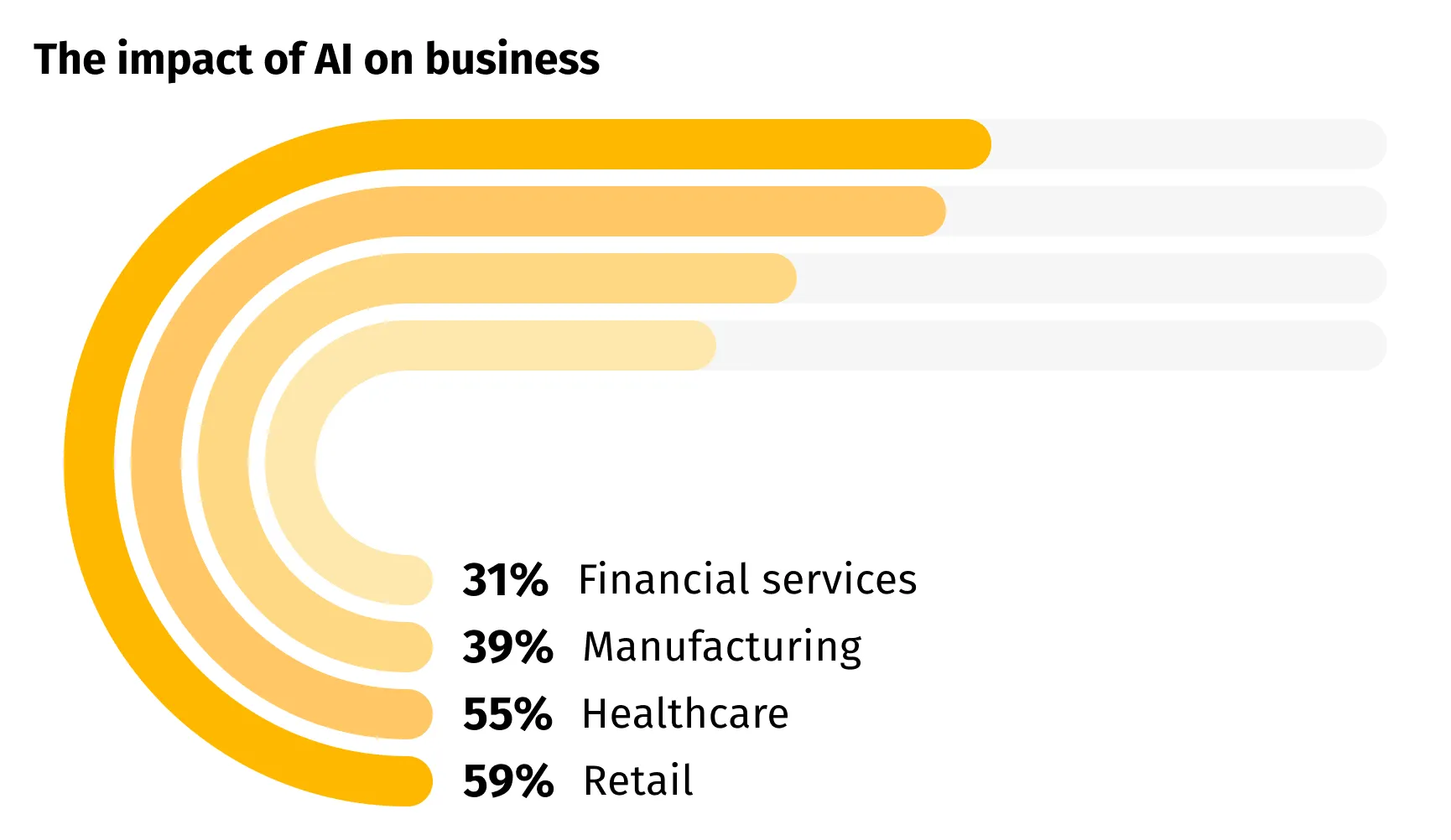
Let’s be honest for a second. We’ve all spent the last three years in a bit of a daze, haven’t we? It’s like we’ve been living through a fever dream. Ever since the world collectively lost its mind over generative AI back in late 2022, the tech scene here in Southeast Asia has felt like a high-speed chase where nobody was quite sure what they were actually chasing—or if there was even a finish line. But as we sit here in 2026, the fog is finally lifting. According to recent data from RISE by DailySocial, that initial, frantic frenzy has finally cooled down. In its place, we’re seeing something much more interesting: actual, boring, and remarkably profitable utility.
The “AI-First” Sticker Has Finally Peeled Off
It’s February 2026, and those “AI-first” stickers that startups used to slap on their pitch decks like badges of honor? They’ve mostly peeled off or been tucked away in the “lessons learned” folder. We’ve officially moved past the era of chatbots that could write mediocre poetry or a generic haiku but couldn’t help a frustrated customer track a missing package in Bandung to save their life. The conversation has fundamentally shifted. It’s no longer about what AI can do in a vacuum or some lab setting; it’s about what it is actually doing for the bottom line of a logistics firm in Vietnam or a fintech giant in Manila.
I distinctly remember sitting in a crowded coffee shop in Kuningan just two short years ago, listening to a wide-eyed founder explain how their “AI-powered” coffee app was going to revolutionize the way we consume caffeine. Looking back, it sounds almost absurd, right? But that was the climate we were living in. Fast forward to today, and that same founder isn’t talking about revolutionizing the world. Instead, they’re probably using a very quiet, very efficient machine learning model tucked away in their backend to optimize their supply chain and reduce milk waste by 15%. It isn’t flashy. It isn’t going to win a “Most Innovative” award at some glitzy gala at a five-star hotel. But you know what? It’s keeping the lights on. And in 2026, when the venture capital taps aren’t exactly gushing like they used to, that’s the only metric that actually matters.
“The era of experimentation for the sake of optics is dead. If your AI isn’t shaving 20% off your operational costs or directly increasing your LTV, it’s just expensive digital wallpaper.”
— Andi Syahri, Lead Tech Analyst
So, why did it take us this long to get here? Why did we have to go through the cycle of hype and heartbreak? The “ROI Wall” is a term I’ve been hearing a lot lately in the boardrooms of Jakarta and Singapore. For a long time, there was this dangerous assumption that if you just threw enough compute power and a few expensive API keys at a problem, magic would just… happen. But as many companies discovered the hard way in 2024 and 2025, the “Last Mile” of AI implementation is incredibly expensive and notoriously difficult to navigate. It turns out, moving from a demo to a production-ready system that doesn’t hallucinate your company’s financial data is a lot harder than it looks on Twitter.
Hitting the ROI Wall: Why the “Last Mile” Is So Brutal
According to the Google, Temasek, and Bain & Company e-Conomy SEA 2025 report, our region’s digital economy actually surpassed $300 billion in GMV last year. That’s a massive, staggering number. But if you look closer, hidden within that growth is a significant and much-needed consolidation of tech spending. Companies aren’t just buying every shiny SaaS tool with an “AI” suffix anymore. They’re scrutinizing every single dollar. They’ve realized that the hidden costs—the cost of tokens, the cost of specialized talent, and the grueling cost of cleaning up decades of messy legacy data—are often much higher than the immediate benefit they see in the first quarter.
But here’s the thing that gives me hope: those who hit that wall and kept climbing are the ones seeing the real rewards now. We’re seeing a massive divergence in the market. On one side, you have the “AI tourists”—the companies that tried a few prompts, got a weird result, and gave up when it didn’t immediately double their revenue. On the other, you have the “AI Natives.” These are the companies that didn’t just add AI as a feature but integrated these systems into the very plumbing of their businesses. These are the companies that are actually scaling in 2026 while everyone else is still trying to figure out their login credentials for the latest model.
And don’t think this is just a game for the big players with deep pockets. A 2025 Statista report found that AI adoption among Indonesian SMEs reached 38%, which is nearly a twofold increase from just three years prior. These aren’t mom-and-pop shops building their own Large Language Models from scratch—that would be crazy. These are small businesses using localized, vertical AI tools to handle their accounting, customer sentiment analysis, and inventory management. They aren’t sitting around talking about “AGI” or the singularity; they’re talking about getting their weekends back because the software handled the boring stuff. Isn’t that what technology was supposed to do in the first place?
Localization: The Real Reason Why One Size Never Fit All
If 2024 was the year of the “Global Model,” then 2025 was definitely the year of “Localization.” One of the biggest, most painful realizations the Southeast Asian tech ecosystem had was that a model trained primarily on Western data often fails miserably to grasp the nuances of regional commerce. Whether it’s the linguistic complexity of Bahasa Indonesia, the layers of politeness in Thai, or the specific social commerce patterns in the Philippines, the “one size fits all” approach simply didn’t work. It was like trying to use a map of London to find your way through the small alleys of Ho Chi Minh City.
We saw a massive surge in regional LLMs last year, and honestly, it was about time. These models aren’t necessarily “smarter” in a general, academic sense than what’s coming out of Silicon Valley, but they are infinitely more useful for local businesses. They understand the slang, they understand the cultural context of negotiations, and they operate at a fraction of the latency because the servers aren’t halfway across the world. This move toward localized tech has been a huge win for regional sovereignty and data privacy, too. But let’s be real—it wasn’t just about cultural pride or sovereignty. It was about the money.
Using a massive, multi-billion parameter model to answer a simple customer query in Tagalog is like using a Ferrari to deliver a single egg. It’s total overkill. It’s expensive, it’s slow, and it’s unnecessary. The shift toward smaller, specialized, and localized models has finally made AI financially viable for the average Southeast Asian enterprise. We’re finally seeing the democratization of the tech, not through grand speeches at tech conferences, but through practical, grimy engineering. It’s about finding the right tool for the job, rather than the most expensive one.
And speaking of engineering, have you noticed how the talent landscape has changed? Remember when everyone was absolutely terrified that AI would replace all the coders by 2024? Well, it’s 2026, and we still have coders—lots of them. They’re just doing very different things. The “Prompt Engineer” title that was trendy for about six months has mostly vanished into the ether, replaced by “AI Systems Architects.” These are the people who know how to stitch together various models into a cohesive, reliable workflow. It’s less about “talking” to the machine now and more about building the factory the machine lives in. It’s about building systems that are robust, not just clever.
The Human Element: Dealing with the “Great Upskilling”
We can’t talk about AI without talking about the people—the actual humans behind the desks. There’s been a lot of anxiety, and let’s be honest, it was justified. But the “job apocalypse” that the doomsayers predicted hasn’t quite manifested in the way they thought it would. Instead, we’ve seen a massive, region-wide “Great Upskilling.” It hasn’t been easy, and it certainly hasn’t been painless for everyone involved, but the workforce in 2026 looks remarkably different than it did in 2023. We’re finally starting to see the division of labor that makes sense.
A 2025 report from the World Economic Forum highlighted a fascinating trend: while 25% of tasks in the regional service sector were automated, the demand for “human-centric” roles actually grew. We’re talking about roles that require high emotional intelligence, complex problem-solving, and cross-cultural communication—things a model still struggles with. We’ve finally stopped asking humans to act like robots, and we’re finally letting robots be robots. It’s a messy transition, and there are still plenty of kinks to work out, but it’s happening right in front of us.
I spoke with a customer service lead at a major regional e-commerce platform recently, and her take was eye-opening. She told me that her team is actually smaller now, but the people who are left are much higher-paid and more specialized. They don’t handle the “where is my refund?” or “how do I change my password?” tickets anymore—the AI handles those in seconds. Instead, they handle the “the AI made a mistake, the order is ruined, and now the customer is furious” situations. They are the escalation experts, the empathy officers. It’s a much higher-stakes job, and it requires a much more sophisticated skill set than just following a script. It’s a job that requires being, well, human.
But we shouldn’t sugarcoat the reality. There are people being left behind, and that’s a conversation we need to have more often. The digital divide is very real, and in 2026, it’s not just about who has a stable internet connection or a smartphone. It’s about who has the “AI Literacy” to stay relevant in a shifting economy. Governments across ASEAN have been scrambling to launch national AI education programs, but the private sector is actually moving much faster. If you’re a mid-career professional in Jakarta today and you aren’t comfortable working alongside an AI co-pilot, you’re definitely feeling the heat. That’s the uncomfortable, cold truth of our current era.
Is AI still a bubble in 2026?
I’d say the “hype bubble” has definitely burst—and honestly, good riddance. But the technology itself hasn’t gone anywhere; it has just moved into the “utility phase.” We’re seeing fewer speculative investments based on a fancy slide deck and more focus on companies with proven revenue models and efficient AI integration. It’s less like the dot-com crash of 2000 and more like the period immediately after, where the real winners—the ones with actual business models—started to emerge from the wreckage.
How has the cost of AI changed for startups?
Costs have basically split in two directions. While the top-tier, frontier models remain incredibly expensive to train and run, the cost of “inference” for specialized, smaller models has plummeted by nearly 70% since 2024. This has been a game-changer for bootstrapped startups. They can now compete with the big incumbents by focusing on very specific, niche use cases rather than trying to build a general-purpose AI that does everything for everyone.
What is the biggest challenge for AI in Southeast Asia today?
Data quality is still the biggest mountain we have to climb. You can have the best model in the world, but if you’re feeding it garbage, you’re going to get garbage out. Many regional companies are still struggling with siloed, unorganized, or biased data that hasn’t been touched in a decade. The focus in 2026 has shifted from “finding a better model” to “building a better data pipeline.” It’s not glamorous work, but it’s the work that actually yields results.
The Path Ahead: Moving From Integration to Real Innovation
So, where do we go from here? If 2026 is the year of the “Great Re-Adjustment,” then I suspect 2027 will be the year we start seeing things that were truly, fundamentally impossible before. We’ve spent the last few years trying to make AI do things we were already doing, just a little bit faster or a little bit cheaper. But we’re finally reaching the point where we can start imagining entirely new categories of products and services that we couldn’t even conceive of in 2022.
Think about hyper-localized healthcare diagnostics delivered via a smartphone in the rural Philippines, or autonomous agricultural drones that can manage individual crops for smallholder farmers with surgical precision. These aren’t sci-fi dreams or pitch deck fantasies anymore; the pilot programs that started back in 2024 are finally becoming full-scale operations. We are moving from the question of “How can AI help my business?” to the much more exciting “What new business can I build because AI exists?”
The investors have definitely noticed this shift, too. The “spray and pray” approach to VC funding—where you’d fund ten AI startups and hope one sticks—is long gone. Today’s term sheets are obsessively focused on unit economics and defensibility. Can your AI be easily replicated by a competitor in a weekend? Do you have a proprietary data loop that gets better over time? Is your team actually capable of shipping production code, or are they just really good at making pretty slides? It’s a harsher environment for founders, without a doubt, but it’s a much healthier one for the ecosystem as a whole. It weeds out the noise.
Looking back at my news feed from a few years ago, it’s clear that we were all just trying to make sense of the noise. The shouting matches about whether AI was going to save the world or end it were exhausting. Thankfully, the noise has finally settled. What’s left is a powerful, transformative tool that is quietly, and often invisibly, reshaping the digital economy of Southeast Asia. It wasn’t a revolution that happened overnight with a bang; it’s been a slow, steady, and often difficult integration that is finally starting to pay off in real, tangible ways.
And honestly? I prefer it this way. The hype was fun for a while, but it was also exhausting. The reality we’re living in now is much more useful. We’ve stopped talking about when the “future” will arrive because we’re too busy living in it, one optimized supply chain and one localized LLM at a time. The AI hangover is officially over, and the real work has finally begun. It’s time to get to it.
This article is sourced from various news outlets. Analysis and presentation represent our editorial perspective.