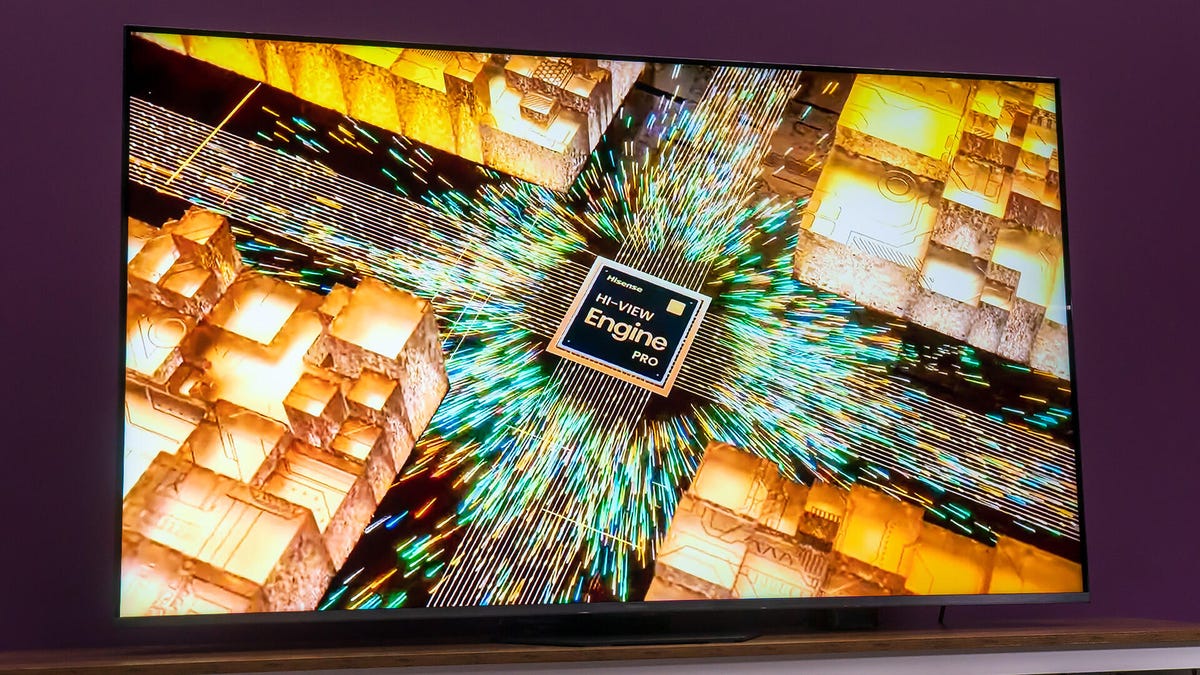
If you’ve been keeping even a casual eye on the tech world lately, you probably saw the news: the 65-inch Hisense U8QG just crashed down to a pretty mind-blowing price of $860 during the Presidents’ Day sales. Now, if you’ve been tracking the TV market over the last few years, you’ll know that the “sweet spot” for a high-end, no-compromises display usually sits somewhere around that $1,500 mark. But here we are in February 2026, and it feels like the traditional boundary between “budget” and “premium” hasn’t just blurred—it’s been completely steamrolled by brands like Hisense. It makes you wonder why anyone is still paying double for a name brand when the performance gap has narrowed to a sliver.
I clearly remember the days when buying a new TV was a game of “pick your poison.” You either went home with a budget panel that made every movie look like a muddy, washed-out painting, or you dropped the equivalent of a down payment on a used Honda for something decent. Thankfully, those days are dead and buried. The U8QG is a 2025 model that has spent the better part of a year proving that the “brand tax” is a relic of the past. It delivers a blindingly bright Mini-LED experience that holds its own against the giants. But as someone who stares at these screens for a living—literally, it’s my job—I have to ask a serious question: at what point do we stop calling these “budget” options and just admit they’ve become the new standard for everyone?
Why “ULED” is More Than Just Another Confusing Acronym
Walk into any big-box retailer today and you’re immediately assaulted by a wall of acronyms. You’ve got OLED, QLED, Mini-LED, and now Hisense is pushing their proprietary “ULED” branding. Honestly? It’s enough to make even a tech enthusiast want to give up and just go back to reading paperbacks. According to the official word from Hisense, ULED (or Ultra LED) isn’t just a single piece of hardware. Instead, it’s a massive collection of 20 different patents all working in tandem to optimize things like local dimming, color gamut, resolution, and motion. It sounds impressive on a spec sheet, but does it actually change the way you watch TV on a random Tuesday night?
Let’s be real for a second. When you’re sitting on your couch with a bowl of popcorn, you don’t care about “20 patents.” What you care about is whether the black bars at the top and bottom of your favorite movie actually look black, or if they’re a distracting, glowing shade of dark grey. In my time testing the U8QG, I found that the Mini-LED backlighting is doing the real heavy lifting here. It acts as the perfect bridge—the “Goldilocks” zone, if you will—between the infinite, perfect contrast you get with an OLED and the searing, room-filling brightness of a traditional LED. It’s the best of both worlds without the extreme price tag of the former.
It’s also worth noting how much the market has shifted. A 2025 Statista report recently highlighted that Hisense has clawed its way up to nearly 14% of the global TV market share. They’re currently trailing only the massive industry giants like Samsung. This kind of growth doesn’t happen by accident. Hisense has leaned incredibly hard into the “spec-sheet war,” packing in features that were exclusive to $3,000 televisions just three short years ago. When you see “Quantum Dot” and “Mini-LED” printed on a box that costs less than $900, it’s a clear signal that the high-end market is being disrupted from the bottom up. The gatekeepers are losing their grip, and the consumer is the one winning.
“The goal is to deliver the most accurate information and the most knowledgeable advice possible in order to help you make smarter buying decisions on tech gear.”
ZDNET Editorial Team
The Hardware Reality: Heavy Iron, Backlit Remotes, and Chiropractor Visits
One thing that often gets lost in the shuffle when we talk about pixel counts and refresh rates is the actual physical presence of the TV in your home. When we finally unboxed the 65-inch U8QG in the lab, the first thing that grabbed our attention wasn’t the screen at all—it was the stand. This thing is a total beast. It’s a heavy, solid iron plate that feels like it could survive a minor natural disaster without budging an inch. In an era where so many manufacturers are switching to flimsy, wide-set plastic feet just to save a few pennies on shipping costs, Hisense went in the opposite direction. They built something that feels substantial and premium.
It’s a smart move, honestly. If you have kids running around or a cat that thinks the top of the TV is its new favorite high-altitude perch, that stability is a huge deal. However, I have to give you a very fair warning: do not, under any circumstances, try to set this thing up by yourself. It’s heavy, it’s awkward, and you’re going to want a second pair of hands unless you’re looking to book a very expensive and very painful trip to the chiropractor. It’s a two-person job, period. But once it’s on the media console, it looks and feels like a piece of high-end machinery.
Then there’s the remote. I’ll admit it: I’m a total sucker for a remote that lights up the second you pick it up. It’s one of those small, “quality of life” features that you don’t think you need until you’re fumbling around in a pitch-black room trying to find the mute button before a commercial wakes up the whole house. The U8QG remote also features a “Find My Remote” function that’s baked right into the Google TV OS. As someone who routinely loses the remote in the mysterious, dark depths of the sofa cushions, this is a feature I’d honestly consider paying extra for—though here, it’s just part of the standard package. It’s these little touches that make the TV feel more expensive than it actually is.
The 165Hz Leap and the One Blatant Mistake Hisense Made
For the gamers reading this, the U8QG brought a pretty significant upgrade over its predecessor, the U8N. We saw the native refresh rate jump up to a staggering 165Hz. Now, let’s be clear: if you’re just using this TV to binge-watch Netflix or catch the local news, this extra speed isn’t going to do much for you. But if you’re planning on plugging in a high-end gaming PC or a next-gen console, that extra overhead makes a world of difference in terms of motion clarity and responsiveness. It’s smooth—ridiculously smooth.
However, this is where I have to throw a little cold water on all the hype. For some reason, the U8QG only comes with three HDMI ports. In 2026, that honestly feels like a massive missed opportunity. Think about it: a 2024 survey by the Consumer Technology Association showed that the average American household now owns upwards of 20 connected devices. If you have a soundbar, a PlayStation 5, and an Apple TV, you’re already out of ports. If you want to add a Nintendo Switch or a PC to the mix, you’re stuck playing “cable musical chairs” every time you want to switch games. For a TV that markets itself as a tech powerhouse, three ports is a frustrating bottleneck that I wish they’d addressed.
Is 165Hz actually noticeable compared to 144Hz?
For the vast majority of console gamers who are capped at 60Hz or 120Hz, the answer is no—you won’t see a difference. But for the hardcore PC gaming crowd using the TV as a massive monitor, that 165Hz ceiling provides much smoother frame pacing and a noticeable reduction in input lag during fast-paced, competitive titles. It’s a niche benefit, but a welcome one.
Why does Hisense use the term “ULED” instead of just QLED?
Think of ULED as a marketing umbrella. While the TV definitely uses Quantum Dots (which is what QLED refers to) and Mini-LEDs for the backlight, “ULED” is Hisense’s way of talking about their specific “secret sauce”—the proprietary algorithms they use to manage local dimming zones and motion processing to make the picture look its best.
Winning the War Against the Sun-Drenched Living Room
We’ve all been there. You’re trying to watch a dark, moody prestige drama or a gritty thriller, but the afternoon sun is streaming through the window and turning your expensive TV into a giant, useless mirror. This is where the U8QG really finds its stride—quite literally. One of the biggest inherent advantages of the Mini-LED and ULED combo is its sheer peak brightness. While OLED screens are undeniably beautiful in a dark room, they often struggle to compete with a sun-drenched living room. They just can’t get bright enough to overcome the glare.
During our extensive lab testing, the U8QG handled glare better than almost any other mid-range set we’ve ever put through its paces. But it’s not just about being “loud” and bright; it’s about having the “Ultra Wide Color Gamut” to keep those colors looking accurate even when the backlight is cranked up to the absolute max. It’s the difference between a picture that looks washed out and neon-tinted and one that actually looks vibrant and lifelike. It’s a massive relief for anyone who doesn’t live in a basement apartment.
Of course, we have to talk about the competition. Brands like TCL are doing incredible work, and even Sony’s mid-range sets are fighting tooth and nail for this same customer. But the reason I find myself recommending the Hisense more often lately isn’t just because of the raw specs—it’s the “value-to-frustration” ratio. The Google TV interface is snappy and responsive, the setup process is straightforward (even if the TV itself is heavy), and the price-to-performance ratio is, frankly, unbeatable as of early 2026. It just works, and it works well.
Final Thoughts: Is This Actually the Smartest Way to Spend Your Money?
So, at the end of the day, is the Hisense U8QG the “smartest” buy you can make right now? If you’re in the market for a 65-inch screen that punches way above its weight class, the answer is a resounding, “Absolutely.” At $860, you’re essentially getting a television that rivals the flagship models from just two years ago—sets that originally cost triple what you’re paying now. It’s a testament to how fast this technology is moving.
Yes, I have my gripes. I really wish it had a fourth HDMI port so I didn’t have to keep a switchbox behind my media console. And yes, the “ULED” branding is a bit of a marketing headache that requires a manual to explain. But when you finally sit down, dim the lights, and fire up a high-bitrate 4K HDR movie, all those technical complaints tend to just melt away into the background. We are living in a true golden age of display technology where “affordable” no longer means you have to settle for a compromised experience. The U8QG is living, breathing proof of that industry shift.
If you’re still holding onto an old 1080p set or an aging 4K LED from five or six years ago, this is the perfect moment to make the jump. The massive leap in contrast and brightness is something you’ll actually notice every single time you turn the TV on. And honestly, isn’t that exactly what a good tech upgrade should feel like? It should make your daily life just a little bit more enjoyable without emptying your savings account.
This article is sourced from various news outlets. Analysis and presentation represent our editorial perspective.