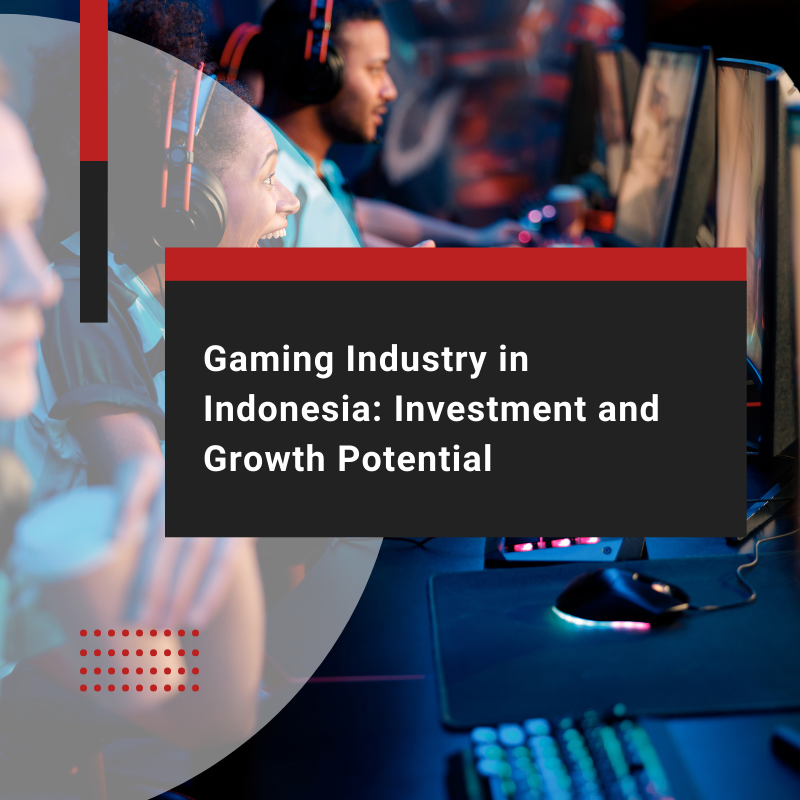
I was sitting in a crowded coffee shop in Senopati last week—you know the kind of place, where the aroma of overpriced Arabica competes with the frantic tapping of mechanical keyboards and the rhythmic swiping of smartphone screens. Looking around at the sea of focused faces, it really hit me: we aren’t just playing games anymore. We are living inside a digital ecosystem that has finally, after years of awkward growth spurts and a few painful stumbles, found its footing. According to the latest insights from Hybrid.co.id, the recent shift in investment patterns across the archipelago suggests we’ve officially moved past that bleak “esports winter” of the early 2020s. It feels like we’ve finally stepped into a more temperate, sustainable spring.
It’s a fascinating time to be watching the tech space in Southeast Asia. For a long time, the narrative was almost too simple: Indonesia has a massive population, those people have phones, therefore gaming will be huge. But as any seasoned observer will tell you, volume doesn’t always equal value. We spent years chasing “active user” metrics while largely ignoring the fact that the underlying business models were, frankly, a bit of a mess. But standing here in early 2026, the landscape looks fundamentally different. The frantic hype has been replaced by something much more boring, and yet much more exciting: actual, honest-to-god stability.
The $2.5 Billion Reality Check: Why We Can’t Call This a “Hobby” Anymore
Let’s talk numbers for a second, because they tell a story that the flashy tournament trailers often miss. There was a time when we all wondered if the gaming bubble would just burst once the world returned to “normal” after the mid-2020s shifts. Instead, the exact opposite happened. According to Statista, the Indonesian gaming market reached a staggering $2.5 billion in revenue by the end of 2025. And look, that’s not just pocket change from teenagers buying flashy skins for their avatars; it’s a legitimate, weight-bearing pillar of the national digital economy. It’s a real industry now, with real consequences.
But the real kicker isn’t just the sheer amount of money—it’s where that money is coming from. A 2025 Niko Partners report found that 70% of Southeast Asian gamers now engage with cross-platform titles. This is a massive departure from the “mobile-only” identity that defined Indonesia for nearly a decade. We’re seeing a convergence where the lines between your PC, your console, and your phone are blurring into a single, seamless experience. You start a quest on the bus and finish it on your 27-inch monitor at home. And that shift? It has forced local developers to seriously step up their game.
And honestly? It’s about time. We’ve finally moved away from the era where “local games” were just a novelty or something you played out of a patriotic duty to support the home team. Now, Indonesian studios are competing on a global stage, not because they’re Indonesian, but because they’re actually good. The maturity we’re seeing in the market is a direct result of this “sink or swim” reality that set in over the last two years. If you can’t compete with the best in the world, you don’t survive. It’s harsh, but it’s working.
“The Indonesian gaming industry has transitioned from a consumption-based market to a creation-based powerhouse, proving that localized content can have global resonance.”
— Industry Analyst, 2025 Digital Trends Summit
The Death of the “Mobile Only” Label (and Why Fiber Changed Everything)
I remember back in 2022 when people would scoff at the idea of a serious “PC gaming” revival in Indonesia. The logic was simple: hardware was too expensive and mobile data was the only way people stayed connected. But things changed. The infrastructure improved—fiber is no longer a luxury reserved for Jakarta elites but is becoming common in tier-two cities—and the hardware became more accessible through various financing models that simply didn’t exist five years ago. You can now get a decent rig without having to sell a kidney, and that has changed the math for everyone.
But there’s a deeper psychological shift at play here that’s worth mentioning. As the first generation of “mobile-native” gamers grew up, their tastes naturally evolved. They started looking for deeper, more immersive experiences that a five-minute round of a battle royale on a bumpy bus ride couldn’t provide. This led to a surge in demand for narrative-driven games and high-fidelity graphics. Hybrid.co.id notes that this “sophistication of the Indonesian gamer” has been the primary driver for the recent influx of venture capital into local AA studios. People want stories that mean something, not just a quick hit of dopamine.
It’s also about how we socialize. The “warung” culture hasn’t disappeared; it has just evolved into something more high-tech. You still see groups of friends hanging out for hours, but now they’re likely tethered to a high-speed hub, playing a game that requires actual strategy and long-term commitment. It’s a more intentional form of play. And that intentionality? That’s what makes the market so much more attractive to advertisers and investors alike. A player who is deeply invested in a world is a much better customer than someone just killing time in a waiting room.
When the Shopkeeper Remembers Your Name: How AI is Quietly Rebuilding the Local Scene
We can’t talk about 2026 without talking about Artificial Intelligence. A few years ago, AI was just a scary buzzword that made people nervous about their jobs. Today, in the Indonesian gaming scene, it’s the engine under the hood. Local developers are using generative AI not to replace artists, but to amplify them. It’s allowed small, scrappy teams in places like Bandung and Yogyakarta to create assets and localize content at a speed that was previously impossible. It’s like giving a small team the resources of a giant studio.
Think about the implications for a second. An Indonesian indie studio can now launch a game simultaneously in five different languages with culturally nuanced dialogue, thanks to localized LLMs (Large Language Models) that actually understand the difference between Jakarta slang and Surabaya dialects. This isn’t just about efficiency; it’s a democratization of the global market. The barrier to entry has been lowered, but the ceiling for quality has been raised. You can’t hide behind “we’re a small team” anymore.
And it’s not just on the development side. AI-driven NPCs (Non-Player Characters) are making games feel more alive than ever. I played a local RPG last month where the shopkeeper actually remembered that I’d been rude to him in a previous session and raised his prices out of spite. That kind of emergent gameplay was a total pipe dream in 2023. Now, it’s becoming the standard expectation. It makes me wonder: if the machines are getting this good at storytelling and reacting to our choices, what does that mean for our role as the players? We’re no longer just following a script; we’re co-authoring the experience.
The Great Correction: How the “Esports Winter” Actually Saved the Industry
For a while there, around 2023 and 2024, everyone was talking about the “Esports Winter” like it was the end of the world. Teams were folding, sponsors were pulling out, and the “burn cash for growth” strategy was failing spectacularly. Many predicted that esports in Indonesia would shrink back into a niche hobby for hardcore fans. But looking at the current state of the MPL and other regional leagues, those doomsday predictions were clearly off the mark. The industry didn’t die; it just grew up.
What actually happened was a much-needed correction. The industry stopped pretending that millions of “views” automatically translated to millions of dollars. Teams started focusing on lifestyle branding, merchandise, and actual community engagement. They became media companies rather than just groups of kids playing games in a gaming house. This pivot essentially saved the industry. According to internal data discussed by Hybrid.co.id, the average revenue per user (ARPU) in Indonesian esports has increased by 40% since 2024, primarily through diversified monetization. They aren’t just relying on one big sponsor anymore; they have a dozen different ways to keep the lights on.
But let’s be real: it wasn’t an easy transition. A lot of people lost their jobs, and some iconic names in the scene disappeared entirely. It was painful to watch. But the organizations that survived are leaner, meaner, and much more professional. They’ve moved away from the “influencer” model—where it was all about who had the most followers—and toward a “pro-athlete” model, with better training facilities, mental health support, and long-term career planning. It’s a grown-up version of the dream we all had a decade ago. It’s less about the drama and more about the performance.
More Than Just Pixels: The New Cultural Glue of the Archipelago
With all this talk of data, AI, and revenue streams, it’s easy to forget why we care about gaming in the first place. At its core, it’s about connection. In a country as vast and fragmented as Indonesia, gaming has become the ultimate bridge. It doesn’t matter if you’re in a high-rise in Jakarta or a small village in Papua; if you’re on the same server, you’re on equal footing. That’s a powerful thing in a world that often feels more divided than ever.
I’ve seen firsthand how gaming has created new career paths that didn’t even exist when I was in school. It’s not just about being a “pro player” anymore. We have professional shoutcasters, observers, community managers, game historians, and even specialized lawyers who handle digital asset disputes. The “gamer” label has effectively died because, well, everyone is a gamer now. It’s like saying you’re a “TV watcher”—it’s too broad to be a personality trait anymore. It’s just part of what we do.
But we also need to be careful as we move forward. As the industry becomes more corporate and more data-driven, there’s a real risk of losing that “indie” spirit that made the Indonesian scene so vibrant and weird in the first place. We need to ensure that the next generation of developers feels empowered to take risks and tell uniquely Indonesian stories—the kind that are a bit messy and experimental—rather than just chasing the latest global trend or an AI-optimized engagement loop. We don’t want to become a factory; we want to remain a creative hub.
Is the “Esports Winter” really over for good?
While the period of reckless, “burn-it-all” spending is definitely behind us, the industry is now in what I’d call a “sustainable spring.” Growth is slower than the wild days of 2019, but it’s much more consistent. Organizations are finally focusing on profitability rather than just visibility. It’s a much healthier environment for long-term investment because the floor isn’t going to fall out from under us tomorrow.
How has AI changed the job market for local game developers?
AI hasn’t replaced developers; it has shifted what they do on a daily basis. Entry-level tasks like basic asset generation or repetitive bug testing are now largely automated, which is actually a good thing. It allows junior devs to focus on high-level design and creative problem-solving much earlier in their careers. Today, being a developer is as much about being an “AI orchestrator” as it is about being a coder.
Looking ahead, the future of Indonesian gaming isn’t just about playing the games others make—it’s about leading the way. We’ve moved from being a market that others sell to, to a powerhouse that the rest of the world watches for inspiration. We aren’t just the consumers anymore; we’re the creators. And honestly? I can’t wait to see what happens when we hit the next level.
This article is sourced from various news outlets. Analysis and presentation represent our editorial perspective.