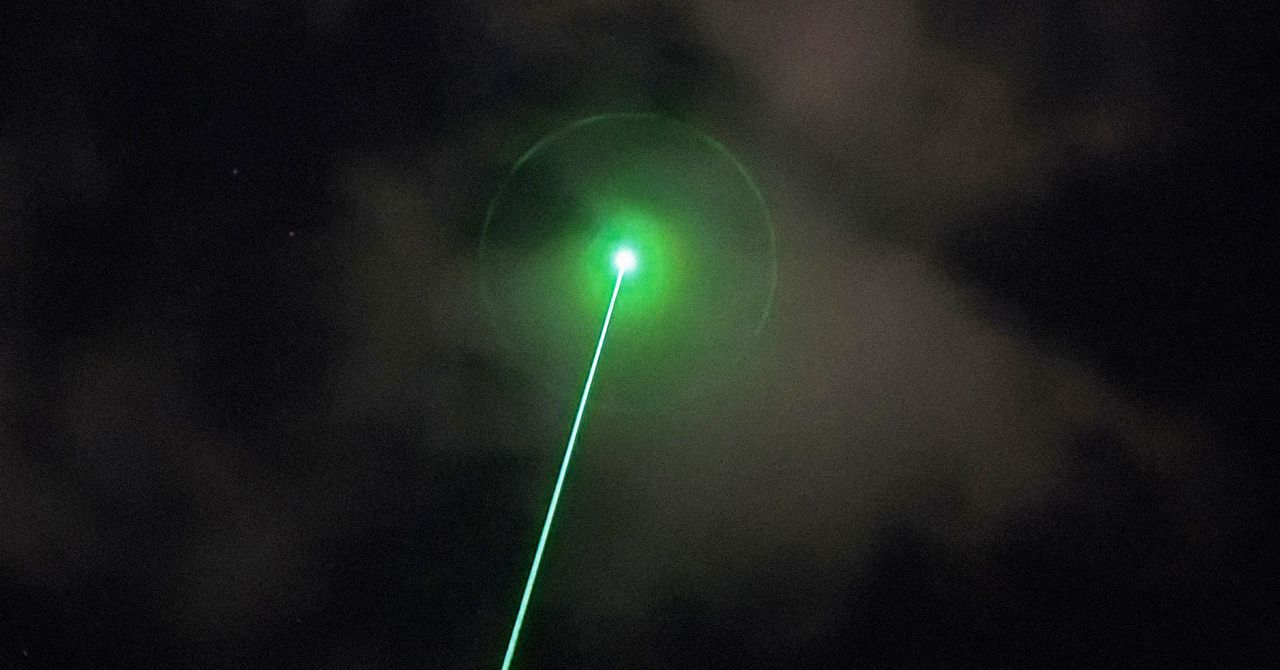
If you happened to be flying anywhere near El Paso or catching a connecting flight through New Mexico last week, you might have felt a peculiar vibe in the air. It wasn’t just the usual turbulence; it was a palpable sense of tension that had the entire aviation community on edge. According to a deep dive by WIRED, a sudden and frankly baffling airspace closure sent massive ripples through the world of pilots and air traffic controllers, leaving thousands of travelers grounded and wondering why a massive 10-day flight restriction was suddenly slapped onto the region. And then, in a move that only added to the confusion, the whole thing was lifted just eight hours later. As it turns out, we weren’t dealing with a cartel invasion or some sophisticated high-tech spy craft from a foreign power. The culprit? A party balloon. And the response? A high-powered laser beam provided by the Pentagon. You really can’t make this stuff up.
It honestly sounds like a plot point from a low-budget sci-fi flick from the 90s, but the implications of this mess are incredibly real and, frankly, a bit unsettling. What we’re witnessing here is a live-action collision between the rapid-fire, “move fast and break things” deployment of military technology and the slow, methodical, safety-obsessed world of civilian aviation. To be blunt, the communication between these two worlds looks like it’s still stuck in the dial-up era while the tech is moving at the speed of light. When Customs and Border Protection (CBP) starts zapping things out of the sky with “LOCUST” laser weapons without giving the FAA a proper heads-up, we’ve moved well past a “learning curve” and driven straight into a full-blown bureaucratic debacle. It’s the kind of situation that makes you wonder who, exactly, is holding the remote control.
When the FAA Slams the Brakes, Everyone Feels the Whiplash
The Federal Aviation Administration (FAA) is not an agency known for its sense of humor or its desire to cause chaos. They don’t just close down massive swaths of American airspace for the fun of it. Doing so is a logistical nightmare of the highest order—it costs airlines millions in fuel and lost time, ruins thousands of carefully planned travel itineraries, and creates a domino effect across the entire national airspace system. So, when they issued a Temporary Flight Restriction (TFR) for a staggering 10 days over the El Paso area, everyone in the industry assumed something major was going down. The initial narrative trickling out from the Trump administration was that these measures were necessary to protect against Mexican drug cartel drones. It’s a story that fits the current political climate perfectly, but as we’ve learned, the reality on the ground was a lot more disorganized and frantic than the official lines suggested.
The New York Times and several other major outlets eventually started digging and caught wind of what was actually happening behind the scenes: the FAA was terrified. But they weren’t scared of the drones themselves; they were scared of the defense against them. Specifically, senior officials were deeply worried about CBP personnel using a high-energy laser weapon provided by the Pentagon in a busy civilian corridor. There were some very serious, very unanswered questions about whether this weapon could accidentally blind a commercial pilot on final approach or interfere with the sensitive electronics of a passing jet. Faced with a lack of information, the FAA did the only thing it could do to ensure safety—it shut the door. According to Tarah Wheeler, the chief security officer at TPO Group, the FAA likely made the smartest move possible under the circumstances. If you’re a safety regulator and no one tells you how long a powerful laser will be active or what its range is, you have to assume the worst-case scenario. You don’t gamble with lives at 30,000 feet.
But here’s the real kicker that makes the whole situation feel like a dark comedy: after all that drama, all those grounded planes, and all that political posturing, the “threat” was reportedly just a stray party balloon. We are literally using million-dollar directed energy weapons to pop latex. While it’s certainly good to know that the technology actually works, the absolute lack of a “hey, we’re doing this” phone call between government agencies is the kind of thing that should keep us all up at night. It suggests a level of institutional siloing that we haven’t seen in years, and it’s happening right over our heads.
“The FAA likely did a very intelligent thing by issuing the Temporary Flight Restriction… The initial 10-day length of the TFR makes it seem like the FAA wasn’t provided with information on how long the laser would be in use.”
Tarah Wheeler, TPO Group Chief Security Officer
A 20-Kilowatt “Solution” Looking for a Problem
Let’s talk about the hardware for a second, because it’s straight out of a laboratory. The system in question is known as “LOCUST,” a 20-kilowatt laser weapon developed by BlueHalo. For those keeping track of industry mergers, BlueHalo was actually acquired by AeroVironment in late 2024, signaling a massive consolidation in the drone defense space. This isn’t just a one-off experiment; it’s part of a much broader, multi-billion-dollar push to get “Directed Energy” weapons into the field as fast as possible. Now, to be clear, these aren’t the giant, planet-destroying death rays you see in Star Wars. They are precision tools designed to focus an intense beam of light on a drone’s internal components until the plastic melts, the electronics fail, or the lithium battery explodes. In 2025, the Army’s Directed Energy Prototyping Office was working overtime to get these units into the hands of border personnel, and by last year, two sets of LOCUST units were delivered as part of the AMP-HEL project. It’s high-tech, it’s sleek, and it’s very, very powerful.
You can see why the government is so obsessed with this tech. According to a 2025 report from Drone Industry Insights, the global drone market has ballooned to over $43 billion. With that kind of growth comes a massive increase in cheap, weaponized, or just plain nosy eyes in the sky. For the military and border security, lasers are seen as “game-changers” because they solve the “magazine depth” problem. Unlike traditional missiles or anti-aircraft guns, lasers don’t run out of ammo—as long as you have a generator or a battery, you have a “bullet.” They’re also incredibly cheap per shot. Firing a million-dollar missile at a $500 quadcopter bought off Amazon is a losing game of math. A laser shot costs pennies in electricity. But there’s a catch: lasers don’t just stop when they hit the target. If you miss, or if the beam reflects, that light keeps traveling until it hits something else or eventually dissipates. That is a terrifying thought when you realize that “something else” could be a Boeing 737 filled with families.
The Army has been testing these systems in controlled environments like the White Sands Missile Range for years. But the El Paso incident is a perfect illustration of what happens when you take that tech out of the lab and drop it into a complex, high-traffic civilian corridor. It’s one thing to zap a drone in the middle of a restricted desert range where you know every inch of the sky is clear; it’s an entirely different beast to do it near an international airport where a plane is taking off or landing every few minutes. The margin for error isn’t just slim—it’s non-existent.
Finger-Pointing and the Rise of the “Department of War”
One of the weirdest and most frustrating parts of this whole story is the immediate finger-pointing that started as soon as the news broke. A White House official reportedly told The Hill that the FAA administrator basically went rogue, closing the airspace without coordinating with the White House, the Pentagon, or the Department of Homeland Security (DHS). It was painted as an overreaction by a nervous bureaucrat. But then, in the very next breath, that same official claimed that the “Department of War”—which is the recently rebranded and much more aggressive moniker for the defense apparatus—and the Department of Transportation had been working together on these protocols for months. So, which is it? Were they in sync and following a plan, or was this a “spontaneous action” by a rogue agency? You can’t have it both ways, and the contradiction smells like a classic cover-up for a massive communication breakdown.
The official government statements claimed that at no point were civilian aircraft in any actual danger. But if that were truly the case, why on earth did the FAA feel the need to issue a 10-day lockdown? This highlights a massive, growing rift in how different parts of our government define “safety.” To the Department of War, safety means neutralising a potential cartel threat or a surveillance drone immediately, by any means necessary. To the FAA, safety means ensuring a pilot isn’t momentarily blinded by a reflected laser beam while they’re trying to navigate a final approach in bad weather. These are two fundamentally different goals, and right now, they are clashing at 200 knots in the skies over Texas. It’s a clash of cultures that hasn’t been resolved, and El Paso was just the first real explosion of that friction.
And we really need to talk about that “Department of War” phrasing. It’s not just a name change; it’s a signal. It suggests a shift toward a much more aggressive, tactical posture on domestic soil. When you have local lawmakers like Texas Representative Veronica Escobar and New Mexico Senator Martin Heinrich demanding classified briefings on the incident, you know the “failed communication” wasn’t just a one-time missed email or a dropped call. It’s a symptom of a systemic breakdown. If the people representing the region don’t know what’s being fired into their skies, how can the public be expected to feel safe? It feels like we’re moving into a period where domestic security is starting to look a lot more like a battlefield, and the rules of engagement haven’t been shared with the rest of us.
Cockpit Anxiety: Why Pilots Aren’t Buying the “Safety First” Narrative
I’ve had the chance to speak with a couple of commercial pilots about this over the last few days. They preferred to remain anonymous—mostly because they have no interest in getting on the wrong side of their airlines or the FAA—but their take was pretty unanimous: they’re spooked. One veteran pilot told me quite bluntly, “Look, I do not want to be stuck in a holding pattern for 10 days because of a bureaucratic fight, and I definitely don’t want to get hit by a laser. There is currently no procedure for that in my flight manual.” And he’s absolutely right. There isn’t. We have incredibly detailed procedures for everything from engine failures and bird strikes to dealing with an unruly passenger in seat 14B. But we don’t have a standard “in-flight laser defense avoidance” protocol for civilian crews. We are flying blind into this new reality.
A 2024 FAA study found that unauthorized drone sightings in restricted airspace have increased by 30% year-over-year. That’s a staggering number, and it means the need for some kind of defense is very real and very urgent. But the method of that defense shouldn’t be more dangerous than the threat it’s trying to stop. We’ve all heard stories about idiots with low-power laser pointers in their backyards disorienting pilots. Now imagine a 20-kilowatt military-grade beam. Even a secondary reflection off a metallic surface or a cloud could cause permanent retinal damage or “flash blindness.” That’s the last thing you want to happen to a pilot who is responsible for the lives of 150 people on board. The pilots I’ve talked to aren’t anti-defense; they understand the world is changing. But they are very much anti-surprise. They want to know exactly where these things are, who has the authority to fire them, and where the “no-go” zones are—and they want to know it well before they ever step into the cockpit.
The Growing Pains of a Domestic Battleground
The El Paso debacle is really just a preview of what the next decade of domestic security is going to look like. We are entering an era where the “front line” isn’t some distant shore; it’s everywhere. Drones are cheap, they’re ubiquitous, and they are increasingly being used by criminal organizations for everything from high-level surveillance to drug smuggling. The government has to respond to that reality. But responding in a vacuum, without coordinating with the agencies that keep our skies safe, is a recipe for a catastrophe. This incident feels like the “growing pains” of a new era of electronic warfare, but the stakes are far too high for us to be this messy. We’re not talking about a software glitch; we’re talking about tons of metal flying over populated areas.
What we’re seeing here is a glaring lack of “jointness” between civilian and military agencies. It’s hauntingly reminiscent of the early days of post-9/11 security where different agencies had different pieces of the puzzle but refused to share the data. Now, instead of data, they aren’t sharing the “keys” to the airspace. If we’re going to use directed energy weapons in populated areas, we need a unified command structure that includes the FAA as a primary stakeholder, not as an afterthought that gets notified only when the lasers start firing. We need a system where the “Department of War” and the “Department of Transportation” aren’t just in the same room, but are actually speaking the same language.
Is the LOCUST laser actually dangerous to people on the ground?
Technically, these systems are designed to be highly directional, meaning the energy is focused into a very tight beam. However, the real risk isn’t a direct hit on a person on the sidewalk; it’s the “stray” beams or reflections. While the 20-kilowatt beam is aimed at a target in the sky, that energy doesn’t just vanish if it misses. It can travel for miles, and if it hits a reflective surface—like the wing of a plane or even certain types of glass—it can bounce in unpredictable directions. That’s exactly why the FAA is so incredibly concerned about its use in busy flight paths.
How on earth did they mistake a party balloon for a drone?
It sounds ridiculous, but drones and balloons can look remarkably similar on certain types of radar or through long-distance optical sensors, especially if the wind is light and the object is moving slowly. Modern sensors are great, but they aren’t perfect. This “identification failure” is a massive, ongoing issue in the drone defense world. A sensor might detect an object’s presence, but it can’t always immediately verify what it is. In a high-tension environment like the border, the “shoot first, ask questions later” mentality can lead to zapping a “Happy Birthday” balloon instead of a cartel spy craft.
Should we expect to see more of these sudden airspace closures?
Honestly? Almost certainly. As the Department of War and CBP continue to deploy more anti-drone technology along the borders and near critical infrastructure, we can expect more of this friction. Until a standardized, automated communication protocol is established between the military and the FAA, these kinds of “surprises” are going to keep happening. The tech is being deployed faster than the policy is being written, and that’s always a recipe for more closures and more confusion.
Where Do We Go From Here? (Besides Avoiding El Paso)
The meeting that was already on the books between the FAA and the Pentagon for later this month has suddenly become the most important meeting in the world of aviation. They have to sit down and hammer out some real “Rules of Engagement” for domestic lasers. You simply cannot have CBP agents zapping balloons whenever they feel like it if there’s a Southwest flight three miles away and descending. There has to be a clear, ironclad process for how and when these weapons are used, and that process has to be transparent to the people flying the planes.
We also desperately need better technology for identification. If we’re going to be firing 20kW lasers in American airspace, we should probably be 100% sure we’re hitting a legitimate threat and not a stray balloon from a kid’s party. According to a 2025 report by MarketsandMarkets, the anti-drone market reached nearly $5 billion last year. The money is clearly there to build better, more accurate sensors. We just need the political will to integrate them properly and ensure that all agencies are using the same high-quality data. It’s not just about having the biggest laser; it’s about having the smartest one.
For now, the El Paso incident serves as a loud, chaotic wake-up call. We’ve managed to develop the weapons of the future, but we’re still stuck with the communication habits of the past. Let’s hope that the next time someone decides to fire a laser, everyone—from the White House and the Department of War to the guy sitting in the cockpit of a passenger jet—is on the exact same page. If they aren’t, this “drone defense mess” is only going to get messier, and eventually, we might not be so lucky as to only be popping balloons.
This article is sourced from various news outlets and industry reports. The analysis and presentation represent our editorial perspective on the intersection of technology and public safety.