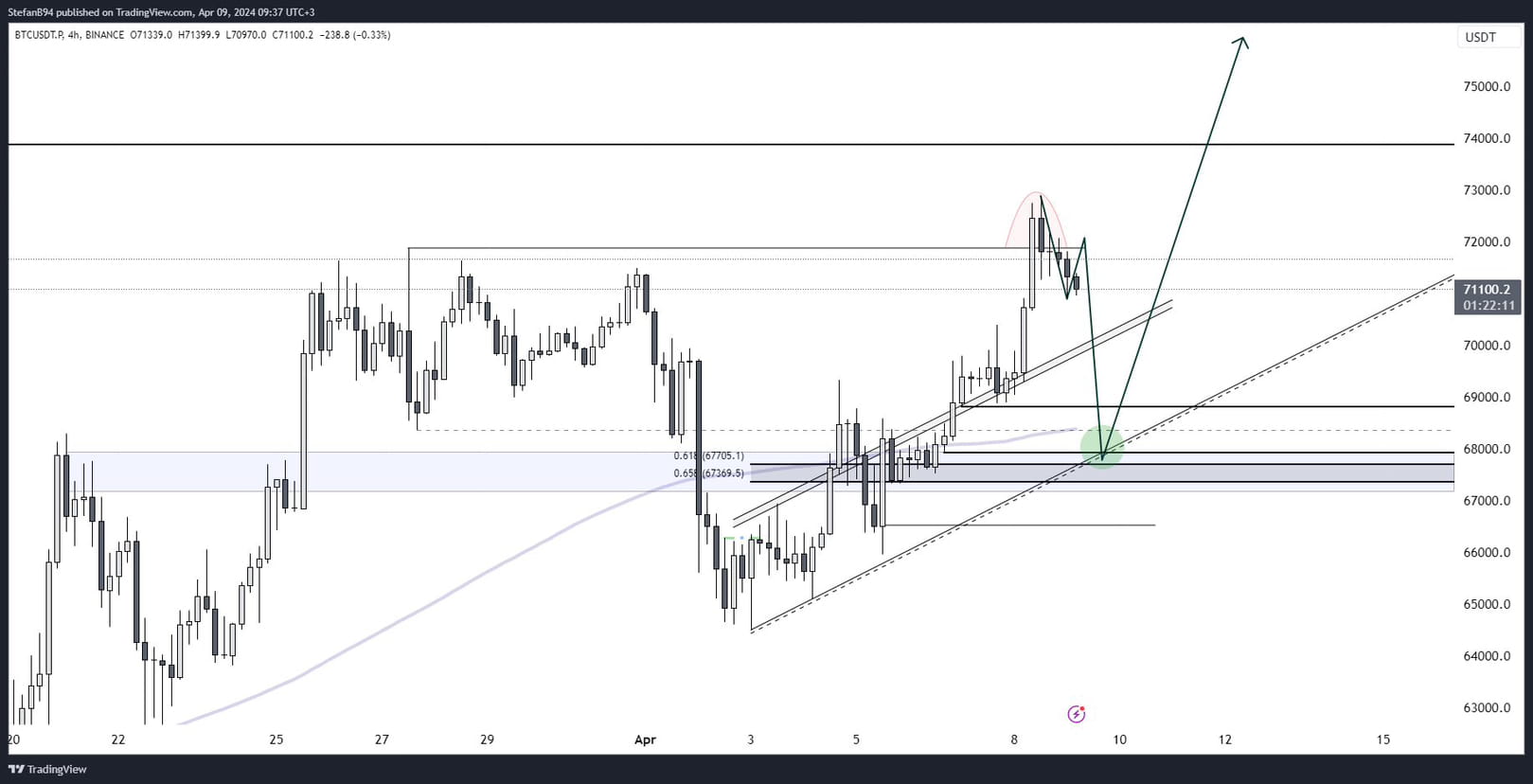
If you’ve been white-knuckling your phone while staring at the Bitcoin charts over the last 24 hours, you probably feel like you’ve just stepped off a rollercoaster that didn’t quite have the safety bar locked in. It has been, to put it mildly, a brutal ride. According to the latest data from Telset, the market has been nothing short of a bloodbath lately. If your portfolio is looking significantly more “crimson” than “emerald” right now, believe me, you aren’t alone in that sinking feeling. It’s wild to think that just a few months ago, back in October 2025, we were all basically popping champagne in the streets as the king of crypto touched that staggering all-time high of $126,210. It felt like the moon wasn’t just a meme anymore—it was within reach. But fast forward to yesterday, February 16, 2026, and we’re suddenly hovering around the $68,000 mark. That’s nearly a 50% haircut from the peak. For a lot of people, this isn’t just a dip; it’s a massive wake-up call that the “easy money” era of 2025 has officially transitioned into something much more calculated, strategic, and—let’s be honest—dangerous for the unprepared.
I’ve seen plenty of these cycles over the years, but I have to say, this one feels different. It’s faster, it’s more aggressive, and the sheer amount of leverage baked into the system right now is acting like high-octane gasoline on a bonfire. Take February 6, for example. When Bitcoin dipped toward that $60,000 level, we saw a staggering $4.85 billion in liquidations across the board. That’s not just an abstract number on a spreadsheet; that represents thousands of real traders getting absolutely wiped out because they didn’t have a concrete plan for the downside. When the Fear & Greed Index hits a 6—the kind of “extreme fear” we haven’t witnessed since the early days of the year—it’s usually the exact moment where the professionals stop panicking and start looking for tools to hedge their bets. Meanwhile, everyone else is busy panic-selling their bags at the bottom. It’s a classic tale, but the stakes have never been higher.
From Blind Faith to Battle Plans: Why the “HODL and Hope” Strategy is Dying
There was a time, not too long ago, when the average crypto enthusiast in Indonesia was mostly a “HODLer”—someone who bought a coin, moved it to a wallet, and basically prayed to the market gods that it would go up. But as the market matures, the strategies have to evolve too. We’re finally seeing a shift away from blind faith and a move toward sophisticated, proactive risk management. This is exactly where platforms like Pintu Futures are starting to fundamentally change the narrative. Instead of just being another place to click “buy” and “sell,” it’s becoming a toolkit for survival in a volatile landscape. When the market is “bleeding,” you don’t necessarily have to run for the exits and cash out into fiat; you just have to change how you play the game. Trading derivatives isn’t just about chasing those elusive 100x gains that you see on social media; in a market like this, it’s often about the much more important task of protecting the wealth you’ve already managed to build.
I think the most fascinating shift we’ve seen so far in 2026 is how local traders are getting smarter about using these tools to “short” the market or hedge their existing spot positions. Think about it: if you’re holding a significant amount of Bitcoin and you’re genuinely worried about a further drop toward the $50k level, you don’t actually have to sell your precious coins and lose your long-term position. Instead, you can use a futures contract to offset that potential loss. It’s a professional, institutional-grade mindset that’s finally trickling down to the retail level, and honestly? It’s about time. According to a 2025 Statista report, Indonesia saw a massive 38% increase in active crypto users, and a huge chunk of those people are now looking for more than just a simple “buy” button. They want control, and they want options when things go south.
“Trading derivatives is not just a test of nerves to chase profit. The core essence of a successful trader is the ability to control and anticipate risk.”
Iskandar Mohammad, Head of Product Marketing at PINTU
The Silent Portfolio Killers and the Tech That Actually Stops the Bleeding
Let’s have a real conversation about slippage for a second. It’s the silent killer of crypto portfolios that nobody talks about enough until it’s too late. You think you’re closing out your position at $68,000, but because the market is moving at the speed of light, your order actually executes at $67,500. It might not seem like much in the moment, but over time, those “small” gaps eat your capital alive. One of the more impressive features Pintu has rolled out lately is their “Price Protection” mechanism. Think of it as a sort of insurance policy for your execution price. You can set a specific tolerance—say 0.2% or 1%—and if the market starts moving too wildly beyond that threshold, the trade doesn’t just execute anyway and leave you hanging in the wind. In a market where a $5,000 candle can materialize in ten minutes, this kind of feature isn’t just a luxury; it’s a basic necessity for anyone who values their balance.
And then there’s the “Initial Margin (IM) Buffer,” which is a personal favorite of mine. We’ve all been there: you have a solid long position, and then a “scam wick” drops the price for all of three seconds just to hit your liquidation point, only for the price to bounce right back up to where it started. You’re out of the trade, your money is gone, but the price is exactly where you predicted it would be. It’s enough to make you want to throw your laptop out the window. By adding a margin buffer, you’re essentially giving your position a little more room to breathe. It’s the difference between being “right but liquidated” and actually staying in the trade long enough to see the recovery happen. It’s a clever bit of engineering that specifically addresses the unique, heart-stopping volatility of the crypto space.
Walking the Tightrope: How to Use Leverage Without Setting Your Wallet on Fire
Leverage is, without a doubt, a hell of a drug. Pintu allows for up to 25x, which is more than enough for most sane people. But the real “alpha” here isn’t actually the high end of that scale; it’s the flexibility. The fact that you can manually adjust it down to 1x or 2x means you can use futures for low-risk hedging rather than just high-stakes gambling. I’ve always argued that the problem in this industry isn’t leverage itself—it’s the total lack of education surrounding it. If you’re jumping into a trade at 25x without a Stop Loss in place, you aren’t “trading” in any meaningful sense of the word; you’re just playing a very expensive game of roulette and hoping for the best.
But that’s where the “Take Profit” and “Stop Loss” (TP/SL) automation comes into play. Let’s be real: the biggest enemy any trader faces isn’t the whales or the exchanges—it’s their own brain. We get incredibly greedy when we’re winning and stubbornly delusional when we’re losing. Automating these exits takes the messy human emotion entirely out of the equation. You set your levels, you walk away, and you let the code do the heavy lifting. It sounds simple on paper, but in a market where the Fear & Greed index is sitting at a 6, your emotions are your absolute worst advisors. You have to learn to trust the math and the plan you made when you were calm, not your gut feeling in the middle of a dump.
The “Boring” Stuff is Finally Cool: Why Regulation is the Ultimate Safety Net in 2026
I know, I know. Nobody gets particularly excited about reading about the OJK (Otoritas Jasa Keuangan) or the intricacies of the CFX bursa. It’s not exactly “to the moon” content. But in a post-2022/2023 world, where we watched global giants collapse into dust overnight, knowing that PT Pintu Kemana Saja is actually regulated as a Pedagang Aset Keuangan Digital (PAKD) actually matters quite a bit. It means there’s a real paper trail. It means your funds aren’t being funneled off to fund some CEO’s private yacht or a high-stakes bet on another platform. In 2026, “safety” has become a top-tier feature. We’ve finally moved past that “Wild West” phase where we didn’t care about the plumbing as long as the price was going up. Now, we want the peace of mind that comes with knowing if we actually make a profit, we can actually withdraw it without a headache.
Is Pintu Futures suitable for beginners?
That’s a bit of a loaded question. While futures are inherently higher risk than standard “spot” trading, Pintu’s heavy focus on education through their Pintu Academy and their very simplified UI makes it much more accessible than the confusing dashboards you see elsewhere. However, my advice stays the same: beginners should always start with very low leverage (we’re talking 1x-2x) and use the Stop Loss feature religiously until they truly understand the mechanics of the market.
What is the “IM Buffer” exactly?
Think of the Initial Margin Buffer as a safety cushion. It’s a feature that adds an extra layer of protection to your position specifically to prevent those annoying, premature liquidations caused by sudden, short-lived price spikes—often called “wicks.” It essentially gives your trade more “room” to stay active during moments of extreme, temporary volatility so you don’t get kicked out of a good trade by a three-second anomaly.
Why did the market drop so much from the October 2025 ATH?
Markets don’t go up in a straight line forever, as much as we wish they did. After Bitcoin hit that $126k milestone, a lot of institutional investors decided it was time to take profits, which is perfectly natural. Combine that with a series of macroeconomic shifts that led to a global liquidity crunch, and you have the perfect recipe for a correction. While $68k feels low compared to the peak, many seasoned analysts view this as a necessary cooling-off period that’s actually healthy for the market’s long-term survival.
The Survivalist’s Mindset: Playing the Long Game
Look, the reality is that the crypto market in early 2026 is a completely different beast than it was even a year ago. The volatility is still very much there—it’s part of the DNA of this asset class—but the tools we have at our disposal to fight back are getting exponentially better. Whether you’re using a “Stop Order” to catch a breakout before it leaves you behind, or utilizing “Adjustable Leverage” to hedge your long-term Bitcoin holdings, the goal remains exactly the same: stay in the game. You simply can’t win if you allow yourself to get wiped out by a single bad candle on a Tuesday afternoon.
As we continue to navigate this “bloody” February, just remember that the most successful traders in the long run aren’t necessarily the ones who made the most money during the massive pumps; they’re the ones who managed to keep their capital intact during the dumps. Use the tools available to you. Set your stops. And for heaven’s sake, please don’t trade with money you actually need for rent or groceries. The market will always be there tomorrow, but your capital might not be if you don’t treat it with the respect it deserves. Stay safe out there.
This article is sourced from various news outlets. Analysis and presentation represent our editorial perspective.