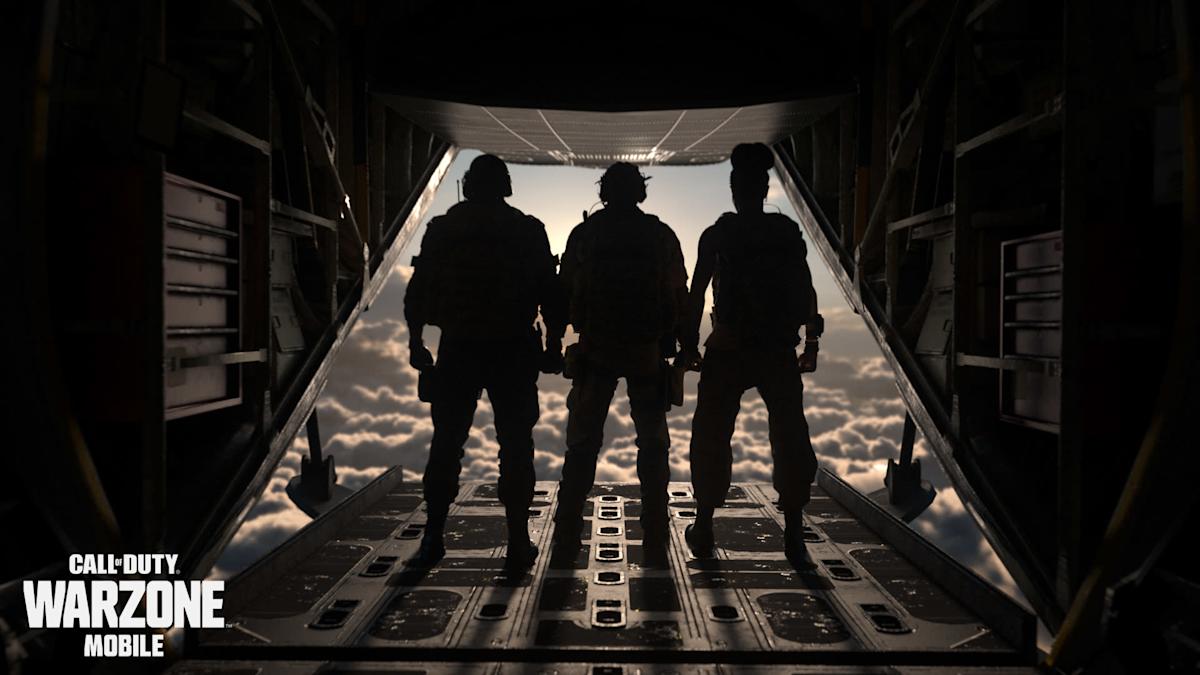
Let’s be honest with ourselves for a second: did anyone actually think this was going to end differently? If you’ve been keeping even a casual eye on the mobile gaming landscape over the past year, the news that Call of Duty: Warzone Mobile is officially being sent to the digital scrapyard shouldn’t exactly come as a shock to the system. It’s more of a “finally, they said it” moment than a genuine surprise. According to the folks over at Engadget—who usually have their finger on the pulse of every gadget and gaming shift—Activision has finally stopped the bleeding and set a hard date: April 17, 2026. That’s the day the servers go cold, the parachutes stop opening, and the dream of having a fully-realized Verdansk in your pocket officially fades into the background noise of gaming history.
Let’s be real: The writing has been on the digital wall for a long, long time
It’s a bit of a bittersweet pill to swallow for the community, isn’t it? We’re currently navigating through mid-February, which gives the remaining player base exactly two months to figure out what to do with their leftover COD Points and squeeze in those final, frantic matches. But if we’re being completely transparent here—and I think we should be—the game has basically been a “ghost ship” since May 2025. That was the turning point where the studio essentially waved the white flag, delisting the title from stores and cutting off the life support of new content. It’s been a slow, quiet, and somewhat painful march toward this inevitable finish line. Honestly, it’s a fascinating, if cautionary, case study in what happens when even the biggest entertainment brands on the planet try to force a square peg into a round hole.
I vividly remember the absolute fever pitch of hype when this project was first unveiled to the world. The promise was nothing short of revolutionary: “true” cross-progression and a “unified” Call of Duty ecosystem that bridged the gap between your high-end PC, your living room console, and the smartphone in your pocket. We were sold on the vision of leveling up a Battle Pass during a boring commute or a lunch break and then seeing those rewards waiting for us on the PS5 when we got home. It felt like the future of the medium. But as we’ve learned the hard through several overheating batteries and frame-rate stutters, the future was just a little too heavy and a lot too hot for our current handheld hardware to handle gracefully.
The problem wasn’t a lack of effort or a lack of passion from the developers. It was the fundamental physics of the thing. Trying to run a console-grade engine on a device meant for scrolling through social media was always going to be an uphill battle. And while the ambition was admirable, the execution eventually hit a wall that no amount of patching could truly fix. It’s a reminder that sometimes, the most impressive technical feats aren’t necessarily the ones that make for the best gaming experiences.
Why trying to cram a console engine into a smartphone was a technical gamble that didn’t pay off
When you look under the hood, the core issue with Warzone Mobile wasn’t that it lacked ambition—it was that it had far too much of it for its own good. Unlike its older, more successful sibling, Call of Duty: Mobile—which was built from the ground up specifically for mobile architecture by the experts at TiMi Studio Group—Warzone Mobile tried something much riskier. It attempted to port the actual IW engine, the literal powerhouse technology that runs the console and PC versions of the game, directly onto iOS and Android. From a purely engineering standpoint, it was a marvel. Seeing those assets on a phone screen was incredible. But for the average person just trying to play a game? It was a technical disaster waiting to happen.
Unless you were rocking the absolute latest, most expensive flagship device on the market, the game often ran like a choppy slideshow. And even if you were fortunate enough to have a top-tier phone, the experience was… well, intense. After about ten minutes of gameplay, it usually felt like you were holding a literal brick of glowing charcoal. There’s a certain level of anxiety that comes with feeling your $1,000 smartphone reach temperatures that could probably fry an egg. A 2024 Statista report highlighted a crucial reality: while mobile gaming makes up nearly half of the global games market revenue, player retention is almost entirely driven by accessibility. If your game requires a high-end handset just to maintain a stable 30 frames per second, you’ve already alienated about 90% of your potential global audience. You can’t build a sustainable community on the backs of only the most elite hardware owners.
And then there’s the audience itself. The mobile gaming crowd is a different beast entirely compared to the hardcore PC or console demographic. Mobile is about the “pick up and play” factor. It’s about quick sessions, controls that don’t feel like a chore, and above all else, rock-solid stability. Warzone Mobile struggled to hit any of those marks consistently. By the time the dev teams started making real headway on optimization issues, the ship had already sailed. Most players had long since drifted back to the more reliable, more polished, and frankly more fun experience of Call of Duty: Mobile. It’s nearly impossible to compete with a game that runs perfectly on a three-year-old mid-range Android phone when your “next-gen” alternative is struggling to stay open for more than two matches without crashing.
“The challenge for high-end mobile ports is rarely the brand recognition; it’s the friction between the software’s demands and the hardware’s thermal limits. Players will forgive a lot, but they won’t forgive a game that turns their phone into a space heater.”
— Gaming Industry Analyst, 2025 Report
The “Two CoD” dilemma: Why Activision’s biggest competitor was actually itself
In a weird way, Activision ended up becoming its own worst enemy in the mobile space. By trying to maintain two separate, massive mobile titles under the same brand umbrella, they essentially forced their own players to pick a side. It was a house divided. On one side, you had Call of Duty: Mobile, which is basically a “greatest hits” collection of the best maps, weapons, and modes in the franchise’s history, optimized to run on almost anything with a screen. On the other side, you had Warzone Mobile, which promised “authenticity” but delivered a heavily compromised version of a game that people could already play much better on their actual PCs or consoles. It was a tough sell from day one.
If we look at a 2023 Newzoo report, there’s a clear trend: players are increasingly gravitating toward “forever games.” We’re talking about titles like Roblox, Fortnite, or the original CoD: Mobile. People don’t want to migrate to a new iteration within the same franchise unless there’s a massive, undeniable reason to do so. And frankly? There just wasn’t enough “new” in Warzone Mobile to justify the headache of switching. Sure, the cross-progression was a cool hook for the die-hards, but it wasn’t a strong enough tether to sustain a player base that was already deeply invested in the skins, ranks, and social circles they had spent years building in the other mobile app. Why start over—or deal with performance issues—when the game you already like works just fine?
Then there’s the cold, hard reality of the business side. Maintaining a live-service battle royale on this scale is an incredibly expensive endeavor. It requires constant updates, server maintenance, anti-cheat measures, and marketing. When the executives at Activision sat down and crunched the numbers in early 2025, the math simply didn’t work. Why would you continue to split your development talent and your massive marketing budget between two competing games when one is a global juggernaut and the other is barely keeping its head above water? The decision to pull the plug was a business move, yes, but from a strategic perspective, it was the only logical path forward. It’s about focusing resources where they actually matter.
The death of the “console port” and what’s next for the thumb-stick shooters
The sunsetting of Warzone Mobile feels like the definitive end of a specific era—the “console-quality port” era. For a few years there, the industry was obsessed with the idea that we could just shrink down massive PC games and they would thrive on mobile. We’re now seeing a hard pivot back toward games that are designed specifically for the platform they live on. Developers are finally internalizing the fact that “mobile-first” isn’t just some corporate buzzword you throw into a pitch deck; it’s a fundamental necessity for survival. You can’t just take a game designed for a 60-inch TV and a controller and expect it to work for someone playing on a bus during their fifteen-minute commute.
But if you’re a fan of mobile shooters, don’t go selling your phone just yet. The itch for a solid military shooter isn’t going anywhere. Activision was very clear in their announcement: they are doubling down, big time, on Call of Duty: Mobile. They’ve promised a roadmap filled with “meaningful seasonal content” and updates for the foreseeable future. In a lot of ways, this shutdown is actually a massive win for the CoD: Mobile community. It means more focus, more developers, and a much more unified vision for what the franchise should look like on handheld devices. And for those who absolutely cannot live without their Warzone fix, the game is still right there, free-to-play on Xbox, PlayStation, and PC. It’s just the “on-the-go” version that’s hitting the showers for good.
I have a feeling we’re going to see a few more of these “high-fidelity” experiments quietly vanish over the next year or so. The market has spoken loud and clear: players want games that actually play well, not just games that look like they belong on a 4K monitor. There’s a bit of irony in the fact that the more “advanced” game is the one being retired, while the older, more “basic” version continues to be a cash cow. But that’s the beauty of the mobile market—it’s the ultimate meritocracy of playability. If it isn’t fun and it doesn’t run, it doesn’t stay.
Will I lose all the stuff I bought when the servers close?
This is the big question, right? Generally speaking, if you bought items specifically within the Warzone Mobile ecosystem that weren’t part of the shared cross-progression system with the console and PC versions, those will likely be lost when the lights go out. However, there is a silver lining: any skins, weapon blueprints, or operators you earned through the unified Battle Pass should still be tied to your Call of Duty account. That means you can still flex those items in the main Warzone and Modern Warfare titles on PC and console.
Can I still play Call of Duty on my phone after April 17?
Yes, absolutely. Don’t worry—Call of Duty: Mobile isn’t going anywhere. If anything, it’s going to get even better now that Activision is shifting its full attention back to it. That game already has its own dedicated Battle Royale mode, dozens of classic maps, and a massive community that isn’t going anywhere. It’s the safe harbor for mobile fans.
Is there any way to sneak into Warzone on mobile after the shutdown?
Short answer: No. Once those servers go offline on April 17, 2026, the app will basically become a very large icon on your home screen that does nothing. It won’t function natively at all. If you’re truly desperate for a mobile-ish experience, your best bet is looking into a handheld PC like the Steam Deck, the ROG Ally, or the Lenovo Legion Go. Those devices can run the full, uncompromised version of Warzone while you’re sitting on your couch or traveling.
So long, Verdansk: Lessons learned from a beautiful, burning-hot experiment
At the end of the day, Warzone Mobile will probably be remembered as a bold, if deeply flawed, attempt to bridge the gap between platforms. It gave us a genuine glimpse of what’s possible when you push mobile hardware to its absolute breaking point—even if that breaking point turned out to be a little too close for comfort. For the dedicated few who stuck with the game through the lag, the frame drops, and the literal heat, these next two months are a time to say a proper goodbye to a version of Verdansk that lived in our pockets for a while.
It’s a healthy reminder that in the fast-moving world of tech, being the “most advanced” isn’t always the same thing as being the “best.” Sometimes, the better experience is the one that just works, every single time you tap the icon. So, let’s pour one out for Warzone Mobile. It tried to give us the whole world in the palm of our hands, but honestly? We were happy enough with a game that didn’t make our thumbs smell like burnt silicon after a single match. It was a wild ride while it lasted.
As we look toward the rest of 2026, it’s clear that the mobile gaming landscape is finally growing up. We’re moving past the era of “console graphics on your phone” gimmicks and toward a more thoughtful, platform-specific approach to how games are built and played. And if you ask me? I think we’re all going to be a lot better off for it in the long run. The games might not look like a Hollywood blockbuster every time, but at least they’ll run at a stable 60 FPS without melting our cases.
This article is sourced from various news outlets. Analysis and presentation represent our editorial perspective.