Do you remember when Sony first pulled the curtain back on the original LinkBuds? You know the ones—the earbuds with the actual, literal hole right in the middle. They were undeniably weird, they were incredibly brave, and honestly, they were exactly the kind of “what if” engineering project we’ve come to expect from the same giant that gave us the Walkman and changed music forever. According to WIRED, those donut-shaped drivers weren’t just a gimmick; they were among the first truly viable open earbuds to hit the market. They served as a bold proof of concept that eventually kicked off an entire movement in the audio world. But let’s fast forward to today, February 17, 2026. The open-ear market isn’t just a quirky little niche anymore—it’s a crowded, noisy, and frankly cutthroat battlefield where everyone is fighting for a piece of your ear real estate.
Sony’s latest attempt to reclaim the throne is the LinkBuds Clip. It’s been out for a bit now, and I have to admit, it’s a bit of a head-scratcher. Now, don’t get me wrong—they aren’t bad. In fact, they’re perfectly fine. But in this economy, “fine” is a pretty dangerous place to be when you’re asking people to drop $230 on a pair of headphones. We have officially moved past the era where simply being “open” was a cool enough trick to justify a premium price tag. In a world where you can snag a decent pair of open buds for the price of a fancy steak dinner, Sony is out here trying to sell us a five-course tasting menu that looks suspiciously like something we’ve already seen on a different menu.
The hard reality is that the LinkBuds Clip feels less like a revolution and more like a defensive reaction. It feels like Sony looked at the massive success of brands like Soundcore and Shokz and said, “Yeah, we should probably be doing that too.” But here’s the thing: in the process of trying so hard to fit in with the current trends, they might have accidentally lost a bit of that original LinkBuds magic—the stuff that made us lean in and actually pay attention in the first place. And that’s a bit of a shame, isn’t it?
When did Sony start following the crowd?
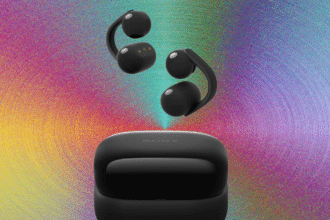
The very first thing you’re going to notice about the LinkBuds Clip is that they look… familiar. If you’ve spent any time at all browsing the Soundcore Aeroclip or any number of those budget-friendly “cuff” style buds on Amazon, you’re going to get a heavy dose of déjà vu. This is a massive departure from the “donut hole” driver that defined the original LinkBuds identity. Instead, Sony opted for a clip-on design that wraps around the back of your ear. Is it a functional choice? Sure, it stays on. But does it feel inspired? Not really. It feels a little safe for a company that used to be the king of “weird.”
Sony has always been at its absolute best when it’s building something that nobody else even thought was possible. Usually, when they decide to follow the pack, they try to over-engineer their way to the top spot. With the Clip, we do get some really fun colors and a charging case that is, quite frankly, a delight. It’s tiny—it feels like a premium, high-tech sandwich cookie in your pocket. It’s easy to carry, easy to love, and fits in even the smallest coin pocket. But the moment you actually open that case, the little frustrations start to bubble up to the surface.
For some reason—and I’d love to talk to the designer who made this call—Sony decided to orient the buds in the case so they face downward and inward. Almost every other clip-on pair I’ve ever tested is designed so you can just grab them and slide them onto your ear in one smooth, fluid motion. With the Clip, you’re forced into this awkward, clumsy hand-twisting dance every single time you want to put them on or take them off. It’s a small friction point, I know, but we’re in 2026. We shouldn’t be struggling with the basic ergonomics of putting on a pair of headphones. It’s one of those reminders that even the biggest tech titans can sometimes miss the forest for the trees when it comes to the stuff we do every single day.
“We are moving from a world of one-size-fits-all audio to a fragmented ecosystem where users own three different pairs of buds for three different moods—but the price of admission for these ‘secondary’ devices is reaching a breaking point.”
— Audio Industry Analyst Report, 2025
Is staying aware really worth a $230 premium?
Let’s just address the elephant in the room: that price tag. At $230, the LinkBuds Clip are being sold as a flagship, premium product. But are they really? A 2025 Statista report pointed out that the average consumer is now willing to spend about $120 on “specialized” audio gear—things like open-ear buds or sleep buds—while saving the $200+ portion of their budget for their “main” noise-canceling workhorses. Sony is asking for flagship money for a pair of buds that, by their very design, can’t actually be your “everything” pair. They are specialized by nature.
Think about it: You can’t use these on a plane (unless you want to hear the engines more than your movie). You can’t use them in a loud, clanking gym. You definitely can’t use them to block out the world when you’re trying to find some “deep work” focus in a busy coffee shop. They are designed specifically to let the world in, not shut it out. And while that’s a fantastic feature for cycling through traffic, walking the dog, or keeping an ear out for the kids in the next room, it firmly cements them as a secondary device. When you can pick up something like the Acefast Acefit Air for around $30, or the excellent Soundcore Aeroclip for significantly less than Sony’s asking price, that value proposition starts to feel a bit shaky.
And then there’s the list of missing features that just shouldn’t be missing. In 2026, I really shouldn’t have to complain about a $230 pair of earbuds lacking wireless charging. It’s a basic staple at this point; it’s like buying a luxury car and finding out it doesn’t have power windows. Sony tries to make up for it by giving us quick charging—three minutes in the case gets you an hour of playback—which is great in a pinch, but it feels like a consolation prize for a tech omission that just shouldn’t exist in this price bracket.
Can Sony’s engineering actually beat the laws of physics?
If there’s one area where Sony usually manages to justify its premium pricing, it’s the sound quality. And to be fair, the LinkBuds Clip do sound good—notably better than most of the cheap alternatives flooding the market. There’s a certain clarity in the midrange and a warmth in the vocals that you just aren’t going to find in those $40 knock-offs. When I’m listening to a well-produced podcast or a clean acoustic track, the experience is genuinely lovely. You feel connected to your environment without the music feeling like a distant afterthought.
But here’s the catch: physics is a cruel mistress. Without a proper seal in your ear canal, getting that deep, resonant, “thumping” bass is nearly impossible. Sony tries its absolute best, and the sound is certainly “weighty,” but it’s never going to satisfy a true basshead. If you’re looking for the absolute best sound possible in an open-ear format, the Bose Ultra Open Buds—which have been the gold standard for a while—still hold the crown. Bose uses a clever rollable clip design that lets you position the driver much closer to your canal, resulting in a richer, fuller sound that Sony just can’t quite match with this specific design.
The bigger disappointment for me, however, was the call quality. Sony talked a big game about their AI Voice Pickup and bone-conduction technology. In practice? It’s hit or miss, mostly miss. On several calls, my friends told me I sounded tinny or like I was talking on a speakerphone from the end of a long hallway. For a company that usually absolutely nails microphone arrays, this feels like a major missed opportunity. This is especially true since a huge chunk of the people buying open-ear buds are doing so specifically so they can take calls while multitasking or walking through the city.
Are open-ear buds better for your hearing?
It’s a common misconception that they’re “safer” just because they’re open. While they don’t inherently protect you from loud volumes, they do eliminate the pressure buildup and potential for bacterial growth that comes with jamming silicone tips into your ear canals for hours. According to a 2024 WHO report on hearing health, the most important thing is maintaining moderate volume levels, regardless of the form factor. That said, open designs do tend to encourage lower volume usage in quiet environments because you don’t feel “isolated.”
Top-tier software meets some baffling hardware quirks
On the bright side, the Sony Connect app remains one of the best companion apps in the business. You get a fully customizable 10-band EQ, which is a absolute godsend for tweaking the sound to your specific taste. There’s also DSEE for upscaling your compressed audio and 360 Reality Audio for that spatial “wow” factor that Sony loves so much. These are the “nice-to-have” features that add a layer of polish and professional feel that the budget brands just can’t replicate.
But then we hit the controls, and things get weird again. Sony was smart enough to put the touch sensors on the loop that connects the two pieces, rather than on the bulky back barrel. It’s a great move—it’s intuitive, easy to hit, and feels natural. But then they went and restricted the customization options. You can only choose from these preset combinations of controls instead of mapping individual taps to the specific functions you actually use. It’s a weirdly restrictive choice for a company that usually loves giving users every single knob and slider to play with. Why the sudden lack of trust in the user?
When you look at the landscape here in 2026, the competition is just incredibly fierce. The market has matured. We have the Bose Ultra Open Buds for the high-end enthusiasts who don’t mind the $300 price tag for the best possible sound. We have Soundcore providing 90% of that experience for roughly 50% of the price. And then we have a literal sea of budget options that are “good enough” for a casual jog. Sony is sitting in this awkward, uncomfortable middle ground—they’re more expensive than the value kings, but they aren’t quite as refined or innovative as the premium leaders. It’s a tough spot to be in.
Can you use the LinkBuds Clip for sports?
Absolutely, and this is probably where they shine the most. Their IP rating and the secure clip-on design make them pretty much ideal for running or cycling. Because they don’t seal the ear, you don’t get that annoying, internal “thumping” sound of your own footsteps or your heartbeat that usually plagues traditional in-ear buds. You can just run and hear the world around you, which is a huge safety plus.
The verdict: A great pair of buds that’s currently having an identity crisis
So, where does that actually leave us? If you’re a die-hard Sony fan and your entire life is already invested in their ecosystem, you’re going to find a whole lot to like here. The integration is seamless, the case is undeniably adorable, and the sound is clear, crisp, and pleasant. But for the average person just looking for a good pair of headphones, $230 is a lot of money to drop on a “second pair” of buds that has some notable ergonomic quirks and skips out on wireless charging.
The open-ear movement is clearly here to stay, but the “new toy” novelty has definitely worn off. We’re at the point now where we’re looking for actual value and clever, thoughtful engineering. The LinkBuds Clip feel like a solid, safe iteration in a category that was originally built on being bold and taking risks. My honest advice? Keep a very close eye out for a sale. At $150 or maybe $160, these become an easy recommendation. But at $230? You might find yourself looking at the competition and wondering exactly what that extra hundred dollars is buying you.
Sony helped start this fire with the original LinkBuds, but if they want to keep leading the charge in 2026 and beyond, they’re going to need to bring back some of that “donut-hole” bravery. They need to stop reacting to what others are doing and start making us go “wow” again. Until then, the Clip is a fine pair of earbuds in a world that’s very quickly becoming much more than just fine.
This article is sourced from various news outlets. Analysis and presentation represent our editorial perspective.