It’s February 2026, and if you take a second to look around while you’re commuting—whether you’re squeezed onto a packed New York subway or finding a seat on a London bus—you’ll see something pretty remarkable. We’ve all become incredibly comfortable living inside our own little bubbles. It’s almost like we’re in the middle of a quiet revolution, one where the “mute” button for the physical world has become just as vital to our daily survival as the smartphones in our pockets. According to Engadget, a web magazine that’s built its reputation on obsessive, day-to-day coverage of everything happening in the world of gadgets and consumer electronics, the hunt for that perfect pair of noise-canceling earbuds has shifted. It’s no longer just a hobby for audiophiles or tech geeks; it’s become a fundamental strategy for staying sane in a modern world that just won’t shut up.
I want you to really think about the environments we inhabit now. We’re working from home in shared apartments where the dishwasher is always running, or we’re navigating those “open-concept” offices that were supposed to foster collaboration but basically ended up being high-volume noise factories. Even our cities seem to be cranking the volume knob every single year. It’s a lot to process. A 2024 Pew Research Center study pointed out that roughly 35% of workers who have the option to work remotely are doing so full-time. Many of those people are leaning heavily on ANC (Active Noise Cancellation) technology to carve out a “virtual office” right in the middle of a chaotic living room or a bustling coffee shop. We aren’t just buying earbuds anymore; what we’re really buying is the ability to focus. We’re buying the right to be left alone with our thoughts, and honestly, can you blame us?
The tech itself has matured to a point where the gap between a $100 pair of buds and a $400 pair isn’t really about whether they “work”—it’s about how surgical they are in their execution. We’ve moved way past the days of simple “white noise” cancellation and entered this new era of hybrid adaptive intelligence. But here’s the thing: as we’ve seen over the last twelve months, more features don’t always translate into a better user experience. Sometimes, the industry gets a little too clever for its own good and tries to fix things that weren’t actually broken. It leaves a lot of us looking back at the “old” classics from just a year or two ago with a sense of genuine longing. Why change what was already perfect?
Bose Still Owns the ‘Cone of Silence’—But the Power Comes at a Price
If you’re the type of person who wants the absolute “gold standard” of silence—the kind of quiet that feels like you’ve been transported to a vacuum—the conversation almost always begins and ends with Bose. The QuietComfort Ultra Earbuds (2nd gen) have really dug their heels in as the king of the mountain for one very specific reason: they treat noise cancellation like a high-stakes combat sport. While other brands are out there trying to make the world sound “natural” or “transparent,” Bose just wants the world to be quiet. And if I’m being completely honest? Most of the time, when I’m on a loud train or sitting under a rattling AC vent, that’s exactly what I want, too. I don’t want a “natural” version of a jackhammer; I want it gone.
The second-generation QC Ultras are particularly impressive because they’ve finally managed to crack the code on one of the hardest things to cancel: the human voice. It’s one thing to drown out the low, predictable hum of a jet engine—that’s just basic physics and phase cancellation. It’s a whole different ballgame to silence the person sitting three rows back who’s decided that everyone on the plane needs to hear their speakerphone Zoom call. Bose’s CustomTune technology is the secret sauce here. Every time you pop them in, the buds send out a little acoustic ping into your ear canal to map its unique shape. It makes the ANC feel tailor-made for your specific anatomy. It’s aggressive, it’s personal, and man, is it effective.
“The second-gen QC Ultra Earbuds are effective with human voices too, blocking that distraction better than much of the competition. But with any kind of constant roar, and many irregular sounds, these earbuds will serve you well.”
— Billy Steele, Engadget
But we have to talk about the editorial reality here: Bose is asking us to accept a pretty significant trade-off. In an era where some competing earbuds are pushing 10 or even 12 hours of battery life on a single charge, the QC Ultras give you about six. If you decide to turn on that fancy “Immersive Audio” spatial feature—which, to be fair, sounds incredible—you’re looking at more like four hours. That’s barely enough to get you through a cross-country flight if you don’t find a moment to tuck them back into the charging case. It’s the classic “muscle car” dilemma—you’ve got all the horsepower in the world, but you’re going to be spending a lot of time at the gas station. Is that total silence worth the constant anxiety of hearing that low-battery chirp? For most commuters, the answer is a resounding yes. But for long-haul travelers? It’s a much tougher sell.
The Sony XM5 vs. XM6: Why the Newer Model Isn’t Always the Smarter Buy
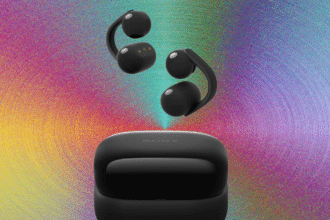
Now, we have to address the elephant in the room, and that elephant is named Sony. In a move that has honestly baffled a lot of tech circles over the last year, the newer WF-1000XM6 hasn’t quite managed to capture the same magic as its predecessor. It’s one of those rare, weird moments in the tech world where the “older” model—the WF-1000XM5—actually remains the smarter purchase in 2026. This isn’t just a case of being thrifty; it’s about the fundamental way the product was designed and tuned. Sometimes, the first draft is just better.
The XM5s hit a sweet spot that Sony has seemingly struggled to replicate. A big part of that is the memory foam tips they use. They act almost like high-end earplugs before you even turn the power on, providing a level of passive isolation that makes the active cancellation work even better. It feels organic. The sound profile is warm, it’s bassy, and the buds are absolutely loaded with every feature you could possibly think of—multipoint pairing, LDAC support, spatial audio. They really are the “Swiss Army Knife” of the earbud world. They do everything well, and they do it without making you feel like you’re compromising on any one front.
The irony here is that as manufacturers keep chasing smaller and sleeker designs, they sometimes end up sacrificing the very things that made the previous generation so great. The XM6, while it certainly looks more modern and fits a bit more flush in the ear, lost some of that ANC “oomph” and the stellar call quality that turned the XM5 into a legend. It serves as a reminder that we might be reaching a plateau in hardware. We’ve hit “Peak Earbud,” a point where improvements are often marginal at best, or in some frustrating cases, a step backward in the name of aesthetic minimalism. If you can track down a pair of XM5s on sale right now, you’re looking at what is arguably the most well-rounded tech product of the last ten years.
The Democratization of Peace: Why Budget Buds are Winning
We also can’t ignore the simple fact that $300 is a massive amount of money to spend on something so small you might accidentally leave it in a jeans pocket and send it through the heavy-duty wash cycle. This is exactly where brands like Anker’s Soundcore line have completely disrupted the market. If you go back just a few years, “budget” noise-canceling was basically a joke—it was mostly just a marketing label that didn’t do much. Today? It’s a legitimate threat to the premium players. A 2025 Statista report found that the global noise-canceling headphone market has ballooned to nearly $18 billion, and a huge chunk of that growth is coming from mid-tier and budget-friendly options that perform at about 80-90% of the level of a flagship.
The Soundcore Space A40 is the poster child for this movement. It doesn’t come with the “prestige” or the fancy branding of a Bose or a Sony, but for a fraction of the cost, it gives you adaptive ANC that actually handles the real world. It’s the “everyman” earbud. In a world where we’re all feeling the squeeze of subscription fatigue and general inflation, seeing high-quality silence become affordable is a huge win for everyone. You shouldn’t have to be a C-suite executive or a high-paid consultant to enjoy a quiet commute. Everyone deserves a break from the noise.
However, I will say this: you definitely still get what you pay for when it comes to “Transparency Mode.” This is that clever feature that uses microphones to let the outside world *in* so you can hear a gate announcement or order a coffee without taking the buds out. On the high-end Bose and Sony models, it’s so clear it feels like you aren’t wearing headphones at all. On the budget models, though? It often sounds like you’re listening to the world through a scratchy 1990s walkie-talkie. It’s what I call the “uncanny valley” of audio—it’s close enough to be useful, but just weird enough to be a little bit distracting every time you use it.
Is it Tech, or is it Jewelry? The Rise of the Luxury Earbud
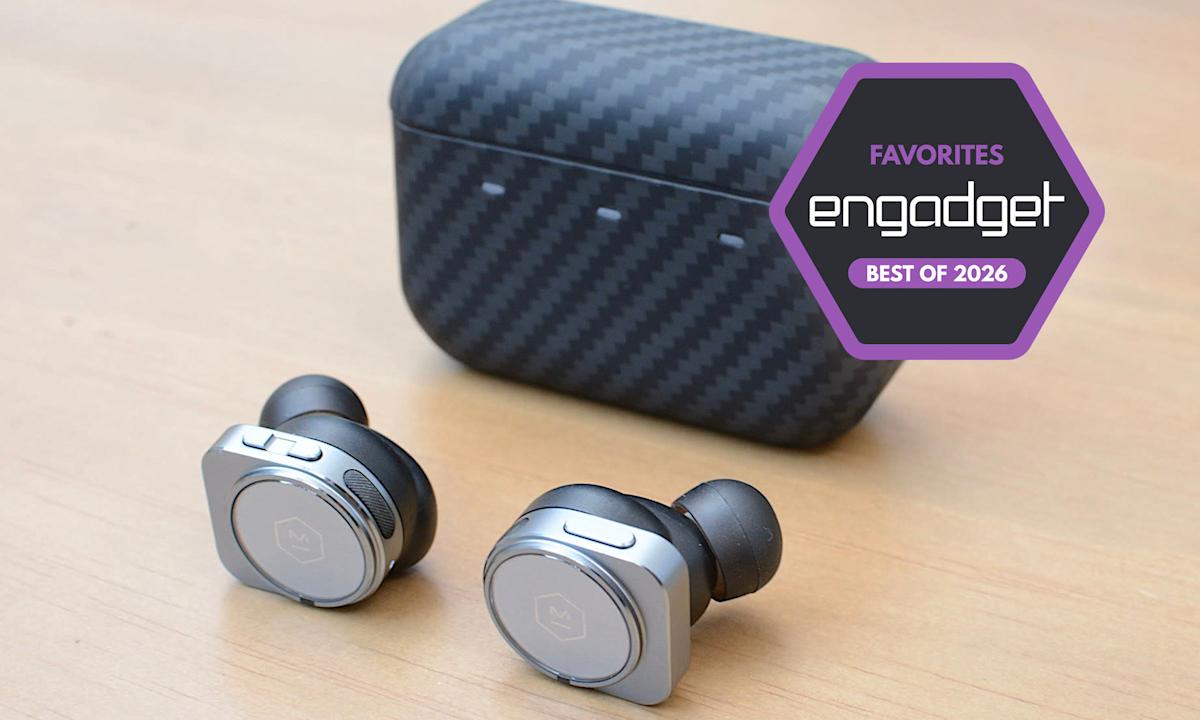
Then we have the boutique end of the spectrum, which is currently being lead by the Master & Dynamic MW09. While the big tech giants are mostly focused on various types of plastic and silicon, M&D is out here crafting earbuds from sapphire glass and machined aluminum. It’s a completely different philosophy. To these guys, earbuds aren’t just tools or gadgets; they’re pieces of jewelry that just happen to play high-fidelity music. And with a staggering 12 hours of battery life even with the ANC turned on, they solve the one major gripe I have with the Bose Ultras. They’re built for the long haul.
But it raises a fair question: does the style really matter when you’re just trying to block out the sound of a jackhammer outside your window? I think it comes down to a question of identity. Some people want the absolute best tech (that’s the Bose crowd), some people want the best possible value (the Anker crowd), and some people just want the best *object*. The MW09 is a reminder that as earbuds become more of a fashion statement, the hardware needs to feel as premium as the price tag suggests. But let’s be real for a second: most of us are buying these things for the silence, not the sapphire. If the ANC can’t outperform the aging Sony XM5, all that glass and metal is just a very pretty distraction.
There’s also a health angle here that we don’t talk about nearly enough. According to a 2024 WHO report, over 1 billion young adults are currently at risk of permanent hearing loss because of unsafe listening habits. This is where high-quality ANC actually becomes a legitimate health tool, not just a luxury. By effectively blocking out the background noise, we don’t feel the need to crank our volume up to 100% just to hear a podcast over the sound of the bus. When you look at it that way, a pair of $300 earbuds is actually a lot cheaper than a lifetime of hearing aids and doctor visits. It’s an investment in your future self’s ability to actually hear the world.
The Final Verdict: Finding Your Own Quiet in 2026
So, where does all of this leave us as we navigate the early months of 2026? The “Silence Wars” have reached a really fascinating stalemate. We have the raw, unbridled power of Bose, the balanced, reliable perfection of the Sony XM5, and the incredible, accessible value of Anker. The technology has become so consistently good that we’ve actually started complaining about the tiny nuances—things like the specific “texture” of the silence or the “naturalness” of the ambient mode. It’s a good problem to have, honestly.
Which earbuds have the best pure noise cancellation in 2026?
If your only goal is to delete the outside world, the Bose QuietComfort Ultra Earbuds (2nd gen) are still the undisputed champions. They are particularly good at handling those annoying, unpredictable sounds like office chatter or someone talking loudly on their phone nearby.
Is it worth buying the Sony WF-1000XM6 over the XM5?
In a bit of a twist, the answer is often no. Many reviewers and long-time users still prefer the older WF-1000XM5. It offers superior ANC performance, better microphone quality for calls, and a more secure fit thanks to those foam tips, making it the better overall value even years later.
How long does the battery last on premium ANC earbuds?
The range is surprisingly wide. While a luxury pair like the Master & Dynamic MW09 can easily hit 12 hours with ANC on, the top-tier Bose models are much more limited, usually giving you between 4 and 6 hours depending on whether you’re using spatial audio features.
At the end of the day, the “best” pair of earbuds isn’t necessarily the most expensive one; it’s the one that fits the specific rhythm of your life. If you’re a frequent flyer who spends half your life on planes, you absolutely need the Bose “cone of silence.” If you’re a 24/7 power user who needs your buds to last all day, you probably want the battery life of the MW09 or the all-around reliability of the Sony XM5. And if you’re just a person trying to survive the daily bus ride to work without spending a week’s pay, Anker is going to be your best friend. We might not have those flying cars we were promised for 2026, but at least we can finally have a little bit of peace and quiet while we wait for them.
This article is sourced from various news outlets. Analysis and presentation represent our editorial perspective.