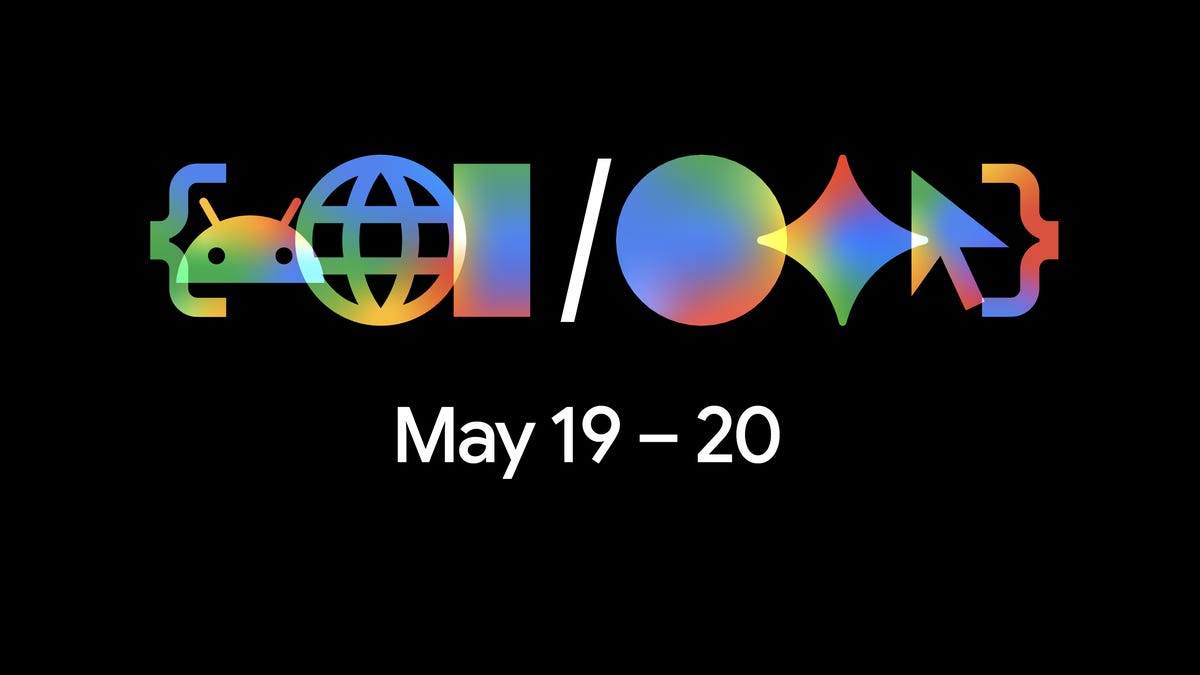
Let’s be honest for a second: at this point, we’ve all pretty much stopped asking *if* a Google product is going to have AI baked into it. Now, we’re just taking bets on how many different ways it’s going to try to finish our sentences or reorganize our digital lives before we even ask. We finally have the official dates for the big annual dance in Mountain View, and it feels like the stakes have never been higher for the house that search built. According to the latest from CNET, Google I/O 2026 is officially penciled in for May 19 and 20 at the Shoreline Amphitheatre. But while the logistics are set in stone, the whole vibe surrounding this year’s event feels fundamentally different from those playful, puzzle-filled days we used to love.
For years, Google loved to make us work for the news. Remember the elaborate digital scavenger hunts and those cryptic code-breaking puzzles we’d obsess over just to figure out when the keynote was starting? It was a bit of a tradition, a way to engage the developer community with a wink and a nod. This year, though? They just posted the dates on the official I/O page and called it a day. Maybe it’s a sign that the company is finally “maturing,” or maybe they’re just moving way too fast to play games anymore. When you’re locked in an all-out arms race with the likes of OpenAI and Microsoft, spending three weeks on a “guess the date” minigame probably feels like a luxury the engineering team just can’t afford. So, it’s May 19. Mark your calendars, because this isn’t just another developer conference; it’s a high-stakes status report on the very soul of the modern internet.
Google is Betting the Farm on Gemini—and We’re All Along for the Ride
If you thought last year’s “Gemini everywhere” theme was a little heavy-handed, you might want to brace yourself. By the time May rolls around, Gemini won’t just be an app you open or a side panel you occasionally click on; it’s going to be the literal connective tissue of the entire Google ecosystem. We’ve already seen the rollout of the AI side panel in Chrome and those deeply integrated (and sometimes slightly aggressive) suggested replies in Gmail earlier this year. But we need to look at the bigger picture here. Google isn’t just adding “features” like they used to. They are fundamentally re-architecting how we, as humans, interact with technology on a daily basis.
I remember when “Googling it” was a simple, transactional act—you typed three words into a clean white box and hoped for the best. Now, it means asking a multimodal agent to plan a three-day trip to Kyoto, handle the flight bookings, and summarize the best hidden-gem ramen spots that don’t have a two-hour wait. It’s incredibly convenient, sure, but it’s also a massive shift in how much agency we’re handing over to the machine. At I/O 2026, I fully expect we’ll see “Gemini 2.5″—or whatever branding they land on—and it’s going to be laser-focused on one thing: autonomy. We’re moving past the era of “AI as a tool” and straight into the era of “AI as a delegate.”
But here’s the real rub: as Google shoves Gemini into Maps for hands-free navigation and deepens its roots in Workspace, the margin for error is basically shrinking to zero. A hallucinated recipe for banana bread is a funny anecdote; a hallucinated navigation instruction while you’re doing 70 mph on a confusing freeway interchange is another thing entirely. According to a 2025 Statista report, the global generative AI market was projected to soar past $300 billion by early 2026, and Google is clearly desperate to claim the lion’s share of that massive valuation. They can’t afford to be that “fun, experimental” company from the early 2000s anymore. They have to be the reliable utility that we trust with our lives and our data.
“The transition from search-based discovery to agent-based execution represents the most significant shift in consumer technology since the introduction of the smartphone.”
— Tech Industry Analyst, 2025 Market Review
Android 17 and the Quest for the First Truly ‘AI-First’ OS
Let’s talk about Android 17, because this feels like a major turning point for the platform. In the old days, a new Android version meant some cool new widgets, a few privacy toggles, and maybe a weird new gesture system that most of us disabled after five minutes. This year? Android 17 needs to be the first “AI-First” operating system that actually feels like it was built for this moment from the ground up. We’ve had “AI features” in our phones for years, but let’s be honest—most of them felt like bolt-ons or marketing gimmicks to sell more hardware. I’m talking about an OS where the kernel itself is optimized for local LLM processing, making the AI part of the phone’s DNA rather than just an app running on top of it.
Google has been quietly laying the groundwork for this for a while, but I/O 2026 is where they have to prove that your phone is more than just a glass slab that runs a bunch of disconnected apps. If Android 17 can truly leverage the on-device processing power of those latest Tensor chips to handle Gemini requests without constantly hitting the cloud, that’s a total game-changer for privacy. And let’s be real, Google really needs a win on the privacy front. A 2024 Pew Research Center study found that while roughly 20% of workers in high-exposure jobs were already using AI to help with tasks, a much larger percentage expressed deep concern about how their data was being handled by these massive models. If Android 17 can keep your most sensitive “delegate” tasks strictly on the device, it might just win back some of that lost trust.
And then there’s the XR elephant in the room. Remember when we thought Google Glass was the future? Then it was Daydream? Then it was… well, nothing for a while? With the rumors of a new XR platform developed alongside Samsung and Qualcomm reaching a fever pitch, I/O 2026 feels like the perfect stage for a genuine “one more thing” moment. If they can integrate Gemini into a pair of glasses that actually look like glasses—not a bulky scuba mask—then we’re looking at a whole new world of contextual computing. Imagine walking through a grocery store and having Gemini highlight the ingredients for the lasagna you told it you wanted to make tonight, or giving you real-time translation during a conversation in a foreign country. That’s the dream, right? Or is it a nightmare? It’s a fine line, but it’s one Google seems intent on walking.
Wait, Do We Actually Want This? Navigating the Great AI Fatigue
I have to wonder, though—and I suspect many of you are wondering the same thing—are we reaching a point of diminishing returns? There’s a very real risk that Google is over-engineering solutions for problems we don’t actually have. Do I really need an AI side panel in Chrome to summarize the page I’m literally reading right now? Sometimes, I feel like we’re being force-fed “innovation” because the stock market demands a higher valuation and constant growth, not because users are actually clamoring for more chatbots in their lives.
There’s also the very real “AI Fatigue” factor to consider. Every time I open an app lately, there’s a new purple or blue sparkle icon popping up, desperately telling me it can “help me write” or “reimagine my photo.” I don’t always *need* help writing; sometimes I just want to send a quick text to my mom without a chatbot suggesting I add a “touch of professional flair” or an unnecessary emoji. Google’s biggest challenge at I/O 2026 won’t be showing off what Gemini *can* do—we already know it’s powerful—it will be proving that they know when it *shouldn’t* do anything at all. Discretion and knowing when to stay out of the way is going to be the next great AI feature, mark my words.
What are the official dates for Google I/O 2026?
The event is officially on the calendar for May 19 and May 20, 2026. As per tradition, it will be held at the Shoreline Amphitheatre in Mountain View, California. While there is a physical component, most of the world will be tuning in via the livestream to see what Sundar Pichai and his team have been cooking up.
Will there be a focus on hardware this year?
While I/O is and has always been a software and developer-first event, Google usually can’t resist showing off some new silicon. We’re likely to see the latest Pixel “A” series phone, and there’s a lot of buzz about potential hardware reveals in the XR (Extended Reality) space, especially given their high-profile partnerships with Samsung and Qualcomm to take on the Apple Vision Pro.
Is Android 17 the main software update?
Absolutely. Android 17 will be one of the major pillars of the keynote. The focus this time around is expected to be much deeper than just UI tweaks; we’re looking at fundamental shifts toward on-device AI processing for Gemini and creating a more seamless, “intelligent” experience across the entire Google ecosystem of devices.
Cutting Through the Hype: What Actually Matters When the Keynote Drops
So, what should you actually keep an eye on when the keynote kicks off on May 19? First, watch the “latency.” If Google can show Gemini responding in real-time, with human-like prosody and no awkward “thinking” delay, the gap between us and our computers just got a whole lot smaller. This isn’t just about speed; it’s about the feeling of the interaction. Second, look at the “integration.” If Gemini is still just a chatbot sitting in a window or a floating bubble, they’ve missed the mark. It needs to be the ghost in the machine, working silently in the background to make things easier before we even think to ask.
I’ll also be watching for the “boring” stuff—and I mean that in the best way possible. The updates to Google Sheets that handle complex data analysis or the way Maps manages complex, multi-stop routing for a delivery driver. That’s where the real utility lives for most of us in our day-to-day lives. We’ve had enough of the flashy, highly polished demos that don’t actually ship to our devices for another six months. We need tools that work on May 20. Google has the talent, they have the data, and they definitely have the infrastructure. Now, they just need to show us that they have the restraint to build an AI future that actually feels, well, human.
It’s going to be a long, intense couple of days in Mountain View. But if Google plays its cards right, I/O 2026 could be the moment we stop talking about AI as a buzzword and start talking about it as a utility—something like electricity or the internet itself. It’s about making technology disappear into the background. Just, you know, hopefully with fewer hallucinations and a lot more helpful suggestions on where to find that perfect bowl of ramen without a line around the block.
This article is sourced from various news outlets. Analysis and presentation represent our editorial perspective.