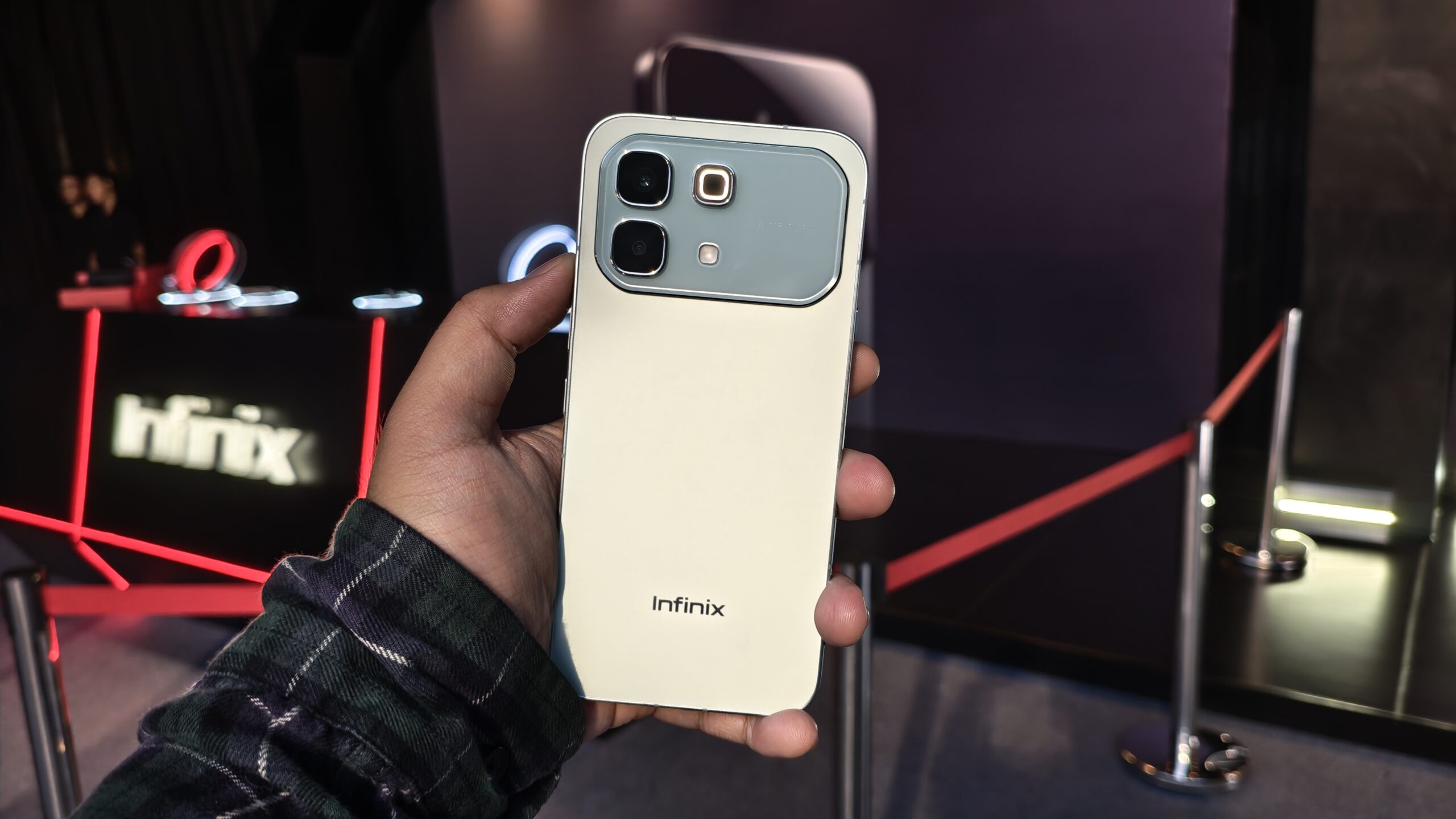
If you’ve spent any time at all scrolling through the smartphone market lately, you already know the deal: the “mid-range” segment has become an incredibly crowded house. It’s a noisy, frantic space where brands usually try to out-shout each other about massive megapixel counts or blistering charging speeds, all while quietly cutting corners on the things that actually matter for your day-to-day sanity. We’ve all been there—buying a phone that looks great on a spec sheet, only to realize two weeks later that the battery drains if you look at it funny or the screen turns into a mirror the moment you step outside. But, according to the folks over at Telset, the recent arrival of the Infinix Note 60 in Indonesia might just be the reality check the industry desperately needed. It’s not just another generic slab of glass and silicon designed to fill a shelf; it’s what Sergio Ticoalu, the Head of Marketing at Infinix Indonesia, calls a “sweet spot” device. And honestly? Looking at the package they’ve put together, I think he’s really onto something here.
For years, we’ve been conditioned—almost brainwashed, really—to think that if you want the “good stuff,” you have to pay a premium that makes your eyes water. You want the high-refresh screens that feel like liquid? The massive batteries that don’t leave you tethered to a wall? The cameras that don’t turn a night out into a blurry, grainy mess? Well, the traditional logic says you have to sell a kidney for a flagship. Infinix has been chipping away at that myth for a while now, but with the Note 60, they’ve basically demolished the pedestal that flagships sit on. They aren’t just playing the “spec-war” anymore; they’re building a thoughtful ecosystem of features that actually solve the annoying, low-level problems we all deal with. You know the ones—like your phone hitting 5% at 4 PM when you’re nowhere near a charger, or trying to read a text message while waiting for a Grab in the middle of the midday sun and seeing absolutely nothing but your own squinting reflection.
“The Infinix Note 60 isn’t just about competing on paper; it’s about redefining what a user should expect for four million Rupiah.”
— Sergio Ticoalu, Infinix Indonesia
The 6,500mAh Powerhouse: Why “Battery Anxiety” Might Finally Be a Thing of the Past
Let’s talk about the literal elephant in the room: that massive 6,500mAh battery. Most phones these days hover around the 5,000mAh mark, which is “fine,” but Infinix clearly decided that “fine” wasn’t going to cut it anymore. They’ve managed to pack a cell in here that can easily carry even a heavy user through two full days of moderate use without breaking a sweat. But the real headline here isn’t just the sheer physical size of the battery—it’s something they’re calling “Battery Self-Healing Technology.” I’ll admit, when I first heard that, it sounded like something straight out of a Marvel movie or a sci-fi novel. How does a battery “heal” itself?
The tech is actually pretty fascinating from an engineering standpoint. It essentially uses low-level currents to “repair” the micro-cracks that naturally occur in a battery’s structure over hundreds of charging cycles. Infinix claims this process can recover about 1% of battery health every 200 cycles. Now, that might not sound like a lot on paper, but it’s a direct, practical answer to the biggest fear we all have when we drop a few million Rupiah on a new device: that our expensive phone will become a glorified paperweight in two years because the battery simply gave up the ghost. A 2024 Statista report recently noted that the average smartphone replacement cycle in emerging markets has stretched out to nearly 3.5 years. People are holding onto their phones longer, mostly due to economic factors and the fact that tech is maturing. By promising six years of “normal” battery life, Infinix is basically telling its customers, “We’ve got your back for the long haul.” It’s a refreshing change from the planned obsolescence we see elsewhere.
And they didn’t just stop at the capacity and the longevity. Even though this is the “standard” model and not the high-end Pro variant, you’re still getting 30W wireless charging. I honestly can’t tell you how many times I’ve seen competitors strip wireless charging out of their mid-range phones just to save a few bucks on the bill of materials. Keeping it here is a class act. It’s not just about the tech; it’s about the convenience of just dropping your phone on a desk pad while you work, without having to fumble for a USB-C cable every single time you get a notification or need to step away for a meeting. It’s those little quality-of-life touches that make a phone feel more premium than its price tag suggests.
High Refresh Rates and Blinding Brightness: The Display That Refuses to Act Like a Mid-Ranger
Usually, when a brand releases a “Standard” and a “Pro” model, the standard version is the one that gets the “diet” treatment—especially when it comes to the screen. Not this time. The Note 60 sports a gorgeous 6.78-inch OLED panel with a 144Hz refresh rate. If you haven’t lived with a 144Hz screen yet, let me tell you, it is incredibly hard to go back to 60Hz or even 90Hz. Everything just… glides. Scrolling through your Twitter or Instagram feed feels like butter, and gaming is noticeably more responsive. It gives the entire interface a sense of urgency and smoothness that you usually only find on devices costing twice as much.
But the real kicker—the thing that actually made me do a double-take—is the brightness. We’re looking at a peak of 4,500 nits. To put that in perspective, many “flagships” from just two years ago were struggling to hit 1,500 nits. This isn’t just a number for the sake of numbers; it has a massive impact on usability. It means even if you’re standing in the middle of a beach in Bali at high noon, you can actually see who’s texting you or check your maps without squinting like a madman or trying to create a makeshift shadow with your hand. Plus, they’ve used Gorilla Glass 7i for the cover. It’s that extra layer of “oops” protection for those of us who have a habit of letting our phones take a spontaneous dive onto the pavement while getting out of a car. It shows that they’re thinking about durability as much as they are about aesthetics.
Under the hood, it’s running the Dimensity 7400 Ultimate. While the Pro version of this phone goes the Snapdragon route, the Dimensity chip here feels like a very strategic play for efficiency. It’s plenty fast for multitasking and handles modern apps with ease, but more importantly, it doesn’t turn your phone into a pocket-sized hand-warmer after ten minutes of gaming. It’s a balanced, measured approach that fits the “sweet spot” narrative perfectly. You get the speed you need for daily life without the thermal throttling headaches that often plague “overclocked” mid-range chips.
Beyond the Megapixel Myth: Why OIS is the Real Hero of the Camera Setup
We’ve all been there—you try to take a photo at a concert, a birthday party, or a dimly lit restaurant, and the result looks like it was taken with a potato. Most mid-range phones try to hide poor low-light performance by bumping up the megapixel count to some absurd number, but Infinix is taking a smarter route. The Note 60 features a 50MP main camera, but the real star of the show is the OIS (Optical Image Stabilization). That OIS is a huge deal. It physically moves the lens to compensate for your shaky hands, which is often the thin line between a crisp, memorable night shot and a blurry, unusable mess. It’s the kind of hardware feature that actually improves your photos, rather than just giving you a larger file size.
Infinix is also leaning heavily into what I’d call the “Ready-to-Post” philosophy. Their AI Studio and 4K Pro Level Video features are clearly designed for the TikTok and Instagram generation who don’t want to spend hours in an editing suite. According to a 2023 Pew Research study, roughly 76% of adults in major economies now use their smartphones for almost everything, including serious content creation. By automating things like color grading and stabilization through the onboard AI, Infinix is removing the friction. You shoot the video, the AI does the heavy lifting to make it look cinematic, and you post it. It’s simple, it’s effective, and it recognizes how people actually use their cameras in 2024.
Is the Infinix Note 60 waterproof?
Well, it’s not exactly a submarine. It comes with an IP64 rating, which is tech-speak for saying it’s well-protected against dust and can handle splashes of water from any direction. You definitely shouldn’t take it for a swim in the pool, but it’ll survive a sudden tropical rain shower or an accidental spill at the dinner table without skipping a beat. It’s about peace of mind, not deep-sea diving.
How does the satellite phone feature work?
This is one of those “forward-looking” features. While the Note 60 series showcased satellite connectivity as part of Infinix’s big innovation push, it’s primarily designed as an emergency tool. It’s meant for those rare moments when you’re completely out of cellular range—maybe hiking or traveling in remote areas—and you need to send a distress signal or a basic message. It’s a “just in case” feature that adds a surprising amount of security for adventurous travelers.
Disrupting the Status Quo: Why the Big Players Should Probably Start Paying Attention
So, why does any of this actually matter in the grand scheme of things? It matters because for a long time, Infinix was seen by many as the “budget specs” brand—the one you bought if you just wanted the most RAM for the least amount of money, regardless of the build quality. But with the Note 60, they’re showing a level of maturity and polish that should honestly make the “big players” a little bit nervous. They aren’t just chasing vanity metrics; they are focusing on longevity (that self-healing battery), durability (Gorilla Glass 7i), and actual, everyday utility (OIS and those high-brightness screens).
At a starting price of around Rp4,099,000 for the 8GB/256GB variant, they aren’t just offering a “good deal”; they’re issuing a direct challenge to the market. They’re asking the consumer a very pointed question: why would you pay significantly more for a big-name brand that gives you a dimmer screen, a smaller battery, and no wireless charging? And honestly, it’s becoming a very hard question to answer. The inclusion of JBL-tuned stereo speakers and a surprisingly fast health sensor embedded in the side button are just the cherries on top. They didn’t have to include those premium extras to make the phone viable, but they did anyway, and that says a lot about their current direction.
My take? The Infinix Note 60 is a rare beast in a sea of “me-too” devices. It’s a phone that feels like it was designed by people who actually use phones and understand the frustrations of modern mobile life. It addresses the practical, boring, but essential annoyances—like battery degradation and screen glare—while keeping the price tag within reach for most people. If this is the new “sweet spot” for the mid-range, then the future of affordable tech is looking very bright—4,500 nits bright, to be exact. It’s proof that you don’t need to spend a fortune to get a device that feels like it belongs in the future.
This article is sourced from various news outlets and technical releases. The analysis and presentation represent our editorial perspective on the current smartphone landscape.