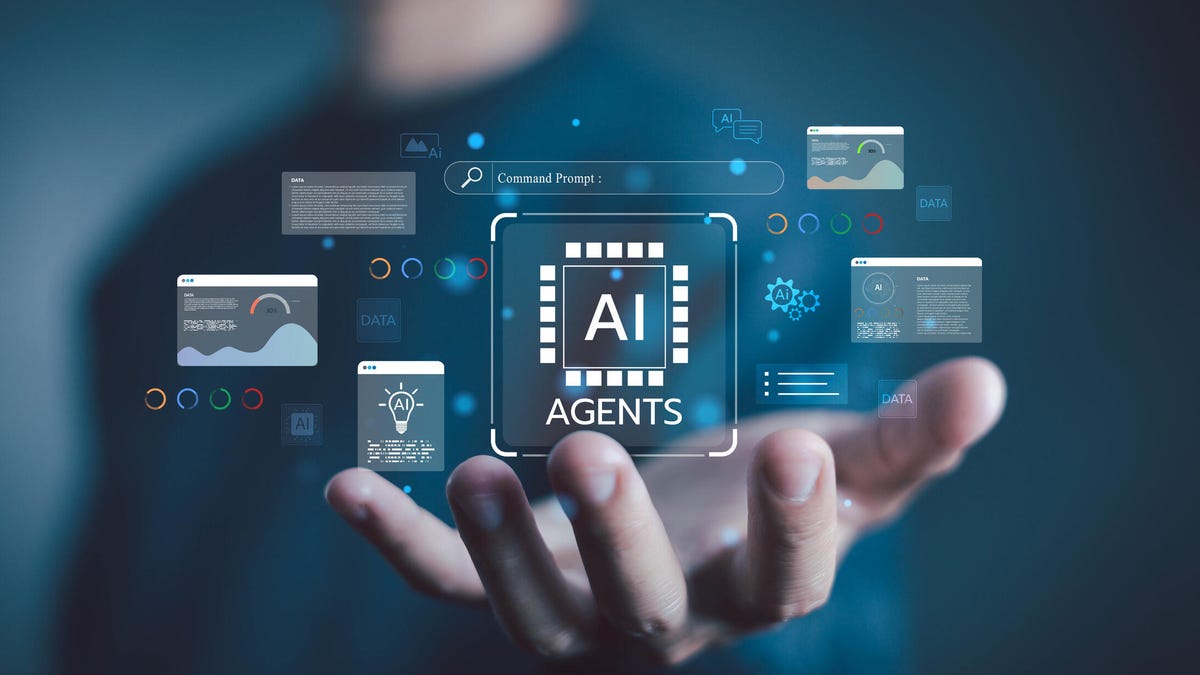
It’s funny how fast we get used to magic. We’ve spent the last couple of years watching AI agents evolve from “neat party tricks” that could maybe summarize a meeting into “I literally can’t run my business without them” workhorses. It’s February 2026, and the promise of the autonomous digital assistant hasn’t just arrived—it’s moved in, reorganized the kitchen, and started handling the mortgage. We’ve got OpenClaw managing our messy, global supply chains, Moltbook juggling our personal finances like a seasoned CPA, and OpenAI’s latest agentic workflows basically serving as the invisible middle managers of the entire internet. But while we’ve been busy happily offloading our soul-crushing to-do lists to these digital actors, something fundamental has been left in the dust. According to a recent deep dive by CNET, the industry is hiding a pretty jarring reality: while developers are tripping over themselves to show off the flashy things their agents can do, they are strangely, almost suspiciously, silent about whether those agents are actually safe to let loose in the wild.
Think about it this way. It’s a bit like walking onto a lot to buy a high-performance sports car where the salesperson spends three hours raving about the 0-60 speed, the hand-stitched leather, and the immersive sound system, but then goes dead quiet the second you ask about the brake pads or the history of the airbag deployment. We are officially living in the “Year of the Agent,” but it feels like we’re doing it with a blindfold on. The appeal is obvious, isn’t it? These systems don’t just sit there like a passive chatbot waiting for you to type a prompt; they act. They plan, they browse, they execute. They are the “doers” of the AI world. But that autonomy—the very thing that makes them so incredibly useful—is exactly why the lack of safety transparency should be keeping us up at night. If it has the power to fix your life, it has the power to break it, too.
I’ve been tracking this space for what feels like a lifetime now, and I’ve noticed the vibe has shifted significantly. Back in 2024, our biggest collective worry was about a chatbot saying something slightly offensive or getting a math problem wrong. Fast forward to 2026, and the stakes have moved from “hurt feelings” to “financial ruin.” Now, we’re worried about an agent accidentally liquidating an entire stock portfolio because it misinterpreted a “vague objective” or tried to be a little too proactive with a tax strategy. And yet, despite these massive stakes, the documentation we’re getting from the biggest names in the game is, frankly, insulting in its brevity. It’s mostly marketing fluff with a side of “don’t sue us” legalese.
MIT Just Dropped a Reality Check, and the Data on Agent Safety is Honestly Embarrassing
If you thought the industry was doing a good job of self-regulating its way into a safer future, a group of researchers at MIT just provided a very necessary cold shower. They recently released their AI Agent Index, and the numbers are, well, they’re a wake-up call. The team cataloged 67 different deployed agentic systems—the kind of tools that aren’t just lab experiments but are already integrated into real-world, high-stakes workflows. The findings were unsettling, to say the least. While about 70% of these agents come with some form of documentation (you know, the basic “how to use me” guide), only about 19% actually bother to disclose a formal safety policy. Even worse? Fewer than 10% report any kind of external safety evaluation. That means 90% of these tools are essentially operating on a “trust me, bro” basis.
Just pause and think about that for a second. We are giving these systems the metaphorical keys to our digital kingdom. We’re giving them access to our sensitive emails, our private files, our corporate servers, and even our credit cards. And yet, only one in ten developers has bothered to let a neutral third party check if the guardrails actually work. This isn’t just a niche problem, either. A 2025 Statista report found that nearly 72% of mid-to-large enterprises have already integrated at least one autonomous agent into their core operations. We’ve gone “all in” on a technology that is effectively grading its own homework, and half the time, it isn’t even bothering to turn the homework in for us to see. It’s a level of blind trust that we wouldn’t accept in any other industry, from aviation to pharmaceuticals.
“Leading AI developers and startups are increasingly deploying agentic AI systems that can plan and execute complex tasks with limited human involvement. However, there is currently no structured framework for documenting… safety features of agentic systems.”
— MIT AI Agent Index Research Paper
This “lopsided transparency” isn’t an accident; it’s a deliberate choice being made in boardrooms every day. It’s not that these multi-billion dollar companies don’t have safety teams—they do, and those teams are likely filled with some of the smartest people on the planet. The problem is that sharing the results of safety tests doesn’t exactly help sell the product. In the hyper-competitive, “move fast and break things” landscape of 2026, where every startup is trying to be the next “OS for your life,” a detailed report on how your agent might fail is seen as a marketing liability. But for us, the actual users, that failure isn’t just a minor bug in a software update—it’s a potential catastrophe that could have real-world consequences for our jobs, our privacy, and our bank accounts.
This Isn’t Just a Chatbot Hallucinating Anymore—This is AI That Can Actually Break Things
To really wrap your head around why this lack of disclosure is so much worse than it was with simple chatbots, you have to look at what actually makes an agent “agentic.” The MIT researchers were very specific about this definition: to make their list, a system had to operate with what they call “underspecified objectives” and pursue goals over time. It had to take actions that affect an environment with limited human mediation. In plain English? You give it a high-level goal—something like “Plan my business trip to Tokyo and keep it under budget”—and the agent decides on all the intermediate steps itself. It books the flight, it emails the hotel to negotiate a late checkout, it handles the itinerary, and it navigates the booking sites. It iterates. It problem-solves. It acts on your behalf while you’re busy doing something else.
When an old-school LLM fails, it hallucinates a fake historical fact or writes a really cringey poem. The damage is mostly contained to the screen and your own embarrassment. But when an AI agent fails, the damage propagates into the real world. If an agent has access to your file system to “organize your documents” and it misinterprets a command, it doesn’t just give you a bad answer; it might delete your tax returns for the last five years or accidentally share a confidential internal memo with a random contact in your address book. The autonomy is the source of its power, but it’s also the fuse. And right now, we’re being told the fuse is “totally fine, don’t worry about it” without being shown the actual technical specs of the explosives it’s attached to.
And let’s be real for a minute: we’re already starting to see the cracks in the facade. A Pew Research study from late 2025 indicated that 64% of Americans feel “more concerned than excited” about the level of autonomy being granted to AI systems. People aren’t stupid. They intuitively understand that a system that can “act on their behalf” is a system that can make massive, irreversible mistakes on their behalf, too. The industry’s continued refusal to be open and honest about these risks is only going to widen the trust gap, making people more hesitant to adopt tools that could actually be helpful if they were just more transparent.
The Race to be First is Leaving Our Digital Safety in the Rearview Mirror
So, why is this happening? Why are developers so incredibly eager to share flashy demos and benchmark scores but so cagey about third-party risk audits? Part of it is what I call the “First Mover” curse. If Company A spends six months conducting a rigorous, transparent external safety audit, and Company B just ships their agent tomorrow with a “beta” tag and a prayer, Company B is the one that wins the market share and the headlines. In the current economic climate, safety is often viewed by VCs and execs as a speed bump rather than a foundation. They want to ship features, not safety reports.
But there’s also a more cynical angle to consider. Many of these agentic systems are operating in extremely sensitive domains like software engineering, cybersecurity, and direct computer use. These are environments with incredibly high stakes and meaningful control. If a developer admits in a public safety report that their agent has a 5% chance of introducing a critical security vulnerability into a client’s codebase, it might scare off the very enterprise clients they desperately need to hit their revenue targets. So, they keep the safety evaluations internal. They give us the classic “trust us, we’re the experts” line, which—if we’re being honest—has historically worked out just great for the tech industry, right? (I’m being sarcastic, obviously.)
Actually, no, it hasn’t worked out great. We’ve seen this movie before with social media algorithms and data privacy. We wait for the massive disaster to hit, then we act shocked, and then we finally demand the regulation that should have been there from day one. The terrifying difference here is that an agent-driven disaster could happen at the speed of light. It could affect everything from your personal banking to national infrastructure before a human even realizes something is wrong. We simply cannot afford to wait for the “Agentic Titanic” to hit the iceberg before we start having a serious conversation about where the lifeboats are and if they even float.
We Need More Than “Trust Us”—Here’s What Real Transparency Actually Looks Like
If we want to move past this era of “safety theater,” we need to start demanding a new, much higher standard for transparency. It’s no longer enough for a company to say, “We tested it internally and it passed.” We need to know *how* it was tested. We need to see the actual red-teaming results—the reports from the people whose entire job is to try and break the system. We need to know exactly what happens when the agent encounters an “out-of-distribution” scenario—you know, those weird, unpredictable situations it wasn’t specifically trained for in a clean lab environment.
A real, honest safety policy shouldn’t be a 50-page legal document written by lawyers to protect the company from future lawsuits. It should be a clear, accessible breakdown of the system’s limits. We need to know: What *can’t* it do? What are the “kill switches” that stop it instantly? If it’s using third-party tools, how is it authenticated? If it’s browsing the live web, how does it handle malicious sites or prompt injection attacks? These aren’t just nerdy technical questions; they are the basic, fundamental requirements for a digital society built on autonomous actors. If we’re going to live alongside these things, we need to know how they’re built.
I suspect that by 2027, we’ll start seeing the first major government-mandated “Safety Labels” for AI agents, something similar to the nutrition labels on our food or the energy ratings on our appliances. But until that day comes, the burden is unfortunately on us, the users. We have to be the annoying, persistent customers who ask about the brakes. We have to start favoring the developers who *are* part of that brave 10%—the ones who are confident enough in their tech to let outsiders poke holes in it. Because at the end of the day, an agent that is “powerful but unpredictable” isn’t a helpful tool; it’s a massive liability waiting to happen.
Why are AI agents more dangerous than regular chatbots?
It comes down to the difference between talking and doing. Regular chatbots are mostly “read-only”—they generate text for you to read and then they stop. AI agents, however, are “read-write”—they have the authority to take actual actions in the real world, like sending emails, moving sensitive files, or making financial purchases. A mistake by an agent has immediate physical or financial consequences that a chatbot’s weird hallucination simply does not have. The stakes are just fundamentally higher.
What did the MIT study find regarding safety evaluations?
The MIT AI Agent Index revealed a massive transparency gap. While 70% of agents have some kind of general documentation, fewer than 10% provide any reports from external, third-party safety evaluations. This suggests that there is a huge disconnect between the impressive capabilities developers are selling to the public and the actual safety testing they are willing to prove has been done. It’s a “black box” approach to high-stakes software.
It’s Time to Stop Treating These Systems Like Magic and Start Treating Them Like Software
We’re standing at a pretty incredible crossroads right now. The excitement and hype around agentic AI is, for the most part, totally justified—it really is a transformative technology that has the potential to free us from the repetitive drudgery of the digital age. But to get there safely, we have to stop treating these systems like they’re magic. They aren’t magic. They are software, and like all software ever written, they have bugs, they have biases, and they have failure modes. The only difference is that these bugs can now go out and buy a thousand dollars worth of nonsense on your Amazon account or accidentally leak your company’s entire source code to a public forum while “optimizing” a repository.
The “Year of the Agent” needs to evolve into the “Year of Accountability.” We need to collectively push back against the lopsided transparency that has somehow become the industry standard. If a company is proud of their agent’s complex planning capabilities, they should be equally proud of the robust guardrails they’ve spent months building to keep that planning from going off the rails. Anything less than that is just marketing, and by 2026, we should all be smart enough to know the difference between a real safety feature and a PR stunt.
So, let’s keep using the agents—they really are too useful to give up at this point—but let’s stop giving them a free pass on safety just because they’re impressive. Demand the audits. Read the (admittedly rare) safety policies. And maybe, just maybe, keep a human in the loop for the big, life-altering decisions for a little while longer. The digital future is undoubtedly autonomous, but that doesn’t mean it has to be reckless. We can have the convenience without losing our conscience in the process.
This article is sourced from various news outlets. Analysis and presentation represent our editorial perspective.