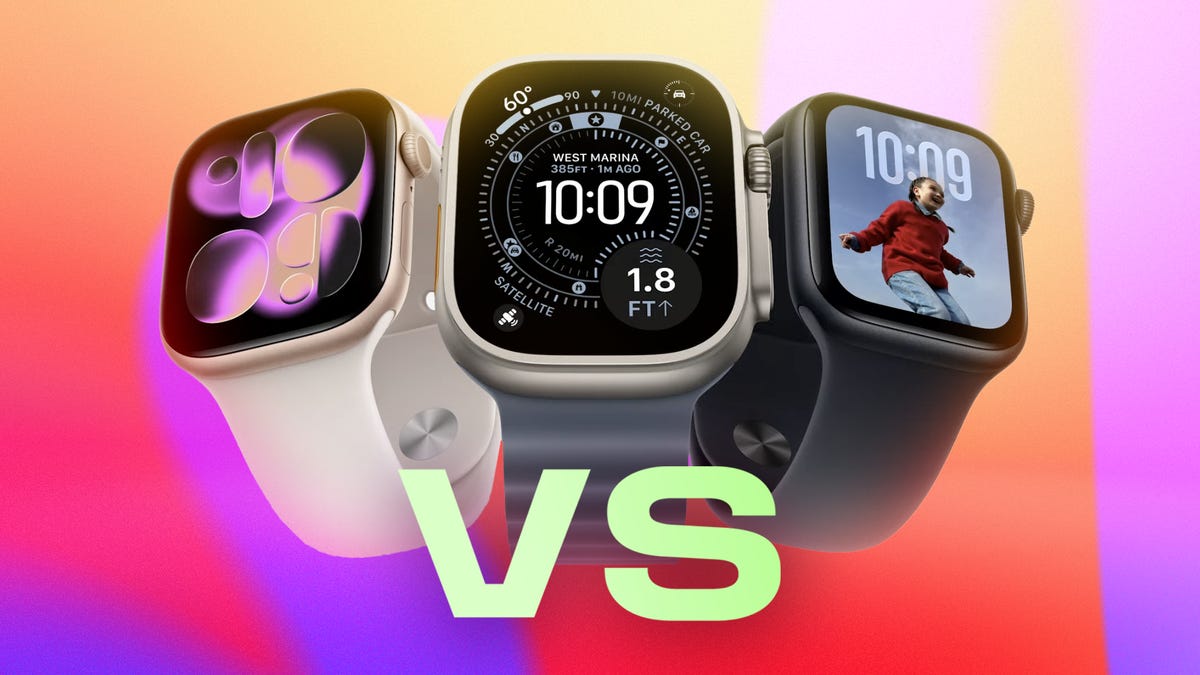
We’ve officially crossed that invisible line where a smartwatch isn’t just another gadget in our pockets; it’s become a permanent piece of our anatomy. It’s February 2026, and as we look back at the hardware cycle that brought us the Apple Watch Series 11, the Ultra 3, and the SE 3, it’s clear that Apple has reached a fascinating—if slightly predictable—plateau of excellence. According to the latest analysis from CNET, this new lineup has brought the three tiers closer together than we’ve ever seen before. It’s reached a point where the choice isn’t really about “what can this thing actually do?” and is much more about “who do I want to be today?” and “how much weight do I want on my wrist?”
For years, the decision-making process was pretty straightforward: you grabbed the cheap one if you were on a budget, the big rugged one if you were a weekend warrior, and the middle one if you were, well, everyone else. But as we’ve seen over the last few months of real-world use, those lines are blurring into each other. The Series 11 has borrowed so much from the premium playbook that the “standard” watch is starting to feel like a luxury item in its own right. Meanwhile, the SE 3 continues to hang on to a design language that feels like a nostalgic, slightly stubborn nod to 2020. It’s a strange family dynamic, to say the least, but it’s one that defines the current state of wearables.
When the “Standard” Watch starts looking like a piece of jewelry
The Series 11 arrived last year with a profile that felt like a breath of fresh air—or at least a very thin slice of it. At just 9.7mm thick, it’s remarkably svelte. When you actually put it side-by-side with the SE 3’s 10.7mm or the Ultra 3’s chunky 14.4mm frame, you realize that Apple is leaning hard into the “jewelry” aspect of the Series 11. It’s clearly the watch for people who want the power of a modern computer but don’t want their wrist to look like it’s carrying a miniature mainframe. It disappears under a shirt cuff in a way the Ultra simply can’t, and that matters more to the average user than we might like to admit.
But the real story here isn’t just the thickness; it’s that gorgeous screen. Both the Series 11 and the Ultra 3 are rocking the new LPTO 3 OLED displays. This is a genuine game-changer for those of us who spend our days glancing at our wrists from awkward angles—whether you’re stuck in a boring meeting or trying to check a notification while lugging a heavy bag of groceries. The wide viewing angle means you don’t have to do that exaggerated, performative “wrist-flick” just to see if you’re late for lunch. It’s subtle, but it makes the device feel much more like a traditional watch and less like a piece of reactive glass. And while the Ultra 3 hits a blinding 3,000 nits—the same peak brightness as the iPhone 17 Pro—the Series 11’s 2,000 nits is more than enough to fight off even the harshest midday sun.
A 2025 report from Statista noted that the global smartwatch market has seen a significant shift. Consumers are increasingly prioritizing display quality and health sensor accuracy over battery life alone. This explains a lot about Apple’s strategy. They haven’t chased a 7-day battery for the Series 11, choosing instead to make the 18-24 hours we do get look absolutely stunning. It’s a trade-off, sure, but for the person who charges their phone every night anyway, it’s a trade-off that clearly works.
“The Ultra 3 is like the luxury Land Rover you see in safari brochures: It’s adventure-ready on the outside, with all the modern conveniences on the inside.”
— Vanessa Hand Orellana, CNET
Is the Ultra 3 still the king of the mountain, or just a really nice tank?
Let’s talk about the Ultra 3 for a second. It’s still the most significant departure from the original Apple Watch silhouette we’ve ever seen. It’s big, it’s bold, and in its new black titanium finish, it looks like something a special ops team would wear on a night mission. But here’s the editorial reality we have to face: most people buying the Ultra 3 aren’t actually diving 100 meters deep or trekking across the Gobi Desert. They’re wearing it because it’s the only Apple Watch that doesn’t feel like a delicate piece of glass. It’s the “peace of mind” watch. You can whack it against a door frame and the door frame is the thing that’s going to break.
The 3D-printed titanium body is a marvel of modern manufacturing, even if that sounds like marketing speak. Apple managed to use 100% recycled titanium without leaving any of those ugly layering marks or rough textures you usually see on 3D-printed parts. It’s smooth, it’s rugged, and it includes that programmable Action button that I personally wish was on every single model. Why do I have to buy the “extreme” watch just to have a physical button that starts my workout or turns on the flashlight? It feels like a deliberate gatekeeping of a very basic, incredibly useful feature. But hey, that’s how you upsell people to the $799 model, right?
And yet, the Ultra 3 is the only one in the lineup that feels like a truly “new” object. The Series 11 is a beautiful refinement, and the SE 3 is essentially a relic of a bygone era. The Ultra 3 is a statement. According to industry analysts at Canalys, high-end “Pro” level wearables now account for nearly 25% of Apple’s watch revenue. This proves that people are more than willing to pay a premium for a device that looks like it could survive a tumble down a mountain, even if the most dangerous thing it encounters on a daily basis is a spilled oat milk latte.
The SE 3: A budget-friendly trap or a genuine smart play?
Then we have the SE 3. Starting at $249, it’s the “economical” choice, the one you buy when you just want the basics. But is it really a smart play in 2026? It still uses the older case sizes (40mm and 44mm) and, crucially, it lacks the always-on display. In this day and age, not having an always-on display feels a bit like using a phone with a physical keyboard—it works, it’s functional, but it feels like you’re living in the past. It’s thicker than the Series 11 and lacks the advanced health sensors like the ECG or blood oxygen monitoring that have become standard elsewhere. If you care about the “health” part of “health and fitness,” the SE 3 starts to look a bit thin on features.
However, for a huge segment of the population, those missing features aren’t dealbreakers. Think about parents buying a first watch for their kids, or people who just want their texts on their wrist and a way to track their morning walk. For them, the SE 3 is plenty. It’s water-resistant to 50 meters, meaning it can handle a trip to the local pool just as well as the Series 11. It’s the “no-frills” option in a world where the “frills” are the main selling point, which makes the SE 3 feel increasingly like a niche product for the tech-indifferent or the extremely budget-conscious.
The environmental flex you probably didn’t see coming
One thing that doesn’t get nearly enough credit in the Series 11 and Ultra 3 discussion is the massive shift in how these things are actually made. We’re seeing a move toward recycled materials that actually feel premium, which is a hard trick to pull off. A 2024 Pew Research Center study found that roughly 60% of consumers now consider a company’s environmental record when making a major tech purchase. Apple is clearly paying attention to that data. The 3D-printing process for the Ultra 3 and the heavy use of recycled aluminum in the Series 11 isn’t just a footnote in a press release—it’s becoming the core of their identity.
It’s actually a very clever bit of engineering. By 3D printing the titanium chassis, Apple reduces material waste significantly compared to the traditional CNC machining where you’re essentially carving a watch out of a solid block of metal and throwing away the scraps. It’s better for the planet, sure, but it also allows for that incredibly complex internal geometry. That’s how they manage to cram a massive battery and a 3,000-nit screen into a frame that doesn’t feel like a lead weight. It’s the kind of “invisible” innovation that we often take for granted until we see the competitors struggling to keep up with the same level of integration.
Which one actually deserves a spot on your wrist?
So, here’s the real-world breakdown. If you’re still rocking a Series 7 or 8, the Series 11 is going to feel like a massive jump forward. The extra screen real estate and the sheer slimness of the case make it feel like a completely different category of device. It’s the sweet spot of the lineup. It’s the watch that looks sophisticated with a suit and doesn’t feel like a heavy brick when you’re trying to sleep so it can track your respiratory rate and sleep cycles. It’s the “just right” option for the vast majority of people.
On the other hand, if you want the absolute best battery life possible and the biggest screen you can get, and you don’t mind the “look at me” aesthetic of a rugged tool, the Ultra 3 is the clear winner. It’s a tank, but it’s a tank designed by a luxury car brand. And if you’re just looking for a reliable, no-nonsense way to get your notifications without pulling out your phone every five minutes, the SE 3 is fine—it really is. But I’ll warn you now: you’ll probably find yourself glancing at someone else’s Series 11 and wishing you’d spent the extra $150 within six months.
Ultimately, the Apple Watch lineup in 2026 is all about maturity. There are no “bad” choices here, just different ways to express your relationship with the technology you wear. Apple has stopped trying to reinvent the wheel every twelve months and has instead focused on making the wheel so perfect you forget it’s even there. Whether you think that’s a win for innovation or a sign of a stagnant market is a fair debate to have, but for the person just trying to close their rings and stay connected, it’s a pretty great time to be in the ecosystem.
Is the Ultra 3 actually worth the price for non-athletes?
Honestly? Yes, I think it is—but only if you value battery life and durability above all else. While the software features are heavily geared toward deep-sea divers and mountain explorers, the sheer toughness of the sapphire crystal and the extra day of battery life make it a great “lazy person’s” watch. You don’t have to worry about charging it every single night, and you don’t have to panic if you accidentally whack it against a concrete wall.
Can I still use my old bands with the Series 11?
You’ll be happy to know the answer is yes! Despite the slimmer 9.7mm profile and the slight shift in case sizes to 42mm and 46mm, Apple has played nice and maintained compatibility with previous generations of bands. Your favorite leather link, solo loop, or third-party Milanese band will still slide right in and lock into place perfectly. It’s one of the few times a hardware redesign didn’t force us to buy all new accessories.
Does the SE 3 have the same processor as the Series 11?
Not quite. While the SE 3 is plenty snappy for everyday use, it usually lags one or two generations behind in terms of the silicon. It handles your notifications, timers, and basic fitness apps perfectly well, but don’t expect it to run complex on-device AI tasks or the most demanding new software features as smoothly as the Series 11 or Ultra 3. It’s built for the basics, and it stays in that lane.
This article is sourced from various news outlets and industry reports. Analysis and presentation represent our editorial perspective on the current state of wearable technology.