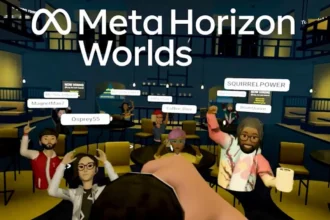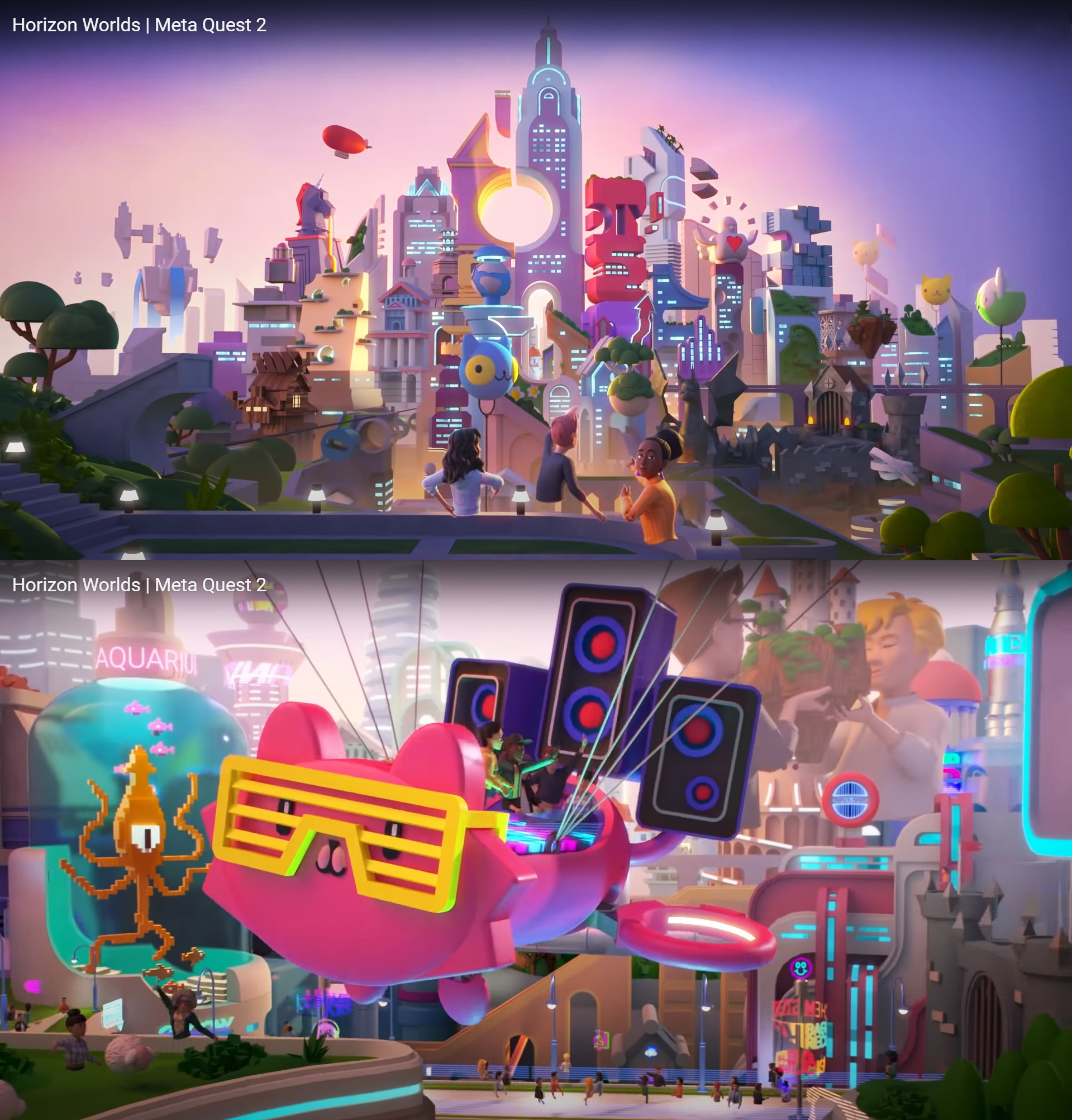
Remember the digital fever dream that was 2021? It feels like a lifetime ago, doesn’t it? Back then, Mark Zuckerberg stood in front of a green screen and pitched us a future where we’d all be legless avatars floating through a neon-soaked, digital utopia. We called it the Metaverse, and for a while, it really felt like the Quest headset was the only ticket to the show. But as we sit here in February 2026, the scenery has shifted quite a bit. According to recent reports from Telset, Meta has officially “decoupled” Horizon Worlds from its Quest VR ecosystem. This isn’t just a minor technical tweak or a backend update; it’s a massive, fundamental shift in how the tech giant views the future of social interaction. Honestly, it’s a total vibe shift.
For those of us who have been tracking this saga since the beginning, the news isn’t exactly a shock, but the finality of the decision is still pretty striking. Samantha Ryan, the VP of Content at Meta’s Reality Labs, recently laid it all out in a blog post that essentially served as a divorce decree between Meta’s flagship software and its hardware. The official line is that they want to give both products “room to grow” independently. But if you’re willing to read between the lines even a little bit, it’s a clear admission that the “VR-or-bust” strategy just wasn’t panning out the way they hoped. By separating Horizon Worlds from the Quest, Meta is trying to save the platform from becoming a digital ghost town. Their solution? Moving it to the place where everyone actually spends their time anyway: their smartphones.
This move is a classic case of tech pragmatism finally winning out over an idealistic—and maybe slightly disconnected—vision. Let’s be honest with ourselves for a second: putting on a bulky, plastic headset just to “hang out” with friends was always a high-friction activity. It’s great for an intense hour of Beat Saber or a round of Pistol Whip, but for a casual social network? Not so much. A 2023 report from the Pew Research Center found that only about 13% of U.S. adults had ever even touched a VR headset, while nearly every single person has a smartphone practically glued to their hand 24/7. Meta finally did the math. To get billions of people into Horizon, they realized they had to meet them where they already are, rather than asking them to buy a $500 peripheral and clear out their living room furniture.
“We are explicitly separating our Quest VR platform from our Worlds platform to create more space for both products to grow.”
— Samantha Ryan, VP of Content at Reality Labs
The Great Mobile Pivot: Can Meta Actually Chase Down the Roblox Dragon?
By pushing Horizon Worlds toward mobile and web access, Meta is stepping into a colosseum where the lions are already very, very well-fed. They’re no longer just competing with niche VR startups or experimental tech demos; they’re going head-to-head with established giants like Roblox and Fortnite. These platforms have already mastered the complicated art of “user-generated content” (UGC) and have spent years building massive, thriving economies without ever requiring a single person to wear a headset. It’s a tough crowd to break into, especially when you’re the “new kid” on the block, but Meta thinks they have an ace up their sleeve: the social graph.
Think about it for a second. If you’re playing a game or exploring a space in Horizon Worlds on your phone, you’re just one tap away from sharing that experience to your Instagram Stories or inviting your entire Facebook group to join you for a virtual concert. That kind of baked-in, friction-less distribution is something Roblox can only dream of. But the real question is: is it enough? Roblox boasted over 70 million daily active users as of late 2024, and those users are deeply entrenched in their own digital identities, their own friend groups, and their own virtual economies. Meta isn’t just building a game here; they’re trying to convince a whole generation of “digital natives” to switch neighborhoods. That is a tall order, especially when the “Meta” brand still carries some of the baggage from those early, over-hyped metaverse years.
But there’s an even deeper strategy at play here. By moving to mobile, Horizon Worlds becomes a data-rich environment for Meta’s real obsession: Artificial Intelligence. Every single interaction, every piece of user-generated content, and every social exchange that happens on a mobile app provides a mountain of data. This data can be used to train more sophisticated, more “human” social AI models. This isn’t just about fun and games or digital hangouts; it’s about building the underlying infrastructure for the next decade of digital life. Meta clearly believes that the future will be powered by AI rather than just immersive virtual reality, and mobile is the fastest way to get the data they need to build it.
What Happens to the Quest Now? (Spoiler: It’s Finally Getting a Job)
So, does this decoupling mean the Quest is dead? Not by a long shot. But its job description has definitely changed. For years, the Quest was marketed as the “Metaverse Machine”—the portal to a new world. Now, it’s being repositioned as a high-end gaming and productivity tool. We actually saw the writing on the wall late last year. According to reports from Business Insider in December 2025, Meta has been quietly trimming its internal VR game studios to focus more on supporting third-party developers. They’re moving away from trying to do absolutely everything themselves and are instead focusing on making the Quest the best possible platform for *others* to build on.
This is actually fantastic news for VR enthusiasts. When a company tries to force a single device to be “everything for everyone,” it usually ends up being “good at nothing for anyone.” By freeing the Quest from the heavy burden of carrying the entire Metaverse vision on its shoulders, Meta can finally focus on what VR is actually good at: deep immersion, high-fidelity gaming, and specialized training applications. They’ve promised new monetization tools for developers and better “discoverability” features in the store. Basically, they want the Quest to be the “Steam” of the VR world—a robust, reliable storefront and hardware ecosystem, rather than a mandatory social portal that feels like a chore to log into.
It’s also worth noting the cold, hard financial reality of the situation. Meta’s Reality Labs has been a notorious money pit, posting an operating loss of over $16 billion in 2023 alone. Investors have been, to put it mildly, screaming for a more focused and fiscally responsible approach. By splitting the platforms, Meta can more easily track what’s actually working and what isn’t. If Horizon Worlds fails to gain traction on mobile, they can’t blame the hardware limitations anymore. If the Quest fails to grow as a gaming console, they can’t blame the lack of “metaverse” features. It’s a moment of real accountability for Mark Zuckerberg’s biggest bet to date.
The AI Glasses Era: Finding a New North Star
If you really want to know where Meta’s head is at in 2026, you don’t need to look at a headset—just look at your face. Or at least, look at the growing number of people wearing Ray-Ban Meta glasses. The shift away from “immersive VR” and toward “augmented AI” is the defining tech trend of this year. Zuckerberg has been increasingly vocal about AI-powered hardware—specifically smart glasses that don’t block out the world but instead enhance it. This is where those custom AI chips Meta has been developing for years finally start to make sense.
The vision has evolved from “escaping reality” to “enhancing reality,” and frankly, that’s a much easier sell to the general public. Wearing a pair of stylish glasses that can translate a menu in real-time, remind you of a colleague’s name, or take a high-quality photo with a simple voice command is a far more practical proposition than strapping a plastic brick to your forehead. Horizon Worlds, living on your mobile device, fits perfectly into this new ecosystem. It becomes a persistent digital layer that you can access via your phone or your glasses, rather than a separate, isolated “world” you have to physically travel to. It’s about integration, not isolation.
And we should probably take a moment to acknowledge the bittersweet news that rippled through the tech industry recently: the passing of Hideki Sato, the legendary father of Sega hardware. His legacy is a powerful reminder that hardware is incredibly hard, and even the most beloved, innovative platforms can disappear if they don’t adapt to the shifting tides of the market. Meta seems to have finally learned this lesson. They aren’t going to let the Quest become the next Dreamcast by tying it to a software vision that the general public just isn’t ready for yet. They’re pivoting before the ship hits the iceberg.
Is Horizon Worlds still free to play?
Yes, absolutely. Horizon Worlds remains a free-to-play social platform. The big change here is accessibility. You no longer need to own a Quest headset to jump in; you can now access the platform using the mobile app on your phone or even a web browser on your PC. It’s much more open than it used to be.
Can I still use my Quest headset for Horizon Worlds?
You definitely can. While Meta is managing the platforms separately now, the Quest will still fully support Horizon Worlds. In fact, it will likely remain the most “immersive” way to experience the platform, even if it’s no longer the primary way Meta expects the average person to log in on a daily basis.
What does this mean for VR developers?
In the long run, it’s actually a win for the developer community. Meta is doubling down on making the Quest a better, more stable platform for third-party games and apps. By decoupling the social metaverse elements, they are freeing up internal resources to improve developer tools, documentation, and the overall storefront experience for everyone else.
A Pragmatic Future for the Virtual World: Growing Up is Hard to Do
So, is the Metaverse dead? No, I don’t think so. It’s just growing up. It’s shedding the awkward, over-hyped, and frankly confusing skin of its youth and becoming something a bit more manageable and, honestly, more useful. The “Great Decoupling” is Meta’s way of admitting that the future won’t be one single, all-encompassing immersive world. Instead, it’s going to be a messy, interconnected web of apps, different devices, and AI-driven experiences that follow us throughout our day.
In the short term, some people might view this as Meta retreating or backing down from their grand vision. But looking at it from a long-term perspective, it’s probably the smartest move they’ve made since they acquired Instagram. By separating the dream (Horizon) from the machine (Quest), they’ve given both products a fighting chance to survive in a world that is much more interested in AI and mobile convenience than it is in living inside a virtual box. It’s a pivot toward reality, and if we’re being honest, it’s about time.
This article is sourced from various news outlets. Analysis and presentation represent our editorial perspective.