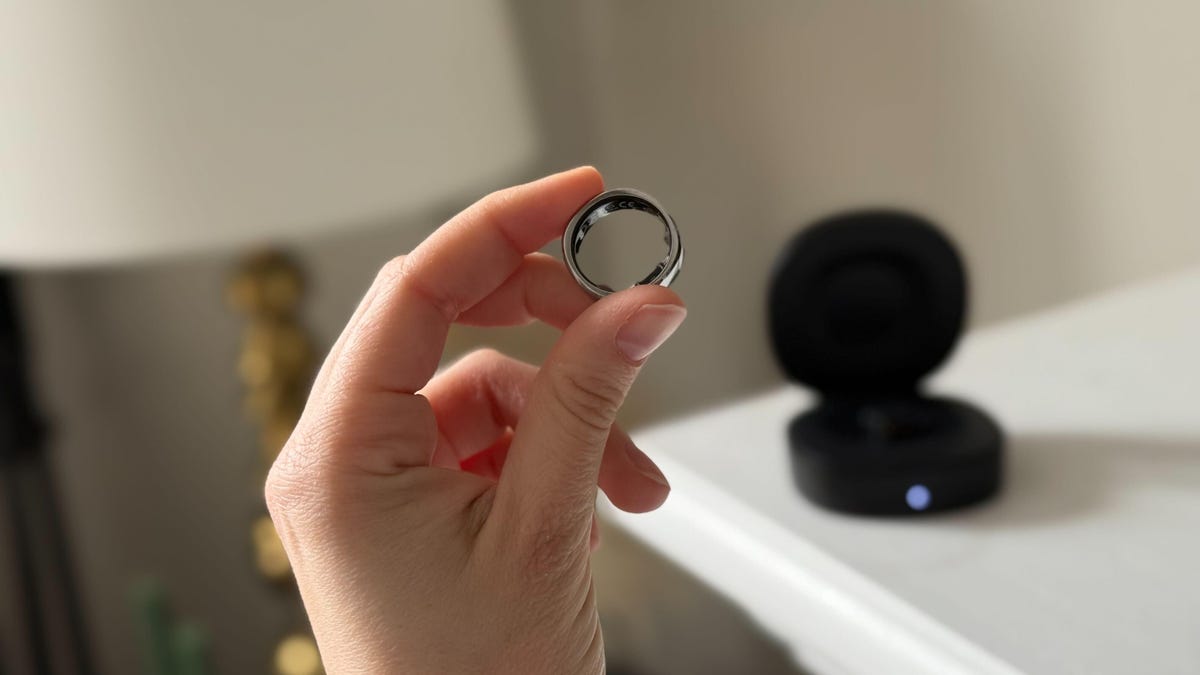
Lately, I’ve been hit with this nagging feeling that I don’t actually own anything anymore. You know exactly what I’m talking about—it’s that “subscription creep” that has infected every corner of our lives. You shell out hundreds of dollars for a piece of hardware, strap it to your wrist or slide it onto your finger, and then the realization hits: the “real” insights, the ones you actually bought the thing for, are locked behind a $6-a-month paywall. It’s exhausting, isn’t it? It feels like we’re essentially renting our own health data back from the companies we already paid. But if the latest news from the early 2026 wearable landscape is any indication, the tide might finally be turning. The RingConn Gen 2 has stepped into the ring (pun intended) as a champion for those of us who are just plain done with the “subscription-everything” era. After living with it for a while, I’m starting to think the industry giants should be looking over their shoulders with a fair bit of anxiety.
Let’s be honest for a second: the smart ring market has absolutely exploded. If we look back to 2024, Statista was projecting that the global smart ring market would grow at a staggering compound annual rate of nearly 30% through the end of the decade. We’re seeing that play out in real-time now. It feels like everyone has a ring—your yoga instructor, your accountant, your barista. But while the Oura Rings and Galaxy Rings of the world have dominated the headlines, they’ve also done something a bit more sinister: they’ve normalized the idea that your sleep data belongs to a cloud-based ledger that you have to pay a monthly “tax” to access. RingConn is doing something radically, refreshingly different by just… letting you own your data. For a flat $300, you’re in. No strings, no hidden fees, and no “premium” tiers that make you feel like a second-class citizen for not paying extra. It’s a bold move, and honestly, it’s about time someone made it.
It is such a relief to see a company pivot away from the trend that a 2023 Deloitte survey highlighted, where over half of consumers were already suffering from “subscription fatigue.” We’ve reached a breaking point. We don’t want a “relationship” with our hardware; we just want the things we buy to work. And the RingConn Gen 2 doesn’t just work; it outlasts almost everything else currently sitting on my nightstand. It’s a testament to the idea that you can provide high-end tech without nickel-and-diming your customers into oblivion. I found myself wondering why it took this long for a major player to realize that “no subscription” is actually a massive selling point, not just a missed revenue opportunity.
The 10-Day Battery Dream Meets the Real World (And I’m Not Even Mad)
If you’ve ever owned a first-gen smart ring, you know the routine. The marketing materials promise you a full seven days of life, but by the evening of day four, you’re already eyeing the charger because you’re terrified of missing a single night of sleep tracking. It’s a constant, low-level anxiety that shouldn’t exist with something as passive as a ring. When RingConn announced the Gen 2 last year, they made a claim that sounded almost too good to be true: 10 to 12 days of battery life on a single charge. Now, I’ve tested enough tech over the years to be a professional skeptic, and I’ll tell you right now: in my actual, messy, daily use, I haven’t quite hit that 12-day mark. I’m getting about seven solid days before I feel the need to top it off.
But here’s the thing—seven days of real-world, “don’t-have-to-think-about-it” use is still a massive win. Most of its competitors, including the highly-touted Oura Ring 4, usually tap out around day five for me. That extra two-day cushion is the difference between having a set routine where you charge your ring twice a week and completely forgetting where you even put the charging case because you use it so infrequently. And speaking of that case, it’s an absolute beast. It holds enough juice to keep the ring powered for over 150 days without needing to plug the case itself into a wall. For someone like me who travels frequently and has a drawer full of proprietary charging cables I can never identify, this is a genuine lifesaver. You could go on a two-week vacation, forget the case entirely, and still probably make it home with data to spare.
“The true value of a wearable isn’t in how many sensors it has, but in how often it actually stays on your body. Every hour it spends on a charger is an hour of lost data.”
— Editorial Perspective on Wearable Utility
We often get bogged down in the minutiae of sensor specs and hertz, but the Gen 2 is a stark reminder that battery life is actually the ultimate feature. If the device is dead, the most advanced heart rate monitor in the world is just a piece of expensive, inert metal. RingConn has clearly prioritized what I call the “set it and forget it” lifestyle. That’s exactly what a ring should be. It shouldn’t be another digital pet that you have to feed and manage; it should just be an extension of you that works in the background while you live your life. Every time I don’t have to take it off to charge, I’m getting a more complete picture of my health, which is the whole point of wearing the thing in the first place.
Wait, Is This Ring Actually… Square? (And Why That’s a Genius Move)
When you first pull the RingConn Gen 2 out of the box, the shape is definitely going to catch you off guard. It’s not a perfect circle; it’s more of what the tech world calls a “squircle”—essentially a rounded square. I’ll be the first to admit that I was skeptical. Jewelry is supposed to be circular, right? That’s the rule. But after wearing it for a few weeks, the design choice makes total, undeniable sense. Think about how a round ring spins on your finger throughout the day. For a piece of jewelry, that’s fine. For a medical-grade sensor, it’s a disaster. The flatter sides of the Gen 2 actually help the ring stay oriented correctly on your finger, which is crucial for the sensors to maintain a consistent “view” of your skin. It doesn’t spin around nearly as much as my perfectly round rings do, which means fewer gaps in my data.
It’s also incredibly durable, which is a must for me. I’m not exactly gentle with my hands—I’ve banged this thing against heavy gym weights, car doors, and granite kitchen counters, and so far, it hasn’t tarnished or scratched in any meaningful way. It comes in silver, black, and gold, and it actually looks like a piece of high-end jewelry rather than a tech gadget. We’ve finally moved past that awkward era where wearables looked like plastic toys from a cereal box. The Gen 2 feels premium, and at $300, it undercuts the competition significantly. Most high-end rings are pushing $350 or $400 these days, and that’s before you even start factoring in the lifetime cost of those pesky subscriptions I mentioned earlier.
The comfort was another major surprise for me. It’s thin—noticeably thinner than the first generation—and it lacks that “bulky” feeling between your fingers that some of the thicker smart rings suffer from. I’ve worn it to sleep every single night, and I genuinely forget it’s there within minutes of putting it on. That’s the highest compliment I can possibly pay to a wearable device. If I can sleep, shower, and work out without it bothering me, it’s a winner. It feels like the designers actually spent time considering the ergonomics of a finger rather than just trying to cram as much tech as possible into a circular shell.
Forget the 1-to-100 Scores—I’d Rather Grow a Digital Flower
Most health apps these days love to give you a “Readiness Score”—a single, arbitrary number from 1 to 100 that basically tells you whether you’re allowed to feel tired or not. I’ve always found that a bit reductive and, frankly, a little annoying. RingConn takes a refreshingly different approach with their “Wellness Balance” feature. Instead of a cold, hard number, you get a flower-like graph. Each petal represents a different biometric category: sleep, activity, vitals, and stress. If you’re doing well, the petals are long, vibrant, and full. If you’re slacking on your sleep or your stress levels are spiking because of a deadline, the petals shrink and the flower looks a bit wilted.
It’s a beautifully simple, intuitive way to visualize your health. When your “flower” is symmetrical, you’re in equilibrium. It’s less about chasing a high score like it’s a video game and more about maintaining a general sense of balance in your life. I found myself checking the app throughout the day just to see the shape of my flower—it felt more human and less like I was being graded by a cold algorithm. However, I will offer a small word of caution: if you’re a hardcore athlete—the type who needs to know exactly how many milliseconds of heart rate variability you had during a specific HIIT session—this might feel a little too “lifestyle” and not enough “data-cruncher” for your tastes.
The app also tries to give you context for your data, though I’ll admit it can be a bit… blunt at times. I had one day where I was feeling pretty under the weather and ended up staying in bed for about 12 hours. The app noticed this shift and actually sent me a notification warning me that too much sleep could lead to weight gain or a sluggish metabolism. While that might be technically true in a broad sense, it felt a little like being kicked while I was down. I think a bit more “empathy” in the AI coaching would go a long way, but the data itself is solid, easy to digest, and—most importantly—doesn’t require a monthly fee to view. It’s my data, presented clearly, and that’s exactly what I want.
The Verdict: Is It Time to Ditch the Big Names and Go Subscription-Free?
As we navigate the increasingly complex tech landscape of 2026, we have to start asking ourselves what we value more: brand prestige or practical, long-term utility? The RingConn Gen 2 isn’t the most famous ring on the market, and it doesn’t have the deep, sprawling ecosystem integration that you get with an Apple Watch or a Samsung Galaxy Ring. But it does something those tech giants seem fundamentally unwilling to do: it treats you like an owner, not a recurring revenue stream. It’s a refreshing philosophy in an industry that is increasingly obsessed with “lifetime value” over customer satisfaction.
If you’re looking for a device that you can wear for a full week, get deep and meaningful insights into your sleep and stress patterns, and never have to worry about a monthly bill hitting your credit card, this is the one. It’s built for the person who wants to track their health without making it a second job. It’s for the traveler who is tired of carrying a separate bag just for chargers. And most importantly, it’s for the consumer who wants to take a principled stand against the “everything-as-a-service” model that has infected almost every part of the tech industry. It’s a way to reclaim your data and your wallet at the same time.
Is it a perfect device? No, of course not. The battery life, while excellent, isn’t quite the 12-day miracle that the marketing brochures might lead you to believe. The app’s AI coaching can be a little preachy and could use a dose of human empathy. And I realize the “squircle” shape might not be everyone’s cup of tea from an aesthetic standpoint. But for $300, it offers what I believe is the best value-to-performance ratio in the smart ring world today. It’s a bold statement in a very small package, and I sincerely hope the rest of the industry is paying very close attention to what RingConn is doing here.
Is the RingConn Gen 2 waterproof?
Yes, it’s built to handle the elements. It features an IP68 rating and 10ATM water resistance, which is a fancy way of saying you can wear it while swimming, showering, or washing your hands without a second thought. I’ve worn mine in the pool several times with zero issues. Just a pro-tip: if you’ve been swimming in salt water or a heavily chlorinated pool, give it a quick rinse with fresh water afterward to keep the finish looking new.
Can I use it with both iPhone and Android?
Absolutely, and this is one of its biggest strengths. The RingConn app is fully featured and available on both iOS and Android platforms. Unlike the Galaxy Ring, which feels like it’s trying to trap you in the Samsung ecosystem, RingConn remains happily platform-agnostic. It doesn’t care what phone you have in your pocket, which makes it a fantastic choice if you’re the type of person who likes to switch between devices every couple of years.
Does it track workouts automatically?
It’s important to manage expectations here. It tracks your basic movement, steps, and heart rate throughout the day, but it’s not a dedicated fitness tracker in the same way a Garmin or an Apple Watch is. It doesn’t have built-in GPS, so it won’t map your runs. Think of it as a wellness and recovery tool. It’s much better at telling you how well you recovered from a workout or how your sleep quality is trending than it is at timing your 40-yard dash or tracking your splits on a marathon.
This article is sourced from various news outlets. Analysis and presentation represent our editorial perspective.