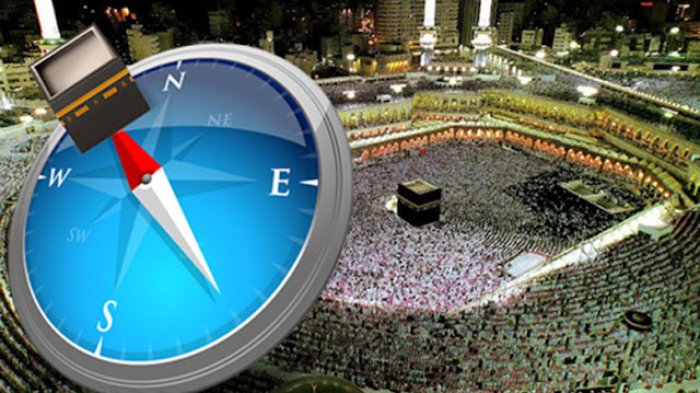
There’s a very specific, almost visceral kind of quiet panic that sets in when you find yourself in a hotel room in a city you’ve never visited before. The sun is dipping below the horizon, the call to prayer is approaching, and you suddenly realize you have absolutely no idea which way is West—let alone which specific degree points toward Mecca. We’ve all been there, squinting at the shadows or trying to remember if the city’s grid system follows the cardinal points. But as we settle into this first week of Ramadan 2026, that old-school confusion is starting to feel like a dusty relic of a completely different era. According to recent insights from Telset, a fresh crop of 12 Qibla direction apps has really taken center stage this year. It’s a fascinating reminder that while our spiritual goals remain as ancient and timeless as ever, the methods we use to reach them are getting some pretty serious 21st-century upgrades.
Honestly, it’s incredible to see just how far we’ve come in such a short span of time. Just a few years back, you might have found yourself squinting at a physical compass that was easily thrown off by a nearby radiator, or trying to calculate the sun’s position like you were a seasoned 18th-century navigator. Now? We’ve got a dozen high-tier, precision-engineered options sitting right there in our app stores, ready to turn our smartphones into sophisticated instruments of faith. But let’s be clear: this isn’t just about watching a digital needle spin around on a glass screen. It’s about how technology has finally, truly caught up with the nomadic, fast-paced lifestyle of the modern believer. We’re no longer tethered to a single spot; we’re moving, and our faith is moving with us.
When Your App Store Becomes a Prayer Space: Navigating the Paradox of Choice
When you actually take a look at the current list of recommendations, you see a massive spectrum of philosophy in design. On one end, you have the hyper-minimalist “Arah Kiblat” by Firdaus Kurniawan Zulqornain, and on the other, you have the “everything-plus-the-kitchen-sink” behemoth that is Muslim Pro. It makes you realize that we’re living in a true age of specialized digital tools. According to a 2024 Statista report, Indonesia’s smartphone penetration blew past the 80% mark, and that trend has only become more entrenched as we’ve moved into early 2026. We aren’t just using these devices to check work emails or mindlessly scroll through social feeds anymore; we’re using them as the literal anchors for our daily rituals and spiritual obligations.
The “Arah Kiblat” app is actually a perfect case study for what I like to call “utility-first” design. It’s been downloaded over 500,000 times for one simple reason: it doesn’t try to be a social media platform or a news aggregator. It just finds the Kaaba. Period. In an era where “app fatigue” is a very real mental health concern, there is something deeply refreshing about a tool that does exactly one thing perfectly. You open it, you get your answer in three seconds, and you put your phone down so you can actually focus on your prayer. Isn’t that supposed to be the whole point? It removes the digital noise rather than adding to it.
But then, of course, you have the giants of the industry. Muslim Pro has now officially passed the 50 million download mark, maintaining a staggering 4.6-star rating through years of updates. At this point, it’s no longer just an “app”; it’s a full-blown digital ecosystem. It’s got the Quran with multiple translations, prayer times for every corner of the globe, a Hijri calendar, and even community features that let you ask for prayers from strangers halfway across the world. It’s essentially the “Super App” of the religious world. And while some purists might argue that it’s “too much” or that it distracts from the simplicity of worship, the data suggests a different story. People clearly want their spiritual life to be as integrated, seamless, and data-rich as their mobile banking or their fitness tracking. We want everything in one place, and for millions of people, Muslim Pro is that place.
“The digitalization of ritual isn’t about replacing the sacred with the silicon; it’s about removing the friction between a busy modern life and ancient obligations.”
— Editorial Reflection, February 2026
Finding Our Way in a World That Never Stops Moving
Let’s take a second to talk about the “why” behind all of this. Why are we seeing such a massive, concentrated focus on these specific apps this year? For one thing, travel is back in a huge way. Whether it’s for business, family visits, or the “digital nomad” lifestyle that has become the standard for so many workers by 2026, we are a globalized community. A Pew Research Center study from a few years back noted that roughly 40% of Muslims were already using apps to help with religious duties, and that trend has only intensified globally since then. When you’re constantly changing time zones or sleeping in different cities every week, your phone becomes the only constant anchor you have. It’s your map, your bank, and now, your compass.
And if we’re being honest, the technology itself has just gotten significantly better. The magnetometers and GPS chips in our 2025 and 2026 handsets are miles more reliable than the ones we were struggling with five years ago. We’re finally moving away from that annoying “calibrate your compass by waving your phone in a giant figure-eight” dance—though, let’s be real, we all still have to do it occasionally when the sensors get confused. The integration of Augmented Reality (AR) in several of these 12 featured apps is where it gets really cool. You can literally hold your phone up and see a digital Qibla line projected directly onto your physical surroundings through the camera lens. It feels like living in a sci-fi movie, yet it’s serving a religious practice that is over 1,400 years old. That bridge between the ancient and the futuristic is actually quite beautiful when you think about it.
Digital Precision vs. Old-School Reality: Can You Really Trust the Needle?
One of the standout features highlighted in the Telset report is the widespread availability of both online and offline modes in this year’s top apps. This is a massive win for accessibility, and it’s something we often overlook. We tend to assume that everyone has a perfect 5G signal at all times, but life doesn’t always work that way. If you’re hiking in a remote area, stuck on a long-haul flight with spotty Wi-Fi, or traveling through a region with poor infrastructure, an offline Qibla compass is an absolute lifesaver. It relies on the phone’s internal hardware sensors rather than waiting for a server to ping back, which is a subtle but vital distinction for any serious traveler.
But there’s a catch to all this convenience. We’ve become so incredibly reliant on these digital tools that we’ve almost forgotten how to verify them. I’ve actually seen people get into heated arguments with a mosque’s physical mihrab because their phone told them the direction was a few degrees off. We have to remember that even in 2026, digital tools are fallible. Metal interference from building structures, magnetic cases, or even just uncalibrated sensors can throw a reading off by a significant margin. It’s a tool, not a divine miracle. The best apps in the 2026 lineup are the ones that are honest about this—the ones that include a “low accuracy” warning or a calibration prompt when the sensor is clearly struggling with local interference.
Whose Eyes Are on Your Prayer? Navigating the Ethics of Location Tracking
We really can’t talk about these apps without addressing the shadow that hangs over all “free” technology: data privacy. Over the last few years, there have been some very serious, very public conversations about how religious apps handle sensitive location data. When you’re using an app that tracks your exact coordinates five times a day (or more) for prayer times, that’s a goldmine of information. In the wrong hands, that’s a privacy nightmare.
The good news is that by 2026, the industry has definitely started to clean up its act, largely thanks to stricter international regulations and a much more vocal, tech-savvy user base. The top apps on this year’s list have leaned heavily into transparency as a selling point. They’re telling us exactly what they do with our data, and many have moved toward “on-device processing.” This means your location is calculated locally and never even leaves your phone’s hardware. It’s a win for the user and a necessary step for developers who want to maintain the community’s trust. If you’re choosing an app this Ramadan, my advice is to look at the privacy label just as closely as you look at the feature list. Faith requires trust, and your apps should too.
More Than a Compass: How Apps Are Becoming Our Full-Time Ramadan Companions
What’s really fascinating about the “12 apps” list is that many of them have evolved far beyond just pointing a needle toward Mecca. They are becoming what I’d call “holistic Ramadan companions.” We’re starting to see AI-driven features that suggest personalized meal plans for Suhoor based on your local climate and activity levels, or “fasting trackers” that sync with your smartwatch to monitor your hydration levels the moment the sun sets at Iftar.
It’s an incredible intersection of health, technology, and faith. We are seeing a fundamental shift from just “finding the direction” to “managing the entire experience.” This holistic approach is exactly why these apps have become so indispensable to the modern observer. They help us manage the complicated logistics of the month—the timings, the nutrition, the locations—so that we can actually clear our heads and focus on the spirituality of it all. If an app can tell me exactly when I need to stop eating and exactly which way I need to face to pray, that’s two fewer things cluttering my brain during a month that is supposed to be dedicated to reflection and peace.
Do these Qibla apps work without an internet connection?
They absolutely do. Many of the apps featured in the 2026 recommendations, especially the more streamlined ones like “Arah Kiblat,” utilize your phone’s built-in magnetometer (the hardware compass). As long as your GPS was able to lock onto your general coordinates recently, the compass will function perfectly fine offline. However, keep in mind that secondary features like live maps, street view, or real-time local weather updates will still require a data connection to refresh.
Why does my Qibla direction seem to jump around when I move the phone?
This is almost always due to local magnetic interference. Electronic devices, metal furniture, or even a small magnet in your phone case’s clasp can seriously mess with the internal sensor. For the best results, it’s always a good idea to lay the phone flat on a non-metallic surface—like a wooden table or the floor—and stay at least a few feet away from large speakers, computers, or power cables when you’re taking a reading.
Is Muslim Pro still the most recommended app in 2026?
It depends on what you’re looking for. While it remains the most popular choice by far because of its massive, all-in-one feature set, many users in 2026 are starting to pivot toward “lightweight” alternatives. If you just need a quick Qibla check and prayer times without the extra bells and whistles, smaller apps might be faster and easier on your battery. But if you want the full “super app” experience with community and content, Muslim Pro is still the heavyweight champion of the world.
At the End of the Day, It’s Still About the Intention
At the end of the day, whether you’re using a state-of-the-art AR compass that looks like it belongs in a fighter jet or just a simple green arrow on a basic screen, the goal remains exactly the same. These 12 apps are ultimately just mirrors of our own intent. They represent a global community that is trying its best to stay connected to its deep, ancient roots while simultaneously moving forward into an increasingly digital future.
I think there’s something genuinely beautiful about the fact that in 2026, a developer sitting in an office in Indonesia can write a few lines of code that help a student in London, a nurse in New York, or a traveler in Tokyo find their way home—spiritually speaking. It’s a powerful reminder that technology doesn’t have to be cold, clinical, or isolating. Sometimes, it’s the very thing that helps us stay on the right path. Both figuratively and literally.
So, as we navigate the complexities of this Ramadan, let’s go ahead and appreciate the convenience. Let’s use the tools that brilliant people have built for us. But let’s also remember to actually look up from the screen once the direction is found and the phone is put away. After all, the app is great at finding the Qibla, but you’re the one who has to do the praying.
This article is sourced from various news outlets and tech reports. The analysis and presentation provided here represent our editorial perspective on the 2026 digital landscape.