We’ve all been there, haven’t we? You notice that nagging little red notification badge sitting on your Settings icon, promising a whole new world of fancy emojis, customizable lock screen widgets, and maybe a translucent menu or two to show off to your friends. You tap “Update,” sit through the agonizingly slow progress bar, and then… the reality of the situation hits you like a ton of bricks. Suddenly, your phone feels just a little bit heavier in your hand. The keyboard starts to lag for a fraction of a second when you’re mid-sentence. That battery, which used to comfortably carry you through dinner, is now gasping for air and begging for a charger by 3:00 PM. It’s a frustrating phenomenon that most of us have just come to accept as the “price of progress.” But if the latest buzz from Telset is any indication, Apple might finally be calling a much-needed time-out on this endless cycle of software bloat.
Why Choosing “Boring” Might Actually Be the Smartest Move Apple’s Made in Years
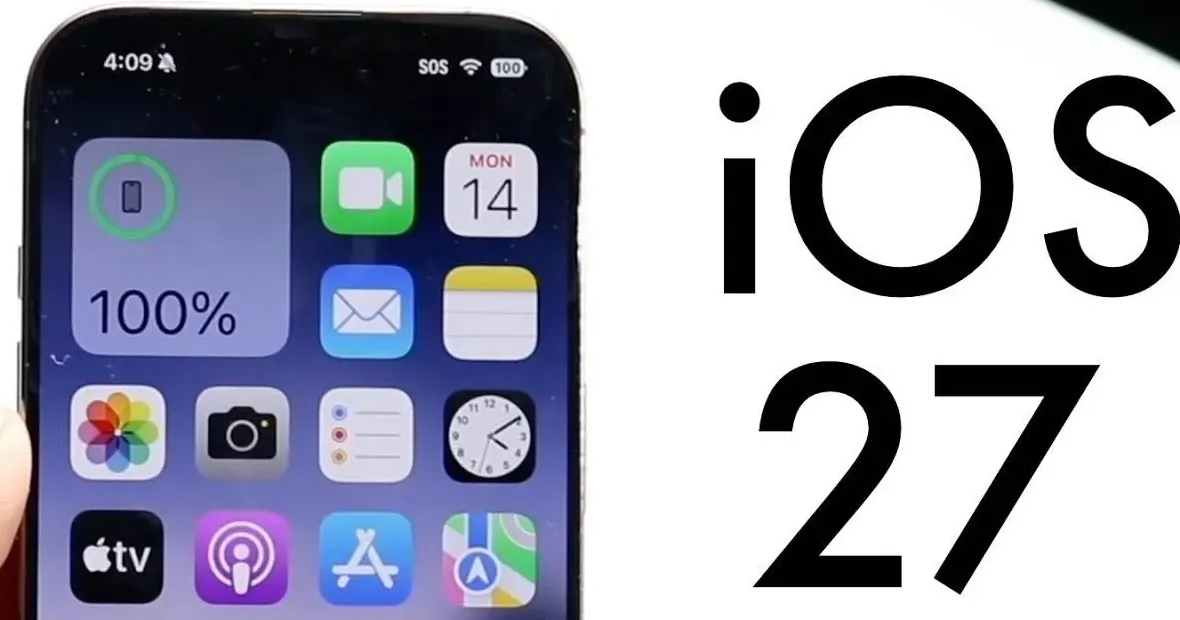
In a tech world that seems completely obsessed with the “next big thing,” Apple is reportedly planning to give us something that feels almost revolutionary in its simplicity: stability. Reports trickling out of Cupertino this February 2026 suggest that iOS 27 isn’t going to be the massive visual overhaul or the aesthetic “glow-up” that many were probably expecting. Instead, the word on the street is that it’s being built from the ground up as a “performance-first” release. And honestly? It’s about damn time. We’ve reached a point where our hardware is practically screaming for the software to just step aside and let it work. If these rumors hold water, iOS 27 is going to be the lean, mean, fighting machine that actually allows your brand-new iPhone 18—and, more importantly, your aging older devices—to finally breathe again without the stutter.
But let’s be real for a second here. In an industry that lives, breathes, and dies by the “wow” factor of a flashy keynote presentation, choosing raw performance over cosmetic flair is a massive, high-stakes gamble. It’s incredibly hard to market something like “optimized memory management” to a teenager who just wants a cool new way to slap stickers on their friends’ faces. Yet, this shift signals a maturing Apple—one that finally realizes a phone that works perfectly every single time is far more valuable to a user than a phone that looks pretty while it’s crashing in the background. It’s a pivot from “flashy” to “functional,” and it’s a move that should have happened years ago.
Channeling the Spirit of the Legendary “Snow Leopard” Strategy
For the tech historians and long-time Mac users among us, the phrase “Snow Leopard” carries a very specific, almost nostalgic weight. Back in 2009, Apple released Mac OS X Snow Leopard to the public. The big twist? It didn’t have a single major new “headline” feature. Instead, it was a massive, deep-dive cleanup of the code under the hood. It was faster, it was lighter, and it was significantly more reliable than anything that had come before it. According to the ever-reliable Mark Gurman, iOS 27 is poised to be the mobile equivalent of that legendary release. And man, do we ever need it right now.
Just think about the state of software lately—it’s been a bit of a mess across the board. We’ve seen the “Dear Algo” feature pop up on Threads, which essentially lets users manually tweak their own feeds because the automated systems have become too bloated and messy to work correctly. We’ve also watched Tesla delay its CarPlay integration yet again, largely due to the persistent stability issues that plagued the early versions of iOS 26 last year. It’s not just a feeling, either; a 2025 Statista report highlighted that a whopping 58% of smartphone users cite “system speed and responsiveness” as their primary reason for choosing a specific brand. That’s a huge number, and it far outranks the desire for “new visual features.” People don’t want more bells and whistles; they want a phone that responds when they touch it.
“Software is like a garden. If you keep planting new flowers without pulling the weeds, eventually you just have a mess that nobody can walk through.”
Anonymous Apple Software Engineer, circa 2025
Apple’s decision to finally “clean the house” with iOS 27 isn’t just about making the UI feel a bit snappier during daily use. It’s really about addressing years of accumulated technical debt. Over the last half-decade, Apple has piled feature upon feature—we’ve had the Dynamic Island, the Always-On Display, Standby Mode, and increasingly complex AI integrations. Each one of these additions adds another layer of complexity to the system. By stripping back the unnecessary “visual noise” and painstakingly optimizing the kernel, Apple is essentially giving the iPhone’s processor a much-needed, well-deserved vacation. It’s about making sure the foundation is solid before they try to build anything else on top of it.
The Hidden AI Bottleneck: Why Speed Is the New Luxury
There’s actually a very specific, hidden reason for this sudden obsession with raw performance: Artificial Intelligence. As we’ve seen throughout 2025 and into the early months of 2026, the demand for on-device AI processing has absolutely skyrocketed. We aren’t just sending simple queries to a cloud server anymore; our phones are now tasked with running massive large language models (LLMs) locally to protect our privacy and keep things fast. But the thing is, these models are incredibly hungry. They eat through RAM for breakfast and they sip on your battery life like it’s a glass of fine wine. They are resource-heavy in a way that traditional apps simply aren’t.
If iOS 27 were to include yet another massive UI redesign—complete with heavy blur effects, complex transparency, and resource-intensive animations—there simply wouldn’t be enough “overhead” left for the AI features to function smoothly. By making the base operating system as light as possible, Apple is creating a massive runway for their AI features to actually take off. It’s a pragmatic, calculated move. A Pew Research study from late last year found that users are becoming increasingly frustrated by AI features that take “too long to think.” If Apple wants their “Apple Intelligence” suite to actually feel magical and seamless, the operating system itself needs to become essentially invisible. It needs to get out of the way.
And let’s not ignore the elephant in the room: battery life. We’ve seen some specialized wearables lately promising “27-day battery life,” but for the average smartphone, we’re still frustratingly stuck in that 24-hour loop of charging every single night. Much of that drain doesn’t come from the apps you’re actually using, but from inefficient background processes that are constantly churning away. If iOS 27 can truly optimize how the CPU handles those minor, repetitive tasks, we might finally see a meaningful, real-world jump in daily endurance without needing a physically larger battery. It’s the kind of innovation that you can’t see with your eyes, but you’ll definitely feel it by 9:00 PM when you realize you still have 40% left in the tank.
The Human Side: Why Your Parents (and Your Favorite Developers) Will Love This
One of the most frequently overlooked benefits of a “stability” year is the lack of a steep learning curve. Every single time Apple moves a button, changes a menu, or alters how a basic gesture works, millions of people have to re-learn how to use their most essential daily tool. This is especially true for senior users or those who aren’t exactly tech-obsessed. By keeping the design language consistent from iOS 26 to iOS 27, Apple is practicing what I like to call “human-centric engineering.” It’s about having a bit of respect for the user’s muscle memory. There’s something to be said for a phone that stays familiar even after a major update.
I’d bet that developers are also breathing a massive, collective sigh of relief right now. When the UI changes drastically every year, app creators have to spend months of their lives just updating their layouts and fixing broken elements just to keep their apps from looking dated or feeling clunky. With the stability of iOS 27, they can finally focus their energy on making their apps *better* and more feature-rich, rather than just making them *compatible*. We might actually see a whole new wave of third-party apps that are more stable and polished because the foundation they’re built on isn’t constantly shifting underneath their feet like quicksand.
And let’s not forget about what I call the “Tesla factor.” Those delays in CarPlay were a serious black eye for Apple’s reputation for software reliability. By focusing on the plumbing—ensuring that external integrations and wireless handshakes are rock solid—Apple is actively fixing its relationship with the automotive and smart home industries. If iOS 27 makes your car connection feel instant and ensures your smart lights actually turn on the very second you tap the screen, that’s a much bigger win for the average person than any flashy new wallpaper or icon pack could ever be. It’s about making the ecosystem actually work the way it’s supposed to.
Is iOS 27 going to look exactly like iOS 26?
For the most part, yes. While you might see some very minor refinements to specific icons or perhaps a tweak to the typography here and there, the core layout and the general “feel” of the OS are expected to remain very consistent. The focus this year is almost entirely on what’s happening behind the glass, not on top of it.
Will older iPhones actually benefit from this update?
In theory, they should! Because this update is laser-focused on efficiency and stripping away system overhead, older models like the iPhone 14 or 15 might actually feel faster and more responsive after the update. It’s a rare case where an update might actually give your old phone a second lease on life rather than slowing it down.
Does this mean we won’t get any new features at all?
Not necessarily. There will almost certainly be new AI capabilities and perhaps some new functional tools added to the mix, but the key difference is that they won’t come at the expense of overall system performance. Think of it as a “quality over quantity” approach to software design.
Final Thoughts: The iPhone Is Finally Growing Up
Let’s face it: we are well past the era of “revolutionary” smartphone changes happening every twelve months. The slab of glass and metal in your pocket is now a mature, refined product. Just like a car or a kitchen appliance, we don’t really need it to reinvent itself every year; we just need it to be incredibly reliable. iOS 27 feels like Apple’s way of admitting that the frantic race for the “newest” feature is essentially over, and the much more important race for the “best” daily experience has finally begun.
Will some people call this update boring? Oh, absolutely. There will be plenty of tech YouTubers and influencers who complain that there’s “nothing to talk about” in their review videos because they can’t show off a new home screen layout. But for the rest of us—the people who just want our phones to open the camera app instantly when our kid does something cute, or for our navigation not to stutter right when we’re lost in a new city—iOS 27 might just be the most important update Apple has released in a decade.
In 2026, speed isn’t just a technical spec; it’s the ultimate feature. And if Apple can deliver an iPhone that stays “sat-set”—that’s slang for snappy, for those wondering—for three or four years without a hint of slowing down, then they’ve truly won the long game. It’s not about the cosmetics or the fluff; it’s about the soul of the machine. And right now, that soul is getting exactly the kind of fine-tuning it deserves.
This article is sourced from various news outlets. Analysis and presentation represent our editorial perspective.