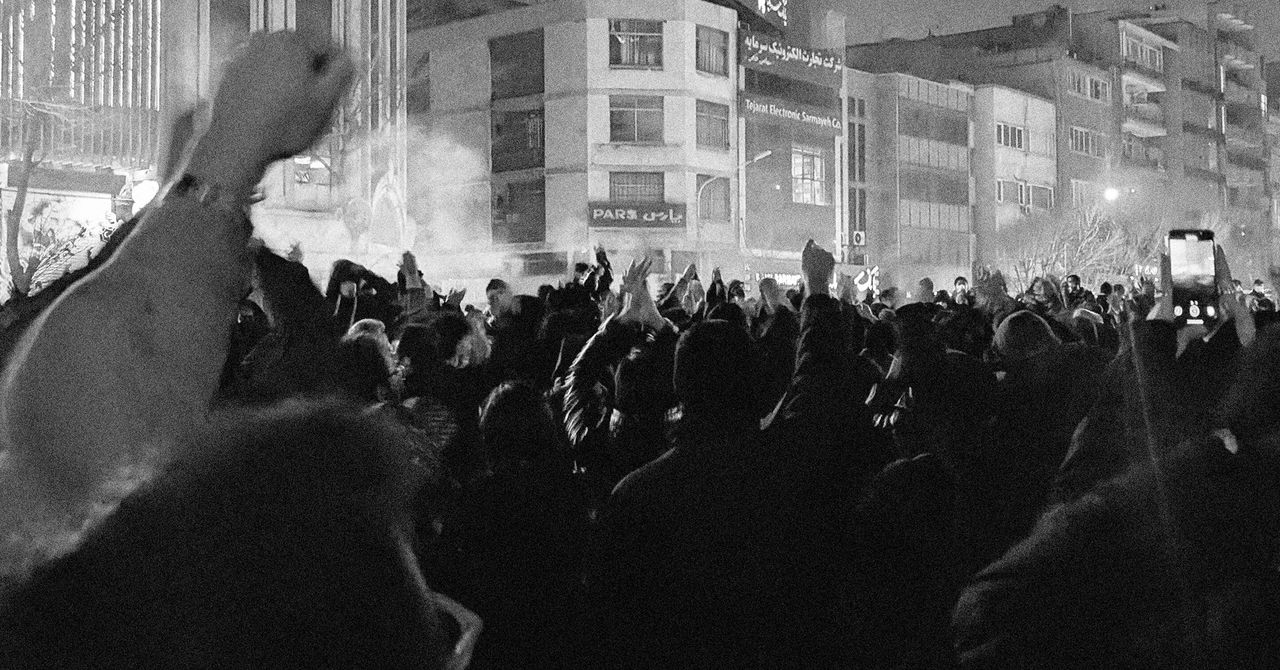
Okay, here is the situation. A recent deep dive by WIRED just shed some light on what is happening with Iran’s internet connectivity, and honestly? It is wild. It goes way beyond the usual censorship we have all come to expect. While everyone was watching the tragic protests unfold on the ground, a silent war was raging online. The government didn’t just filter the web this time; they basically yanked the cord on the whole country.
But here is the twist—and it’s a weird one. This wasn’t some calculated, high-tech removal of information. It was messy. Chaotic, even. For the first time, it looks like the regime panicked and actually broke their own surveillance tools in the process. This is a huge deal because it signals a scary shift in how authoritarian governments might handle the internet from now on: moving from control to total destruction, even if it shoots them in the foot.
The Full Story: A Clumsy Disconnect
Let’s break down what actually went down. For over four weeks, Iran faced a near-total blackout from the global internet. Now, Tehran messing with connectivity isn’t exactly breaking news—they’ve been imposing digital curfews and filtering stuff for 15 years. They have also spent a literal fortune building something called the National Information Network (NIN).
Think of the NIN as a massive, country-wide intranet. The goal was pretty simple: if they need to cut off the “global” web (bye-bye Instagram and WhatsApp), the internal banking, government, and hospital systems could keep humming along on the NIN. It was supposed to be the ultimate backup plan. A way to isolate the people without crashing the economy.
But that is not what happened this January. Researchers told WIRED that the regime completely ignored its own playbook. Instead of a smooth switch-over to the NIN, they went for a “blunt-force” approach. They just crippled everything.
A researcher from Project Ainita—an internet freedom initiative—described it as a total panic move. “It looked very impulsive,” they said. They essentially nuked their own infrastructure. The shutdown was so bad that landlines, special privileged-access SIM cards, and even the NIN itself went offline for days. Doug Madory, a director of internet analysis over at Kentik, called it arguably “one of the biggest communications blackouts in history.”
The Surveillance Paradox
Here is where things get really interesting. And ironic. You might think shutting down the internet gives the government total control, right? In a physical sense, sure, it stops protesters from organizing. But from an intelligence perspective? It blinds them.
When you kill the network, you wipe out the digital breadcrumbs intelligence agencies use to track people. You can’t intercept WhatsApp messages or track location data if nobody can get a signal. By plunging the country into digital darkness, the government created a massive blind spot for its own spies.
On the flip side, when the internet is working in Iran, the level of surveillance is terrifying. Reports from the nonprofit Holistic Resilience show that the Islamic Revolutionary Guard Corps (IRGC) basically owns—or holds shares in—almost all the telecom systems in the country. We aren’t just talking about reading emails here; researchers call it “lifestyle surveillance.”
We are talking about a centralized nightmare that combines CCTV, facial recognition, and behavioral profiling. They want to know who you are, where you go, and who you talk to. But to do that, they need the network to stay on. That is why this recent “panic” shutdown is so baffling to experts—it hurts the regime’s long-term goal of total monitoring.
From Blacklisting to Whitelisting
As connectivity slowly creeps back online, we are seeing a disturbing shift in strategy. Historically, internet censorship worked by “blacklisting.” You could go anywhere except the sites the government blocked. Think of it like a garden with a fence around the poisonous plants.
Now? It looks like Iran is moving toward “whitelisting.” This flips the script entirely. In this model, you have zero access to the internet unless a website is specifically approved by the state. It stops being a public utility and becomes a government-granted privilege.
State-controlled media recently dropped a list of websites available on the NIN. It included local search engines, local video services, and local messaging apps. If you aren’t on the list, you don’t exist digitally. This turns the internet into a closed loop—kind of like North Korea, but applied to a population that actually knows how to use the web.
Why This Matters
I know, you might be sitting there thinking, “That’s terrible, but I don’t live in Iran.” Here is why you should care. This isn’t just about one country. This is basically a beta test for the “Splinternet.”
Tech experts have been warning for years that the global internet could fracture into separate, national networks controlled by local governments. Russia has been testing its own “sovereign internet,” and China has its Great Firewall. If Iran proves that a country can survive—even barely—by cutting off the global web and relying on a domestic intranet, other authoritarian regimes are going to take notes.
Plus, this highlights just how fragile our digital rights really are. We tend to see internet access as a given, almost like air or water. But the infrastructure—the cables, the servers, the ISPs—is owned by companies and regulated by governments. If the people in power decide to pull the plug, the screen goes black. It is a stark reminder that technology isn’t inherently liberating; it is a tool. And it can be used for connection or control.
Looking Ahead
So, what happens next? The situation is volatile, but looking at the data, we can make a few educated guesses about the future of connectivity over there.
1. The Economic Reality Check
I predict the regime will be forced to restore more connectivity simply because of money. You can’t run a modern economy on a whitelist. International trade, shipping, and banking need the global internet. The “panic shutdown” likely cost the Iranian economy millions, if not billions. They are going to have to find a balance between control and commerce.
2. The Rise of the “Super-App” Model
Keep an eye out for Iran pushing its own versions of WeChat—a single “super-app” for payments, messaging, and news. By forcing citizens onto a domestic platform, they can monitor activity way easier than trying to crack encrypted foreign apps like Telegram or Signal.
3. A Cat-and-Mouse Game
We will likely see a surge in low-tech communication methods. When the digital highway is closed, people take the dirt roads. We might see an increase in “sneakernets” (physically moving data on USB drives) or the use of mesh networking apps that use Bluetooth to hop messages between phones without needing a central server.
FAQ
What is the National Information Network (NIN)?
Basically, the NIN is Iran’s domestic internet. It is a state-controlled network designed to host Iranian websites, banking services, and apps so they can keep working even if the connection to the worldwide web is cut. It allows the government to inspect and filter traffic way more easily than on the open web.
Can VPNs bypass this kind of shutdown?
It is really tough. VPNs (Virtual Private Networks) need an initial connection to the internet to actually work. If the government physically cuts the connection to the outside world or blocks all encrypted traffic protocols, standard VPNs often fail. That said, during partial shutdowns or “throttling,” sophisticated VPNs can sometimes punch through.
Why did the government shut down the NIN too?
That is the million-dollar question. Experts think it was a panic reaction to widespread protests. The situation likely escalated so fast that authorities decided a “total blackout” was safer than trying to filter traffic, even if it meant knocking their own internal systems offline. It screams a lack of coordination.
Is this permanent?
Likely not in its current “total blackout” form. A permanent disconnect would absolutely destroy the economy. However, we are likely moving toward a permanent state of “filtered access,” where the global internet is extremely slow or blocked, and the fast, cheap option is the state-monitored NIN.
How does this affect the rest of the world?
It sets a pretty dangerous precedent. If Iran successfully transitions to a “whitelisted” internet model, other nations with authoritarian leanings might adopt the same technology and legal frameworks. It threatens the whole idea of a single, open, global internet.
The Bottom Line
The recent internet blackout in Iran was more than just a censorship measure; it was a sign of a regime at war with the digital age. By impulsively crashing their own National Information Network, the government showed they are willing to sacrifice economic stability and their own intelligence gathering just to maintain control.
As connectivity slowly returns, it won’t be the open internet Iranians once knew. It is going to be a smaller, monitored, and gated digital world. This is a wake-up call for digital rights advocates everywhere: the fight for a free internet is physical, political, and far from over.
Share this article with anyone interested in tech policy or human rights—it’s a story that needs to be heard.
This article is sourced from various national news outlets, including WIRED. All presentation and analysis represent our editorial perspective, without any intention to disparage or harm any party.