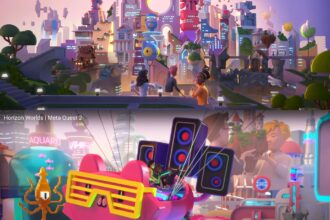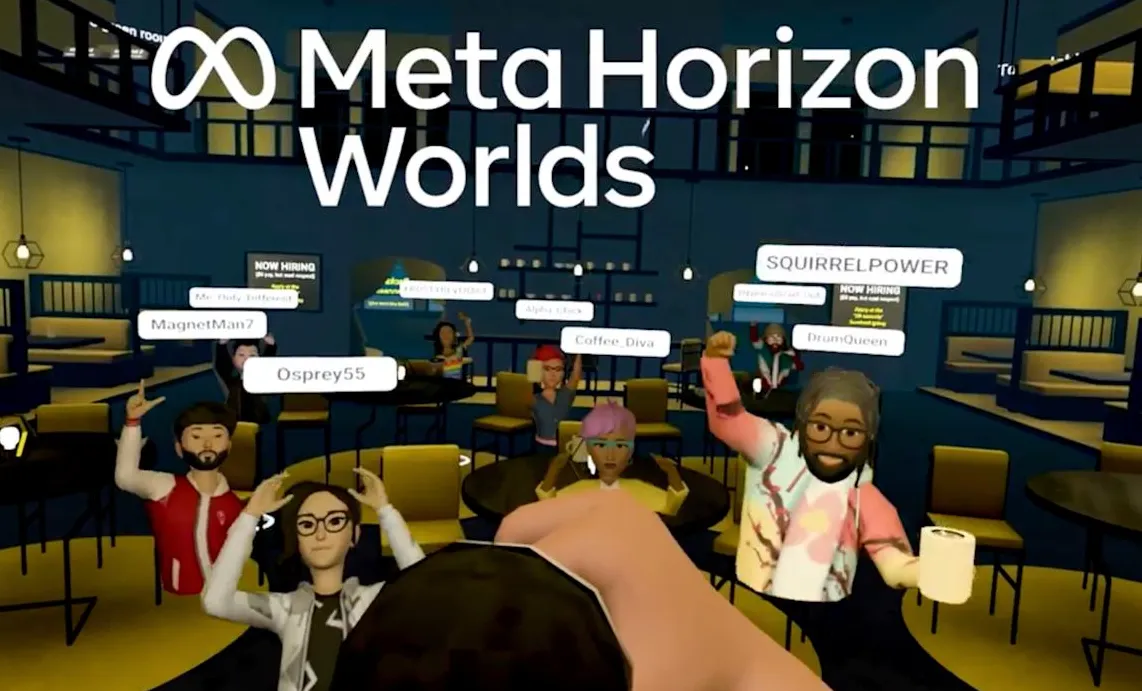
Do you remember 2021? Honestly, it feels like it happened in a different geological era, doesn’t it? Back then, the world was still a bit upside down, and Mark Zuckerberg stood in front of a green screen to give us a sermon on the future. He told us we’d all be living, working, and—if the marketing was to be believed—practically breathing in a digital utopia called the Metaverse. We did our part, too. We went out and bought the headsets, we spent way too much time customizing avatars that, for some reason, didn’t have legs, and then we waited. And waited. But if you’ve been following the latest reports from Telset, that dream is currently undergoing a massive, much-needed reality check. Meta has officially decided to “decouple” Horizon Worlds from its Quest VR ecosystem. And you know what? It’s probably the smartest, most pragmatic thing they’ve done in years.
For what feels like an eternity in the tech world, Horizon Worlds was the golden child that just couldn’t quite find its footing. It was tethered—both literally and figuratively—to the Quest hardware. It was a closed loop. If you didn’t feel like strapping a heavy plastic brick to your face for two hours just to hang out, you simply couldn’t join the party. It was a high-friction experience in a world that craves instant gratification. But that’s all shifting now. By finally separating the platform from the hardware, Meta is essentially admitting what most of us have known for a while: the “Metaverse” isn’t some mystical place you “enter” through a portal; it’s just another app on your phone. And as we navigate 2026, that distinction matters more than we ever realized it would.
The Great Migration: Why Meta is Finally Chasing the Kids on Their Phones
Let’s be brutally honest for a second. While Meta was busy trying to convince us that high-end VR was the definitive future of social interaction, an entire generation of kids was already living in their own version of the “metaverse” on cracked iPhone screens. They weren’t waiting for a $500 headset; they were already there, building and socializing in Roblox and Fortnite. The numbers back this up in a way that’s hard to ignore. According to a 2024 Statista report, mobile gaming revenue climbed to nearly $100 billion. To put that in perspective, that figure dwarfs the entire VR hardware market by a margin that is, frankly, staggering. Meta looked at those charts and finally realized they were playing the wrong game on the wrong field.
By aggressively pushing Horizon Worlds onto mobile devices and web browsers, Meta is finally stepping into the arena where the actual users—and the actual money—reside. They’re no longer demanding that you invest in a pricey peripheral just to see a virtual concert or play a mini-game; they’re just asking you to tap an icon that’s already on your home screen. It’s a move toward accessibility that was, quite frankly, long overdue. But let’s not kid ourselves—this puts them in a very crowded, very dangerous spot. Suddenly, they aren’t just competing with niche VR apps; they’re fighting for attention against the likes of TikTok, Instagram, and the absolute behemoth that is Roblox. It’s a David and Goliath story, except David is a multi-billion dollar social media company trying to act like a scrappy startup.
Can they actually win this fight? Well, they do have one weapon in their arsenal that Roblox simply can’t match: the social graph. Integrating Horizon Worlds directly into your Facebook and Instagram feeds is a massive, calculated power move. Just imagine the workflow: you’re scrolling through your Reels, and you see a “Join this world” button that instantly drops you into a 3D hangout with your actual, real-life friends. That’s the kind of friction-less entry that could actually make “the metaverse” a reality for normal people—not just the hardcore tech enthusiasts who actually enjoy troubleshooting firmware updates on a random Tuesday night. It takes it from being a “tech project” to being a “social feature.”
“We are explicitly separating our Quest VR platform from our Worlds platform to create more space for both products to grow,”
— Samantha Ryan, VP of Content at Meta Reality Labs
The Quest’s New Identity Crisis (And Why It’s Actually Good for Gamers)
So, if Horizon Worlds is packing its bags and moving to the mobile neighborhood, does that mean the Quest is dead in the water? Not by a long shot. But its identity is definitely shifting, and honestly, it’s about time. For years, Meta tried to market the Quest as “the next PC”—a general-purpose computing device that would handle everything from your spreadsheets to your social life. It turns out, though, that most people don’t want to do their taxes in a headset. They want to use it to slash neon blocks in Beat Saber or get their adrenaline pumping by shooting zombies with their buddies. Meta is finally leaning into that reality, and it’s a breath of fresh air for the hardware.
Recent reports surfacing in late 2025 suggest that Meta’s hardware roadmap is narrowing its focus significantly. They’re doubling down on support for third-party developers, working hard to improve “discoverability” in the Quest Store, and essentially turning the Quest into a dedicated gaming machine. It’s a bit like how the iPad eventually found its true calling as a creative tool and a media consumption device rather than the laptop replacement Apple initially promised. The Quest is becoming the “console” of the spatial era. It’s a specialized tool, not a Swiss Army knife that does everything poorly.
And let’s look at what the data tells us. A Pew Research study from late last year found a fascinating trend: while general VR adoption has hit a bit of a plateau, “hardcore gaming” remains the primary driver for a whopping 72% of headset owners. By stripping away the “social platform” baggage that was weighing down the Quest experience, Meta can finally optimize the hardware for what it’s actually good at: immersion and raw performance. They’re stopping the “jack of all trades, master of none” approach, which, if we’re being totally honest, was making the entire user experience feel a bit cluttered, confused, and—at times—downright frustrating.
The Reality Check: How AI and Smart Glasses Swallowed the Metaverse Whole
We really can’t talk about Meta in 2026 without addressing the massive AI elephant in the room. Mark Zuckerberg’s obsession has shifted, and it has shifted hard. If you’ve seen the success of the Ray-Ban Meta glasses, you know exactly what I’m talking about. They look like normal eyewear, but they act like a personal AI assistant that lives on your face. This one product has changed the entire trajectory of the company. Why? Because these glasses are useful *right now*. They solve problems today, rather than promising to solve them in some theoretical digital future that’s always five years away.
This is where the Horizon Worlds split gets really interesting from a strategic standpoint. If Horizon Worlds becomes a cross-platform social layer, it can eventually be projected onto the lenses of these AI glasses. You don’t need a bulky VR headset to see a digital avatar sitting on your real-world couch if you’re wearing stylish smart glasses. By moving Horizon Worlds to mobile and ensuring it’s compatible with AI frameworks, Meta is quietly building the software foundation for an “Augmented Reality” future, rather than the “Virtual Reality” one they initially pitched. It’s a pivot from total immersion to “ambient computing,” and it feels much more aligned with how humans actually want to live.
It’s a pragmatic, almost clinical pivot. They’re building the individual blocks—mobile social interaction, AI-driven hardware, and high-end gaming VR—and they’re letting them grow independently. Maybe one day, years down the line, they’ll snap back together into one cohesive vision, but for now, they are much better off as separate entities. It’s like a famous band breaking up so the lead singer can go make a solo pop album while the drummer stays in the heavy metal scene. Both can be wildly successful without holding the other back or forcing a creative compromise that satisfies nobody.
Is This a White Flag or a Strategic Masterstroke?
I know what the critics are saying. Some people are already calling this the “death of the Metaverse.” Personally? I think that’s a bit dramatic, even for the tech press. It feels more like the “growing pains” of an industry that finally had to grow up. We’ve finally moved past that exhausting hype cycle where every single press release had to include the word “immersive” at least ten times. Now, we’re in the execution phase. And as any business owner will tell you, execution requires a brutal level of focus.
The cold, hard reality is that Meta’s Reality Labs was hemorrhaging money at a rate that would make most governments blush—we’re talking billions of dollars every single quarter. You can only sustain that kind of burn for so long before the shareholders start sharpening their pitchforks and demanding heads. By splitting these platforms, Meta can finally show a clearer ROI (Return on Investment) for each specific division. The mobile side of Horizon can monetize through ads and microtransactions just like a traditional social app, while the Quest side can function as a high-margin gaming ecosystem. It’s about accountability as much as it is about technology.
Will my Quest headset still work with Horizon Worlds?
Yes, absolutely. Don’t worry, your hardware isn’t becoming a paperweight. Horizon Worlds isn’t leaving the VR space; it’s just no longer *exclusive* to it. You’ll still be able to jump in with your headset whenever you want that full, immersive experience, but you’ll also have the convenience of checking on your virtual home or chatting with friends from your phone while you’re sitting on the bus or waiting for a coffee. It’s about choice, not exclusion.
Is Meta giving up on the Metaverse?
Not at all, though it might look like a retreat to the casual observer. They’re just changing the delivery method to something more palatable for the average person. Instead of trying to force every human being on earth into a headset, they’re bringing “metaverse” elements to the devices people already carry in their pockets every single day. It’s a fundamental shift from “Virtual Reality” as a destination to “Ambient Computing” as a layer of our daily lives. It’s less about escaping reality and more about enhancing it.
Looking ahead, I fully expect to see Horizon Worlds start looking a lot more like a professional creative suite. If they actually want to beat Roblox at its own game, they need to give creators better tools and, more importantly, better ways to make a living. The move to mobile makes that transition so much easier because the developer pool for mobile apps is infinitely larger than the tiny pool of VR-specific developers. It’s a numbers game, and Meta is finally starting to play the odds to win.
In the end, this “Great Divorce” might actually be the best thing that ever happened to Meta’s digital ambitions. By letting Horizon Worlds breathe on its own and letting the Quest focus on being a world-class gaming rig, Meta is finally acknowledging a truth they tried to ignore: the future isn’t one-size-fits-all. It’s messy, it’s spread across multiple platforms, and it’s probably living in your pocket right now. It might not be the sci-fi dream we were sold in 2021, but it’s a version of the future that might actually work for the rest of us.
This article is sourced from various news outlets. Analysis and presentation represent our editorial perspective.