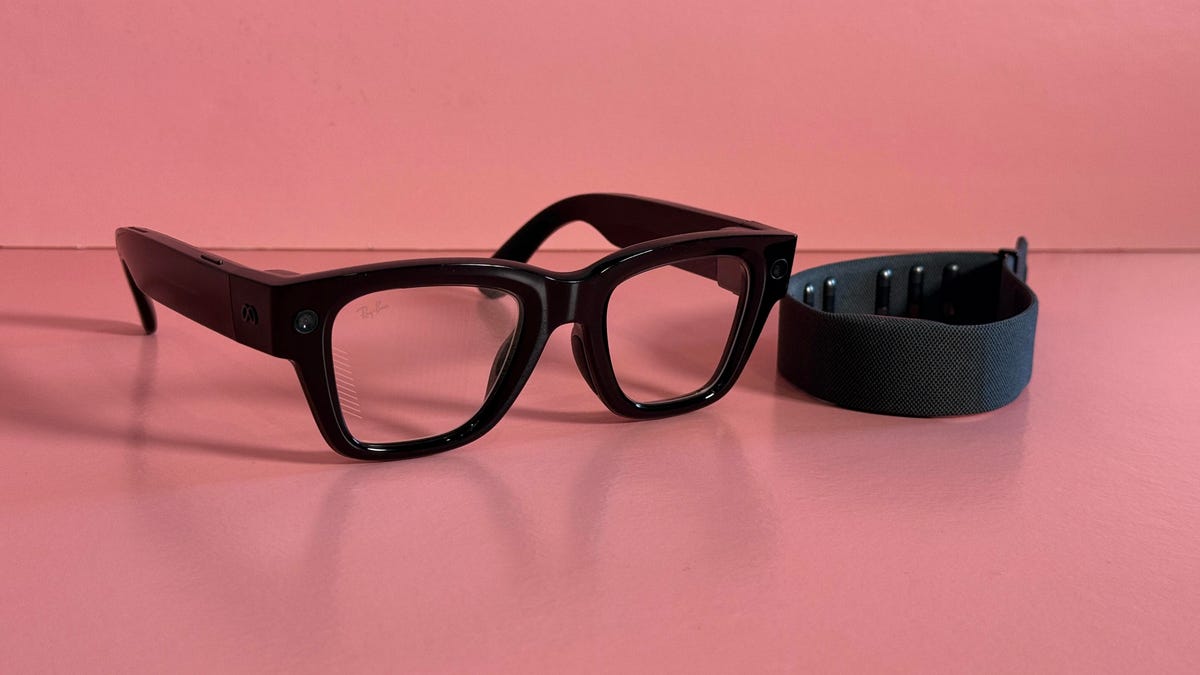
We’ve all seen it—or worse, we’ve been that person. You’re standing on a busy street corner, looking slightly frantic as you tap the side of your smart glasses, desperately trying to skip a track or snap a quick photo. It’s a bit of a social nightmare, isn’t it? You end up looking like you’re struggling with a malfunctioning hearing aid that just won’t cooperate. But if the latest industry whispers are anything to go by, that era of “clunky” wearable interactions is finally on its way out. According to CNET, Meta is preparing to drop a full-blown smartwatch later this year, and while the tech press is currently fixated on heart rate zones and step counts, the real story here is far more ambitious. It’s about a fundamental shift in how we’re going to talk to our machines—without ever having to say a single word out loud.
The device, currently carrying the internal codename “Malibu 2,” represents a massive pivot for Mark Zuckerberg’s hardware roadmap. We’ve been hearing rumors about a Meta watch for what feels like an eternity. We all remember those leaked renders of a device with a front-facing camera (a concept that, thankfully, seems to have been buried), and we’ve watched the company struggle to find its rhythm in a market that the Apple Watch has essentially owned for a decade. But 2026 feels different. This isn’t just another “me-too” fitness tracker intended to pad out a catalog; it’s the connective tissue between the surprisingly popular Ray-Ban Meta glasses and the high-end AR future the company has been hyping since the early Oculus days. As it turns out, the secret to the perfect pair of glasses wasn’t on our faces—it was sitting on our wrists the whole time.
The magic of the “Neural Band”: Why your wrist is the new mouse
Let’s dig into the “neural band” for a moment, because that is the genuine “magic” hidden inside this upcoming watch. If you’ve been keeping tabs on Meta’s Reality Labs research, you know they’ve been borderline obsessed with electromyography (EMG). Now, I know that sounds like something pulled straight from a hard sci-fi novel, but the logic is actually quite grounded. Every single time you even think about moving a finger, your brain sends a tiny, distinct electrical signal down your arm. Meta’s tech is designed to read those signals through the skin of your wrist before your fingers even physically move. It’s effectively mind-reading for your hands, translated into digital commands.
Up until now, this tech has been tucked away in those somewhat bulky, utilitarian gray wristbands that developers have been tinkering with in labs. But by folding this capability into the Malibu 2 smartwatch, Meta is solving the single biggest hurdle facing smart glasses today: the input problem. Let’s be real—voice commands are awkward in public, and touchpads on the side of your head are imprecise and smudge your lenses. But a subtle, almost imperceptible flick of your thumb against your index finger? That’s invisible. It’s lightning-fast. And perhaps most importantly, it’s completely private. According to Statista, the global smartwatch market climbed past $54 billion in 2025, but most of that growth was driven by health metrics. Meta is gambling that the next massive wave of growth will be in “interaction,” essentially turning the watch into a universal remote control for the digital world layered over our physical one.
“The wrist is the most logical place for the ‘brain’ of a wearable ecosystem. It’s where the nerves are, it’s where the pulse is, and it’s where we’ve been comfortable wearing tech for over a century.”
— Independent Hardware Analyst, 2025 Wearables Summit
The analysis here actually goes a lot deeper than just “cool gestures” or feeling like a Jedi. By combining a neural band with a smartwatch, Meta is essentially creating a dedicated co-processor for your glasses. We have to remember that processing heavy AI and AR data on a pair of lightweight frames is a total heat and battery nightmare—nobody wants their temples burning after ten minutes of use. By offloading a significant chunk of that “thinking” to the watch, Meta can keep the glasses looking like, well, actual glasses. It’s a clever bit of engineering gymnastics that might finally make AR glasses wearable for more than thirty minutes at a time without feeling like a burden.
The Garmin alliance: Can Meta win over the hardcore athletes?
One of the most fascinating wrinkles in this report is the potential for a deep collaboration with Garmin. If you’ve ever used a Garmin watch, you know they are the undisputed gold standard for people who actually care about things like VO2 max, recovery times, and heart rate variability. Meta, on the other hand, is still viewed primarily as a social media company. They don’t have the decades of biometric data or the hard-earned trust of the athletic community. Partnering with Garmin—or at least integrating deeply with their existing ecosystem—is a brilliant tactical move. We already saw some breadcrumbs last year with Meta’s Oakley Vanguard sports glasses playing nice with Garmin data, so the path is already being paved.
A 2025 Pew Research Center study found that roughly 38% of Americans now wear a fitness tracker or smartwatch daily, which is a significant jump from just a few years ago. But most of those users are getting tired of “dumb” notifications that just buzz their wrist every time a spam email arrives. They want actionable, intelligent data. If Meta can successfully combine Garmin’s world-class fitness tracking with their own Llama-powered AI, you don’t just get a heart rate reading; you get a coach on your wrist that actually knows how tired you are because it’s literally reading the state of your nervous system. That’s a value proposition that even Apple might struggle to match in the short term, given their more closed-off approach.
And let’s be honest: Meta absolutely needs the “fitness” angle to sell this thing to the masses. While tech enthusiasts and early adopters will buy it for the neural control, the average person is going to buy it because it helps them lose weight or train for a faster 5K. It’s the classic “Trojan Horse” strategy. You buy the watch for the steps and the heart rate monitor, but you keep it because it makes your smart glasses feel like a natural extension of your body. It’s a smart play, and honestly, it’s likely the only way Meta manages to get onto the wrists of people who aren’t already VR enthusiasts or Meta employees.
Welcome to the “Wearable Triangulation”: It’s not just about the phone anymore
Meta isn’t working in a vacuum, of course. We know Apple is reportedly working on its own “pin” or wearable accessory to complement the Vision Pro and their future lightweight glasses. And Google? Their XR team has already confirmed that their 2026 smart glasses will be deeply integrated with the Android watch ecosystem. We are officially entering the era of “Wearable Triangulation.” It’s no longer about a single “hero” device; it’s about how your watch, your glasses, and your earbuds work together as a team to eventually replace the slab of glass in your pocket.
But Meta has a distinct head start in one specific area: social AI. With over 3 billion people active across their apps, Meta has a deeper understanding of how humans actually communicate than almost anyone else on the planet. Imagine a world where your watch senses you’re in a real-life conversation—using the glasses’ microphones and your own neural signals—and automatically silences your digital notifications or pulls up a relevant “memory” from a previous chat you had with that person. It’s a level of context-aware computing that feels both incredibly useful and, if we’re being fair, slightly terrifying. But that’s the frontier we’re heading toward.
Will the Malibu 2 watch work without Meta glasses?
While the watch will almost certainly function as a standalone fitness tracker and AI assistant, its real “superpowers”—like the neural gesture control—are specifically designed to work in tandem with Meta’s Ray-Ban and AR glasses. You could use it on its own, but you’d really be missing the point of why it was built in the first place. It’s meant to be part of a set.
Is the neural tech actually safe?
Yes, at least by current medical standards. Unlike “Brain-Computer Interfaces” (BCI) that require surgical implants (think Neuralink), EMG is entirely non-invasive. It simply reads the electrical activity that naturally occurs on the surface of your skin, much like an EKG at a doctor’s office. It’s no more “dangerous” than a standard heart rate monitor, though the data privacy implications of a company knowing your intent to move are certainly a brand-new frontier for us to navigate.
The “Post-Smartphone” reality is finally taking shape
I’ve been a skeptic about the “death of the smartphone” for a long time. Our phones are just too good, too convenient, and too central to our daily existence to be easily replaced. But as I look at what Meta is building with the Malibu 2 and their next-gen glasses, I’m starting to see the first real, legitimate crack in the smartphone’s armor. If I can take a call, reply to a message with a simple gesture, and get AI-powered directions overlaid on the world in front of me—all without ever reaching into my pocket—why would I bother pulling the phone out?
The watch is the key because it provides the tactile feedback and the precise control that glasses naturally lack. Think of the watch as the mouse and the glasses as the monitor. You could technically have one without the other, but the experience would be miserable. Together, they form a complete, functional computer. And because it’s Meta, this computer is built entirely around the concepts of “presence” and “connection.” It’s about being present in the physical world, not staring down at a glowing rectangle in your palm while life happens around you.
We’re likely going to see the full, official reveal at Meta Connect this coming September. If they can nail the price point—somewhere in that sweet spot of $300 to $400—and maintain the style and wearable appeal of the Ray-Ban partnership, they might just have the hit of the year on their hands. It’s a bold bet, and it’s one that requires us to trust Meta with more of our personal data than ever before (our literal nerve impulses, for starters). But in a world where we’re all looking for a way to be more present while staying connected, the Malibu 2 might just be the compromise we’ve been waiting for.
So, are you actually ready to trade your screen for a wristband that can essentially read your mind? It sounds a little crazy when you say it out loud, but then again, so did the idea of carrying a supercomputer in our pockets twenty years ago. The future has a funny way of looking like a toy until it suddenly becomes a necessity. And from where I’m sitting, Meta’s new watch looks like it’s about to become very necessary, very quickly.
This article is sourced from various news outlets. Analysis and presentation represent our editorial perspective.