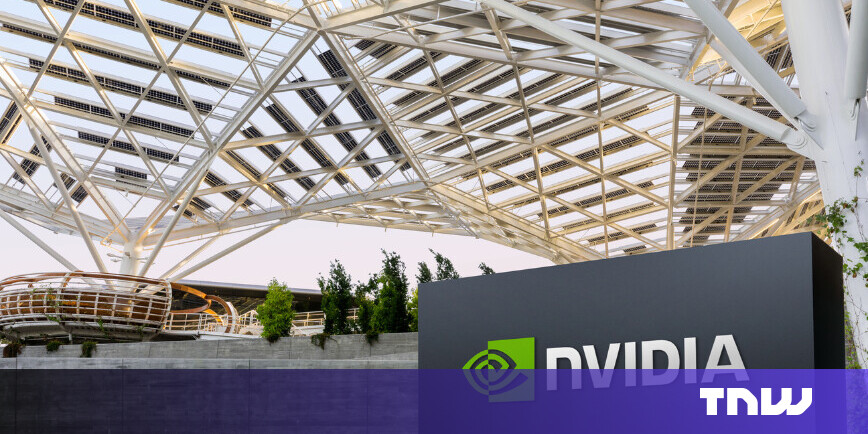
February 25, 2026. The air in Silicon Valley feels measurably heavier this morning.
We’re waiting on Nvidia. Again. For the last few years, the company’s quarterly earnings calls have functioned less like standard corporate reporting and more like a global economic holiday — the kind where everyone watches the ticker instead of the parade. But the vibe has shifted. According to The Next Web, Nvidia’s Q4 results could serve as a brutal make-or-break moment for confidence across the entire AI hardware market.
And honestly? They’re right to be anxious.
Between 2022 and 2025, Nvidia’s stock surged an eye-watering 1,500 percent. The company practically became shorthand for artificial intelligence itself. Building a large language model, running real-time inference, or just trying to convince your board you understood the future — all roads led to Nvidia GPUs. Bought by the truckload. But sitting here in early 2026, the question echoing through Wall Street isn’t whether Nvidia is making money. It’s whether the golden goose is finally getting winded.
$66 Billion and Nobody’s Impressed — That’s the Problem
Look at the numbers. Analysts are expecting Nvidia to post a staggering Q4 revenue somewhere between $65 billion and $66 billion. Adjusted gross margins are projected to hover near 75 percent.
Objectively insane figures. In any previous era of modern computing, a hardware company pulling those kinds of margins would dominate headlines for a solid month. For Nvidia, it’s just Tuesday. They’ve beaten Wall Street’s revenue and earnings estimates for more than a dozen straight quarters — a streak that, in practice, has made the market almost pathologically indifferent to their wins.
Which surfaces a massive psychological problem. When perfection becomes your baseline, merely being “great” reads as disappointment.
Track Reuters technology coverage over the last two months and you’ll notice a distinct cooling in the rhetoric. Nvidia’s share price has barely moved in 2026. While the rest of the tech sector has lurched under unpredictable economic crosswinds, Nvidia has mostly traded sideways — not crashing, not climbing, just hovering. Investors are restless with the narrative. They want the next jolt of dopamine, and a routine $66 billion quarter almost certainly won’t deliver it.
Your Biggest Customers Are Plotting Their Escape
Here is the quiet part said plainly: Nvidia’s most valuable customers are working overtime to stop being Nvidia’s most valuable customers.
The tech industry has always bristled at monopolies — especially when that monopoly dictates the fundamental unit economics of your entire business model. Meta, Google, Amazon, Microsoft — the hyperscalers that literally underpin the internet — have spent the last two years quietly bankrolling a rebellion. Billions poured into custom silicon. Google has its TPUs. Amazon has Trainium and Inferentia. Meta is designing internal accelerators tuned specifically for its own recommendation algorithms.
“The question now isn’t just ‘how much growth?’, but ‘for how long?’ and ‘toward what?’ When a single architecture holds up the sky, everybody starts looking for a backup plan.”
— Market analysis consensus, early 2026
None of these companies believe they can out-engineer Jensen Huang’s team on a general-purpose chip. That’s not the point. The point is strategic independence — and the negotiating leverage that comes with it the next time they’re sitting across a table from Nvidia’s sales team.
Custom silicon trims costs. It sharpens performance on highly specific workloads. Three years ago, none of this existed as a real strategic option — it was a blind scramble for H100s, full stop. Now it’s a calculated diversification play. Demand for high-end accelerators remains genuinely strong for the moment, but the competitive terrain for the back half of the decade looks considerably more hostile. That shift is already priced into the anxiety.
The Gold Rush Is Fine — But Where’s the Actual Gold?
We need to talk about the ROI problem. Seriously.
For the last few years, the world has been living through the “picks and shovels” chapter of the AI gold rush. Nvidia sold the shovels. Brilliantly, profitably, at scale. But eventually — inevitably — the people buying the shovels need to surface actual gold, or the whole operation loses its funding.
According to a 2025 forecast by Gartner, global enterprise spending on AI software and services was projected to hit record highs, but the actual revenue generated by those end-user applications hasn’t consistently kept pace with the infrastructure costs underneath them. The gap between spending and returns is, in most cases, still uncomfortably wide.
Building generative AI is brutally expensive. Research from the Stanford Institute for Human-Centered Artificial Intelligence found that training costs for frontier models routinely cleared the $100 million mark back in 2024 — and those figures have only compounded as parameter counts ballooned past what anyone anticipated. You can’t keep ordering $30,000 chips unless the software running on them is generating real cash. Right now, a striking number of Fortune 500 companies are staring at expensive new server racks, quietly asking their IT departments when, exactly, the magic profits are supposed to materialize. Keynote speeches don’t pay for cooling systems.
Real-world deployment metrics are suddenly the only currency that matters.
The “B” Word Nobody Wants to Say Out Loud
Bubble.
Is the AI sector in one? That depends almost entirely on your time horizon. If you believe artificial intelligence will automate 40 percent of the global knowledge economy by 2030, then current valuations probably look cheap — even rational. But stack that against the immediate economic fundamentals — the actual cash flow being generated by AI startups today, right now — and the disconnect is jarring enough to give pause.
Sentiment has visibly softened. The blind faith that characterized 2023 and 2024 markets has evaporated. Investors are skittish about sustainability and fixated on profitability timelines in ways they weren’t eighteen months ago. Is this recalibration healthy? Probably. Was it inevitable? Absolutely. But it piles an almost unreasonable amount of pressure onto Nvidia’s Q4 call. The market isn’t just listening for a topline revenue beat — it’s listening for a psychological safety net, some signal that the whole edifice isn’t quietly wobbling.
What the Numbers Tonight Actually Mean for the Rest of 2026
So what happens when the figures actually drop?
The stakes are stark. A massive earnings beat paired with aggressive, confident forward guidance would function as a pressure valve for the entire tech sector — proof that yes, the hyperscalers are designing their own chips, but global AI spending is still expanding fast enough that it barely registers as a threat. It would reaffirm Nvidia’s position as the undisputed engine of the modern economy. Markets would exhale.
But what if they post a merely “modest” beat?
What if the guidance lands slightly cautious? What if Jensen Huang drops even a passing hint that cloud providers are pausing to digest their current inventory before placing the next round of orders? Watch out. Mixed signals from Nvidia at this particular moment would immediately validate the most bearish narratives circulating on Wall Street — and likely trigger a broader sell-off across tech, punishing any company whose valuation rests on AI hype rather than hard revenue. The contagion risk is real and underappreciated.
Why does Nvidia’s stock influence the broader market so heavily?
Because their hardware is the foundational layer for the current tech boom. If companies stop buying GPUs, it implies they are slowing down their AI software development, which signals a contraction in overall tech innovation and enterprise spending.
Are custom chips from Google and Meta actually as good as Nvidia’s?
For generalized tasks, usually not. Nvidia’s CUDA software ecosystem gives them a massive moat. However, for specific internal workloads—like running a search algorithm or serving ads—custom silicon can be significantly cheaper and more power-efficient than buying off-the-shelf Nvidia hardware.
We are flying at a remarkable altitude right now. The air is thin. Margins for error are essentially nonexistent. Nvidia has engineered one of the most spectacular corporate ascents in the recorded history of capitalism — and that ascent, when tested against the hands-on reality of enterprise AI deployment, is starting to show the first faint signs of friction. Not failure. Friction. There’s a difference, and right now that difference is everything.
Gravity, as it always does, collects its debts eventually. Whether that bill arrives this quarter or three years from now is the only question anyone in this industry is actually losing sleep over.
Source material compiled from several news agencies. Views expressed reflect our editorial analysis.