It’s February 21, 2026, and if you listen closely, you can almost hear the collective, weary sigh of tech journalists everywhere as they pack their bags for San Francisco. We are officially just four days away from Samsung’s first massive Unpacked event of the year, and I have to say, the atmosphere feels… well, different this time around. Engadget—which, let’s be honest, provides the kind of obsessive, minute-by-minute coverage of consumer electronics that we all secretly rely on—has been tracking the breadcrumbs of this launch for months. But as we sit here on the very cusp of the Galaxy S26 reveal, I can’t help but wonder if we’re witnessing the absolute peak of the “iterative era” or the quiet, slightly nervous beginning of something much more cerebral.
Samsung has already had a frantic start to the year. We saw them flex their engineering muscles at CES last month, and they finally unleashed that eye-watering $2,900 Galaxy Z TriFold into the US market back on January 30. But despite the foldable pyrotechnics, the S-series remains the brand’s bread and butter. It’s the phone your cousin buys when their contract is up, the phone your boss carries into every meeting, and the device that essentially defines the word “Android” for millions of people globally. Yet, looking at the avalanche of leaks and the official “Intelligence becomes personal” teasers, it seems Samsung is making a specific bet: they care less about how the phone feels in your hand and a lot more about how it actually thinks while it’s sitting in your pocket.
When “Same Old” Design is Actually a Strategy
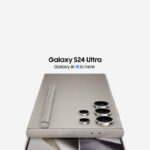
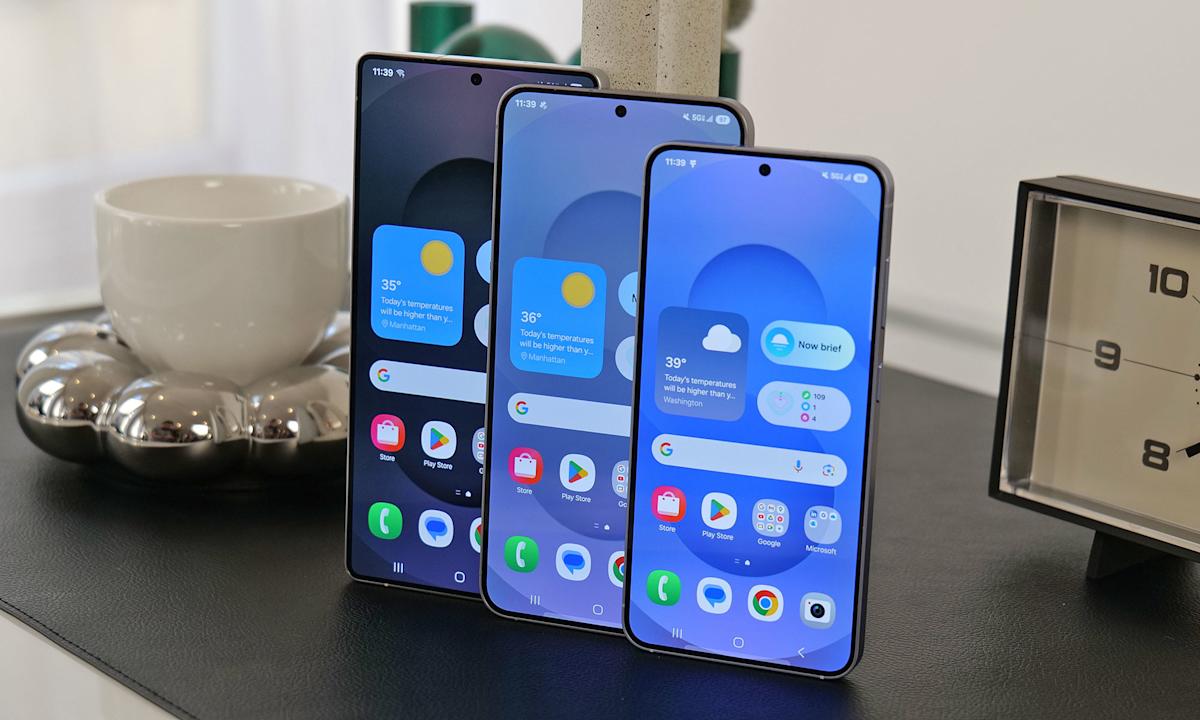
Let’s go ahead and address the elephant in the room right now: the Galaxy S26, the S26+, and even the powerhouse S26 Ultra are going to look remarkably like the S25 series. We’re talking about that familiar vertical pill-shaped camera plateau, those flat frames, and the rounded corners we’ve grown accustomed to. If you were holding your breath for a radical, ground-up redesign, you’re probably going to be a little disappointed. But honestly? I’m not sure I even care anymore. According to Statista, Samsung’s global smartphone market share was hovering around 19% in late 2025, and you simply don’t maintain that kind of dominance by reinventing the wheel every twelve months just for the sake of it.
There are some subtle shifts happening under the surface, though. The base S26 is reportedly jumping to a 6.3-inch screen, up from the 6.2-inch panel we saw on the S25. It’s a tiny change, sure, but it’s another signal that the “small phone” is slowly but surely going extinct. We’re also hearing some wild whispers that the Ultra might actually ditch the titanium frame it adopted just two years ago in favor of aluminum. Now, that feels like a step backward on paper, doesn’t it? But if it helps manage the weight of the new internal components and sensors, it might be a pragmatic win in the long run. A 2025 report from Reuters indicated that premium smartphone prices have risen by an average of 7% year-over-year, so any move that keeps the MSRP from spiraling even further out of control is a win for our wallets.
“The challenge for Samsung isn’t just making a better phone; it’s making a phone that justifies its existence in an age where hardware has effectively plateaued.”
— Editorial Analysis, February 2026
The High-Stakes Gamble: Qi2 vs. the S-Pen
One of the most fascinating—and potentially polarizing—rumors swirling around the S26 Ultra involves the beloved S-Pen. For years, Samsung fans have been begging for built-in magnets for Qi2 wireless charging—the kind of “it just clicks” convenience that iPhone users have been enjoying for ages. But there’s a technical catch: the digitizer layer required for the S-Pen has historically played very poorly with magnetic rings. Word on the street is that Samsung has actually removed the traditional digitizer in the S26 Ultra, opting for a completely “new method” of stylus input specifically so they could make Qi2 work natively.
If this turns out to be true, it’s a massive, high-stakes gamble. The S-Pen is the last vestige of the Note’s soul, and for many, it’s the only reason to buy the Ultra. If this new input method feels even slightly laggy or less precise just so we can snap a magnetic wallet to the back of the phone, the power users are going to revolt. But then again, you have to ask: how many people actually use the S-Pen daily versus how many would use a magnetic car mount or battery pack? It’s a classic case of Samsung choosing broad utility over niche loyalty. It’s a move that feels very “Apple-esque,” and that’s a phrase that usually haunts Samsung’s most hardcore fanbase.
Silicon, Search, and the Perplexity Factor
Under the hood, we’re looking at the Snapdragon 8 Elite Gen 5 across the board, though some regions might still see the Exynos 2600. But let’s be real: the real story this year isn’t the raw clock speed; it’s the NPU. Samsung’s teaser for the February 25 event mentioned a “new phase in the era of AI,” and the whispers of a deep partnership with Perplexity are getting incredibly loud. We’ve seen Samsung lean heavily on Google Gemini in the past, but integrating Perplexity’s AI-powered search directly into OneUI could be a genuine game-changer for the user experience.
Imagine a phone where Bixby isn’t just a voice command you accidentally trigger while trying to lower the volume, but a legitimate, powerful alternative to Google Search, powered by Perplexity’s real-time data. It would be a bold, almost defiant move to distance themselves slightly from Google’s shadow. A 2025 Pew Research Center study found that roughly 50% of US adults are now using AI tools in their daily lives, and Samsung knows that “AI” can’t just be a marketing buzzword anymore—it has to be a utility. Features like turning day photos to night or restoring missing parts of an object are cool, but they’re basically parlor tricks. Real-time, adaptive “personal intelligence” that actually learns your schedule and automates the boring parts of your life? That’s the holy grail they’re chasing.
The Odd Ones Out: S26 Edge and the TriFold Shadow
While the standard S26 lineup seems to be playing it safe, Samsung is still letting its freak flag fly in the corners of the portfolio. The S26 Edge is apparently still a thing, despite those persistent rumors that it might replace the Plus model entirely. This year, it’s reportedly getting even thinner—down to a staggering 5.5mm. It’s clearly Samsung’s answer to the “iPhone Air” rumors, a device built for people who value aesthetics and pocketability over raw, bleeding-edge specs. Interestingly, it’s got that Pixel-esque rectangular camera plateau, which is a weirdly bold design choice for a company that usually sticks to its own visual language.
And then there’s the TriFold. Having launched it at nearly three grand just a few weeks ago, Samsung probably won’t spend a huge amount of time on it at Unpacked. But its presence loomed large at CES 2026, and it serves as a constant reminder that the S26 doesn’t *need* to be experimental. The S26 is the reliable, high-end sedan; the TriFold is the concept supercar you can actually buy if you happen to have a spare kidney to sell. By splitting the lineup this way, Samsung can keep the S26 “boring” and functional for the masses while still claiming the crown of “innovator” with its wild foldables.
Will the Galaxy S26 be more expensive than the S25?
While we won’t have official pricing until the keynote, most analysts expect Samsung to try and hold the line on the base and Plus models. However, the Ultra might see a slight price bump if that new S-Pen technology and the Qi2 integration prove as costly to manufacture as rumored. We’re hoping they keep it steady, but prepare for a potential jump.
Is the S-Pen being discontinued?
Not at all, so don’t panic just yet. The rumors suggest Samsung is changing *how* the S-Pen works—specifically moving away from a traditional digitizer layer to allow for magnetic charging compatibility—but the stylus remains a core, defining feature of the Ultra model. It’s an evolution, not an exit.
When can I actually buy the S26?
Following the official announcement on February 25, 2026, pre-orders usually open up that same day. If Samsung sticks to its usual playbook, you can expect retail availability and shipping to start in early March. It’s a quick turnaround once the curtain goes up.
Final Thoughts: The Maturity of the Smartphone
As we look toward the keynote next Wednesday, I think we all need to recalibrate our expectations just a little bit. We’re no longer living in the era of “wow” hardware where every year brings a new shape or a revolutionary screen. We’re in the era of “how.” How does the phone actually make my day-to-day life easier? How does the AI anticipate what I need before I even realize I need it? The Galaxy S26 looks like a device that has finally stopped trying to impress us with its looks and started trying to impress us with its brain.
Whether that’s enough to get people to drop nearly a thousand dollars on an upgrade is the $2,900 question (or the $799 question, depending on which model you’re eyeing). But for a company that has spent years throwing every possible feature at the wall just to see what sticks, this new, more restrained Samsung is almost more interesting. They’re confident enough in their hardware to let it stay the same, and hungry enough for the future to bet everything on AI integration. We’ll see if that bet pays off when the lights go up in San Francisco next week. I’ll be watching closely—will you?
This article is sourced from various news outlets. Analysis and presentation represent our editorial perspective.