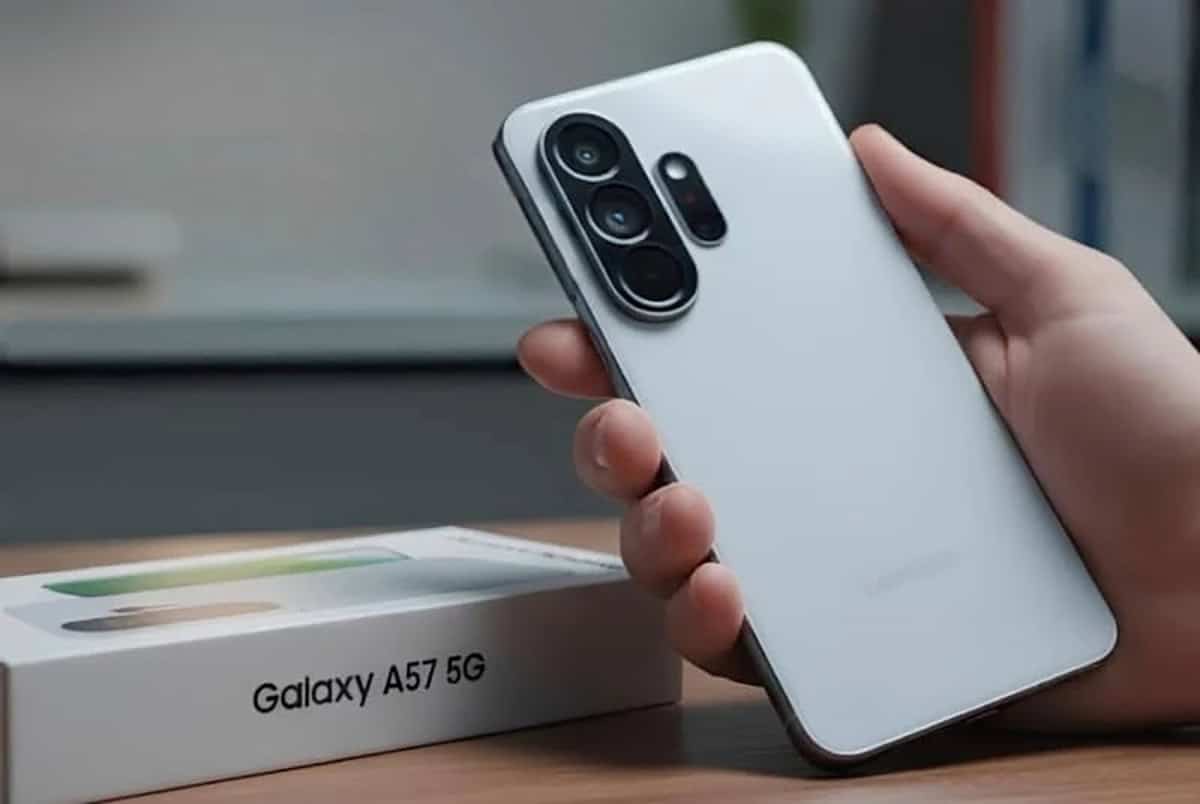
Honestly, it’s not every day that the tech world hands us a genuine “wait, what?” moment—especially not when we’re talking about Samsung. Over the years, we’ve all grown pretty accustomed to their methodical, almost metronomic release rhythm. It’s like clockwork: you get the flagship S-series in the dead of winter, the fancy Folds in the heat of summer, and the reliable A-series scattered predictably in the months between. But something legitimately strange just happened. According to a report from Telset, the Galaxy A37 and Galaxy A57 have made a total surprise appearance on the Google Play Console, and let me tell you, it has sent the tech rumor mill into a bit of a tailspin.
Now, if you’re keeping a close eye on the calendar—and let’s be real, it’s only February 2026—this feels like Samsung isn’t just skipping a beat; they’re trying to move the entire orchestra to a much faster tempo. Usually, a sighting on the Google Play Console is what I’d call the “final boarding call” for an Android device. By the time a phone shows up there, the hardware is locked in, the software is fully certified, and the marketing team is probably already arguing over which fonts to use for the billboards. But seeing the A37 and A57 pop up right now? It feels like we’ve somehow stumbled onto a script for a movie that wasn’t even supposed to start filming for another six months. It’s jarring, to say the least.
Why a listing in the Google Play Console actually matters (and why it’s weirding us out)
For those of you who don’t spend your Saturday mornings refreshing developer databases—and honestly, I don’t blame you—the Google Play Console is essentially the gatekeeper for the entire Android ecosystem. It’s the platform where manufacturers have to register their devices to ensure they can actually run Google services without crashing. When a device finally makes its debut there, we usually get a nice little bundle of specs to chew on: things like screen resolution, RAM counts, and the specific chipset architecture under the hood.
The appearance of the A37 and A57 is particularly weird because the previous generation hasn’t even finished its victory lap in most markets yet. It forces us to ask a pretty glaring question: Is Samsung intentionally accelerating its production cycle just to combat the sheer volume of releases pouring out of China? If we look at the data from Canalys, Samsung managed to hold onto a solid 19% global market share throughout 2025, but they’ve clearly been feeling the heat. Brands like Xiaomi and Tecno are relentless, seemingly launching a “new” phone every single time the wind changes direction, and Samsung might finally be tired of playing defense.
But there’s another angle to consider here, and it’s one I’ve been thinking about quite a bit. It’s entirely possible that these aren’t imminent, ready-to-ship releases but rather sophisticated “placeholders.” Tech giants are known to test software frameworks on future-named hardware to ensure everything stays compatible in the long run. However—and this is a big however—seeing them in a public-facing database like the Play Console suggests this is more than just a quiet boardroom experiment. It feels much more like a deliberate statement of intent.
The real reason for the rush: It’s all about getting AI into everyone’s pockets
So, why the rush? If I had to put money on it, I’d suspect it has everything to do with the “democratization” of artificial intelligence. Last year, we watched Galaxy AI transform from a flashy flagship gimmick into a genuine, everyday selling point. But to keep that momentum going, Samsung needs hardware that can actually handle the heavy lifting of on-device AI in the mid-range segment. You can’t just run these models on old silicon and expect people to be happy with the lag.
“The mid-range market isn’t about who has the best camera anymore; it’s about who offers the most sophisticated software experience at a third of the flagship price.”
— Industry Analyst Perspective, 2025 Tech Trends Report
A recent 2025 report from Counterpoint Research backed this up, finding that nearly 65% of consumers shopping in the $300-$500 price bracket now list “AI capabilities” and “long-term software support” as their top two priorities when they think about switching brands. By spotting the A37 and A57 this early, we might be witnessing Samsung’s grand plan to bake advanced AI features directly into the A-series much sooner than anyone anticipated. They aren’t just selling a piece of plastic and glass anymore; they’re selling an ecosystem that, until very recently, was strictly reserved for the elite S-series users. And honestly? That’s a smart move.
Was this a massive slip-up or a brilliant tactical strike?
Let’s take a second to talk about the “oops” factor. There is always a non-zero chance that some overworked intern at Samsung hit ‘upload’ on a file they shouldn’t have even touched. We’ve seen these kinds of leaks happen before, and they’re usually followed by a lot of frantic deleting. But with two distinct models appearing at the exact same time, this seems less like a typo and more like a coordinated strategy. If Samsung can successfully shorten the gap between their flagship innovations and their mid-range implementation, they effectively choke the life out of the “value-flagship” competitors who usually thrive in that delay.
The Galaxy A57, in particular, has been the subject of some pretty intense design rumors lately. We’re starting to hear whispers about even thinner bezels and a more refined shift toward that “Key Island” design language we saw teased last year. If the Play Console data is valid, we’re looking at devices that are already being optimized for Android 16—or at the very least, a highly customized and advanced version of Android 15. This suggests that Samsung is already looking past the current horizon and toward the next major OS shift.
So, should you actually put off your next phone upgrade?
If you were sitting there with your credit card out, planning on buying an A56 or an A36 today, this news is probably going to make you pause. Should you wait? Honestly, in the world of tech, if you’re always waiting for the “next big thing,” you’ll literally never own anything. There’s always something better six months away. But the early appearance of the A37 and A57 does suggest that the “shelf life” of the current models might be a little shorter than what we’re used to. Samsung is clearly pivoting toward a faster, more aggressive refresh rate to keep people interested.
And let’s be real for a minute—the A-series is the real bread and butter for Samsung. While the Ultra models and the Z-Folds get all the flashy headlines and the YouTube unboxing videos, the A-series is what actually pays the bills and keeps the lights on in Seoul. Ensuring these devices are ready for the Google Play Store months in advance is a calculated move to make sure that when they finally do launch, the software experience is absolutely flawless. No one—and I mean no one—wants a mid-range phone that stutters and chokes during a basic AI photo edit or a simple language translation.
We’re still waiting for the official word to come down from Samsung HQ, but the evidence is sitting right there in the database for everyone to see. Samsung is moving the pieces on the board, and they’re moving them faster than we expected. Whether this is a panicked response to market pressure from rivals or a confident stride into a new AI-driven era, one thing is certain: the mid-range market is about to get a whole lot more interesting than it’s been in years.
Why did the Galaxy A37 and A57 appear so early?
While Samsung hasn’t officially confirmed the reason, it likely comes down to early software certification testing or a strategic shift to speed up their mid-range product cycle. They need to stay ahead of aggressive Chinese manufacturers who are flooding the market with new releases.
Will these phones actually feature Galaxy AI?
Most signs point to a resounding yes. Samsung has been very vocal about their desire to bring flagship-level AI features down to the A-series. It’s their best bet for maintaining a dominant market share in the increasingly crowded mid-range segment.
This article is sourced from various news outlets and developer databases. The analysis and presentation provided here represent our editorial perspective on the current tech landscape.