Sony LinkBuds Clip: The High Price of Staying Connected to Reality
The Open-Ear Revolution Sony Started (and Is Now Following)
There was a time, and it really wasn’t all that long ago, when popping in a pair of earbuds meant you were effectively clocking out of the physical world. You’d jam those little silicone tips deep into your ear canals, hit play on your favorite playlist, and just… hope for the best. You hoped you wouldn’t get flattened by a delivery truck you never heard coming, or miss your stop on the train because the world around you had been muted into oblivion. It was a trade-off we all just accepted: great sound meant total isolation. But then came Sony’s original LinkBuds, and suddenly, the rules of the game changed.
They were weird, weren’t they? Those little donut-shaped things looked like they’d been plucked straight out of a sci-fi prop room or a high-end conceptual art gallery. But despite their odd appearance, they actually changed the entire conversation around personal audio. As WIRED pointed out back then, those original buds were among the first truly viable open-ear options that actually worked. They didn’t just let the world leak in by accident; they were engineered to let it in by design. It was a bold, experimental move from a company that isn’t always known for taking such aesthetic risks.
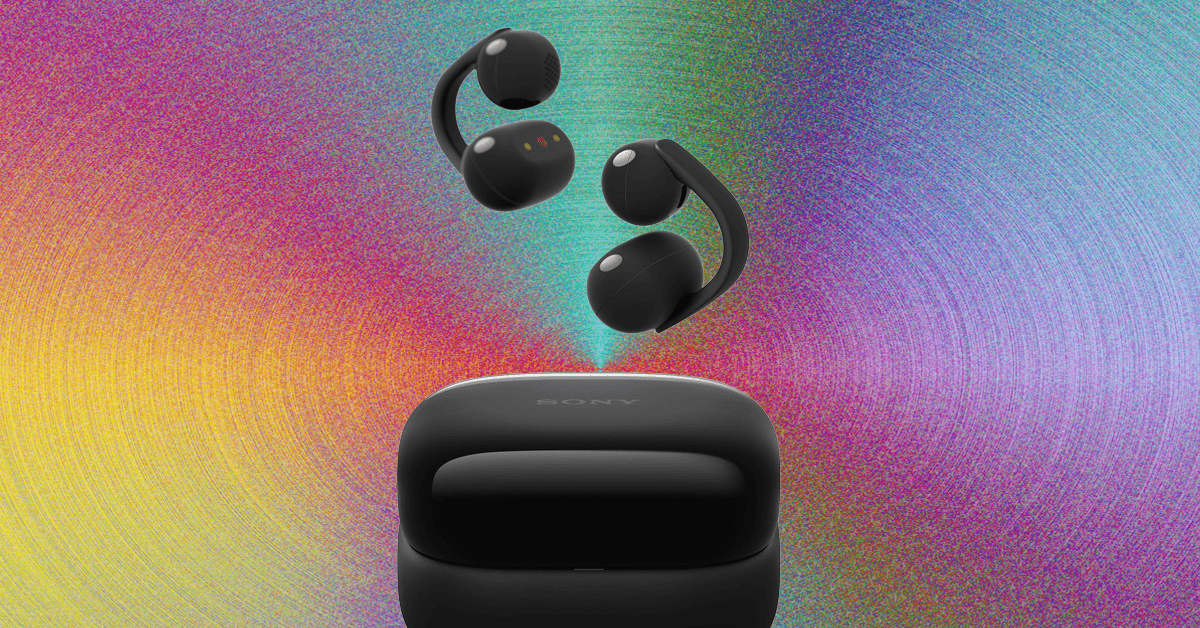
Fast forward to today, February 17, 2026, and the landscape has shifted quite dramatically. What was once a niche experiment for tech enthusiasts has blossomed into a full-blown category that every major player is trying to dominate. We’ve seen every brand, from the budget kings to the high-end stalwarts, try to solve the “transparency” problem. But looking at Sony’s latest entry, the LinkBuds Clip, things feel a bit different this time around. It feels less like a pioneer leading the charge and more like a refinement—or perhaps, if we’re being honest, a bit of a concession. Sony has ditched that iconic hole-in-the-middle driver for a clip-on design that we’ve seen elsewhere, most notably from the likes of Soundcore and Bose. It’s a solid product, don’t get me wrong, but it does make me wonder: has Sony lost its experimental edge in exchange for the safety of the mainstream market?
The Clip is fine. In fact, it’s more than fine; it’s a perfectly capable, well-engineered piece of hardware. But “fine” is a dangerous word to use when you’re asking people to part with $230. In a world where the open-ear market has matured at breakneck speed over the last couple of years, being a slightly more polished version of a cheaper competitor isn’t always going to be enough to justify what many of us call the “Sony Tax.” When you’re paying for the name, you expect a bit of that old-school Sony magic, and I’m not entirely sure it’s here in the way we hoped.
The $230 Question: Is the Brand Name Enough to Carry the Weight?
Let’s talk about the money for a second, because we really need to. We’re currently living in a buyer’s market for audio gear. According to recent data from Statista, the global hearables market was valued at over $40 billion recently, and a massive chunk of that growth has come from people looking for specialized “lifestyle” buds. These aren’t the heavy-duty headphones you wear to block out a screaming baby on a twelve-hour flight; these are the buds you wear while you’re cycling through traffic, walking the dog, or—let’s be real—pretending to listen to your coworkers during a long Monday morning meeting.
At $230, Sony is positioning the LinkBuds Clip in a very awkward middle ground. They aren’t quite as expensive as the $300 Bose Ultra Open Buds, which, let’s face it, remain the gold standard for that “wow” factor and a secure fit. But at the same time, they are significantly more expensive than Soundcore’s Aeroclip or the various offerings from brands like Shokz. It puts the consumer in a tough spot. When you pay flagship prices, you naturally expect flagship features. And yet, the LinkBuds Clip still lacks wireless charging. In 2026, that feels less like a technical limitation and more like a deliberate omission that’s hard to swallow. It’s a small thing until it’s the only thing you can think about—nothing kills that “premium” vibe faster than having to hunt for a USB-C cable while your $30 gas station buds are sitting happily on a Qi pad in the other room.
But maybe I’m being a bit too harsh on them. To be fair, Sony does offer a level of ecosystem polish that is genuinely hard to beat. The Connect app is an absolute powerhouse, and features like DSEE (Digital Sound Enhancement Engine) actually do a pretty decent job of cleaning up compressed audio and making it sound fuller. But is that extra polish really worth a $100 premium over a “good enough” pair of buds from a competitor? For the Sony loyalist who wants everything to match, maybe the answer is yes. For everyone else, the math is getting harder and harder to justify.
“The open-ear category has moved from a novelty to a necessity for the urban commuter, but the price of entry is finally starting to collide with consumer expectations of value.”
— Audio Industry Analyst Perspective, 2025
Physics Still Wins: The Eternal Struggle for Sound Quality
One thing that hasn’t changed, even as we’ve marched into 2026, is the law of physics. If you don’t create a seal in the ear canal, you’re going to lose bass. It’s not a design flaw; it’s just how sound waves work. Sony’s engineers are essentially wizards, but even they can’t make a tiny driver hovering just outside your ear sound like a pair of high-end over-ear studio monitors. The Clip does deliver a soundstage that is remarkably clear and pleasantly warm in the midrange, which makes it fantastic for things like podcasts, audiobooks, and vocal-heavy tracks. But if you’re looking for that skull-thumping, chest-vibrating low end? You’re definitely looking in the wrong place.
Interestingly, Sony added a “Sound Leakage” mode, which is a pretty clever addition on paper. It’s designed to keep your music from annoying the person sitting right next to you on a quiet bus or in a library. In practice, though, it’s one of those features that feels like a solution to a problem most people don’t actually have. Most open-ear buds are already surprisingly quiet to outsiders unless you’re cranking them to max volume. Still, it shows that Sony is at least thinking about the social etiquette of “always-on” audio, which I appreciate.
The real disappointment for me, however, has to be the call quality. Sony talked up their AI Voice Pickup and bone-conduction tech quite a bit during the launch cycle. They made it sound like you could take a call in the middle of a hurricane and come through clear as a bell. But in real-world testing—think windy street corners, busy cafes with espresso machines screaming in the background—the results were… well, they were “speakerphone-ish.” A 2024 report by Grand View Research found that 40% of premium earbud users cite call quality as their top priority. If Sony wants to charge these top-tier prices, they really need to deliver top-tier communication. Right now, they’re honestly getting outclassed by some budget competitors who seem to have figured out how to use beam-forming mics more effectively than the giants.
User Experience or User Annoyance? It’s a Mixed Bag
Design-wise, the LinkBuds Clip are a bit of a roller coaster. Let’s start with the good: the case is a total delight. It’s a tiny, pocketable little cube that feels more like a piece of tech jewelry than a charging dock. It’s the kind of thing you just want to fidget with in your pocket. But then you open it, and things get… weird. Unlike almost every other clip-on bud currently on the market, Sony has designed these so they face inward in the case. This means every single time you want to put them on or take them off, you have to perform this little awkward hand-gymnastics routine. It’s a point of friction that just shouldn’t exist in a product designed for a seamless “lifestyle” experience. It’s a small annoyance, sure, but it’s one you encounter multiple times a day.
Once you actually get them on your ears, though, they’re quite comfortable. At 6.4 grams, they aren’t the absolute lightest buds out there, but the weight is distributed well enough that you genuinely can forget you’re wearing them after a few minutes. And really, that’s the whole point of this category, isn’t it? The “Link” in LinkBuds is supposed to refer to linking your online and offline worlds. If the hardware is constantly annoying you or pinching your ear, that link is broken before it even starts. Sony mostly succeeds here, but it’s not a perfect score.
One area where Sony absolutely nailed it, though, is the controls. By moving the touch sensors to the loop rather than the back barrel, they’ve made it incredibly easy to skip tracks or adjust the volume without constantly poking yourself in the ear or accidentally dislodging the bud. It’s a smart, ergonomic choice that I really hope becomes the industry standard for this form factor. It’s just a shame the app doesn’t let you fully customize those controls to your heart’s content; you’re still stuck with Sony’s pre-set “combos,” which always feel a little bit too restrictive for a “pro” level device.
The Future of the “Always-On” Lifestyle
So, where does the LinkBuds Clip leave us in the grand scheme of things? It feels like we’re finally reaching the “plateau of productivity” for open-ear tech. The gains we’re seeing now are becoming more and more incremental. We’re seeing better battery life—the Clip’s 9 hours of playback is genuinely impressive and a huge step up from the original—and we’re getting more stable connections, but the core experience feels settled. We want to hear the world, and we want the world to hear us (but only when we’re actually on a call). We’ve moved past the “wow, look at this weird tech” phase and into the “how does this fit into my life” phase.
I suspect that by this time next year, we’ll see this technology integrate even more deeply with AI assistants. Imagine these buds not just playing your music, but acting as a constant, helpful whisper in your ear—translating street signs in real-time while you’re traveling or giving you a quick bio of the person you’re walking toward at a networking event. Sony definitely has the ecosystem to make that happen, but for that to work, the hardware needs to be almost invisible. The Clip is close, but its somewhat “hefty” back barrel and flashy, gloss-finish plastic still scream “I’m wearing a gadget.” It’s a bit too loud for a device that wants to be an invisible part of your life.
At the end of the day, if you’re a die-hard Sony fan who already lives in their app ecosystem and you happen to love this specific aesthetic, you’ll find a lot to like here—especially if you can manage to catch them on sale. But for the average person who’s just looking to stay aware of their surroundings during a morning jog or a commute, there are simply too many great options out there for $100 less. Sony proved the concept years ago and deserves credit for that; now they just need to prove that they can still lead the pack they helped create, rather than just keeping pace with it.
Are the Sony LinkBuds Clip waterproof?
Well, they aren’t exactly “waterproof” in the sense that you can go diving with them, but they do come with an IPX4 rating. This means they can handle splashes and sweat without a problem. So, if you’re caught in a light rain shower or you’re having a particularly intense session at the gym, they’ll be just fine. Just don’t go dropping them in the pool.
Can I use just one earbud at a time?
You definitely can. The LinkBuds Clip support independent use, so you can have just the left or just the right bud in while the other stays tucked away in the charging case. It’s a great feature if you want to stretch your battery life even further or if you just prefer having one ear completely free.
How does the battery life compare to the original LinkBuds?
Honestly, it’s a night-and-day difference. The Clip offers a significant upgrade, giving you about 9 hours of continuous playback on a single charge. Compare that to the roughly 5.5 hours we saw on the original donut-shaped model, and it’s clear that Sony has made some big strides in efficiency and battery density here.
This article is sourced from various news outlets. Analysis and presentation represent our editorial perspective.