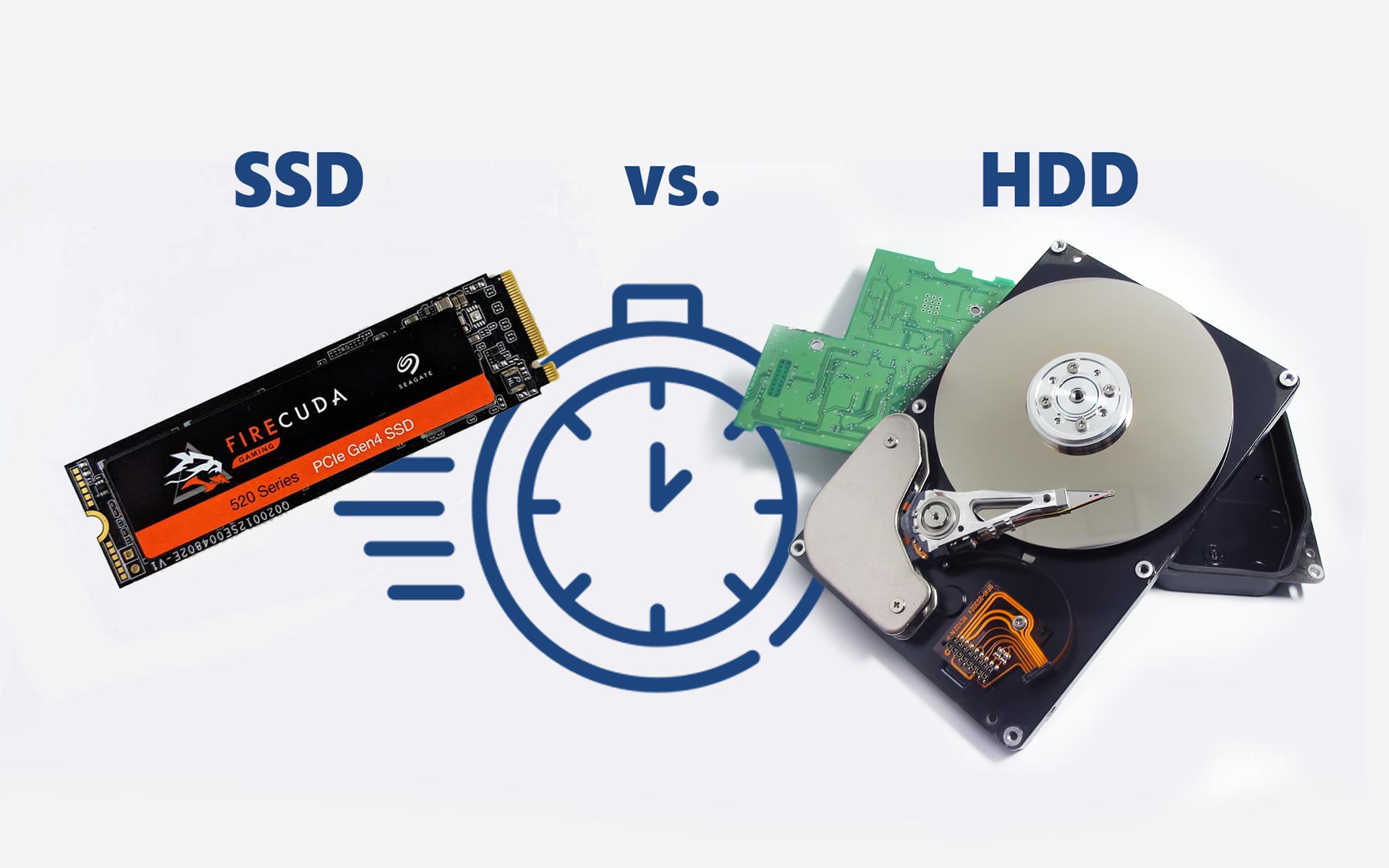
We’ve all been there. You get home after a long day, you’re finally ready to dive into a new world and decompress, and then you see it: “Update Required: 85GB.” Your heart just sinks. You look at your SSD, which is already gasping for air under the weight of three other “triple-A” titles, and you start that grim, familiar ritual of deciding which digital child you have to sacrifice just to make room. It’s a frustrating cycle that’s become the norm for modern gaming. However, according to Telset, a Brazilian modder who goes by the name Goodly recently decided he’d had enough of this never-ending storage arms race. He took Grand Theft Auto V—a game that has swollen to a massive 120GB over its decade-long life—and managed to squeeze the entire thing down to just 2.5GB.
The 2.5GB Miracle: Stripping GTA V Down to Its Bare Bones
That is not a typo, and no, I didn’t miss a decimal point. He actually shaved off 98% of the game’s total weight. Now, before you go thinking this is some kind of magic software trick you can download right now to save space on your Steam Deck, let’s be totally clear: this was a digital autopsy. Goodly didn’t just “zip” the files or use a clever compression algorithm; he went in with a metaphorical scalpel and surgically removed everything that wasn’t strictly necessary to make the game boot and run. And while the final result looks like something running on a toaster from 2004—or maybe a very confused Nintendo 64—it proves a point that the gaming industry has been trying to ignore for years. We are living in an era of unprecedented, and often unnecessary, digital bloat.
It’s a fascinating experiment, mostly because it strips away all the expensive polish to show us the actual skeleton of modern entertainment. And it turns out, that skeleton is surprisingly light. Everything else? It’s just heavy, high-resolution fat that many of us don’t even have the hardware to fully appreciate anyway. It makes you wonder: if the core logic of one of the world’s most complex open-world games fits into a few gigabytes, why are we being forced to carry around an extra 117GB of baggage?
Think about the sheer scale of that reduction for a second. We’re talking about taking a file size that would take hours, or even days, to download on a standard connection and turning it into something you could pull down in the time it takes to make a cup of coffee. It’s a radical demonstration of just how much “stuff” is packed into our games that doesn’t actually contribute to the mechanics of play. We’ve become so used to these massive installs that we’ve forgotten that, at its heart, a game is just code and logic.
The Bloat Epidemic: Why Your Games Are Outgrowing Your Hardware
If you look back at the early 2010s, a 20GB game was considered a “big” install—something you’d actually have to plan for. Fast forward to today, and we’re regularly seeing titles like the latest Call of Duty or the newest Jedi installment pushing well past the 150GB mark. It’s becoming absurd. A 2024 Statista report highlighted that the average size of a top-tier AAA game has increased by roughly 40% every three years since 2018. But here is the real question: are the games actually 40% “bigger” in terms of content? Are the maps 40% larger? Are there 40% more quests? Not really. For the most part, they’re just higher resolution.
The real culprit here is usually a combination of uncompressed audio and 4K textures. Developers often include every single language pack and every ultra-high-res asset in the base download, regardless of whether you’re playing on a $4,000 liquid-cooled rig or a handheld PC with a tiny 7-inch screen. It’s a “one size fits all” approach that is fundamentally failing the consumer. Goodly’s experiment showed that by nuking the cinematics, stripping the audio down to the bare essentials, and using textures that honestly look like wet cardboard, the actual *game*—the code, the physics, the logic—is tiny. It’s almost microscopic compared to the total package.
But here’s the real kicker: most of us aren’t even seeing those 4K textures. If you’re playing at 1080p, which a huge portion of the player base still does, you’re downloading tens of gigabytes of data that your monitor literally cannot display. It’s like buying a 50-gallon drum of milk when you only have a single cereal bowl; most of it is just taking up space in the fridge until it goes bad. You’re paying for the storage, you’re paying for the bandwidth, and you’re getting zero benefit from it.
“The industry has moved from a culture of optimization to a culture of ‘storage is cheap, so why bother?’ But for the average player, storage isn’t cheap—it’s a constant bottleneck.”
— Anonymous Lead Engine Developer, 2025 Industry Summit
The Optimization Myth and the Global Digital Divide
We often hear this lazy argument that “storage is cheap.” People say you can get a 2TB NVMe drive for a reasonable price these days, so why complain? Well, maybe that’s true if you live in Silicon Valley or a major tech hub. But the reality is much different once you look at the global picture. According to a 2025 report by Ookla’s Speedtest, while median global download speeds have definitely risen, there is still a massive, yawning disparity between urban hubs and rural or developing regions. For a player in a region with a 20Mbps internet connection, a 120GB download isn’t just a minor inconvenience—it’s a three-day ordeal that might consume their entire monthly data cap in one go.
This is where Goodly’s work feels less like a fun mod and more like a necessary protest. By showing that a behemoth like GTA V *can* run at 2.5GB, he’s highlighting a genuine lack of empathy in modern game development. There’s a certain “laziness”—or perhaps just a cold shift in corporate priorities—where developers no longer spend the time to pack files efficiently because they assume the hardware will just do the heavy lifting. It’s simply cheaper for a studio to ship a 100GB unoptimized mess than to pay a specialized team of engineers for three months to compress it down to 40GB. They’re essentially externalizing their development costs onto our hardware.
And let’s be real, we’re the ones paying for that shortcut. We pay for it with our limited SSD space, our electricity bills during those grueling multi-hour downloads, and most importantly, our time. When a single modder working in his bedroom can achieve this level of reduction, it really makes you wonder what a multi-billion dollar studio could do if they actually cared about the health of your hard drive. It feels like we’ve traded the art of optimization for the convenience of the developer, and the balance is way off.
It’s also worth noting that this isn’t just about the download itself. Large, unoptimized files lead to longer load times and more strain on the system. When a game has to juggle massive, uncompressed assets, it’s not just your storage that suffers—it’s the overall performance. We’ve reached a point where we’re throwing hardware at problems that should have been solved in the software stage. It’s a wasteful approach that feels increasingly out of touch with the reality of most gamers’ setups.
Modular Gaming vs. the Cloud: Finding a Way Out
So, where do we go from here? Is this just our life now? We are starting to see some developers finally pivot, even if it’s slowly. Call of Duty, for all the flak it gets for its file sizes, has experimented with “modular installs.” This at least allows you to uninstall the single-player campaign once you’re done with it while keeping the multiplayer files. It’s a step in the right direction, but it’s still the exception rather than the rule. Why can’t I choose to download “Low-Res Textures Only” to save 60GB right from the start? Why am I forced to download 12 different language packs for a game I only ever intended to play in English? These seem like simple fixes, yet they remain frustratingly rare.
The other “solution” the industry keeps trying to shove down our throats is cloud gaming. “Don’t worry about that 150GB download,” they tell us with a smile. “Just stream it!” But as we’ve all seen by now, that just trades one headache for another. Instead of a storage bottleneck, you now have a latency bottleneck. And in 2026, despite all the flashy promises of 6G and total connectivity, a stable, lag-free streaming experience is still a luxury for the few, not a reality for the many. For most of us, clicking “play” and having the game actually respond instantly is still the gold standard, and cloud gaming just isn’t there yet.
Goodly’s 2.5GB version of GTA V isn’t “playable” in the way we actually want to play games—let’s be honest, it’s ugly, it’s quiet, and it’s incredibly glitchy. But it’s a powerful proof of concept that should make every major developer blush. It proves that the “weight” of our digital lives is largely artificial. It’s a choice made by publishers and project managers, not a technical necessity. And until we start demanding better optimization and more control over what we actually put on our drives, our SSDs will continue to be the most cluttered, overstuffed closets in our homes.
Can I actually play the 2.5GB version of GTA V?
Technically, you can get it to run, but you really wouldn’t want to for more than five minutes. It was created strictly as an experiment to see exactly how much could be stripped away before the game simply failed to boot. Most of the textures are gone, the audio is minimal to the point of being eerie, and the whole thing is incredibly prone to crashing. It’s a technical marvel and a great talking point, but it’s definitely not a consumer product you’d enjoy playing.
Why don’t developers just use better compression?
The short answer is that compression requires CPU power to “unpack” or decompress the files while you’re playing. In the past, developers avoided heavy compression because they wanted to keep frame rates as high as possible without taxing the processor. However, with modern multi-core processors being as powerful as they are, this is becoming less of a valid excuse. Often, it simply comes down to the bottom line: development time and the cost of paying engineers to optimize those files.
Will game sizes ever start going down?
It’s unlikely that we’ll see a massive downward trend. As the industry pushes toward 8K textures and more complex AI systems, the raw amount of data required will continue to grow. However, the real hope for the future lies in “modular delivery.” This is the idea that you only download the specific parts of the game assets that your hardware can actually utilize—if you don’t have a 4K monitor, you don’t download the 4K textures. It’s a common-sense solution that’s long overdue.
At the end of the day, Goodly’s project serves as a much-needed wake-up call for the entire industry. It’s a stark reminder that in our collective rush toward “bigger and better,” we’ve largely forgotten the quiet art of being lean and efficient. Hopefully, as we look toward the next generation of consoles and PCs, developers will start treating our storage space with a little more respect. Because honestly, I’m tired of having to delete three of my favorite indie games just to make room for a single “Ultra-HD” texture pack of a brick wall that I’m never even going to look at while I’m playing. We deserve better than digital junk filling up our expensive hardware.
This article is sourced from various news outlets. Analysis and presentation represent our editorial perspective.