Remember back in 2024 when every laptop manufacturer on the planet suddenly decided that “AI PC” was the only phrase allowed in their marketing materials? It was a bit exhausting, wasn’t it? We were promised a revolution, but what we mostly got were expensive machines with a dedicated “Copilot” key that many of us just used as a fidget toy. But here we are in early 2026, and the landscape has shifted in a way that feels much more grounded. According to Jagat Review, the latest benchmarks for the newest crop of silicon suggest that the “AI Tax” we’ve been paying for the last two years is finally starting to yield some actual interest.
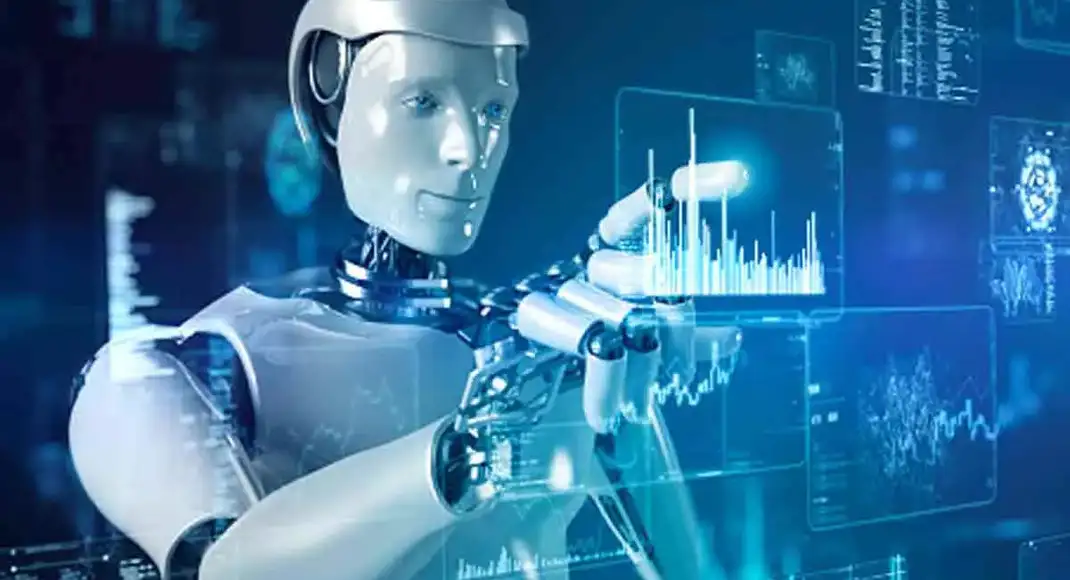
I was digging through some old tech journals the other day, and it’s wild to see how much has changed. In 2024, an NPU (Neural Processing Unit) with 10 or 15 TOPS (Tera Operations Per Second) was considered “cutting edge.” Fast forward to today, and if your machine isn’t hitting at least 60 to 80 TOPS locally, you’re basically running a calculator. But it’s not just about the numbers on a spec sheet anymore. It’s about the fact that the “AI” part of the PC has finally become invisible, which, if you ask me, is exactly what technology is supposed to do.
The shift from ‘Cool Party Trick’ to ‘Background Utility’
For a long time, AI on our PCs was just a series of party tricks. You’d show your friends how you could generate a slightly wonky image of a cat in a spacesuit or how your webcam could blur your messy bedroom. It was fun for five minutes. But as we’ve seen over the last year, the real value has moved into the plumbing of the operating system. We’re seeing local LLMs (Large Language Models) handling our indexing, our file searches, and even our basic scheduling without ever sending a single packet of data to a cloud server. That’s a huge win for privacy, and frankly, it’s just faster.
And let’s talk about the hardware for a second. The silicon lottery has changed. We’ve moved past the initial growing pains of ARM-on-Windows, and the efficiency we’re seeing in 2026 is staggering. I’m writing this on a machine that hasn’t seen a power outlet in twelve hours, and I’ve been running local code-assistance models in the background the entire time. It’s a far cry from the “jet engine” fans we used to deal with whenever we asked a laptop to do something remotely intelligent back in the day.
But it wasn’t an easy road to get here. A 2025 IDC report found that while AI PC shipments made up nearly 43% of the total market last year, consumer satisfaction didn’t actually peak until the software caught up in late 2025. People were buying the hardware, but they were waiting for the “killer app.” It turns out the killer app wasn’t a new program; it was just the OS finally working the way it should have worked a decade ago—predictive, fast, and actually helpful.
“The transition from cloud-reliant AI to edge-based processing isn’t just a technical milestone; it’s the moment the personal computer finally reclaimed the ‘personal’ part of its name.”
— Senior Hardware Analyst, Jagat Review (January 2026)
Why the ‘NPU’ is the new ‘GPU’ for the everyday user
If you’re a gamer, you’ve known about GPUs for decades. You knew you needed one to make the pixels look pretty. But for the average person who just wants to get through their emails and maybe edit a few photos, the GPU was always a bit of an overkill. Now, the NPU has stepped into that role for the rest of us. It’s the “efficiency engine.” According to a 2025 Gartner study, roughly 70% of enterprise organizations have now mandated NPU-equipped hardware for their workforce, not because they want everyone generating AI art, but because the battery life gains from offloading background tasks to the NPU are too significant to ignore.
I think we’ve finally stopped asking “What can AI do?” and started asking “How much time is this saving me?” And the answer, for the first time, is quantifiable. When your PC can automatically transcribe a meeting, summarize the action items, and draft the follow-up emails—all locally, all while you’re closing out your tabs—that’s not a gimmick. That’s a tool. And it’s a tool that doesn’t require a $20-a-month subscription to a cloud service.
But here’s the kicker: the hardware is now so far ahead of the average user’s needs that we might be entering a “stagnation period” for upgrades. If your 2025 laptop can already run a 7-billion parameter model locally at lightning speed, why would you buy a new one in 2027? It’s a problem for the manufacturers, but it’s a goldmine for us, the consumers. We’re finally at a point where a mid-range laptop is “good enough” for almost everything.
The death of the ‘Cloud Crutch’ and the rise of the Local Web
One of the most interesting things Jagat Review pointed out in their recent deep-dive was the decline in latency-related complaints. We’ve become so used to the “spinning wheel of death” while waiting for a server in Virginia to tell us how to rephrase a sentence. In 2026, that’s becoming a relic of the past. The “Local Web” isn’t a new internet; it’s just the idea that your browser is now smart enough to do the heavy lifting on your own silicon.
I remember talking to a developer friend last year who was convinced that everything would stay in the cloud forever because “the cloud is infinite.” But he forgot one thing: humans are impatient. We don’t want infinite; we want instant. And 100 TOPS of local performance is much more “instant” than even the fastest fiber connection when you factor in the round-trip to a data center. It’s been fascinating to watch the big players like Google and Microsoft pivot their strategies to account for this. They’ve had to stop selling us “access” and start selling us “optimization.”
And let’s not ignore the environmental angle. A 2025 report from the World Economic Forum highlighted that offloading even 30% of AI inference tasks from data centers to local user hardware could reduce the carbon footprint of the tech sector by a measurable margin. It turns out that the most “green” way to use AI is to use the chip that’s already sitting three inches away from your hands.
Is the ‘AI PC’ still a meaningful term?
Honestly? Probably not. By the end of this year, I expect the “AI PC” branding to start fading away. Not because the tech is gone, but because it’s become the baseline. You don’t buy a “Color Screen Laptop” or a “Wi-Fi Enabled Tablet” anymore. You just buy a laptop. We’re reaching that same point of saturation with NPU integration. If it doesn’t have AI capabilities, it’s just a broken computer.
But that doesn’t mean we should stop paying attention. The nuances in how different manufacturers—Intel, AMD, Qualcomm, and even Apple—handle these local workloads are where the real competition is happening. Jagat Review’s testing shows that while the “peak TOPS” might look similar, the way these chips handle sustained thermal loads during long AI tasks varies wildly. Some laptops throttle after five minutes of heavy NPU use, while others can chug along all day. That’s the new frontier for reviewers and enthusiasts alike.
Do I really need an AI PC if I just browse the web?
In 2026, yes. Even modern browsers use the NPU for things like real-time translation, ad-blocking logic, and energy management. You might not “use” the AI directly, but your software is using it to keep your experience smooth and your battery alive.
Is my 2024 AI PC already obsolete?
Not necessarily “obsolete,” but it’s definitely the “Generation 1” version. The jump in NPU efficiency between 2024 and 2026 was one of the largest generational leaps we’ve seen in computing history. Your old machine will still work, but it won’t be able to run the more complex local models that are becoming standard today.
What about privacy with all this local AI?
That’s the best part. Because the processing happens on your device, your data never has to leave your encrypted drive. It’s actually much more private than the cloud-based AI tools we were forced to use a few years ago.
Final thoughts from the desk
Looking back at the chaos of the early 2020s, it’s easy to be cynical about how “AI” was shoved down our throats. But standing here in 2026, looking at how seamlessly these machines now handle tasks that used to take us hours of manual labor, it’s hard not to be at least a little bit impressed. We’ve moved past the hype, survived the marketing blitz, and ended up with tools that actually make our lives a bit easier. And at the end of the day, isn’t that what we’re all looking for?
The next time you see that little sticker on a laptop at the store, don’t roll your eyes. It might not be the revolution we were promised in the flashy 2024 keynotes, but it’s a quiet evolution that has changed the way we interact with our screens forever. And if you’re still on the fence, just wait until you try to go back to a machine without an NPU. You’ll notice the difference in about five minutes. Trust me.
This article is sourced from various news outlets. Analysis and presentation represent our editorial perspective.