If you happened to be anywhere near the El Paso skyline or drifting over the high deserts of New Mexico last week, you might have felt like the sky was suddenly a lot more “off-limits” than it usually is. For a brief, chaotic window—well, eight hours, if we’re being precise—the Federal Aviation Administration (FAA) effectively slammed the door on a massive chunk of American airspace. According to reporting from WIRED, what started as a seemingly routine 10-day Temporary Flight Restriction (TFR) quickly morphed into a glaring, neon-lit spotlight on a massive communication breakdown within the U.S. government. And the culprit behind this whole mess? A high-tech laser weapon, a rogue drone scare, and—I wish I were making this up—a simple party balloon.
Let’s be completely real for a second: we’ve been hearing the drumbeat of the “drone threat” for years now. Low-cost unmanned aerial vehicles (UAVs) are everywhere, and they aren’t just being used for cinematic wedding shots or real estate listings anymore. They’re being utilized in conflicts across the globe, and the fear that they could be used for something truly nasty on U.S. soil is a very real, very legitimate concern for security experts. But as we saw in the El Paso debacle, the current “solution” might actually be just as chaotic as the problem it’s trying to solve. When the “good guys” start firing invisible, high-energy beams into civilian flight paths without even bothering to give the air traffic controllers a heads-up, we’ve got a systemic problem that even a 20-kilowatt laser can’t blast its way out of. It’s a classic case of the technology outpacing the common sense needed to manage it.
A Massive Communication Breakdown Where Nobody Owns the “Fire” Button
The timeline of this entire mess is enough to give any logistics manager or air traffic controller a legitimate migraine. Initially, the FAA issued a TFR that was slated to last for 10 full days. In the fast-moving world of aviation, that is an absolute eternity. Imagine being a commercial pilot or a private flyer and being told that a massive, vital corridor of your route is just… gone. Just like that, for a week and a half, the sky is closed. The Trump administration initially pointed the finger at Mexican drug cartel drones, which, on the surface, sounds entirely plausible. We know the cartels have been using drones for surveillance and even light payloads for quite a while now along the border. It’s a narrative that fits the current political climate perfectly.
But the story shifted faster than a drone in sport mode. It turns out the FAA didn’t close the airspace because of some imminent cartel invasion; they closed it because Customs and Border Protection (CBP) was playing with a brand-new toy they didn’t quite have the manual for—or at the very least, didn’t have the legal permission to use in a sky crowded with civilian travelers. They were deploying a Pentagon-provided anti-drone laser weapon system known as LOCUST. And here’s the real kicker: they reportedly used this high-end piece of military hardware to take out a party balloon. Yes, a balloon. Somewhere out there, a kid is probably missing their birthday decoration, and the U.S. government used a directed-energy weapon to “neutralize” it. It’s the kind of overkill that would be funny if it wasn’t so incredibly dangerous to everyone else in the air.
The lack of transparency here is honestly staggering. A White House official told The Hill that the FAA administrator made the unilateral call to shut down the sky without even notifying the White House, the Pentagon, or the Department of Homeland Security (DHS). Meanwhile, the “Department of War”—a term that has seen a bit of a resurgence in recent administrative branding—claimed they had actually been working with the Department of Transportation for months on these protocols. If they were really working together so closely, how did the FAA end up so blindsided that they felt they had to ground everything for 10 days just to maintain a baseline of safety? It’s a textbook example of bureaucratic silos where the people holding the “fire” button aren’t even on speaking terms with the people managing the “don’t let the planes crash” button. It’s a terrifying way to run a national security operation.
“The FAA likely did a very intelligent thing by issuing the Temporary Flight Restriction. The initial 10-day length of the TFR makes it seem like the FAA wasn’t provided with information on how long the laser would be in use.”
Tarah Wheeler, Chief Security Officer at TPO Group
The Absurdity of Using a $100 Million Laser to Pop a Party Balloon
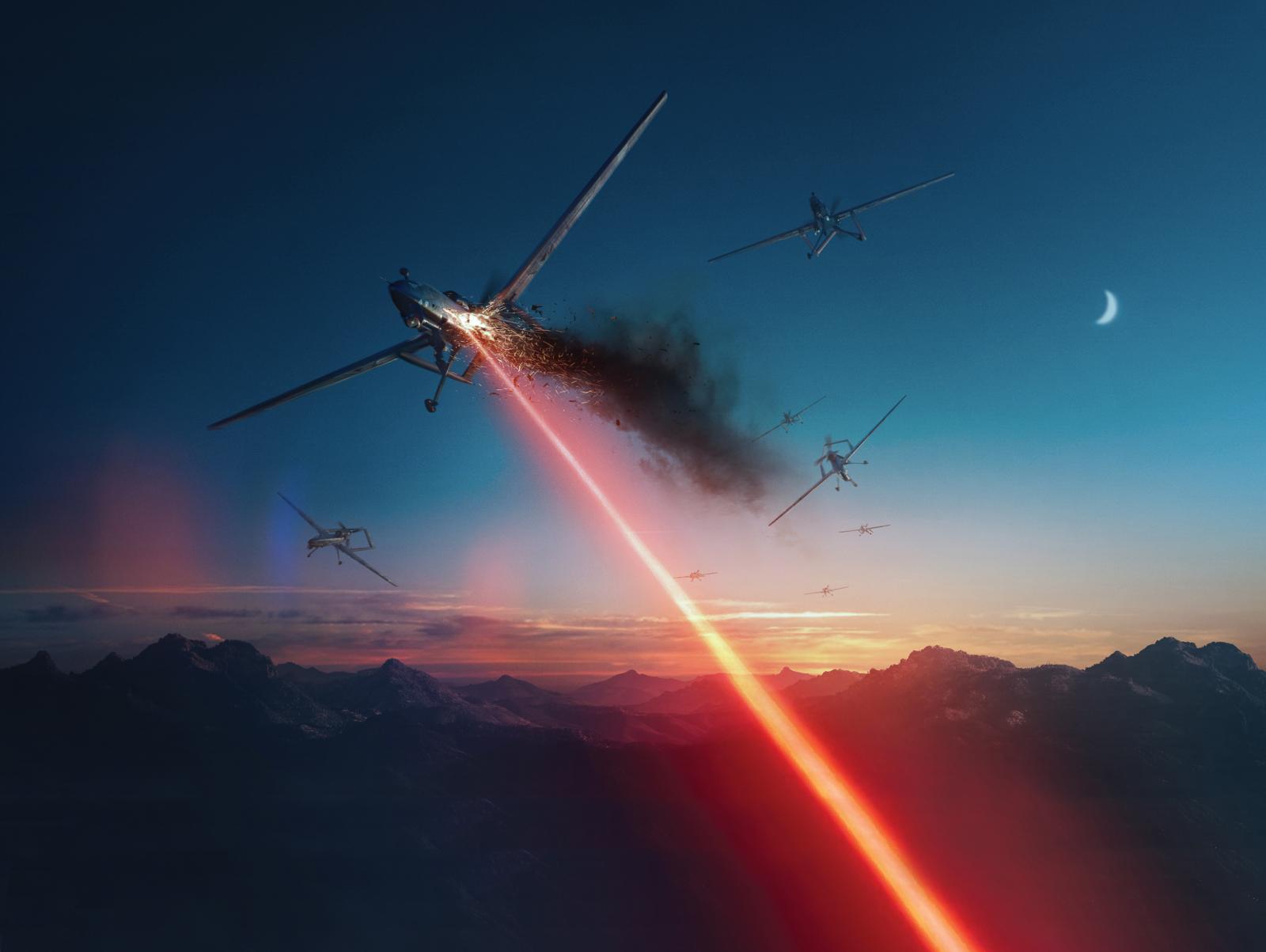
Let’s talk about the tech for a second, because it’s actually pretty fascinating—if you can get past the terrifying implications of it. The LOCUST system, manufactured by AeroVironment (who strategically snatched up the original creator, BlueHalo, back in late 2024), is a 20-kilowatt directed-energy weapon. To give you some perspective, this isn’t the kind of laser pointer you use to annoy your cat. This is serious, military-grade hardware. According to a 2024 report by the FAA, pilot reports of drone sightings have increased by over 300% since 2018, which has put immense, almost unbearable pressure on government agencies to find a “silver bullet” solution. Lasers like LOCUST are supposed to be that answer: they’re incredibly cheap to “fire” compared to traditional missiles, and they are marketed as being incredibly precise.
But “precise” is a very relative term when you’re talking about an invisible beam of light that can blind a pilot from miles away or completely fry the sensitive avionics of a passing Boeing 737. The Army has been pushing these “Directed Energy Efforts” hard over the last few years. In fact, they delivered two sets of LOCUST units just last year as part of their ongoing prototyping project. The core problem is that military tech is designed for the battlefield, where the rules of the sky are basically “if it’s not ours, kill it.” In the civilian world, and specifically near the El Paso and New Mexico border, the sky is a crowded, complex highway. You can’t just go around zapping things because you have a hunch they might be a cartel drone. The margin for error is zero, yet the error in this case was a Mylar balloon.
And then there’s the data to consider. According to a 2025 market analysis by Stratview Research, the global counter-drone market is expected to grow at an annual rate of nearly 25% through 2030. Everyone wants a piece of the drone-defense pie, and the money flowing into these projects is astronomical. But as the El Paso incident so clearly demonstrates, we are currently in the “Move Fast and Break Things” phase of drone defense. The problem is that “breaking things” in this context could easily mean a mid-air disaster involving hundreds of lives. The fact that CBP reportedly mistook a drifting balloon for a legitimate threat suggests that our sensing and identification capabilities are lagging miles behind our “shooting” capabilities. We’ve built a better gun, but we haven’t built a better pair of glasses to see what we’re aiming at.
Why Pilots are Terrified of Being Blindsided by Invisible Energy Beams
I’ve had the chance to speak with a few folks who fly for a living recently, and to say they are frustrated would be a massive understatement. They are beyond livid. One commercial pilot, who asked to remain anonymous for obvious reasons, told me, “I do not want to be stuck on a tarmac anywhere for 10 days, and I certainly don’t want to get hit by a laser. There is currently no standard operating procedure for that.” And he’s absolutely right. If you’re a pilot and a high-powered laser hits your cockpit, it’s not just a minor distraction—it’s a localized, high-stakes emergency. It can cause instant flash blindness or permanent eye damage in a heartbeat, leaving a pilot unable to land the plane safely.
The fallout from this “oopsie” is already hitting the halls of Congress, and it’s getting loud. Representatives Veronica Escobar and Gabe Vasquez, along with Senators Martin Heinrich and Ben Ray Luján, have already fired off a strongly worded letter to the heads of DHS, the Department of War, and the Department of Transportation. They aren’t just asking for an apology; they want a full, classified briefing. They want to know exactly who failed to communicate and why a national “crisis” was essentially manufactured out of a total lack of coordination. It’s a rare moment of genuine bipartisan agreement: nobody, regardless of their politics, wants the FAA and the military playing a high-stakes game of chicken over the southern border while civilian lives are in the balance.
This matters because it sets a dangerous precedent for how we handle future technology. If we accept that the government can just shut down major airspace on a whim because they’re testing lasers they haven’t even cleared with the FAA, what happens when there’s a real, coordinated threat? Will the response be even more fragmented and panicked? A 2024 study by the Center for the Study of the Drone found that over 60 countries now possess some form of counter-UAS technology. We aren’t the only ones struggling with these growing pains, but as the supposed global leaders in aerospace technology, we’re looking remarkably amateurish right now. It feels like the Wild West, but with 20-kilowatt lasers instead of six-shooters.
Is the “Department of War” Mentality Part of the Problem?
There’s also a deeper, more ideological shift we need to consider here. The rebranding of the defense apparatus and the increasingly aggressive stance on border security under the current administration has created a “security first, safety second” atmosphere. When that White House official said the action to disable the drones was “not a spontaneous action,” they were clearly trying to project a sense of strength and preparedness. But that “strength” looks a lot like incompetence when the FAA—the literal guardians of our sky—is left completely out of the loop. You simply cannot claim a process is working when the primary safety regulator has to hit the emergency brake on an entire region because they don’t know what the guys with the lasers are doing. It’s a recipe for disaster that was only avoided this time by sheer luck.
Why was the El Paso airspace closed?
The FAA took the drastic step of closing the airspace due to immediate safety concerns regarding the use of a high-powered anti-drone laser (the LOCUST system) by CBP officials. There were significant fears that the laser could pose a catastrophic risk to civilian aircraft and pilots in the vicinity.
What exactly is a LOCUST system?
LOCUST is a 20-kilowatt directed-energy weapon, essentially a high-powered laser designed to disable or destroy small drones. It is manufactured by AeroVironment/BlueHalo and is currently being prototyped and tested by the U.S. military for various defense applications.
Was there an actual drone threat during the incident?
While the administration initially cited Mexican cartel drones as the reason for the activity, subsequent reports indicate that the specific “threat” neutralized by the laser system during this particular incident turned out to be nothing more than a stray party balloon.
Stop Treating the Border Like a Sandbox for Untested Military Toys
So, where do we actually go from here? How do we fix this before something falls out of the sky? First and foremost, we need a unified command structure for domestic drone defense. The very idea that CBP can deploy Pentagon-grade lasers without a direct, real-time, encrypted link to FAA air traffic control is absolutely insane. It’s 2026; we should have better communication channels than a group of teenagers on Discord. We need protocols that are ironclad—protocols that don’t involve shutting down the sky over entire states just because someone wants to test out a new beam on a Tuesday afternoon.
Secondly, we desperately need better identification technology. If a 20-kilowatt laser system, backed by the full might of the U.S. military-industrial complex, can’t tell the difference between a Mylar balloon and a cartel surveillance drone, then that system is nowhere near ready for prime time. We’re spending billions of taxpayer dollars on these “Directed Energy Efforts,” and yet we’re still being “defeated” by the same things that get stuck in power lines after a five-year-old’s birthday party. It’s embarrassing, and it’s a waste of resources that could be spent on actual, effective security measures.
The El Paso debacle wasn’t just a “brief airspace closure” or a minor technical glitch. It was a loud, clear warning shot across our bow. It showed us that as drone technology becomes more accessible and prevalent, our defenses are being rushed into the field without the necessary guardrails or oversight. We’re incredibly lucky that this time it only resulted in a few cancelled flights, some rerouted passengers, and a lot of annoyed pilots. Next time, if a laser accidentally hits a cockpit or a misidentified “threat” leads to a tragic mistake over a populated area, the fallout won’t be something we can fix with an eight-hour apology and a press release.
We need to stop treating the sky like a battlefield and start treating it like the shared, vital resource it actually is. Until the Department of War, the DHS, and the FAA can finally get on the same page and start talking to each other, maybe we should just keep the lasers in the hangar and let the balloons drift in peace. Safety has to come before the desire to show off new toys, or we’re going to learn a very painful lesson that no amount of technology can undo.
This article is sourced from various news outlets and independent reports. The analysis and presentation represent our editorial perspective on the intersection of technology and public safety.