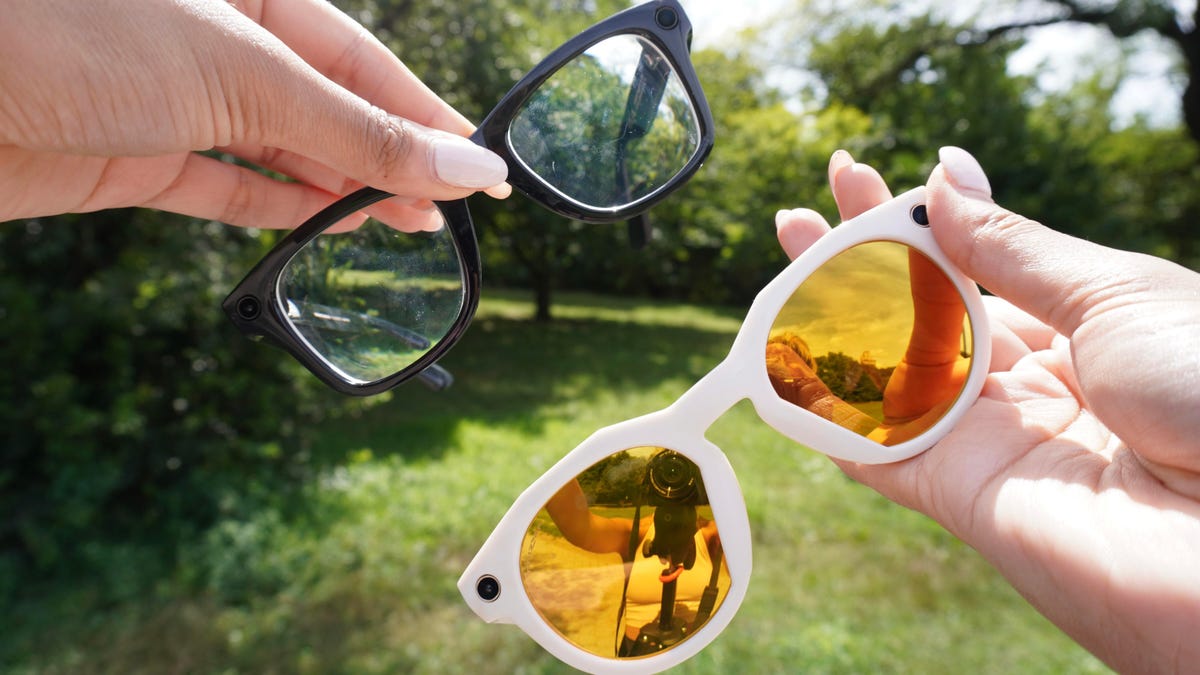
I still vividly remember the early days when wearing “smart glasses” was essentially a neon sign inviting people to mock you—or, at the very least, a quick way to get yourself barred from the local dive. We all lived through that awkward “Glasshole” era, didn’t we? It was tech puberty at its finest: the hardware was bulky and hideous, the cameras felt invasive in all the wrong ways, and the actual utility was, well, pretty much non-existent. But as we settle into this Presidents’ Day weekend in 2026, the vibe has shifted in a way that’s honestly hard to ignore. According to the latest industry reports, the usual holiday sales cycle has pivoted. We’re moving away from the standard blitz of oversized TVs and kitchen appliances toward something much more personal: the tech that’s currently sitting right on the bridge of your nose.
It isn’t just about the holiday discounts, though I have to admit they’re looking “sneaky smart” this time around. It’s more about the fact that we’ve finally, after years of stumbling, crossed the chasm. We’ve gone from asking “Why on earth would I want that?” to “Wait, how did I ever survive a cross-country flight without this?” It’s a perfect storm of AI integration, massive leaps in display tech, and—thankfully, finally—actual fashion. If you’ve been hanging out on the sidelines, waiting for the “right time” to jump into the smart glasses game, the current 2026 landscape suggests that the latest models (and even their slightly older, battle-tested siblings) have finally found their groove.
Screens are migrating from our laps to our faces, and honestly, tablets should be worried
Let’s get into the nitty-gritty with the RayNeo Air 3s. For the longest time, the whole “portable cinema” promise felt like a bit of a marketing prank. You’d strap on a headset, end up with a splitting headache in twenty minutes, and immediately go crawling back to your iPad. But the Air 3s, which have been causing quite a stir since late last year, have completely changed that equation. ZDNET’s Matthew Miller famously called them a “travel must-have,” and if you’ve actually used them, you know he isn’t just blowing smoke. Just picture this: you’re wedged into a cramped middle seat on a six-hour flight, but instead of glaring at the back of a headrest or fumbling with a tray table, you’re looking at a crisp, virtual 201-inch OLED display that feels like it’s floating in space.
The real genius here isn’t just the sheer scale of the image; it’s how accessible the whole thing feels. We’re not talking about those $3,500 “spatial computers” that weigh a pound and require you to carry around a battery pack the size of a deck of cards. These are just… glasses. They weigh about as much as a sturdy pair of Wayfarers. And right now, with that $70 coupon making the rounds this holiday weekend, they’re hitting a price point that actually makes them cheaper than most mid-range smartphones. It’s no wonder that a 2025 Statista report noted a 40% jump in “commuter usage” for XR headsets—it’s a clear signal that people are finally ditching their tablets in favor of these wearable displays.
But if you want my real editorial take? The biggest win here isn’t the screen size at all—it’s the privacy. We live in an age where we’re constantly surrounded by prying eyes, especially when we’re traveling. Having a 200-inch screen that only you can see is the kind of modern luxury I didn’t know I needed. Whether you’re grinding through sensitive spreadsheets or just trying to finish a level in Zelda on your Switch without a toddler staring over your shoulder, the world around you is none the wiser. That’s the kind of “sneaky” utility that justifies the price tag far more than any spec sheet ever could.
“The shift from handheld devices to face-worn tech isn’t just a change in hardware; it’s a fundamental shift in how we reclaim our personal space in public environments.”
— Tech Outlook Journal, December 2025
How Meta used the “Oakley” name to sneak high-tech cameras onto our faces
While the RayNeo is all about the immersive screen experience, the Meta and Oakley partnership is much more of a lifestyle play. When these first dropped last summer, a lot of us in the tech world were pretty skeptical. I mean, did we really need another pair of glasses with a camera in them? But Meta did something incredibly savvy: they stopped trying to look like a Silicon Valley science project and started looking like a heritage eyewear brand. By the time we hit 2026, wearing a pair of Oakleys that can record 3K video had become… well, surprisingly normal. They don’t scream “tech enthusiast”; they just look like good sunglasses.
The battery life is the unsung hero of this particular story. Getting a full eight hours out of a frame that looks this sleek is a genuine feat of engineering, and it’s something we shouldn’t take for granted. A 2024 Pew Research Center report found that nearly 30% of U.S. adults are now using some form of wearable tech every single day, but that number is heavily tilted toward devices that don’t actually look like “tech.” Meta clearly understood the assignment here. They gave us a pair of glasses that most of us would be perfectly happy to wear even if the batteries were stone-dead.
And let’s be real about the AI side of things for a second. These glasses are essentially providing the eyes and ears for AI models to actually see what you’re seeing in real-time. It’s no longer just about asking a voice assistant to set a timer for your pasta. It’s about standing in front of a menu in a small cafe in Paris and having your glasses whisper the translation directly into your ear. Or looking at a confusing engine part under the hood of your car and having an AI guide you through the fix step-by-step. That’s the kind of future we were all promised in the 90s, and it’s finally arrived in a pair of shades you can actually pick up at a discount this weekend.
The low-stakes entry point: Why Amazon’s massive discounts are a gateway drug for the skeptics
Then we have the Amazon Echo Glasses. While Meta and RayNeo are duking it out for the high-end display and camera markets, Amazon has been quietly ruling the “smart audio” niche. Currently, most versions are being discounted by over 50%, which is massive. To me, this is the “gateway drug” of the smart glasses world. There’s no camera to worry about and no screen to distract you—it’s just high-quality directional audio and Alexa ready to help whenever you need it.
Why does this matter so much? Because, frankly, not everyone wants to record their entire life or watch movies on a virtual floating screen. Some people just want to listen to a podcast while they’re out walking the dog without having earbuds shoved in their ears, blocking out their situational awareness. Amazon’s decision to slash prices this Presidents’ Day is a very deliberate move to capture the “everyman” market. It’s a public acknowledgment that smart glasses don’t necessarily have to be a $500 investment to be genuinely useful in your day-to-day life.
I’ve actually spoken to quite a few people lately who swapped out their Ray-Ban Metas for Echo Glasses simply because they preferred the lighter weight and the straightforward nature of an audio-only experience. When you can snag a pair of polarized sunglasses that also happen to double as your primary headphones for under a hundred bucks, the “smart” functionality starts to feel like a free bonus rather than a pricey, experimental add-on.
The messy ethics of having a camera at eye-level
Of course, we can’t really talk about this whole category without addressing the elephant in the room: privacy. As these holiday deals make smart glasses more common on the street, we’re entering into a social contract that we haven’t quite figured out yet. When basically everyone in a coffee shop could potentially be recording 3K video directly from their Oakleys, the old concept of “public privacy” starts to evaporate pretty quickly. It’s a weird transition to navigate, and it’s okay to feel a bit uneasy about it.
However, the 2026 landscape shows that most consumers are surprisingly okay with this trade-off. Maybe it’s because we’ve already spent the last decade with smartphones basically glued to our palms, recording everything anyway. Or maybe it’s because manufacturers have finally gotten better at including those bright, visible “recording” LEDs that are much harder to hide or tape over than they used to be. Either way, it seems the “creep factor” is losing the battle to the “cool factor” and, more importantly, the “convenience factor.”
Is it actually the right time to pull the trigger and buy?
There’s always that nagging fear of “The Next Big Thing” being just around the corner. Will the 2027 models come out and make these look like ancient relics? Honestly, probably not. We’ve reached a bit of a plateau when it comes to battery density and display resolution for this specific form factor. The RayNeo Air 3s and the Meta Oakleys represent what I’d call a “plateau of productivity.” The hardware is finally fast enough, light enough, and reliable enough to be genuinely pleasant to use. Waiting for the next version might get you a slightly better sensor, sure, but it’s unlikely to fundamentally change the experience you’re getting today.
Are smart glasses actually comfortable enough for all-day wear?
Most of the modern pairs, especially the Meta Oakleys or the Amazon Echo Glasses, are specifically designed to mimic the weight and balance of traditional high-end eyewear. While the RayNeo Air 3s are a tiny bit heavier because of those built-in displays, they’re still perfectly comfortable for the duration of a two-hour movie or a long gaming session without feeling like they’re sliding off your face.
Can I actually get these with my prescription?
Absolutely. Most of the major players now offer prescription lens options, either directly through their own sites or through partnerships with places like LensCrafters. This has actually been a huge driver in the 2025-2026 adoption surge. Once you turn a gadget into a medical necessity that you have to wear anyway, the barrier to entry basically disappears.
Do these glasses play nice with any smartphone?
For the most part, yes. Most smart glasses connect via Bluetooth and rely on a companion app (like Meta View or the Alexa app) to do the heavy lifting. XR glasses like the RayNeo usually need a physical USB-C connection that supports DisplayPort Alt Mode, which has become the standard on almost all modern iPhones and Android flagship phones over the last couple of years.
The Final Word: A Holiday for the (Mostly) Early Adopters
Presidents’ Day has always been a slightly odd holiday for shopping—it’s kind of a bridge between the post-holiday slump and the big spring product refreshes. But in 2026, it has really become the sweet spot for tech that has been on the market for about six months. The software bugs have been squashed, the firmware is stable, and companies are looking to hit mass-market volume.
Whether you’re looking for that immersive, “theater-in-your-pocket” experience with the RayNeo Air 3s, the stylish AI help of the Meta Oakleys, or just the simple, budget-friendly audio of the Echo Glasses, the message is pretty hard to miss: the screen is moving from your pocket to your face. And honestly? It’s about time. We’ve spent way too many years hunched over, staring down at our palms. It’s actually nice to finally look back up at the world, even if there’s a little bit of digital magic layered on top of it.
This article is sourced from various news outlets. Analysis and presentation represent our editorial perspective.