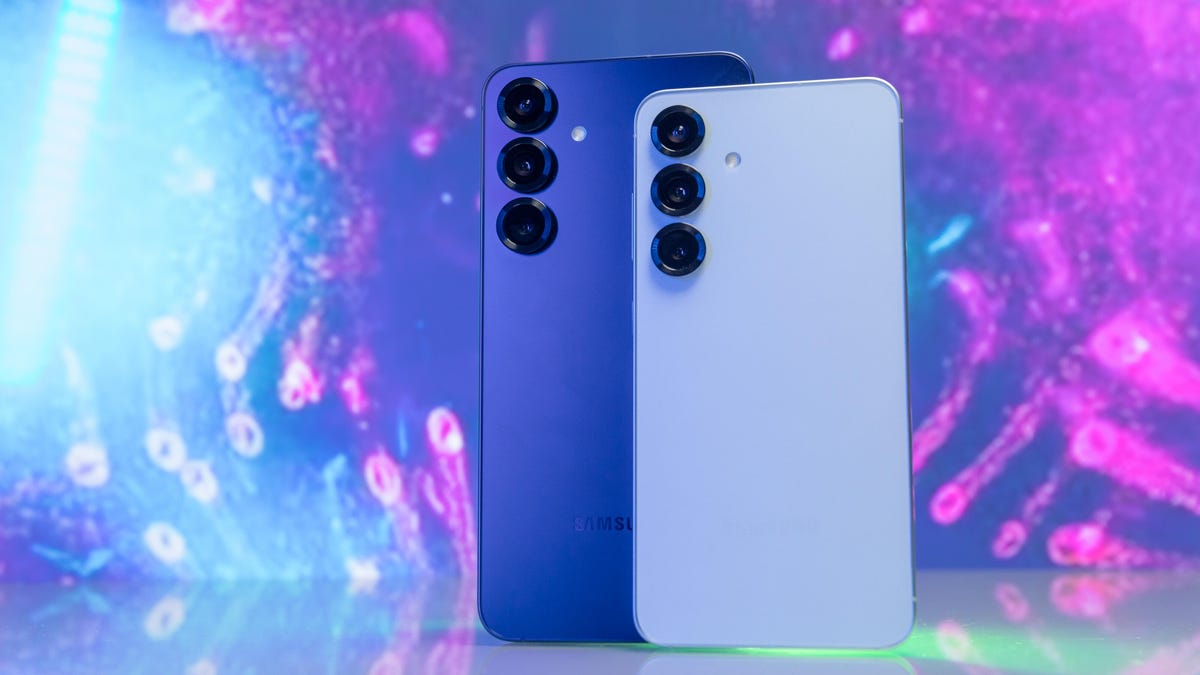
We’re officially ten days out from the big reveal, and the tension is palpable. On February 25, Samsung is set to take the stage in San Francisco for its first major Unpacked event of 2026, and the rumor mill has finally reached that fever pitch where the chaotic noise starts to harmonize into a coherent melody. If the latest reports from CNET are anything to go by, we’re looking at a trio of devices—the Galaxy S26, the S26 Plus, and the powerhouse S26 Ultra—that feel less like a total revolution and more like a very carefully calculated, surgical refinement of everything we saw last year. It’s a “steady as she goes” approach, but in a market this volatile, maybe steady is exactly what Samsung needs.
But let’s be honest for a second: the road to this particular launch hasn’t exactly been a smooth, paved highway. For months, we’ve been bombarded with conflicting reports about what these phones would even be called, let alone what they would do. Was the base model getting the axe to make room for a “Pro” version? Was the “Plus” being rebranded as the “Edge” to recapture some of that old-school Samsung magic? For a while there, it really felt like Samsung was having a bit of an identity crisis behind closed doors, trying to figure out who they wanted to be in 2026. Now that the dust has finally settled and the production lines are humming, it looks like they’ve decided to stick to the established script. However, just because the names are familiar doesn’t mean there aren’t some truly fascinating shifts happening under the hood that deserve a closer look.
The Ultra’s Softened Edges and the Great Titanium U-Turn
The most striking thing about the leaked renders of the S26 Ultra isn’t actually what’s been added to the chassis, but rather what’s being rounded off. After years of those sharp, boxy corners that defined the “Note-like” identity of the Ultra lineup, Samsung seems to be softening its stance—literally. The latest renderings suggest noticeably curvier corners that might actually make this 6.9-inch behemoth comfortable to hold. Let’s face it, the current Ultra can feel like holding a literal brick, and these changes might mean you won’t feel like you need a palm transplant after twenty minutes of doom-scrolling or texting your group chat.
And then we have to talk about the frame, because this is where things get really interesting—and a little confusing. Remember when titanium was the “it” material that every manufacturer was tripping over themselves to adopt? Well, the latest whispers from the supply chain suggest Samsung might actually be pivoting back to an enhanced aluminum frame for the S26 series. It’s a bit of a head-scratcher, isn’t it? You have to wonder: is this a pure cost-cutting measure to keep prices stable, or did the engineering team realize that the marginal weight savings of titanium just weren’t worth the massive manufacturing headache and increased production costs? Either way, it suggests a very pragmatic shift in philosophy. Samsung knows that while us tech enthusiasts love to pore over a spec sheet, the average person buying a phone at a carrier store cares way more about how the device actually feels in their pocket and how it fits in their hand. According to data from IDC, Samsung managed to maintain a dominant 19.4% global market share in 2024 by masterfully balancing that premium “luxe” feel with mass-market appeal. This move back to aluminum might just be a savvy play to keep those profit margins healthy without alienating the loyal fan base that expects a high-end experience.
“The images appear to show that the Galaxy S26 Ultra has curvier corners compared to its predecessor and a slightly different camera layout on the rear… the phone’s 6.9-inch display could use new M14 OLED panels, which would be brighter and more power efficient.”
— Android Headlines Analysis
But please, don’t mistake this pragmatism for a lack of ambition. The confirmed move to M14 OLED panels is actually a massive deal, even if it doesn’t sound “sexy” on a billboard. These aren’t just “screens” in the traditional sense; they are the most power-efficient display panels Samsung has ever produced for a mobile device. In a world where most of us are glued to our screens for six or seven hours a day, those efficiency gains are going to matter a whole lot more in the long run than a 5% bump in peak brightness that you’ll only ever notice if you’re trying to read an email under the midday sun in the middle of the Sahara. It’s about making the phone last longer through the day, which is the number one request from basically every smartphone user on the planet.
Playing it Safe: Why the “S26 Pro” Stayed on the Drawing Board
We really need to address those “S26 Pro” rumors that dominated the headlines a few months back. For a while there, it genuinely looked like Samsung was going to pull a page out of the Apple playbook and replace the standard base model with something marketed as more “premium” or “professional.” Internal build codes that were uncovered by the folks at Android Authority suggested a major shake-up was in the works. I actually thought it was a brilliant move at the time. Let’s be real: the base Galaxy S-series has felt a little bit neglected lately, awkwardly sandwiched between the absolute powerhouse that is the Ultra and the value-oriented FE models that offer 90% of the experience for much less money.
But, as the launch draws near, it seems Samsung blinked. The latest reliable reports indicate they’re sticking with the tried-and-true S26, S26 Plus, and S26 Ultra branding. It’s definitely the safe choice, the “no-risk” option, but I can’t help but wonder if they missed a golden opportunity to simplify a lineup that’s starting to feel just a little bit crowded. Remember last year’s S25 Edge? It made a decent splash, but its total absence in the S26 leaks suggests it might have been a one-hit wonder or an experimental dead end. Samsung is retreating to familiar territory, likely because they don’t want to confuse consumers in a year where the global economic climate remains “cautiously optimistic” at best. When people are tightening their belts, they want to buy something they recognize.
And let’s be totally honest about the “Plus” model—it has always been the perennial middle child of the family. It’s the phone people buy when they desperately want that big-screen real estate but simply don’t want to pay the “Ultra tax” or deal with the bulk of an embedded stylus. By keeping the Plus and ditching the “Edge” or “Pro” rebranding ideas, Samsung is betting big on brand recognition over the allure of novelty. Is it a little boring? Yeah, maybe. Is it smart business? Almost certainly. In a mature market, you don’t always need to reinvent the wheel; you just need to make sure the wheel doesn’t squeak.
Under the Hood: The Return of the Silicon Lottery
If you happen to live in the US or China, you’re likely going to be getting the Snapdragon 8 Elite Gen 5 under the hood. By all accounts, it’s going to be an absolute beast of a chip. But for the rest of the world, the long shadow of the Exynos 2600 looms large once again. This has been a massive point of contention for years among the Samsung faithful. Why should a buyer in London or Berlin get a fundamentally different “brain” than a buyer in New York or Seoul for the exact same price? It’s a question that never quite gets a satisfying answer.
Samsung keeps insisting that the performance gap between their in-house chips and Qualcomm’s silicon is closing, but the hardware enthusiasts and power users aren’t convinced yet. On the bright side, the S26 Ultra is rumored to pack 16GB of RAM across the board, which is a very welcome and much-needed upgrade. We’re finally seeing the “AI RAM” era take physical shape. With all the heavy-duty on-device processing that Samsung is pushing with Galaxy AI, 12GB just wasn’t cutting it anymore if you wanted a smooth experience. You need that extra overhead if you want your phone to translate a live call in real-time while simultaneously editing a 200-megapixel photo of your cat without the whole system stuttering to a halt.
Speaking of that camera—the latest word from ETNews claims the Ultra is sticking with that familiar 200MP main sensor. Some critics might call it stagnant or lazy, but I’d argue it’s actually about the art of optimization. We’ve reached a point of diminishing returns when it comes to raw megapixels on a tiny smartphone sensor. The real magic in 2026 happens in the ISP (Image Signal Processor) and the sophisticated AI denoising algorithms. If Samsung can make that 200MP sensor work more harmoniously with the Snapdragon 8 Elite’s new processing pipeline, the photos are going to look significantly better even if the number printed on the box stays exactly the same. It’s about quality, not just quantity.
Finally Catching Up: Charging Speeds and Satellite Safety
One of the most consistently frustrating things about being a Samsung fan over the last few years has been the glacial charging speeds. While Chinese competitors are out there pushing 100W or even 200W charging that can top off a phone in minutes, Samsung has been stuck in the slow lane for what feels like an eternity. So, the rumor that the S26 Ultra will finally support 60W wired charging is a massive “finally!” moment for the community. Is it industry-leading? No, not by a long shot. But it is a significant and meaningful jump from the 45W cap we’ve been frustrated with for years. It means less time tethered to a wall and more time actually using the device.
But the real “wow” factor this year—the feature that might actually save your life—is the inclusion of satellite communication. The FCC documentation doesn’t lie; all three models in the S26 lineup are expected to have the hardware capability to send and receive emergency messages via satellite. A 2024 report by Juniper Research estimated that the number of satellite-enabled smartphone messaging users will surge to nearly 5 million by 2027, and Samsung is clearly positioning itself to lead that charge. It’s one of those features you genuinely hope you never have to use, but the moment you’re hiking in a dead zone or find yourself in an emergency without a cell tower in sight, it instantly becomes the most important feature on your phone. It’s peace of mind as a service.
When is the Galaxy S26 release date?
Samsung has officially sent out the invites for a Galaxy Unpacked event scheduled for February 25, 2026. If we look at the patterns from previous years, we fully expect the phones to hit store shelves and arrive on doorsteps in early March, likely around the 6th or 13th.
Will the Galaxy S26 Ultra have a new camera?
While the headline sensor resolution is expected to remain at 200MP, the S26 Ultra isn’t standing still. It’s rumored to feature significantly upgraded 50MP sensors for both the ultrawide and the 5x telephoto lenses, all housed in a slightly redesigned vertical camera array on the back of the device.
Is the Galaxy S26 Plus being discontinued?
Despite those early, worrying rumors that it might be phased out or replaced by an “Edge” or “Pro” model, the most current and reliable leaks suggest the S26 Plus is staying exactly where it is. It will remain the big-screen alternative in the lineup, sitting comfortably between the base S26 and the S26 Ultra.
The Bottom Line: Is “Good Enough” Actually Great?
As we sit here on February 15, looking at this literal mountain of leaks and regulatory filings, a very clear picture is starting to emerge. Samsung isn’t trying to reinvent the wheel with the S26. They aren’t trying to shock the world with a radical new form factor or a gimmick that will be forgotten in six months. Instead, they’re trying to build the most polished, reliable, and “grown-up” version of the smartphone wheel possible. They’re fixing the long-standing ergonomic complaints with those curvier corners, they’re finally addressing the needs of power users with 16GB of RAM and 60W charging, and they’re adding essential safety nets like satellite messaging.
The big question remains: Is it enough to make you trade in your S25 or even an older S24? If you’re a power user who constantly finds your battery in the red by 2 PM, that 60W charging boost and the efficiency of the M14 panel might just be the clincher you’ve been waiting for. For everyone else, the S26 looks like a well-deserved victory lap for a design language that has served Samsung incredibly well over the last few generations. It’s a conservative play, sure, but in a mature smartphone market where everyone is holding onto their phones longer, sometimes “better” is actually more important than “new.”
We’ll know the full story for sure in just ten days. But if history is any indication, the leaks have already told us about 90% of what we need to know. The only thing left for Samsung to do now is get on that stage and convince us that this aluminum-framed, curvier, faster-charging future is worth the price of admission. I, for one, am curious to see if they can pull it off.
This article is sourced from various news outlets and industry leaks. The analysis and presentation represent our editorial perspective on the upcoming mobile landscape.