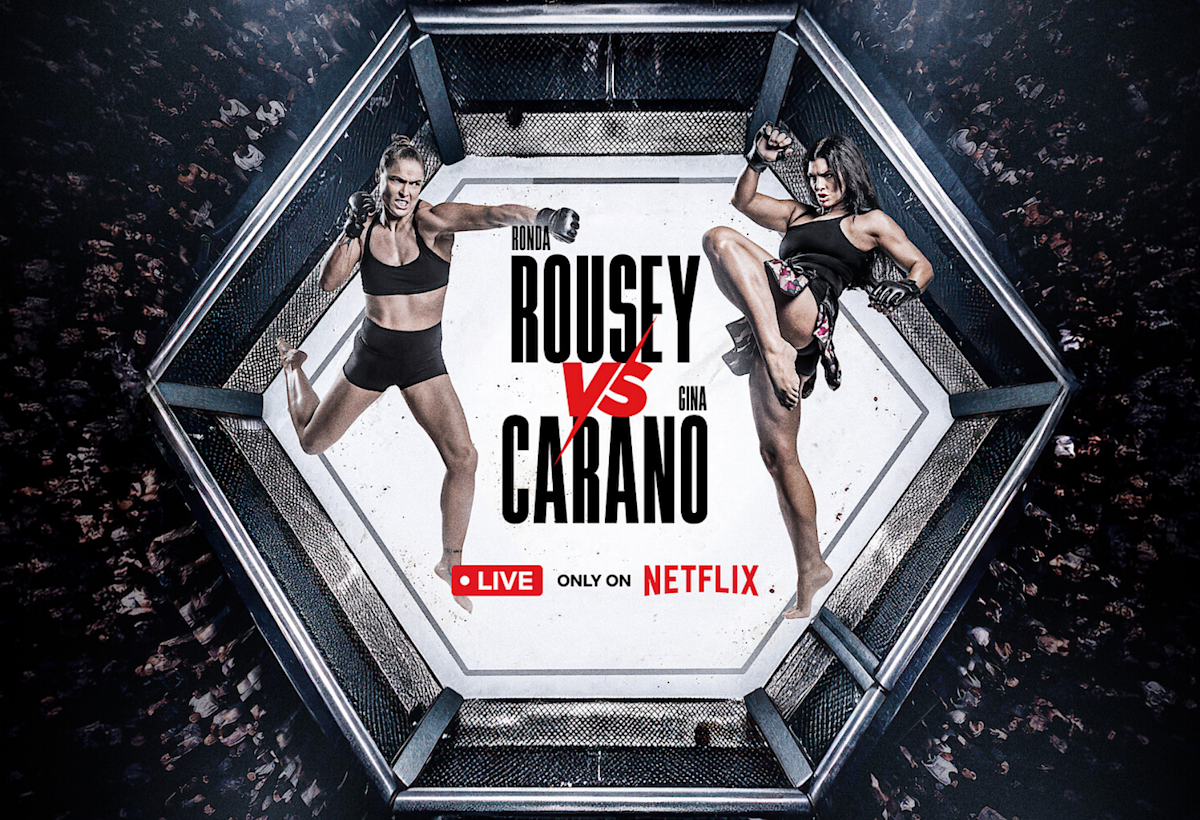
The night that familiar, glowing red “N” on our television screens transformed into a blood-spattered hexagon cage was the exact moment the old cable television model finally took its last, rattling breath. It was May 16, and for those of us who have been tracking the streaming wars with the intensity of a high-stakes poker game, it felt like the ultimate “all-in” move. Netflix—the company that once just wanted to mail you DVDs in those iconic red envelopes—officially stepped into the octagon. And let’s be clear: they didn’t do it with a quiet whimper; they did it with a roar that echoed from the high-rise living rooms of Los Angeles all the way to the crowded pubs of London.
When the Stream Ran Red: Netflix’s Brutal Goodbye to the Cable Era
According to Engadget, a publication that has spent decades obsessively covering every micro-shift in gadgets and consumer electronics, this wasn’t just another show—it was the platform’s inaugural foray into the visceral world of mixed martial arts. It was a moment many of us had been anticipating, or perhaps even dreading, since they first started dipping their toes into the waters of live golf and awards shows. But MMA? That’s a completely different beast. It’s raw, it’s unpredictable, and as we saw that night, it is incredibly lucrative when you have a global audience of over 260 million subscribers all primed to hit “play” at the exact same second.
I vividly remember sitting there on my couch, thumb hovering over the remote, constantly refreshing the app and wondering if the servers would actually hold up under the pressure. We’d all seen those embarrassing hiccups with live reunions and comedy specials in the past—the dreaded “spinning wheel of death” that makes you want to throw your remote at the wall. But this felt different. This was Ronda Rousey and Gina Carano—two names that essentially define the very architecture of women’s combat sports—stepping out of the shadows of retirement for one final dance. It wasn’t just a fight; it was a massive cultural event meticulously designed to bridge the gap between the “Netflix and chill” crowd and the hardcore “Fight Night” fanatics who live and breathe every submission and knockout.
Weaponizing the Past: Why Nostalgia is the New Heavyweight Champion
Let’s be real for a second, because we have to address the reality of the situation: Rousey and Carano weren’t exactly in their athletic primes. Rousey hadn’t stepped into a professional cage since 2016, and Carano? She’d been away from the sport since 2009—back when the original iPhone was still a relatively new toy and we were all still figuring out how to use apps. But in the landscape of modern entertainment, “prime” has become a very relative term. In 2026, we’ve finally realized that nostalgia is often far more valuable than a current championship belt. Netflix knew exactly what they were doing by picking these two icons. They weren’t selling a peak athletic performance; they were selling a memory.
According to a 2024 Statista report, the global streaming market was already witnessing a massive, seismic shift toward “eventized” content. This is the kind of stuff where live viewership is the only way to avoid the landmine of spoilers in our fractured, hyper-connected social media landscape. By pitting two pioneers against each other, Netflix effectively bypassed the need for complex tournament narratives or long-winded backstories. They didn’t need a rankings system or a belt on the line. They just needed two icons and a global stream. It was a brilliant, if perhaps slightly cynical, play to bypass the promotional contracts that keep current UFC stars locked away from rival platforms in legal limbo.
“The move to live sports isn’t just about content; it’s about ownership of the social conversation. When everyone watches the same thing at the same time, the platform becomes the town square.”
— Media Analyst Perspective, 2024
The fight itself was co-hosted by Most Valuable Productions, the outfit started by the polarizing but undeniably successful Jake Paul. Love him or hate him—and most people fall into one of those two camps with no middle ground—Paul has mastered the “spectacle” era of combat sports better than anyone else in the game. He understands that a fight isn’t just about the three rounds inside the cage; it’s about the months of manufactured trash talk, the perfectly edited Instagram reels, and the inevitable “behind-the-scenes” documentary that Netflix likely already has sitting in the editing bay. This partnership signaled that Netflix wasn’t trying to be the “new UFC”; they were trying to be the new home of the Mega-Event—a place where the sport is just one part of the broader content machine.
The Mandalorian in the Room: Gina Carano’s High-Stakes Return
You simply cannot talk about this fight without talking about the elephant in the room—or more accurately, the former Mandalorian in the room. Gina Carano’s return to the spotlight was about as controversial as it gets in today’s climate. Before this fight, most of the headlines involving her name weren’t about her fighting skills; they were about her very public firing from the hit Star Wars show after a series of social media posts that touched on everything from pandemic masking to the 2020 election. It was a messy, loud, and very public divorce from the House of Mouse that eventually led to a lawsuit backed by none other than Elon Musk.
Seeing her step into a Netflix-branded cage felt like a massive statement, both for her and for the platform. It was a stark reminder that in the current streaming era, “cancellation” is often just a transition to a different platform with a different set of rules and a different appetite for risk. For Carano, this fight seemed like a reclamation of her identity as an athlete—a deliberate move away from the “Cara Dune” shadow and back to the woman who essentially put women’s MMA on the map in 2006. Whether you agreed with her politics or not, you were probably watching to see if she still had that legendary right hand that once terrified the featherweight division.
And then there was Ronda. The Olympic medalist, the 12-2 phenom who once seemed so invincible that she was finishing fights in seconds. Watching her return was like watching a retired superhero reluctantly put the cape back on for one last mission. There was a visible vulnerability there that we hadn’t seen during her dominant, almost terrifying UFC run. It made for compelling television, even if the “purists” in the MMA community complained that the sport was being turned into a circus. But then again, if we’re being honest, hasn’t combat sports always been a bit of a circus? From the gladiators in Rome to the modern pay-per-view era, the goal has always been the same: put butts in seats—or in this case, eyes on apps.
The Algorithm is the New Promoter: How Your Watch History Built the Cage
Why does all of this matter in the long run? Because the numbers tell a story that the traditional broadcast networks are absolutely terrified of. A 2023 Pew Research report found that about 30% of US adults were already regularly watching sports via streaming services—a number that has only skyrocketed as Netflix and Amazon have flexed their multi-billion-dollar muscles. When Netflix aired this MMA bout, they weren’t just testing the water; they were claiming the entire beach. They were showing that they could handle the most demanding type of content there is: live, high-stakes action.
We’ve seen the build-up to this for a while now. We saw it with their celebrity golf events, their live talk shows, and their boxing matches. Each one of those was a data-gathering mission. They were learning how to handle millions of concurrent streams without crashing, how to integrate live advertising without alienating the “ad-free” tier subscribers, and most importantly, how to use their algorithm to push a live fight to someone who usually only watches British baking shows. If you watched The Mandalorian, the algorithm likely screamed at you to watch Carano fight. If you’d ever watched a Rousey documentary or even a sports biopic, you were served a notification the second the opening bell rang. It’s personalized promotion on a scale that old-school promoters can’t even fathom.
This level of vertical integration is something the traditional promoters like Dana White or Bob Arum can only dream of. Netflix isn’t just a broadcaster; they are the scout, the promoter, the ticket seller, and the permanent archive all in one. The May 16 fight proved that they could take two “retired” assets and turn them into the most-talked-about event of the financial quarter. It’s a blueprint that every other streamer, from Disney+ to Max, is now frantically trying to copy in a desperate attempt to keep up with the pace.
More Than a Circus: What Happens When the Stream Finally Catches the Sport
At the end of the day, the Rousey-Carano bout was a bit of both—sport and spectacle. It wasn’t the highest level of technical MMA we’ve ever seen—honestly, how could it be given the time away? But it was perhaps the most important MMA fight of the decade in terms of its impact on the industry. It effectively broke the monopoly that traditional promotions had on the “big fight” feel. It showed that in 2026, the platform hosting the fight matters just as much as the participants inside the cage.
I found myself thinking back to the fresh trailer for The Mandalorian and Grogu movie that was making the rounds back then. It was such a strange, almost poetic juxtaposition—Carano’s former franchise moving forward without her while she stepped back into a cage to prove her relevance elsewhere. It felt like a crossroads for the entire entertainment industry. On one side, you have the polished, corporate, and carefully managed world of Disney; on the other, the raw, unpredictable, and slightly chaotic world of live-streamed combat on Netflix. It’s a choice between the scripted and the unscripted, the safe and the dangerous.
As we look back at it now from the vantage point of February 2026, the May 16 fight feels like a major hinge point in history. It was the moment we finally stopped asking “Will Netflix do sports?” and started asking “Who is Netflix going to sign next?” They’ve moved far past being a simple library of movies and shows; they are now a living, breathing broadcaster of the present moment. And if that means we get more “one night only” spectacles featuring our favorite retired legends, I think most of us are more than okay with that. Just as long as the stream doesn’t buffer right as someone is about to land a knockout punch.
Why did Netflix choose retired fighters like Rousey and Carano?
The reality is that most current MMA stars are locked into incredibly restrictive, exclusive contracts with established promotions like the UFC or PFL. By choosing retired legends who are effectively free agents, Netflix could negotiate directly with the athletes themselves. This allowed them to avoid complex legal battles with existing promotional entities and move much faster to get the event off the ground.
Is Netflix planning to do more live MMA events?
Following the massive success of the May 16 event, it’s abundantly clear that live sports are now a core pillar of Netflix’s global growth strategy. They have already expanded aggressively into boxing, golf, and tennis. Given the high engagement numbers, moving deeper into combat sports is the most natural progression for the platform as they look to replace traditional cable TV.
What was the involvement of Jake Paul’s company?
Most Valuable Productions (MVP), which was co-founded by Jake Paul, served as the primary promotional partner for the event. This was a strategic move that allowed Netflix to leverage MVP’s specific expertise in marketing “spectacle” fights. It also helped them reach a much younger, digitally native audience that tends to follow social media influencers and creators with the same fervor that previous generations followed traditional athletes.
This article is sourced from various news outlets. Analysis and presentation represent our editorial perspective.