Honestly, for the longest time, it felt like Metal Gear Solid 4: Guns of the Patriots was destined to just… fade away. It was a game trapped on the very hardware it was born on, seemingly shackled to the PlayStation 3 forever. If you actually wanted to experience the final, heart-wrenching chapter of Solid Snake’s saga, you basically had to keep a dusty console plugged in, cross your fingers that the infamous “Yellow Light of Death” wouldn’t claim your machine, and just sort of “deal” with a frame rate that occasionally dipped into a literal slideshow. But that all changed last year. According to reports from CNET, Konami finally broke the seal, bringing MGS4 to modern platforms as the undisputed crown jewel of the Metal Gear Solid Master Collection Vol. 2. It wasn’t just another game release; it felt like a high-stakes rescue mission for a vital piece of gaming history.
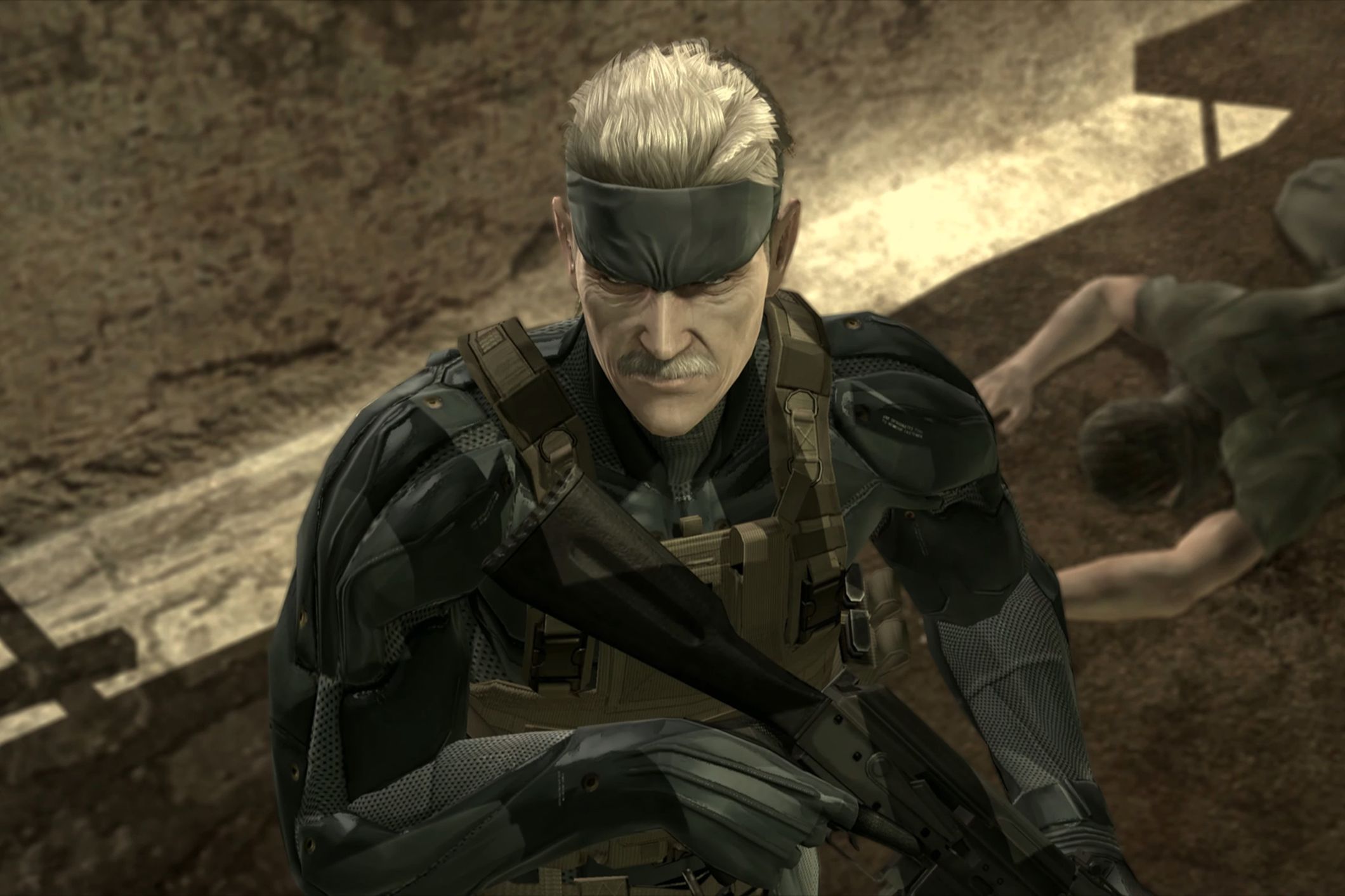
I still remember exactly where I was, watching the State of Play back when this was first announced. The live chat was moving so fast you couldn’t even read the individual screams of excitement, but the collective, digital gasp when the “Vol. 2” logo appeared on screen was almost palpable. For nearly twenty years, Konami had kept us all waiting in the dark. Sure, we got remakes of the very first game, various HD collections of the second and third entries, and even that weirdly divisive zombie spin-off, but MGS4 always remained that “In Case of Emergency Break Glass” title that never quite seemed to get its turn in the sun. Seeing Old Snake rendered in crisp, modern resolutions for the first time was like catching up with an old friend who had finally been allowed to leave a very specific, very cramped, and very outdated apartment.
“The challenge wasn’t just about licensing or demand; it was about the architecture. MGS4 was built so specifically for the PS3’s Cell processor that porting it was once considered a fool’s errand.”
— Anonymous Industry Developer, 2024 Technical Retrospective
Escaping the Cell: Why Freeing Snake from 2008 Hardware Actually Matters
Now, let’s talk about why this actually matters beyond the simple fact that “it’s a cool game.” To be blunt, the PlayStation 3 was a total nightmare for developers. Its Cell Broadband Engine was incredibly powerful for its time, but it was notoriously difficult—some might say hostile—to work with. Because MGS4 was designed as a flagship exclusive, Kojima Productions spent years tuning the engine to the PS3’s specific, weird little quirks. For over a decade, the industry consensus was that moving the game to any other platform would essentially require rebuilding it from the ground up, brick by digital brick. According to data from Statista, the PlayStation 3 sold roughly 87.4 million units worldwide, yet MGS4 remained its most tethered exclusive for nearly twenty years. That’s a massive, significant chunk of gaming history that was essentially locked behind a hardware wall, slowly becoming inaccessible to new generations of players.
When the Master Collection Vol. 2 finally dropped last August, the conversation wasn’t just about the $50 price tag or the simple convenience of not having to dig through your closet for old cables. It was about the much larger issue of digital preservation. We’re living in an era where games disappear all the time—whether it’s because of server shutdowns, expiring music licenses, or just plain corporate apathy. By bringing MGS4 to the PS5 (and eventually other modern platforms), Konami ensured that the conclusion to one of gaming’s most complex, confusing, and beautiful narratives wouldn’t just vanish into the ether. It’s a win for the medium as a whole, honestly. Whether you absolutely love the two-hour-long cutscenes or you find them a bit much, you really can’t deny that MGS4 is a pillar of cinematic storytelling in video games.
And let’s be real for a second—playing this game at a stable frame rate is a total revelation. Back in 2008, we all just sort of accepted the chugging performance during those heavy combat sequences in the Middle Eastern war zones. We thought it was just the “weight” of the game. But seeing it now with improved resolutions and a frame rate that doesn’t buckle under pressure makes you realize just how far ahead of its time the art direction actually was. The “OctoCamo” suit still looks incredible as it mimics the textures of the world, and the mechanical detail on the Metal Gear Mk. II is sharp enough to make any gearhead weep with joy. It’s finally the game we remembered it being, rather than the one the PS3 was struggling to run.
It’s Not Just About the Big Boss: Why Peace Walker and Ghost Babel Steal the Show
While MGS4 was obviously the headliner that grabbed all the headlines, we really shouldn’t sleep on the rest of the package. Including Metal Gear Solid: Peace Walker was a genuine masterstroke of sequencing by the developers. If MGS4 represents the end of the chronological timeline, Peace Walker is the vital bridge that explains exactly how we got there in the first place. It follows Big Boss in Colombia as he builds his own private army (Militaires Sans Frontières), and it’s arguably the most “modern” feeling game of the older era in terms of its mechanics. It originally launched on the PSP, and while the previous HD version was perfectly fine, this remaster feels like the definitive way to experience Big Boss’s slow, tragic descent into becoming the series’ ultimate antagonist. It adds a layer of weight to the entire franchise that you just don’t get elsewhere.
But the real “wait, what?” moment for long-time fans—and a personal highlight for me—was the inclusion of Metal Gear: Ghost Babel. This was a Game Boy Color title from way back in 2000 that most people probably haven’t thought about in twenty years. It’s non-canon, sure, but it’s a brilliant 2D stealth game that captured the “Solid” vibe perfectly on handheld hardware that had no business running something that good. A 2024 Circana report noted that legacy franchise re-releases saw a 15% uptick in consumer spending as “nostalgia gaming” became a dominant market force, and it’s deep cuts like Ghost Babel that make these collections feel like more than just a quick cash grab. It shows a level of respect for the franchise’s weird, sprawling, and often forgotten history.
Konami even went the extra mile by throwing in the digital soundtracks and screenplay books. For the lore nerds out there (and I am firmly in that camp), the master books are a absolute godsend. Trying to keep track of the Patriots, the Les Enfants Terribles project, and the specific details of who is currently possessing whose arm via nanomachines is practically a full-time job. Having all that documentation in one place, officially sanctioned and easy to navigate, is a whole lot better than scouring 15-year-old forum posts on a dying wiki in the middle of the night.
Is a $50 Ticket Back to 2008 a Fair Price for Nostalgia?
I’ve seen plenty of debate online about the price point. Fifty bucks for a collection of remasters can certainly feel a bit steep when we’re all used to deep discounts on digital storefronts every other week. But you really have to look at the sheer volume of what’s actually included here. MGS4 alone is a 20-30 hour experience on a first playthrough, and Peace Walker can easily add another 40 hours if you get sucked into the addictive base-building and recruitment loops. When you factor in the massive amount of technical work required to finally unstick MGS4 from its PS3 grave, the value proposition starts to look a lot more reasonable, especially for those who never owned a Sony console back in the day.
Is MGS4 playable for someone who hasn’t played the first three?
Technically, you can jump in, but I wouldn’t exactly recommend it if you want to know what’s going on. MGS4 is essentially a giant, cinematic “Thank You” note to the fans, filled to the brim with callbacks, returning characters, and resolutions to plot threads that started all the way back in 1987. You’ll probably be very confused by the talking monkeys and nanomachines, but honestly, you’ll probably still enjoy the explosions and the drama.
Does the remaster change the actual gameplay?
The core gameplay remains exactly as you remember it, but the “customized controls” mentioned during the initial reveal make a massive difference in how it feels to play. The original MGS4 control scheme was a bit of a clunky relic from the early dual-stick era. These new tweaks make the movement and aiming feel much more in line with what we expect from modern third-person shooters, which is a huge relief.
This collection also serves as something of a litmus test for Konami’s future as a developer. For a few years there, it really felt like they were moving away from “prestige” console gaming entirely, focusing instead on things like pachinko and mobile titles. But between this collection and the high-profile Silent Hill 2 remake, it feels like the giant has finally woken up from its slumber. They’ve seemingly realized that their back catalog isn’t just a pile of old, dusty code—it’s a gold mine of cultural touchstones that people are desperate to revisit and share with others.
Where Does the Tactical Espionage Legacy Go From Here?
Now that MGS4 is finally free from its hardware prison, where do we go from here? The “Master Collection” branding strongly implies that there’s a Vol. 3 somewhere on the horizon. We’ve still got Metal Gear Solid V: The Phantom Pain and Ground Zeroes to think about, though those are already perfectly playable on modern hardware via backward compatibility. The real dream for many of us would be seeing the original Metal Gear and Metal Gear 2: Solid Snake (the MSX versions, not the NES ones) given a similar level of love, context, and modern accessibility.
There’s also that persistent, nagging rumor of a full-blown remake for MGS4, similar to the treatment we’re seeing with Metal Gear Solid Delta: Snake Eater. While a remaster is great for the sake of preservation, a ground-up remake would allow them to fix some of the more… let’s say, “eccentric” design choices of the late 2000s. But for right now? I’m just happy I don’t have to worry about my PS3’s thermal paste drying out or the fans sounding like a jet engine just to hear the iconic “War has changed” monologue one more time.
Ultimately, the MGS4 remaster is a massive victory for the fans and the community. It’s a reminder that no matter how complicated the technology gets or how messy the corporate politics might become, great art usually finds a way to survive and reach a new audience. Snake might have been “Old” back in 2008, but in 2026, his story feels more relevant than ever. If you haven’t picked it up yet, do yourself a favor and experience the madness for yourself. Just make sure you have a very comfortable chair and plenty of popcorn ready for those legendary cutscenes. You’re going to be there for a while.
This article is sourced from various news outlets. Analysis and presentation represent our editorial perspective.