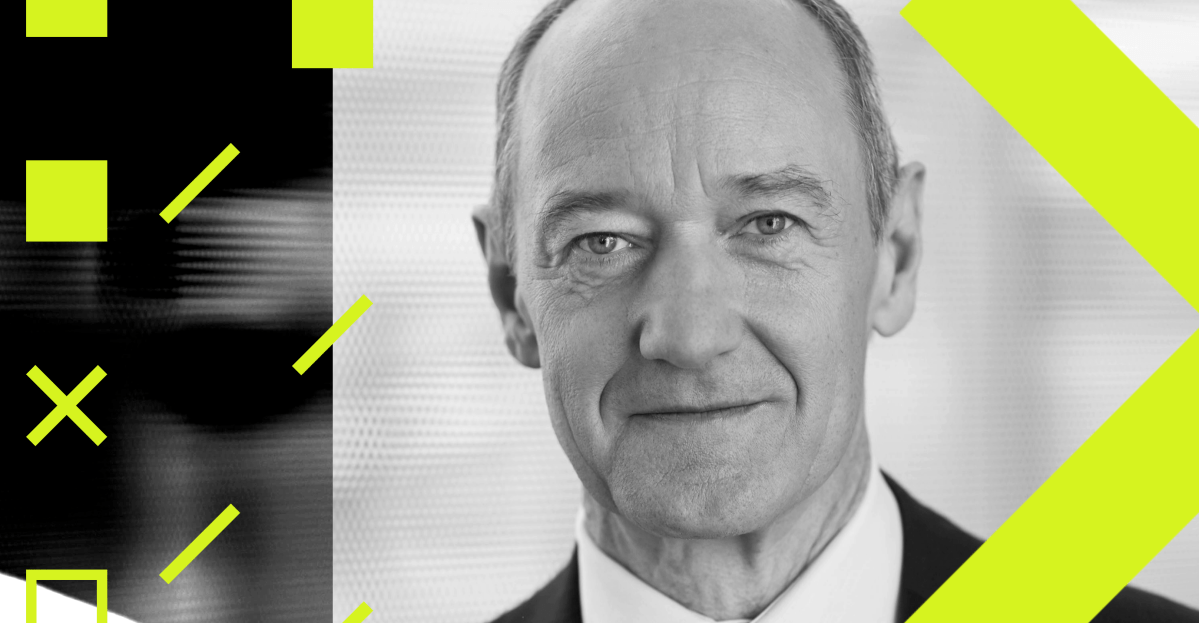
Ever walked past that blue Siemens logo at a hospital or train station and wondered what they actually do? According to a recent report from The Verge, Siemens CEO Roland Busch is on a massive mission to use AI to automate pretty much everything in the physical world. It’s a huge shift. We’re not just talking about gadgets; Siemens is the invisible backbone of global infrastructure. Their pivot toward total AI integration is going to change how stuff is made, shipped, and powered for the next fifty years.
The Hidden Giant in Your Daily Life
Let’s be honest—most of us don’t really think about Siemens unless we see their name on a dishwasher. But here’s the thing: they aren’t really a consumer company anymore. They’ve spent the last 170 years reinventing themselves, and right now, they’re arguably the most important software company you’ve never actually used. Roland Busch points out that if you see a car driving down the street, there’s a massive chance it was designed or built using Siemens tech. We are talking about a footprint that covers about a third of all manufacturing lines on the planet. Think about that for a second.
Meanwhile, if you’ve ever had an MRI or a CT scan, you were probably sitting inside a machine built by their Healthineers division. They also handle about half of the world’s power distribution. So, when Busch talks about “automating everything,” he isn’t just talking about a few robots in a warehouse. He’s talking about the power grids, the hospitals, and the factories that keep society running. With over 320,000 employees—basically the population of a medium-sized city—they’re working to make the world’s hardware run on much smarter software.
The “Digital Twin” Revolution
One of the coolest—and slightly mind-bending—concepts Busch discussed is the “physics-based digital twin.” Imagine you’re building a high-end sports car or a massive chemical plant. Instead of building it in the real world first and crossing your fingers that it works, Siemens creates a perfect digital copy. And this isn’t just some 3D model; it’s a simulation that actually follows the laws of physics. You can test how air flows over a car or how chemicals react in a vat without ever touching a physical object.
Now, get this: Siemens is moving this tech into “molecules.” They want to simulate the very building blocks of materials. This allows companies to fail fast and fail cheap in a virtual environment so that when they finally hit “build” in the real world, the result is perfect. It’s like having a save-state in a video game for billion-dollar industrial projects. This is the foundation of their automation goal—if you can simulate it perfectly, you can automate it perfectly.
Why This Matters: The Efficiency vs. Humanity Debate
Here is where things get a bit spicy. Busch describes a future that sounds incredibly efficient—a “utopian” vision where factories basically run themselves with zero waste. But wait, what happens to the people? If AI is doing the designing, the accounting, and the actual manufacturing, where does that leave the human worker?
Honestly, I think the real risk here isn’t just “job loss” in the traditional sense, but the “deskilling” of the workforce. If we become “hands for the AI,” as some critics fear, we might lose that creative problem-solving that makes work fulfilling. But there’s another way to look at it. By automating the boring, repetitive, and dangerous stuff, we might finally free up humans to do the high-level thinking that computers still struggle with. The transition will be messy—no doubt about it—but the potential for a world where we produce more with fewer resources is a massive win for the planet.
The Geopolitical Tightrope
Siemens isn’t just a tech company; they are a geopolitical player. They operate heavily in the US, Europe, and China. With trade tensions rising and talk of tariffs getting louder, Busch and his team are in a tough spot. They are a defense contractor on both sides of the Atlantic, which means they have to navigate the choppy waters of NATO relations and US-EU trade deals.
Here’s my take: Siemens is a bellwether for the “de-globalization” trend. If a company this big and integrated starts to struggle because of borders and tariffs, it’s a sign that the era of free trade is truly over. Busch seems confident that their tech is so essential that they can weather any storm. But let’s be real—the collapse of NATO or a full-blown trade war would be a nightmare for a company that thrives on open markets. They are essentially betting that the world will stay connected enough for their “automated nervous system” to function across borders.
Looking Ahead: The “Apple-ification” of Factories
So, what