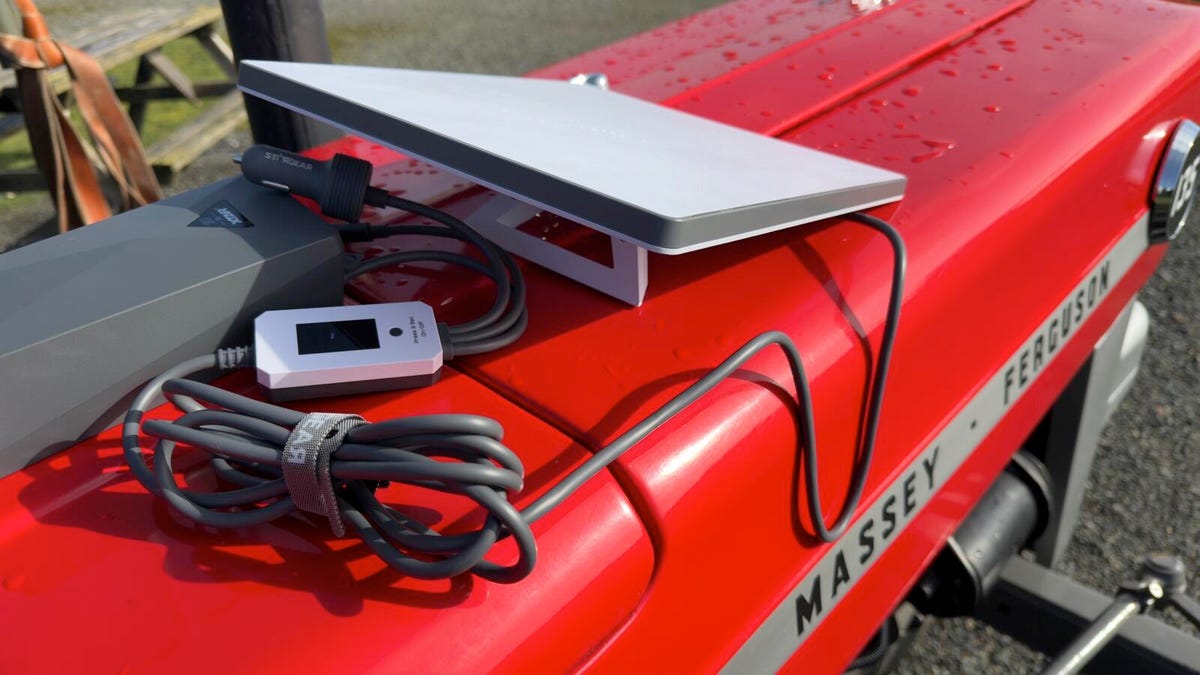
The entire concept of the “digital nomad” is built on a very pretty, very heavily filtered lie. You know the photos. Someone sitting on a cliff edge in a vintage van, laptop open, casually firing off emails while the sun sets over a pristine canyon. What you don’t see is the tangled rat king of adapters, power bricks, and extension cords hidden just out of frame. Going off-grid is incredibly easy. Staying connected while off-grid is an absolute logistical nightmare. According to Latest news, this exact friction point has finally been smoothed over for Starlink Mini users, not by a massive tech conglomerate, but by a simple, third-party aftermarket cable.
And honestly? It’s about time.
When SpaceX dropped the Starlink Mini a couple of years ago, it felt like a revelation. Finally, a portable satellite dish that didn’t require a massive Pelican case to transport. The hardware itself is genuinely brilliant. Over the last two years, I’ve seen these things dragged through TSA checkpoints, left out in freezing rain, and baked in the Mojave Desert sun. They just keep working. But there was always one glaring, infuriating oversight baked right into the box: the power supply.
The Grid-Tethered Illusion
SpaceX built a device explicitly designed for the middle of nowhere, but they shipped it with a power kit that assumes you’re sitting in a Starbucks. It relies on a standard mains AC outlet.
If you’re out in the wild, AC power is a luxury. Sure, you probably have a portable power station—a Jackery, an EcoFlow, or whatever lithium-heavy box you prefer. But plugging an AC brick into a portable battery is a masterclass in inefficiency. It’s what the off-grid community refers to as the “inverter tax.”
Here’s how stupid the math actually is.
Your portable power station stores energy as Direct Current (DC). To use the factory Starlink plug, you have to turn on your battery’s AC inverter, which converts that DC power into Alternating Current (AC). Then, the Starlink power brick takes that AC power and converts it back into DC power to run the dish. Every time you flip the current, you lose power to heat. You are literally burning 10 to 15 percent of your precious battery capacity just to appease a wall plug.
When you’re three days away from the nearest wall socket, a 15 percent power loss isn’t an inconvenience. It’s the difference between hitting a Friday deadline and going dark.
This isn’t a niche problem, either. The remote work explosion didn’t just fade away after the pandemic. According to an MBO Partners research report, the number of digital nomads in the US alone exploded past 17 million by 2024, and that trajectory hasn’t slowed down. People are living out of vehicles, boats, and remote cabins in record numbers. They need satellite internet. They don’t need AC power bricks.
One Cable to Rule Them All
This is where the aftermarket ecosystem usually steps in to fix big tech’s blind spots. For the longest time, powering a Starlink Mini via DC meant carrying a stupid amount of dongles. You had step-up converters, proprietary barrel jacks, and a mess of wires that felt like a science project.
Now, we have things like the Stargear 3-in-1 cable. It’s a ridiculously specific accessory that completely changes the daily reality of using portable satellite internet.
On one end, you have the standard, weatherproof DC jack that slots perfectly into the Starlink Mini. It creates the necessary seal to keep the rain out, which is non-negotiable. But the magic happens on the other end. Instead of a standard wall plug, the cable splits into a trifecta of off-grid power options.
First, there’s a standard DC jack, which lets you plug into the official Starlink AC outlet if you happen to actually be indoors. Fine. Good to have.
Second, and most importantly, is a USB-C connector capable of pulling up to 140W of power.
Third is a 12V-24V car adapter.
This is flexibility. This is what the dish should have shipped with in the first place. You can plug it directly into the 12V cigarette lighter port of your truck dashboard. You can plug it into the 100W USB-C PD port on your portable power station, completely bypassing the AC inverter and saving your battery life. You can even run it off a high-capacity laptop power bank in a pinch.
SpaceX engineered a phenomenal piece of space hardware, but their power assumptions are aggressively grid-centric. We shouldn’t have to fight our gear just to use it in the wild.
The 100-Watt Sweet Spot
We need to talk about power draw for a second, because the physics of satellite internet are stubborn.
SpaceX’s official specs state that the dish needs a minimum of 100W for stable, reliable operation. Pushing signals to low-Earth orbit isn’t cheap from an energy standpoint. The dish has a built-in snow melt feature that cranks the wattage way up when the temperature drops, ensuring ice doesn’t block your signal.
In practice? You can often get away with less.
If you’re in a sunny climate and just browsing the web, the Starlink Mini will happily hum along on a 60W output. I’ve seen it done. But it’s risky. If a heavy rainstorm rolls in, the dish will try to draw more power to punch the signal through the thick cloud cover. If your power source maxes out at 60W, the dish reboots. Right in the middle of your Zoom call.
That’s why a cable capable of pulling 140W via USB-C is such a big deal. It gives the dish enough overhead to handle weather spikes without tripping the power supply. The Stargear cable even throws in a smart digital display and a physical on/off switch—a tiny detail, but when you’re managing off-grid power, being able to cut the parasitic draw of a sleeping device without unplugging it is huge.
The Counterargument: Why Didn’t SpaceX Build This?
It’s easy to sit back and call SpaceX lazy for not including a USB-C cable in the box. But if you look at it from a massive hardware manufacturer’s perspective, it actually makes sense.
It all comes down to quality control and customer support.
If SpaceX ships a dish with a standard USB-C port, they immediately lose control over the power delivery. People are predictably terrible at understanding the difference between a 15W gas station charging cable and a 100W Power Delivery cable. They look exactly the same.
Imagine the customer service nightmare. Thousands of people plugging their $600 satellite dish into an old iPhone charger block from 2018, and then flooding Reddit and SpaceX support lines complaining that their internet is broken. By forcing you to use their proprietary AC brick, SpaceX guarantees the dish receives the exact voltage and wattage it needs to operate flawlessly. They idiot-proofed it.
But in idiot-proofing the device for the masses, they severely handicapped it for the exact demographic the Mini was built for: off-grid users who know exactly how to manage their 12V power systems.
The Universal Language of Power
We are finally entering an era where USB-C is becoming the true universal standard for heavy-duty hardware. For a long time, USB was just for mice and keyboards. Then it was for phones. Then laptops.
Now, thanks to the newer USB-C Power Delivery (PD) protocols, we can push 140W, or even 240W, through a single, standardized cable. The European Parliament’s strict mandate for USB-C standardization wasn’t just about reducing the annoyance of lightning cables. It was about creating a baseline expectation for how our technology communicates and draws power.
The fact that we can now power a phased-array satellite antenna—a device communicating with a constellation of satellites flying at 17,000 miles per hour in low-Earth orbit—using the exact same cable that charges a MacBook is nothing short of incredible.
It demystifies off-grid living. It removes the necessity of heavy, inefficient inverters. It means you can pack lighter, travel further, and stay online longer.
Does powering Starlink via 12V really save that much battery?
Yes. Bypassing an AC inverter saves roughly 10% to 15% of your total battery capacity. Over a three-day camping trip, that saved energy can equate to several extra hours of internet connectivity or keeping your camp fridge running an extra night.
We shouldn’t have to rely on third-party cables to unlock the full potential of our gear. Hardware companies need to start trusting their pro-level users to manage their own power ecosystems. But until big tech completely embraces the DC reality of remote living, accessories like this 3-in-1 cable aren’t just convenient.
They are absolute necessities.
Reporting draws from multiple verified sources. The editorial angle and commentary are our own.