I was sitting in a packed little cafe the other afternoon, just nursing a lukewarm latte and watching the world go by, when I noticed something. Looking out at the sea of white stems and charcoal buds protruding from almost every ear in the room, it finally hit me: we’ve reached a weird kind of “peak gadget.” You know that specific feeling when everything around you is technically brilliant, flawlessly engineered, and yet… somehow completely boring? It feels like we’ve spent the better part of the last decade obsessively chasing the highest specs, the fastest processors, and the most vacuum-like noise cancellation. And now that we’ve actually arrived at that destination, we’re starting to look around and ask ourselves, “Wait, is this really it?”
I was reading some recent coverage from Engadget—which, if you don’t know, is basically the gold standard for obsessive daily coverage of everything moving the needle in consumer electronics—and their latest retrospectives on heavy hitters like the Sony WF-1000XM6 and the ASUS Zenbook Duo really drove this point home for me. It feels like the tide is turning. We aren’t just looking for cold, efficient tools anymore; we’re looking for things that actually make us feel something, even if that means embracing a little bit of imperfection along the way. We’re tired of the “perfect” and hungry for the “personal.”
Why Sony’s Newest Earbuds Feel Like a Victim of Their Own Success
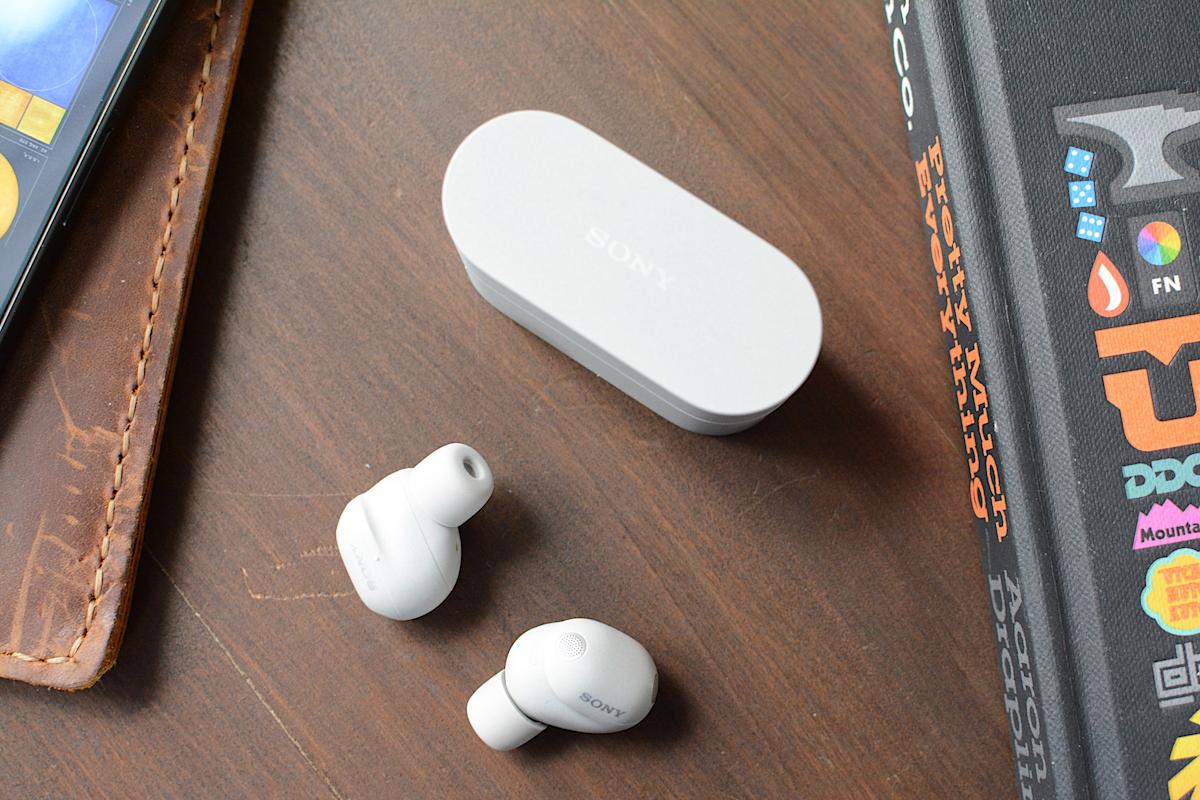
For what feels like an eternity, Sony’s 1000X line was the undisputed king of the hill. It was simple: if you wanted the absolute best noise cancellation and the lushest, most detailed sound, you bought the Sonys. Period. End of discussion. But with the release of the WF-1000XM6 last year, I think we witnessed a bit of a tectonic shift. It’s not that they’re bad—far from it, they’re actually incredible pieces of engineering—but the gap between “the best” and “the rest” has narrowed to a tiny, almost imperceptible sliver. According to a 2024 Statista report, the global True Wireless Stereo (TWS) market has exploded, reaching over 300 million units shipped annually. That kind of massive scale has allowed mid-tier competitors to basically reverse-engineer Sony’s wizardry and sell it back to us at a fraction of the cost. When “good enough” is this good, “great” has a lot more work to do.
When you really sit down and look at the XM6, you see a product that is visibly struggling with its own legacy. The Active Noise Cancellation (ANC) is still top-tier, obviously, but is it significantly better than what we were using two years ago? Not really. It’s an incremental crawl rather than a leap. And then there are those foam tips. I’ve always had a complicated, love-hate relationship with them, and it seems like I’m definitely not alone in that camp. They provide a fantastic seal, sure, but they’re finicky, they get gross, and they eventually wear out. In a world where we expect $300+ earbuds to be completely effortless, these little friction points are starting to feel like major hurdles that Sony just hasn’t cleared yet.
The real sticking point for me, though, is the voice quality. While Apple and Bose have made these massive, impressive strides in making you sound like an actual human being during a Zoom call on a windy street corner, Sony feels like it’s still stuck in the lab playing catch-up. It really makes you wonder: has Sony focused so much on the *listener’s* experience that they completely forgot about the person on the other end of the line? In 2026, where hybrid work isn’t a “trend” anymore—it’s just “work”—that’s a pretty tough pill to swallow for a flagship product.
“The two most obvious places the company is lagging behind the competition is ANC performance and overall voice quality, not to mention my continued dissatisfaction with the fit that Sony’s foam tips provide.”
— Engadget Editorial Review
Can Two Screens Actually Replace Your Entire Workflow? ASUS Thinks So.
While Sony is playing a cautious game of inches, ASUS is out here trying to reinvent the entire playing field with the Zenbook Duo. I’ll be totally honest with you—when I first saw those early dual-screen laptop prototypes years ago, I rolled my eyes. I thought they were a gimmick, a flashy solution in search of a problem that didn’t exist. But after seeing how the Zenbook Duo has matured into its current form, I’m finally starting to see the light. It’s not just a laptop anymore; it’s more like a portable command center that you can actually fit in a messenger bag.
There is something incredibly liberating about having two full 14-inch screens tucked away in your backpack. According to the folks at IDC, the premium laptop segment has seen a 12% shift toward non-traditional form factors since 2023, and once you use one, it’s easy to see why. We’re all multitasking more than we ever have before. Having your Slack or Spotify open on the bottom screen while you’re hammering away at a deadline on the top one just… makes sense. It’s the kind of productivity boost you didn’t even know you needed until you’ve lived with it for a week and then tried to go back to a single screen. It feels like going from a studio apartment to a house.
But—and there is always a “but” when we’re talking about ASUS—you have to be willing to pay the “pioneer tax.” It’s pricey, it’s a bit heavier than your standard ultraportable, and you have to mentally adjust to the idea of a detachable keyboard. Sam Rutherford over at Engadget has been banging the drum for a while that we’ll eventually all be typing on screens just like we do on our phones. Now, I’m not sure I’m personally ready for that level of commitment quite yet—I still love the click of a real key—but the Zenbook Duo gives us a bit of both worlds. It’s a bridge to the future that doesn’t feel like it’s burning the present down behind it.
The $30 Camera That’s Proving We’re All Tired of Perfect Pixels
Now, let’s pivot to what I think is the most fascinating thing happening in tech right now, and surprisingly, it isn’t a $2,000 folding laptop or a set of high-end buds. It’s a $30 camera called the Charmera. It’s tiny, it’s undeniably cute, and by any traditional technical metric you could throw at it, the photos it takes are objectively terrible. They’re crunchy, they’re low-res, and they have the dynamic range of a damp piece of cardboard. And yet, people are absolutely obsessed with it. I’ve seen them everywhere lately.
Why is this happening? I think it’s because we are all suffering from a massive case of “AI Fatigue.” Our smartphones have become so incredibly good at “fixing” our photos in real-time that every single picture has started to look the same. Every sunset is perfectly balanced, every face is smoothed and perfectly lit, and every shadow is boosted. There’s no soul left in the pixels anymore; it’s all just math. The Charmera is the complete antithesis of that. It captures a moment in time that feels real precisely because it’s flawed. It’s the digital equivalent of a grainy Polaroid or a scratchy vinyl record. It’s honest.
It’s a much-needed reminder that tech doesn’t always have to be about “more.” Sometimes, “less” is exactly what we need to actually reconnect with the world around us. In an era where we can generate an entire photorealistic landscape just by typing a text prompt into a box, there’s something quietly rebellious about carrying a tiny plastic box that takes “bad” pictures of your friends at a bar. It’s fun, it’s tactile, and it doesn’t try to be anything other than what it is. It doesn’t want to optimize your life; it just wants to take a photo.
Mullvad and the High Price of Actually Being Private
Finally, we have to talk about the invisible side of tech—the stuff that keeps us safe while we’re browsing the darker or more cluttered corners of the internet. Mullvad VPN has always been the “cool kid” of the privacy world, the one the experts actually use. They don’t have flashy Super Bowl ads or a dozen different “lifestyle” features or celebrity spokespeople. They just do privacy, and they do it with a level of transparency that honestly puts the rest of the industry to shame. They don’t even want your email address; they just give you a random number and say “good luck.”
But being a privacy purist comes with some real-world trade-offs. As Engadget pointed out in their testing, Mullvad’s insistence on using only the WireGuard protocol and its flat-out refusal to play the “unblock every streaming service” game makes it a pretty tough sell for the average user. If you just want to watch the UK version of Netflix from your couch in Ohio, Mullvad is going to frustrate the hell out of you. It’s not built for that. But if you’re one of the 79% of adults who, according to a Pew Research Center study, are genuinely concerned about how companies are harvesting and using their data, those compromises start to feel like a badge of honor. It’s a tool for people who value security over convenience.
Is the Sony WF-1000XM6 still worth buying in 2026?
Honestly? Yes, but only if you value a specific sound profile and brand reliability above everything else. If you’re out there looking for the absolute cutting edge in ANC or you spend half your day on voice calls, I’d argue that competitors from Bose and Apple have finally overtaken Sony in this particular cycle. They’re great, but they aren’t the “default” choice anymore.
Is the dual-screen design of the Zenbook Duo actually practical for travel?
Surprisingly, it really is. While it definitely adds a bit of thickness and weight compared to something like a MacBook Air, the ability to have a full dual-monitor setup in a hotel room or even on a cramped airplane tray table (if you use the screens vertically) is a total game-changer for digital nomads and power users. It turns any coffee shop table into a real office.
What Happens When the Hype Finally Dies Down?
Looking back at this latest batch of gear and reviews, I think I see a common thread emerging. We are slowly moving away from the era of “General Purpose Excellence”—where every device tried to be everything to everyone—and into the era of “Specific Intent.” We’re choosing tools that reflect who we are, not just what the specs say. Sony is for the dedicated audiophiles who don’t mind a bit of foam-tip finickiness if the music sounds right. ASUS is for the power users who refuse to be tethered to a single tiny screen. Mullvad is for the privacy hawks who couldn’t care less about streaming *Love Island* from abroad. And the Charmera? Well, that’s for the rest of us who just want to remember what it feels like to have actual fun with a gadget again.
The tech world in 2026 isn’t about finding the one “perfect” device that does everything for you. It’s about finding the weird, specific, and sometimes beautifully flawed tools that actually fit the way *you* live your life. And honestly? That’s a much more interesting, much more human place to be than where we were just a few years ago. We’ve finally finished climbing the mountain of specs; now we’re just sitting back and enjoying the view—crunchy, low-res photos and all. And I think I prefer it this way.
This article is sourced from various news outlets. Analysis and presentation represent our editorial perspective.