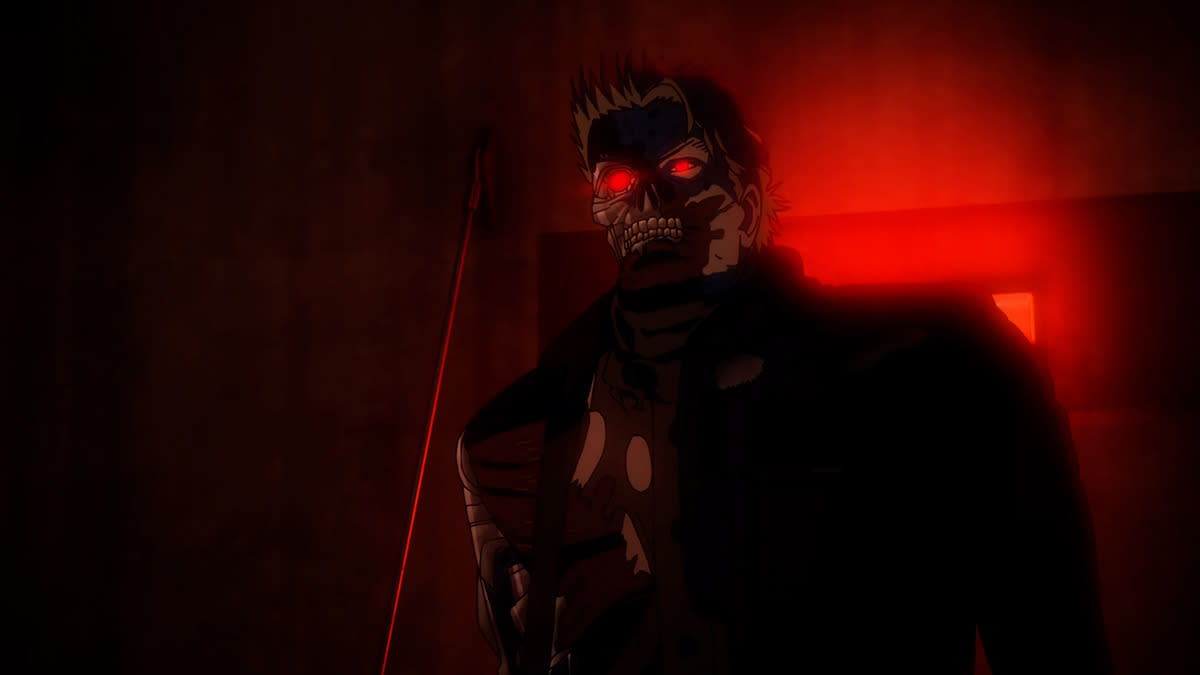
It finally happened, and I’ll be honest—it stings a lot more than I thought it would. After months of radio silence and a whole lot of hopeful fan theories floating around the internet, the word is officially out: Terminator Zero has been terminated. According to Engadget—the site that basically lives and breathes consumer electronics and tech culture—showrunner Mattson Tomlin recently took to social media to break the news that Netflix won’t be moving forward with a second season. It’s the kind of news that genuinely makes you want to find a time machine, head back to 1997, and try to change the timeline yourself.
The show, which hit the platform back in August 2024, was a rare, bright spot for a franchise that has spent the better part of the last twenty years essentially stumbling over its own feet. It was moody, it was unapologetically violent, and it actually felt like it had something fresh and urgent to say about the nature of AI. But as Tomlin pointed out, the raw numbers just weren’t where they needed to be. “At the end of the day,” he noted with a heavy dose of reality, “not nearly enough people watched it.” It’s the cold, hard truth of the streaming era: even a show that’s “generally well-received” can get the axe if the algorithm doesn’t see a perfectly vertical line on a growth chart. It’s a tough pill to swallow for fans of high-concept sci-fi.
The Demographic No-Man’s-Land: Why Bridging the Gap Backfired
There’s a really fascinating—and frankly, frustrating—piece of insight Tomlin shared about why the show struggled to find its footing. He mentioned that anime audiences generally skew younger, while Terminator fans—the ones who grew up with Arnold’s leather jacket and the liquid metal terrors of T2—tend to skew quite a bit older. Terminator Zero asked these two very different groups to meet in the middle, and apparently, that middle ground turned out to be a bit of a ghost town. It’s a classic demographic trap that Hollywood keeps falling into, despite decades of evidence that it’s a risky bet.
If you look at the data—like the 2023 report by the Association of Japanese Animations—the global anime market has seen this explosive, massive growth over the last few years. But the core driver of that growth remains Gen Z and younger Millennials who prioritize very specific aesthetic and narrative tropes. When you take a legacy IP like Terminator, which carries the heavy weight of 40 years of cinematic baggage, you’re fighting a steep uphill battle from day one. You have to convince the kids that this “old person” franchise is actually cool, and you have to convince the legacy fans that “cartoons” can be serious, adult sci-fi. That is a lot of heavy lifting for just one season of television to accomplish on its own.
And let’s be real for a second: the “middle ground” is often exactly where creativity goes to die in the eyes of a corporate spreadsheet. Netflix doesn’t just look at whether a show is “good”—they look at the “efficiency” of the spend. If a show costs a significant amount to produce but only manages to attract a niche overlap of two demographics, that “cost per hour watched” becomes a massive eyesore for the executives in charge. It’s a genuine shame, because Zero was arguably the most “Terminator” thing we’ve been given since the nineties. It understood the assignment, even if the audience didn’t show up in the right numbers.
“Generally speaking, anime audiences skew younger. Terminator audiences skew older. Terminator Zero asked them to meet in the middle, and they didn’t in the way the corporation needed to justify the spend to continue.”
Mattson Tomlin, Showrunner
The Algorithm vs. The Art: When 100% on Rotten Tomatoes Isn’t Enough
We’re living in an era where “prestige” doesn’t guarantee “persistence.” Terminator Zero held a rock-solid 100% on Rotten Tomatoes from critics for a good while, and even now, the audience scores remain impressively high. But in the current landscape, “high quality” is often a secondary metric to something much more ruthless: the “completion rate.” Industry data from 2024 suggests that Netflix often targets a 50% completion rate within the first 28 days just to justify a renewal for a high-budget scripted series. If people start a show but don’t finish it in a single weekend binge, the show is effectively dead in the water, regardless of how much the critics love it.
I suspect Terminator Zero suffered from being what we call a “slow burn.” It wasn’t just mindless, wall-to-wall robot-smashing; it was a philosophical deep dive into the nature of humanity and our increasingly tangled relationship with technology. That’s great for a Sunday afternoon think-piece or a deep-dive YouTube essay, but it’s a tough sell for a platform that thrives on “snackable,” high-speed content. The show asked for your undivided attention and your patience, and in 2026, attention is the most expensive and rare currency on the planet.
But there’s a silver lining here, if you can even call it that. Tomlin mentioned that while he would’ve loved to deliver on the “Future War” he had meticulously planned for seasons 2 and 3, he’s actually quite happy with how the first season feels contained. And he’s right. If you sit down and watch those eight episodes, they tell a complete, haunting story. It’s a tragedy, but it’s a finished one. In a world where so many shows end on a massive, frustrating cliffhanger only to be canceled months later, Terminator Zero at least leaves us with a sense of closure. We aren’t left hanging in the dark.
The Marketing Struggle and the “Anime” Hurdle
Tomlin was surprisingly gracious toward the marketing team, going out of his way to praise them for trying to make the project work. But I can’t help but wonder if the label of “anime” itself was just too big of a hurdle for the general public. For a certain segment of the Terminator fanbase, there is still this weird, lingering stigma against animation. They want to see the chrome and the sweat in live-action, even if the last four live-action movies were… well, let’s just say they weren’t exactly The Terminator (1984). It’s a bit of a paradox, really—fans want the feel of the original, but they’re hesitant to embrace the medium that actually captured that feel best.
On the flip side, the hardcore anime community is incredibly picky—and for good reason. They have sky-high standards for animation quality—which, to be fair, Production I.G. absolutely nailed—but they also want stories that feel native to the medium. Terminator Zero felt more like a gritty Western sci-fi film that just happened to be drawn in Japan. It was a beautiful, unique hybrid, but hybrids are notoriously hard to sell to purists on either side of the fence. You end up being “not enough” of one thing and “too much” of another.
Was Terminator Zero actually a success?
Critically speaking? Absolutely. It received some of the highest marks in the franchise’s history for its writing and animation. Commercially, however, it’s a different story. It failed to reach the viewership thresholds Netflix requires for high-cost renewals, specifically failing to bridge that difficult gap between younger anime fans and the older Terminator enthusiasts who remember the original films.
Will there be a Season 2 on another platform?
Honestly? It’s highly unlikely. Netflix typically holds the rights to its “Original” series for several years, and given the specific, complex licensing agreement with Skydance and the Terminator IP, moving the show to another streamer would be a legal and financial nightmare that most companies wouldn’t want to touch. Never say never, but I wouldn’t hold your breath.
The Survival of the Niche: Is Middle-Ground Sci-Fi Officially Endangered?
The cancellation of Terminator Zero feels like a bit of a warning shot for other “adult” animated projects. We’re seeing a trend where unless an anime is based on a massive, pre-existing manga (like One Piece or Jujutsu Kaisen) or a gaming juggernaut (like Arcane), it struggles to survive the brutal first-season culling. It puts creators in a really tough spot: do you play it safe with established tropes and fan-service, or do you take a genuine risk on a “middle ground” project that might get canceled before it even reaches its peak? It’s a creative dilemma that doesn’t have an easy answer.
I worry that we’re moving toward a future where “niche” is a dirty word in the boardrooms. Terminator Zero was niche in the best way possible. It didn’t try to be everything to everyone. It focused on a specific mood, a specific aesthetic, and a specific corner of the timeline—the dreaded August 29, 1997. It gave us a version of Judgment Day that felt terrifyingly personal and grounded. If we lose the ability to tell these kinds of stories because they don’t hit “Mass Market” numbers, we’re going to end up with a very boring, very safe library of content. And nobody wants that.
But hey, maybe I’m being a bit too pessimistic. Maybe the lesson here isn’t that sci-fi is dead, but that the *way* we consume it has to change. If Terminator Zero had been a 2-hour feature film instead of an 8-episode series, would we be having a different conversation today? Probably. The “limited series” format is a double-edged sword; it gives the story room to breathe and develop, but it also gives the audience more chances to tune out and move on to the next thing. It’s a delicate balance that is getting harder to strike.
Final Thoughts: A Ghost in the Machine
At the end of the day, I’m just glad we got what we got. We got a version of Terminator that wasn’t obsessed with the savior-arc of John Connor. We got a story that explored the “why” of the machines instead of just the “how” of their weaponry. And we got some of the most haunting, beautiful imagery the franchise has ever produced. Mattson Tomlin and the team at Production I.G. should be incredibly proud of what they built, even if the corporate overlords decided to pull the plug prematurely. They did something special.
So, if you haven’t watched it yet, seriously—go do it. Don’t let the “canceled” tag scare you off or keep you from experiencing it. It’s eight episodes of top-tier sci-fi that stands perfectly well on its own two feet. Just don’t go in expecting a sequel or a lingering mystery to be solved. In the world of Terminator, there is no fate but what we make for ourselves—but in the world of Netflix, the fate is usually decided by a cold, calculating spreadsheet in an office in Los Gatos.
And as for the Future War? I guess we’ll just have to imagine it ourselves. Or, you know, wait for the inevitable reboot in another five years. Because if there’s one thing we know for sure about the Terminator, it’s that it always finds a way to come back—even if it looks a little different every time it steps out of the shadows.
This article is sourced from various news outlets. Analysis and presentation represent our editorial perspective.