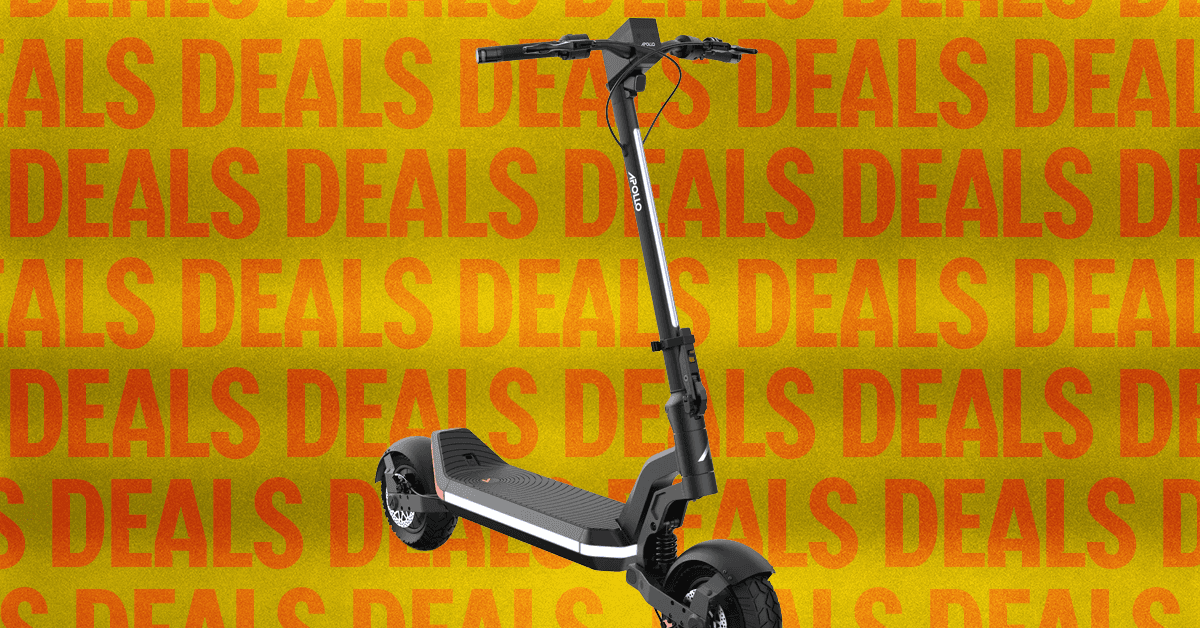
February is a weird, muddy purgatory. The snow is actively dissolving into gray slush, the days are finally stretching past dinnertime, and you can almost smell spring waiting just around the corner. Soon enough, we’ll be gliding around town on ebikes and electric scooters instead of idling in gridlocked traffic, burning fuel and patience in equal measure.
Right now, though? The weather hasn’t quite caught up to our optimism. And that gap — that hesitation between seasons — is quietly engineering a serious opportunity for your wallet.
According to WIRED, some of the finest premium electric scooters on the market have just seen their prices slashed, as of early 2026. Classic retail limbo: winter gear is clearing out, spring inventory is flooding in, and retailers are scrambling to move stock before the sun commits. If you’ve been sitting on the fence about upgrading your commute, your patience is about to pay off handsomely.
These aren’t minor percentage shavings, either. Deep cuts. Flagship models dropping to mid-tier price points. Sunny commuting days are basically here — but the price tags are still stuck in the bleak midwinter.
Owning Your Ride Now Costs Less Than Renting One Did Last Year
The economics of urban transit have shifted in ways most people haven’t fully registered yet. Back in the early 2020s, buying a personal scooter felt like an indulgence — the kind of purchase you’d quietly justify to yourself. Most commuters just leaned on the neon-colored rental fleets cluttering the sidewalks. Scan a QR code, pay a few bucks, abandon the thing against a trash can when you’re done.
Solidly in 2026, that calculus has flipped entirely.
Renting daily is a slow financial hemorrhage. Owning your machine is, for any regular commuter, the only sensible path. According to a recent global market report by Statista, the personal electric scooter segment has surged past earlier projections — driven largely by urban workers figuring out that a reliable machine typically pays for itself in under six months of displaced transit fares and gas costs. That math hits differently when you’re staring at a 30% discount sticker.
You aren’t just buying a gadget. You’re buying back your commute. Buying immunity from train delays, bridge backups, and the particular misery of circling a block for twenty minutes hunting a parking spot. And the hardware — finally, genuinely — has caught up to what daily riders actually need.
Why the Apollo Go Keeps Winning Over Real-World Commuters
Start shopping and it’s easy to get seduced by blistering top speeds and aggressive industrial styling. Real-world commuting, though, demands something subtler: a careful equilibrium of power, weight, and day-in-day-out dependability. Gear editor Julian Chokkattu has spent five grueling years and more than 45 electric scooters working out exactly where that equilibrium lives — thousands of miles of cracked pavement, sudden rainstorms, and close calls with oblivious pedestrians.
His current favorite? The Apollo Go.
In practice, this machine sits precisely in the urban mobility sweet spot. The ride is remarkably fluid and responsive, thanks to dual 350-watt motors paired with solid front and rear suspensions that absorb the relentless punishment of city streets. You don’t feel every pebble telegraphing shock up through your wrists.
The reality of city riding
“Hitting 28 mph on an open stretch of bike lane feels plenty fast. What matters more is torque, braking confidence, and knowing your battery won’t die three miles from home.”
Top speed caps at 28 miles per hour. Spec-chasers will sniff at that — and honestly, let them. Consider the question seriously for a moment: how fast do you actually want to be traveling when a car door swings open directly into your path? Speed is the wrong obsession for city riding. Torque, braking confidence, and predictable handling are the non-negotiable variables.
Range holds up impressively under real conditions, too. Chokkattu — a notably tall, solidly built man — consistently pulled 15 miles from a single charge while cruising at 15 mph. For a typical rider, that comfortably covers a round-trip commute with charge to spare. Apollo also packed in the quality-of-life features that cheaper builds routinely skip: turn signals, a crisp dot display, a bell, a bright headlight, and a highly visible LED strip running along the body. On city streets at dusk, being seen isn’t optional. This scooter handles that for you.
102 Pounds of Raw Power — and the Very Real Problem That Creates
Some riders don’t want balance. They want dominance. Enter the Apollo Phantom 2.0 — an absolute brute of a machine that tops out at 44 mph, fueled by dual 1,750-watt motors that haul you up steep inclines as if gravity is merely a polite suggestion.
Gorgeous hardware, genuinely.
The engineering here is hard to argue with. It rolls on 11-inch self-healing tubeless tires — a substantial upgrade over the flat-prone inner tubes of earlier models. The dual-spring suspension system absorbs road imperfections so effectively that you occasionally forget you’re riding on potholed urban asphalt rather than a freshly paved velodrome. When actually tested on rough city streets, the difference from standard suspension is immediately apparent.
Here’s the catch, though. A significant one.
One hundred and two pounds. Let that settle. The heaviest electric scooter Chokkattu has ever put through its paces — by a considerable margin. Third-floor walkup apartment? Do not buy this scooter. The relationship will curdle within a week. Hauling a hundred pounds of awkwardly shaped metal up a narrow staircase after a long workday isn’t an inconvenience; it’s a punishment. The Phantom 2.0 makes sense only if you have reliable ground-floor access — a garage, a building elevator that actually works, or a dedicated storage space at street level. Without that, the specs become irrelevant.
Segway’s Quiet, Methodical Grip on the Commuter Market
While Apollo chases the boundaries of speed and design ambition, Segway has been doing something quieter and arguably more impressive: systematically owning the practical commuting space. Easy to forget, but Segway essentially blueprinted the modern micromobility category — and their current lineup confirms they haven’t surrendered that institutional knowledge to newer brands.
Their premium commuter option, currently on sale, is a study in efficiency. It delivers more power and range than the Apollo Go — which is already no slouch — but its genuinely distinguishing feature is charging speed. A fully depleted battery reaches 100 percent in just 3.5 hours.
Think about what that actually changes.
You ride to the office, fold it up, and plug it in under your desk at 9 AM. By lunch, you’re at full range. No overnight charging routines. No low-battery dread three miles from home. No obsessive battery degradation math at midnight. That kind of frictionless integration into a workday is, in practice, what separates a scooter you’ll ride every day from one that gradually migrates to a corner of your apartment.
Then there’s the Segway F3 — purpose-built for the rider who prioritizes safety without sacrificing ride quality. Integrated turn signals, a properly loud bell, and a display so bright it remains legible in direct midday sunlight. Segway’s companion app, worth noting, is genuinely feature-rich and stable — a stark contrast to the perpetually crashing, half-baked apps bundled with cheaper knockoff brands. Small thing. Enormous quality-of-life difference once you’re depending on it daily.
Cities Are Finally Building Streets That Make These Machines Make Sense
Something larger is happening here — beyond the hardware specs and the seasonal discounts. For years, scooter riders occupied an awkward legal and physical no-man’s-land: too fast for sidewalks, too exposed for lanes shared with aggressive drivers. Cities treated them as a nuisance to be managed rather than a transit solution worth accommodating.
That posture has shifted. Meaningfully.
By 2026, protected micromobility infrastructure has graduated from pilot program to standard urban planning policy in most major metros. A comprehensive tracking study by the Federal Highway Administration indicates that trips under three miles — which account for roughly 60% of all urban transit, per their findings — are increasingly migrating away from passenger cars. When you buy a scooter, you’re directly displacing a two-ton vehicle from the road for those short grocery runs and coffee shop detours. You’re removing emissions from the atmosphere. And you’re doing it while moving faster than the cars stuck at the light beside you, feeling the wind in your face, completely unbothered by the parking situation.
Worth pausing on: that 60% figure means the overwhelming majority of car trips in cities are, in most cases, entirely replaceable by a decent electric scooter. Not theoretical future trips. Current ones. Today.
These price drops have a shelf life, and it’s shorter than you’d think. Once spring genuinely breaks and the sun commits to staying out, demand spikes fast. Retailers quietly peel off the discount stickers, inventory tightens, and prices drift back toward full retail with minimal fanfare. The window for getting flagship hardware at mid-tier pricing is open right now — and it won’t stay that way.
Are premium electric scooters actually waterproof?
Most reputable scooters released in 2026 carry at least an IPX5 or IPX6 water resistance rating — meaning they handle light to moderate rain and puddle splashing without complaint. Fully waterproof is a different claim entirely, though, and no mainstream scooter makes it honestly. Submerging them or riding through genuinely deep urban flooding remains a reliable way to destroy your motors and void your warranty simultaneously.
Do self-healing tires actually work on city streets?
Remarkably well, as it turns out. The 11-inch tubeless tires on the Apollo Phantom 2.0, for instance, are lined with a jelly-like sealant inside the casing. When a nail or glass shard punctures the rubber, internal pressure forces the sealant into the breach and plugs it almost instantly — no air loss, no stranding yourself on a curb next to 102 pounds of suddenly inert machinery. For city riding specifically, where debris is omnipresent, this is a meaningful real-world advantage rather than a spec-sheet flourish.
Based on reporting from various media outlets. Any editorial opinion is that of the author.