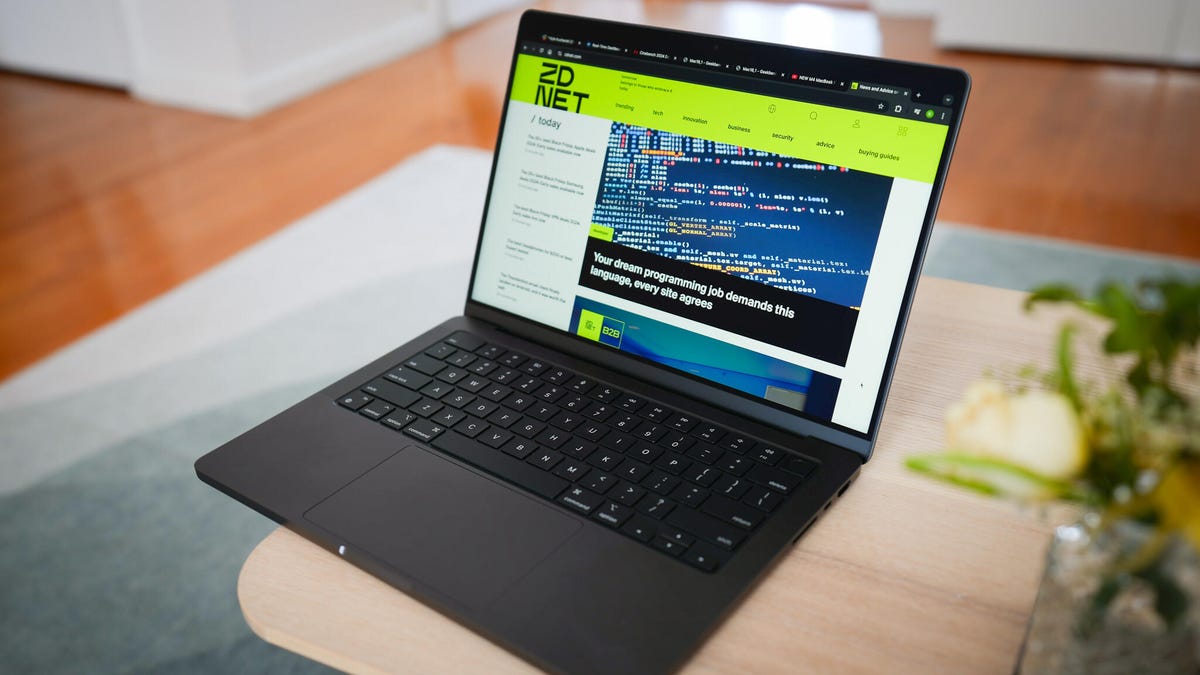
Let’s be honest for a second—we’ve reached a point in personal computing where the word “obsolescence” just doesn’t carry the weight it used to. It used to be a terrifying word, right? But things have changed. According to the latest industry news, the M4 MacBook Pro is currently seeing some pretty massive price cuts—we’re talking up to $400 off at major retailers like B&H Photo Video. Now, I know exactly what you’re thinking. We’re well into 2026 at this point, the M5 series has been sitting on shelves for a while, and the rumor mill is already spinning its wheels about the next big thing from Cupertino. But here’s the reality that most tech reviewers won’t tell you: for 90% of us, the M4 isn’t just “good enough”—it’s arguably the absolute peak of the value-to-performance curve right now. It is the smart play, plain and simple.
Why chasing the bleeding edge is a sucker’s game in 2026
I remember a time—and I’m sure you do too—when buying a two-year-old laptop felt like signing a death sentence for your own productivity. It was a gamble. You’d get the thing home, boot it up with high hopes, and then within six months, a couple of heavy software updates would turn your expensive new machine into a glorified, shiny paperweight. It was frustrating, expensive, and frankly, a bit of a scam. But Apple Silicon completely changed that math. When the M4 first launched back in late 2024, it wasn’t just a minor spec bump; it brought some seriously heavy-hitting features to the table, like Thunderbolt 5 and a massive leap in overall thermal efficiency. Today, seeing these machines drop down to $1,799 for high-spec configurations isn’t just a standard seasonal sale; it’s a genuine opportunity to bypass the “newest-is-best” tax that Apple usually levies on our wallets without mercy.
If we look at the broader market, a 2025 Gartner report noted that global PC shipments saw a 3% year-over-year increase. Why? Because users finally started the long-overdue process of replacing those aging, struggling machines they bought during the pandemic. If you’re one of those people who is still white-knuckling an old Intel-based Mac or even one of the original M1 models, making the jump to an M4 at a $400 discount is probably the most logical financial move you can make this year. It’s that rare sweet spot where the hardware has fully matured, the early-adopter bugs have been squashed, and the price finally respects your bank account. You’re getting a “pro” experience without the “pro” price tag that usually makes people wince at the checkout screen.
Think about it this way: the performance gap between the M4 and the M5 exists, sure, but does it actually change your life? For most of us—the people writing emails, editing photos, managing spreadsheets, and maybe doing some light video work—that gap is invisible. You are paying for a difference you can’t even feel. By opting for the M4 now, you’re essentially getting 95% of the power for 70% of the cost. In any other industry, we’d call that a total no-brainer. And let’s be real, that extra $400 stays in your pocket for things that actually matter, like software subscriptions, a nice monitor, or, you know, rent.
Finally, a base model that doesn’t treat RAM like a luxury
One of the most significant shifts we saw with the M4 generation—and honestly, one of the most welcome—was Apple finally moving away from that stingy, frustrating base-level RAM. It felt like we were stuck in the dark ages for a while there. Looking at the current deals, you’ll notice that the 14-inch M4 MacBook Pro now starts with 24GB of Unified Memory. It’s about time, right? I mean, for years, we were told with a straight face that 8GB was “fine” because of how efficiently macOS handled swap files. But as anyone who keeps more than ten Chrome tabs open while running Slack, Spotify, and a Zoom call knows, that was always a polite fiction. We all felt the lag; we all saw the beachball.
With 24GB now serving as the new floor, these machines are legitimately built to last well into the late 2020s. We’re seeing the 14-inch model with 24GB of RAM and a 1TB SSD sitting at a very comfortable $1,799. That’s a configuration that would have cost a small fortune—and probably required a specialized custom order—just a few years ago. And if you’re a true power user? The 48GB variant is down to $2,299. That’s the kind of massive overhead that lets you edit heavy 4K video or run local AI models without hearing a single fan spin up. It’s peace of mind in hardware form.
“The transition to higher base memory configurations in the M4 line wasn’t just a spec bump; it was a necessary pivot to support the increasingly heavy demands of local AI processing and multi-layered creative workflows.”
— Tech Analysis Quarterly, Autumn 2025 Issue
But it’s not just about the memory numbers on a spec sheet. The M4 Pro and M4 Max chips introduced a level of efficiency that actually, finally delivered on the long-standing promise of “all-day battery life.” Even now, in 2026, these machines frequently outlast the newer M5 models in real-world endurance tests. Why? Because the M4 architecture was so incredibly optimized for thermal management. You’re getting a machine that stays cool under pressure, which, as we all know, is the real secret to a laptop’s longevity. Heat is the enemy of electronics, and the M4 is remarkably good at staying chill. It’s the kind of reliability that makes you forget about your charger for a day or two, which is a total game-changer for anyone who works on the move.
And let’s talk about that 24GB floor again for a second. It changes the way you use the computer. You stop thinking about what’s open in the background. You stop “managing” your computer and just start *using* it. That’s the hallmark of a great tool—it gets out of your way. Whether you’re a developer running a bunch of Docker containers or a creative with fifty high-res assets open in Photoshop, that extra breathing room is the difference between a productive afternoon and a frustrating one spent staring at a progress bar. It’s the standard we should have had years ago, and now that it’s here at a discount, it’s impossible to ignore.
The “future-proofing” trap and why the M4 actually beats it
We often talk about “future-proofing” in the tech world as if it’s a specific destination we can reach if we just spend enough money. Spoilers: It isn’t. It’s a moving target. But the M4 MacBook Pro got pretty damn close by including Thunderbolt 5. If you’re a creative professional, this is the real, tangible reason to jump on this deal right now. Thunderbolt 5 offers up to 120Gbps of bandwidth—that is literally triple what we had with Thunderbolt 4. While we’re only just now seeing a flood of TB5-compatible drives and high-end displays hitting the market in 2026, having that port means your M4 won’t be the bottleneck in your setup for a long, long time. You’re buying a ticket to the next five years of peripheral tech.
And can we talk about the display? Because it’s still incredible. The Liquid Retina XDR screen on these models remains the industry standard for a reason. Even when you put it side-by-side with the latest M5 panels, the brightness levels and color accuracy on the M4 Pro are virtually indistinguishable to the human eye. Whether you’re grading professional footage or just binge-watching a show in bed at the end of a long day, that 120Hz ProMotion tech makes everything feel buttery smooth. It’s one of those features you don’t think you really need until you use it for a week, and then you can never, ever go back to a standard 60Hz screen. It makes the whole OS feel alive.
A Statista report from late 2025 indicated that Apple’s share of the premium laptop market (devices over $1,500) remained steady at roughly 28%, and that’s largely driven by the sustained popularity of the MacBook Pro line. People aren’t just buying these because they want the glowing logo on the back (which doesn’t even glow anymore, but you get the point); they’re buying them because the hardware-software integration remains miles ahead of almost every Windows alternative out there. And then there’s the resale value. An M4 bought today for $1,799 will likely still be worth $800 or $900 in three years. Try doing that with a mid-range PC and see how far you get. It’s not just a purchase; it’s an asset that holds its value remarkably well.
When you consider the display, the ports, and the build quality, the M4 Pro starts to look less like a “last-gen” machine and more like a classic. It’s the peak of a specific design philosophy. Every time I open mine, I’m struck by how solid it feels. There’s no flex, no creaking, and the hinge is perfectly weighted. These are the “human” elements of a laptop that don’t show up in a benchmark score but define your relationship with the machine every single day. The M4 Pro has all of that in spades, and now it has it for a price that feels like a steal.
The “Air” is great, but here’s where it hits a wall
One of the most frequent questions I get from friends and readers is, “Why not just buy a MacBook Air and save the cash?” And look, it’s a fair point. The M3 and M5 Airs are fantastic machines—they’re light, they’re portable, and they are surprisingly capable for most daily tasks. But there is a very real threshold where the Air starts to fall apart and the Pro really begins to shine. If your work involves sustained, heavy loads—I’m talking about rendering a 20-minute 4K video, compiling a massive codebase, or batch-processing a thousand RAW photos—the Air will eventually have to throttle its performance to keep from overheating. It has to. It doesn’t have fans. The Pro, with its active cooling system, just keeps chugging along at full speed without breaking a sweat.
Then there’s the port situation, which is a hill I am willing to die on. Living the “dongle life” is an avoidable tragedy. The M4 MacBook Pro gives you an HDMI 2.1 port, an SDXC card slot, and three Thunderbolt ports. For a photographer or a videographer, that SD card slot alone is worth the extra couple hundred bucks. It’s about having a friction-free experience. You want to be able to sit down at your desk, plug in one single cable, and have your whole world expand across two or three monitors instantly. The Pro makes that easy; the Air makes it a chore involving a mess of adapters and hubs. Who has time for that?
And let’s not forget the speakers. I know it sounds like a small, maybe even trivial thing, but the six-speaker sound system in the MacBook Pro is genuinely, startlingly impressive. In 2026, we’re all doing more video calls than ever before, and having a high-quality microphone array and speakers that don’t sound like a tin can makes a massive difference in how you’re perceived professionally. It’s that extra layer of “polish” that justifies the Pro moniker. When you’re on a call, you sound clear, and you can hear every detail. It’s a small quality-of-life improvement that adds up over hundreds of meetings.
The Pro also offers that extra bit of screen real estate and brightness that makes working outdoors or in a bright coffee shop actually feasible. The Air is great for a student or someone who just needs to browse and write, but if your laptop is your primary tool for making a living, the Pro is the only choice that makes sense. It’s built for the long haul, and it’s built to handle the “edge cases” of your workflow—the times when you need to push the machine to its limits. The Air is a great laptop; the Pro is a great workstation. There’s a big difference when the deadline is looming.
Is the M4 MacBook Pro still worth it with the M5 available?
Absolutely. While the M5 offers some incremental improvements in NPU speed for specific AI tasks, the M4 remains an absolute powerhouse for almost every standard professional workflow you can throw at it. At a $400 discount, the value proposition of the M4 far outweighs the marginal, almost imperceptible gains of the newer model for the vast majority of users. You’re getting 99% of the experience for a significantly lower price.
Which configuration offers the best value in this sale?
In my opinion, the 14-inch M4 MacBook Pro with 24GB of RAM and a 1TB SSD at $1,799 is the absolute “Goldilocks” zone. It provides more than enough storage and memory for nearly any professional task—from heavy coding to creative design—without crossing over into that $2,000+ territory where you really start to see diminishing returns for your money. It’s the perfect balance of power and price.
Will the M4 MacBook Pro receive macOS updates for a long time?
If we look at Apple’s historical support cycles, the M4 series will likely continue to receive major macOS updates until at least 2031 or 2032. And because these machines come with a robust 24GB of base RAM, they are actually better positioned for long-term software support than the earlier 8GB or 16GB models. They have the “headroom” that future OS versions will inevitably crave.
It’s time to stop waiting for the “perfect” moment
In the tech world, there is always, *always* a faster chip just around the corner. That’s the nature of the beast. If you wait for the “perfect” time to buy, you’ll never actually buy anything—you’ll just be stuck in a permanent state of research and hesitation. The current $400 discount on the M4 MacBook Pro is one of those rare moments where high-end, professional-grade hardware becomes relatively affordable for the rest of us. We’re even seeing the 16-inch models—the true desktop replacements for those who need the extra screen space—dropping to around $2,239. For a machine that can comfortably handle the most demanding tasks of 2026 and beyond, that is, quite frankly, a steal.
But here’s the catch: these sales don’t last forever. Retailers like B&H typically use these deep discounts to clear out their remaining inventory before the next big seasonal refresh or product launch. If your current laptop is starting to feel sluggish, if the battery doesn’t even make it through a full morning session anymore, or if you’re just tired of your fans sounding like a jet engine every time you open a few tabs, this is your signal. The M4 MacBook Pro was a triumph when it first launched, and at these prices, it’s a masterclass in value today. You should probably grab one before the price creeps back up or the stock simply disappears into the hands of someone else.
At the end of the day, a tool is only as good as what you actually do with it. But it certainly helps the medicine go down when that tool is $400 cheaper than it was yesterday. Whether you’re a developer, a designer, or just someone who genuinely appreciates a machine that works as hard as you do, the M4 Pro is a decision your future self will almost certainly thank you for. It’s reliable, it’s powerful, and for the first time in a long time, it’s actually priced fairly. Don’t overthink it—sometimes the best tech is the tech that just works, and the M4 Pro works better than almost anything else out there.
This article is sourced from various news outlets and retail listings. The analysis and presentation represent our editorial perspective on the current tech landscape.