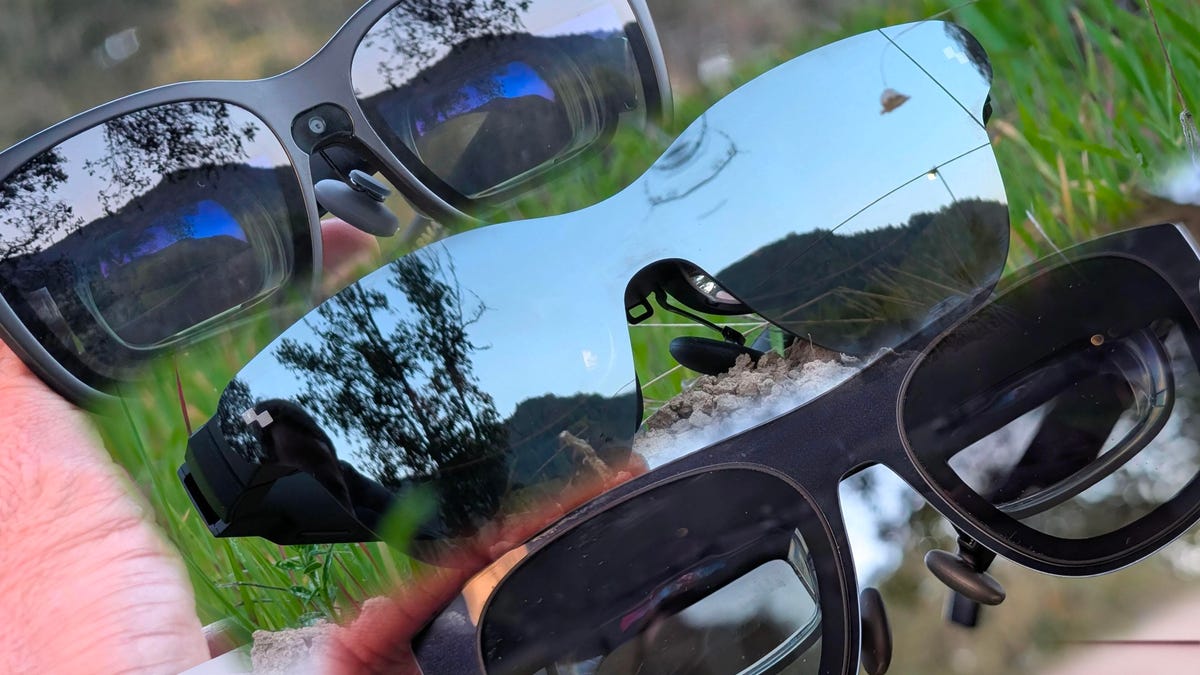
I remember a time, not too long ago, when “wearable tech” was basically shorthand for a bulky watch that died before dinner or a fitness tracker that ended up in the junk drawer after exactly six days. But honestly? Things have moved at a breakneck pace. By the time we hit the early months of 2026, that wild dream of carrying a massive, cinema-sized screen inside a pair of frames that actually look like normal Wayfarers finally stopped feeling like a scene from a low-budget sci-fi flick. According to the latest industry buzz, the recent head-to-head testing of the market’s three biggest heavyweights—the RayNeo Air 3s Pro, the Xreal 1s, and the Viture Beast—has pulled back the curtain on a pretty surprising truth: the most expensive “Beast” on the block isn’t necessarily the one you’re going to want to live with every day. It turns out that throwing money at specs doesn’t always buy you a better experience, and in the world of XR, that’s a lesson some are learning the hard way.
We’ve officially entered an era where “on-paper” specs are increasingly becoming a bit of a trap for those of us who like to be on the bleeding edge. It’s a classic move: we see a high price tag, a list of shiny buzzwords like “6DoF” and “1250-nits,” and we just instinctively assume we’re buying the gold standard of the industry. But if you look at the recent wave of reviews, it’s clear the XR (Extended Reality) market is currently split right down the middle. On one side, you have companies selling us a finished, polished product; on the other, you have companies selling us a roadmap and a promise. And if you’re anything like me, you’re probably getting a little tired of paying five hundred dollars just for the privilege of being a glorified beta tester. We want gear that works when we unbox it, not gear that promises to be great “after the next patch.”
When the biggest specs on the market are just a promise you pay for
Let’s take a deep dive into the Viture Beast. On paper, this thing should have ended the conversation before it even started. It’s a spec-sheet monster. We’re talking about a 58-degree field of view—which is the widest in its class—and a brightness level so intense it could probably guide a ship to shore in a fog storm. It even boasts nine levels of electrochromic dimming. That’s the fancy, high-end tech that lets you turn the lenses from crystal clear to “total blackout” just by tapping a button. It’s ambitious, it’s heavy, and at $549, it’s easily the priciest of the bunch. You look at it and think, “This is it. This is the future.” But as we know, the future doesn’t always arrive on schedule, and the Beast feels like it’s still stuck in the waiting room.
But here’s the real rub, and it’s a massive lesson for the entire tech industry in 2026: features are only actually features if they work the moment you open the box. Right now, the Beast is shipping with its flagship 1200p at 120Hz resolution completely disabled. Think about that for a second. You’re paying for the best, but you’re stuck with 1080p at 60Hz until some mystery firmware update eventually arrives. The front-facing camera, which is supposed to handle advanced 6DoF (six degrees of freedom) tracking? Yeah, that’s also waiting on an update. It’s a classic case of “buy now, enjoy later,” and frankly, shouldn’t we be past this by now? It’s hard to justify that “Beast” price tag when the most beastly parts of the device are currently software-locked and gathering virtual dust.
“The industry is seeing a shift where consumers are no longer blinded by raw specs. A 2024 IDC survey found that 64% of tech consumers prioritize ‘plug-and-play’ reliability over high-end features that require future software patches.”
IDC Market Research Report
Beyond the frustrating software delays, there’s the very physical reality of wearing 94 grams of tech right on the bridge of your nose. While Viture claims they’ve used a premium metal frame, the actual touchpoints—the parts that actually hit your face—feel surprisingly plasticky and a bit cheap for the price point. And then there’s the “water-ripple” effect on the display when you move your head. It’s subtle, sure, but when you’re trying to lose yourself in a high-octane movie or focus on a complex spreadsheet, those tiny visual imperfections become glaring reminders that you’re essentially wearing a first-gen experiment. It’s those little details that break the immersion and make you wonder where exactly that extra money went.
The Xreal 1s: Why getting the basics right beats having a giant spec sheet
If the Viture Beast is that ambitious overachiever who forgot to actually do the homework, the Xreal 1s is the student who showed up early, prepared, and ready to go. It doesn’t have the widest field of view—it sits at a more modest 52 degrees—but it gets the fundamentals so right that you actually stop thinking about the specs and start just using the thing. According to Statista, the XR headset market reached approximately 15.6 million units by 2025, and a huge portion of that growth didn’t come from standalone behemoths like the Vision Pro. Instead, it came from these “display-only” glasses that people can actually afford and understand. Xreal seems to have understood this better than anyone else in the game right now.
The secret sauce for Xreal is the X1 Spatial Computing Chip baked directly into the frames themselves. This is a total game-changer. Most “dumb” glasses rely entirely on your phone or laptop to handle all the tracking, which almost always leads to lag and that annoying “drift,” where the virtual screen slowly slides out of your field of view until you’re staring at a wall. The Xreal 1s handles this on-board with a ridiculous 3ms latency. When you lock a screen in space, it actually stays there. It feels solid. It feels like a real, physical monitor floating in front of you, not a ghost that’s constantly trying to haunt your peripheral vision. That stability is what makes it feel like a tool rather than a toy.
But even the current king has a pretty noticeable flaw. That on-board processing power creates a lot of heat, and physics is a cruel mistress. If you’re using these for a three-hour flight, you’re definitely going to feel the “hot face” factor. The bridge of the glasses and the area near your forehead get noticeably warm to the touch. It’s the trade-off we’re currently making for localized processing—you get a stable image, but you get a warm face in return. Is it worth it? For me, probably. Having a screen that doesn’t jitter or drift is the difference between having a productive afternoon and a localized case of motion sickness that ruins your whole day.
The Real 3D trick: A gimmick that actually works
One of the most surprising wins for the Xreal 1s is its ability to convert standard 2D content into 3D in real-time. Now, usually, these “AI-upscaling” features are a total gimmick—a blurry, headache-inducing mess that you turn off after five minutes. However, testing it on everything from standard YouTube clips to playing Mario Kart on the Switch shows that we’ve finally hit the processing power needed to make this actually viable. It’s not perfect, and it definitely works best on high-quality, crisp footage, but it adds a layer of depth that makes the “wearable monitor” experience feel significantly more immersive than just having a flat panel strapped to your face. It’s one of those features that sounds like marketing fluff until you actually see it in action.
Sometimes the cheap seat is actually the most comfortable
Then we have the RayNeo Air 3s Pro, the budget play that everyone seems to be sleeping on. While it might not have the “spatial” bells and whistles or the fancy onboard chips of the Xreal, it bets everything on two simple things: brightness and price. For a lot of people, these glasses aren’t about “spatial computing” or 6DoF tracking; they’re just a way to watch Netflix in bed or on a train without having to hold a phone for two hours. They don’t need the glasses to understand where the floor is; they just want a bright, clear image. And in that specific, narrow lane, RayNeo is absolutely winning the race.
It’s also the lightest of the three, and in the world of wearables, let me tell you, every single gram counts. If you’re wearing something for hours on end, the difference between 80g and 94g isn’t just a number on a spreadsheet—it’s the difference between a nagging headache and a pleasant evening. It’s a great reminder that as we move toward the end of 2026, the market is finally diversifying. We’re moving away from that “one size fits all” mentality and toward specialized tools for different types of users. Not everyone needs a “Beast” on their face; sometimes, you just need a really good, lightweight screen that doesn’t break the bank.
Wait, are we actually going to work like this? The reality of the pocket-sized office
I’ve started seeing more and more people replacing their entire multi-monitor office setups with these glasses, and honestly, it sounds absolutely crazy until you try it for yourself. Imagine having a 174-inch virtual canvas that literally fits in your pocket. You can work in a crowded coffee shop, on a bumpy bus, or in a cramped airplane seat with the kind of privacy you’d usually only get in a vault. No one can see what’s on your screen, and you suddenly have more “desk space” than a high-frequency Wall Street trader. It’s a level of freedom that’s hard to go back from once you’ve experienced it, even with the current hardware limitations.
But let’s be real: we aren’t quite at the “all-day wear” stage yet. The “plasticky” feel that seems to plague all three of these devices is a bit of a hurdle for long-term adoption. We really need materials that feel more like high-end eyewear—something you’d actually want to be seen in—and less like plastic tech peripherals. We also desperately need to solve the cable problem. While USB-C is great and universal, being physically tethered to a device still feels like a tether to the past. Wireless is obviously the next frontier, but with wireless comes batteries, and with batteries comes more weight. It’s a delicate, frustrating dance that engineers are still trying to learn, and we’re the ones watching them step on their own toes.
Are XR glasses a replacement for a VR headset?
Not exactly, and it’s important to know the difference before you drop the cash. Devices like the Xreal 1s are fundamentally “wearable displays.” They are designed to mirror or extend your existing devices like your phone, laptop, or gaming console. A VR headset like the Quest or Vision Pro is a standalone computer that puts you inside a completely virtual environment. Think of these glasses as a portable, giant monitor and VR as a portable, immersive world. They serve two very different purposes in your tech arsenal.
Can I use these if I wear prescription glasses?
Yes, thankfully! Most of these models, including the Viture Beast and Xreal 1s, fully support prescription inserts that clip right in. Some models even have built-in diopter adjustments for people with mild nearsightedness, which actually allows you to use them without your glasses at all. It’s honestly one of the most underrated and useful features of the current generation, making the tech accessible to those of us who weren’t blessed with 20/20 vision.
Do they work with every phone?
Here’s the catch: they require a device that supports “DisplayPort Alt Mode” over USB-C. Most modern Android flagships, the iPhone 15/16/17 series, and almost all modern laptops work perfectly fine. However, a lot of budget and mid-range phones often lack this specific hardware capability to save on costs. You should always double-check your device specs before buying, or you might end up with a very expensive pair of paperweights.
Cutting through the noise: Which pair actually belongs on your face?
So, where does all of that leave us? If you’re looking to jump into the world of wearable displays today—let’s say it’s February 14, 2026—my best advice is to completely ignore the “coming soon” stickers and the marketing hype. The Viture Beast might eventually be the best pair of glasses on the market once the software catches up to the hardware, but until those firmware updates actually land, it’s just a heavy, expensive promise. The Xreal 1s, despite its tendency to warm up your forehead and the slightly narrower field of view, is the first pair of glasses that feels like a professional tool rather than an expensive toy for early adopters.
We’re witnessing what I think is the slow, agonizing death of the traditional desktop monitor. It won’t happen overnight, of course, but as these glasses get lighter and the spatial chips get cooler, the reason to own a big, static plastic rectangle on your desk becomes harder and harder to justify. For right now, the winner of this race isn’t the one with the most nits or the widest FOV—it’s the one that actually works the way it’s supposed to when you put it on. And in the high-stakes, high-priced game of face-worn tech, reliability is the ultimate luxury that most of us are looking for.
This article is sourced from various news outlets. Analysis and presentation represent our editorial perspective.