We are officially just four days away from Samsung’s next massive Unpacked event on February 25, and the tech world is currently doing its predictable, high-stakes pre-launch dance. You know the one—the rumors about the Galaxy S26 Ultra are flying fast and thick, promising everything from “revolutionary” AI breakthroughs to a design overhaul that might actually make us look twice at our pockets. But if you’re standing in a store right now, squinting at the specs of the Galaxy S25 Ultra—or worse, hovering over the “buy” button on a $1,300 flagship—I’m here to tell you to take a deep breath. According to the latest analysis from CNET, the real winner in this hardware race isn’t the shiny new model with the fresh plastic wrap; it’s the two-year-old workhorse sitting quietly in the “used” or “refurbished” section of your favorite tech site.
I’ve been covering these launches for more years than I’d like to admit, and honestly, we’ve reached a weird, slightly boring plateau. It’s what I call the “iPhone effect,” but for the Android ecosystem. Every single year, the bezels get a hair thinner (barely noticeable), the processor gets a bit snappier in ways only a robot could feel, and the marketing team finds a way to shoehorn the word “AI” into the presentation three hundred times in a single hour. But here in 2026, the gap between “the absolute best” and “the rest of the pack” has narrowed so significantly that paying full retail price for the current flagship feels less like a smart investment and more like a voluntary tax on your own impatience.
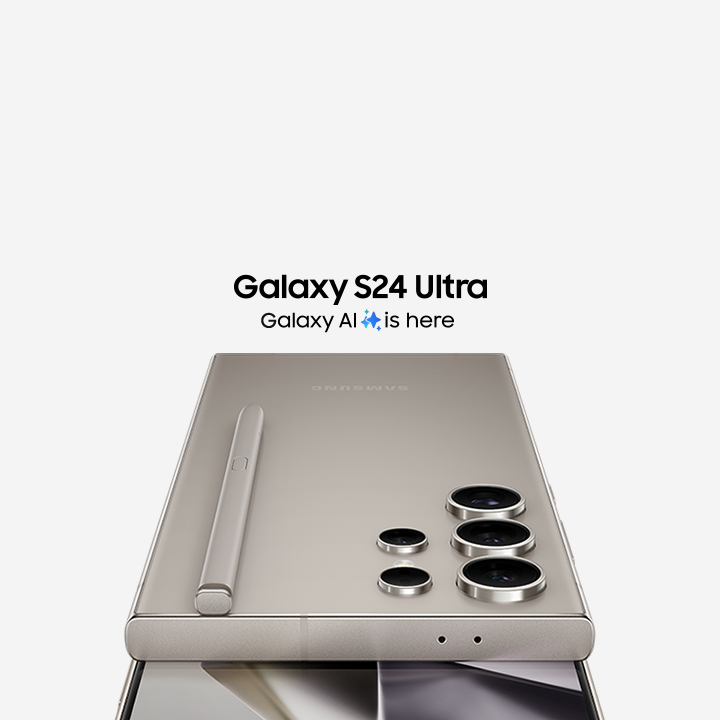
The Galaxy S24 Ultra, which felt like an absolute monster when it first dropped back in 2024, is currently the absolute sweet spot for anyone who values their bank account as much as their screen resolution. It’s the veteran player that still has all the moves. Let’s really break down why this “old” phone is actually the vastly superior buy for most people today, and why the smart money is moving toward the past rather than the future.
Why Paying $1,300 for a Phone in 2026 Feels Like a Tax on Impatience
Let’s talk about the elephant in the room, and it’s a big one: money. The S25 Ultra is, by all accounts, a fantastic piece of engineering, but its $1,300 price tag is a genuinely tough pill to swallow. It’s especially hard to justify when its predecessor is sitting right there, looking nearly identical, for nearly half the price. If you’re willing to go the used route—and honestly, with modern trade-in programs, you should be—you can find a mint-condition S24 Ultra for around $544. Just think about that for a second. You’re getting 90% of the flagship experience for about 40% of the cost. In what other world does that math not make sense?
According to a 2025 report by SellCell, high-end Android flagships tend to lose up to 60% of their value within the first twelve months. While that’s absolutely heartbreaking for the early adopters who camped out to buy them on day one, it’s a total goldmine for the rest of us who don’t mind being one step behind the bleeding edge. We’ve entered an era where “last year’s tech” isn’t obsolete; it’s just seasoned. It’s been through the bug-fix patches and the software optimizations. And with the S26 series about to launch, the S25 Ultra’s price is about to take that same inevitable nose-dive. Why would you try to catch the falling knife of a current-gen price tag when you can pick up the S24 Ultra at its absolute price floor?
And it’s not like you’re sacrificing that premium, “I spent a lot of money on this” feel. Both phones utilize that gorgeous, industrial titanium frame. Both have that satisfying, dense heft that screams quality. If you handed both devices to a non-techie friend, they’d probably struggle to tell you which one cost more. In fact, they might even prefer the S24’s S-Pen, which actually kept a few tactile features that Samsung inexplicably decided to trim down in the S25 version. Sometimes, the “upgrade” is actually a step sideways, or even backward, in the name of minimalism.
“The S25 Ultra may be among the best smartphones you can buy today, but it also demands a whopping amount of cash in return. Its $1,300 price tag puts it out of reach for many of us.”
— Editorial Insight on Flagship Pricing
The Snapdragon Trap: Why Benchmarks Lie to Your Face
On a spec sheet, the S25 Ultra wins the war every time. It’s packing the Snapdragon 8 Elite, while the S24 Ultra runs on the Snapdragon 8 Gen 3. In those sterile benchmark tests that tech YouTubers love to show, the newer chip scores about 25% higher. That looks incredibly impressive in a bar chart, doesn’t it? It makes the older phone look like a relic. But here’s the reality check from someone who actually uses these devices to live, work, and play: you won’t feel that 25% difference. Not in your daily life, and probably not even in your weekly one.
We are currently living in a period of “peak performance.” Most mobile apps—even the heavy hitters—haven’t even begun to catch up to the raw power of the 2024 chips. Whether you’re playing Genshin Impact on maximum settings, multitasking between twenty different Chrome tabs, or trying to edit a 4K video for TikTok, the S24 Ultra doesn’t even break a sweat. It’s like comparing a Ferrari to a high-end Mercedes—sure, the Ferrari is technically faster on a closed track with a professional driver, but the Mercedes is still doing 80 on the highway with zero effort and a much smoother ride. According to Statista, the average smartphone replacement cycle in the US has stretched to over 3 years as of late 2024, largely because the hardware is finally “good enough” to last that long without feeling like it’s struggling to keep up.
Navigation through the Android 16 interface is buttery smooth on both devices. Apps open instantly on both. Unless you are a professional mobile gamer who counts every single frame, or someone who renders 8K video while sitting on a bus, that 25% benchmark lead is effectively invisible. It’s what I call ghost power—it exists in the code, but it doesn’t actually do anything to improve your quality of life. Why pay a $700 premium for power you’ll never actually use?
Megapixels and Marketing: Deciphering the S25’s “Upgraded” Lens
Samsung absolutely loves to talk about camera upgrades. It’s their favorite thing to lead with in every keynote. And yes, the S25 Ultra did get a bump to a 50-megapixel ultrawide sensor. That’s cool, I guess, if you take a lot of wide-angle shots of architecture. But for the 99% of photos we actually take—our dogs, our dinner, and the occasional blurry sunset—the 200-megapixel main sensor on the S24 Ultra is still world-class. It was overkill in 2024, and it’s still overkill today.
I’ve spent the last few weeks comparing shots from both phones side-by-side. In broad daylight? They are virtually identical. In low light? The S25 might have a tiny, microscopic edge in noise reduction, but you genuinely have to zoom in 400% on a calibrated monitor to even see it. The zoom capabilities, which is the primary reason most people buy the Ultra in the first place, are still the gold standard on the S24. You still get that incredible 100x Space Zoom that lets you act like a private investigator from your balcony or see the lead singer’s face from the back of a stadium. That “wow” factor hasn’t diminished one bit.
The truth that the marketing materials won’t tell you is that smartphone photography has moved away from hardware improvements and into the realm of software processing. Since both phones are now running the exact same AI-enhanced image pipelines, the “look” and “feel” of the photos is virtually the same. Samsung hasn’t fundamentally changed their color science or their HDR approach in the last two years. If you want a great camera that can take professional-grade photos, the S24 Ultra isn’t a compromise; it’s a shortcut to the exact same results for a fraction of the cost. You’re paying for the sensor, not the hype.
The 2031 Promise: Why Your Phone Isn’t Getting Old Anytime Soon
There used to be a very real time, not so long ago, when buying an older phone meant you were “behind” on software within six months. You’d be stuck on an old version of Android while everyone else got the new features. Those days are officially dead and buried. Both the S24 and S25 Ultra are currently running Android 16 with Samsung’s One UI 8. Because Samsung committed to a staggering seven years of updates for these devices, the S24 Ultra is going to remain relevant, secure, and updated until 2031.
Think about the weight of that for a second. We are talking about a phone you can buy today for $550 that will still be getting the latest security patches and features when we’re all sitting around complaining about the Galaxy S31. All the “Galaxy AI” features that Samsung marketed so heavily—Circle to Search, Live Translate, the generative AI photo editor—are present and accounted for on the S24 Ultra. There is no “software FOMO” here. You aren’t being left out of the party; you’re just arriving in a car that’s already paid off.
Even Google’s latest Gemini Live features work flawlessly on the 2024 hardware. It turns out that most of the heavy lifting for modern AI actually happens in the cloud anyway, so your phone’s local processor isn’t the bottleneck we were told it would be. You’re getting the same “future of mobile” experience on the 2024 model as you are on the 2025 model. When the software is the same, the experience is the same. And when the experience is the same, the price should be the deciding factor.
Is the S24 Ultra’s battery life significantly worse than the S25 Ultra?
While the S25 Ultra’s chip is technically more power-efficient on paper, both phones easily last a full day of heavy use without breaking a sweat. In real-world testing, the difference is usually less than 30-45 minutes of screen-on time. Unless you’re away from a charger for 20 hours a day, it’s a difference you won’t even notice.
Does the S24 Ultra support the new Galaxy AI features?
Yes, absolutely. Samsung has been very aggressive about backporting almost every major AI feature to the S24 series. This includes Circle to Search, Note Assist, and all the latest generative photo editing tools found in One UI 8. You aren’t missing out on the “AI revolution” by choosing the older model.
The Final Verdict: Should You Wait or Buy Now?
So, where does all of this leave us? With the S26 Ultra Unpacked event just a few days away, the advice is actually quite simple, though it might sound counterintuitive: Wait four days, let the hype peak, and then go buy the S24 Ultra.
When the S26 is officially announced, two very specific things are going to happen in the marketplace. First, the S25 Ultra’s price will drop significantly as retailers scramble to clear out their remaining stock to make room for the new king. Second, the used market—places like Swappa and eBay—will be absolutely flooded with S24 and S25 Ultras from people who feel they absolutely must have the newest thing the moment it exists. That is your moment to strike. That is when the value proposition hits its zenith.
Buying a flagship phone in 2026 isn’t about having the highest numbers on a spec sheet that you’ll never actually push to the limit; it’s about finding the best value for your hard-earned money. The Galaxy S24 Ultra offers a premium titanium build, a world-class display, incredible cameras, and years of guaranteed software support for a mere fraction of the cost of its successors. It’s not just a “bargain”—it’s arguably the smartest, most calculated tech purchase you can make right now. Let everyone else chase the S26 hype and pay the “newness tax”; you’ll be the one with a top-tier phone in your hand and an extra $700 in your pocket. And honestly? That feels a lot better than a slightly thinner bezel.
This article is sourced from various news outlets and market reports. The analysis and presentation represent our editorial perspective on the current state of the mobile market.