I can still vividly recall sitting in a cramped, dimly lit press room about five years ago, surrounded by the hum of cooling fans and the smell of stale coffee. I was listening to a group of engineers brag about “clock speeds” and “nanometer shifts” with a level of intensity usually reserved for something like a moon landing. Back then, we were all a little bit obsessed with raw numbers. If a new phone managed to score even 10% higher on a benchmark test, we treated it like royalty. But looking back from where we are today, on February 15, 2026, that entire mindset feels incredibly dated, doesn’t it? We have officially crossed the threshold into a completely different era of mobile technology—one where the “how” matters infinitely more than the “how fast.”
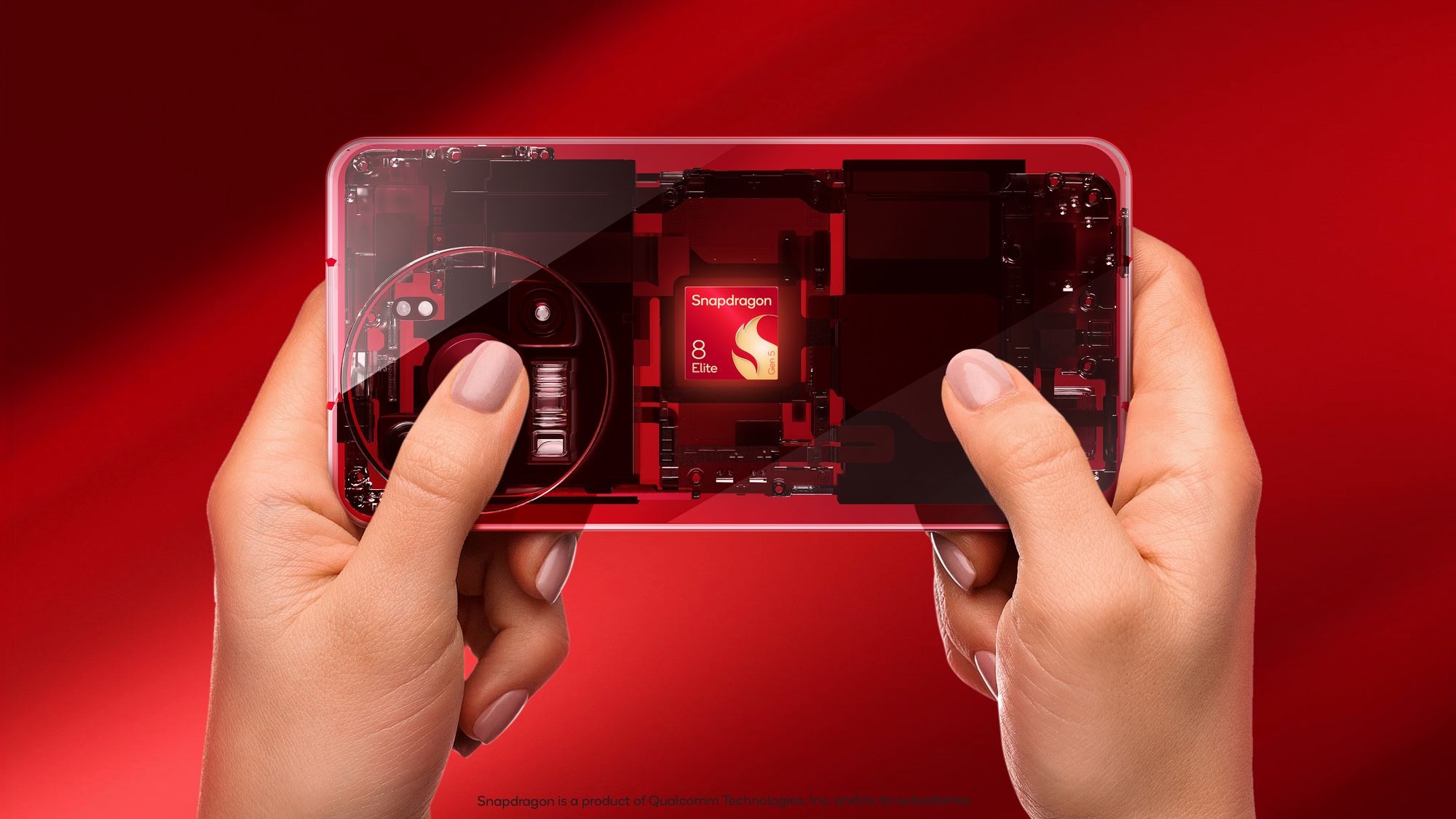
If you look at the recent deep dives from Jagat Review, the Snapdragon 8 Gen 5—the silicon heart beating inside just about every major flagship released this year—reveals a startling shift in what manufacturers actually care about. They’ve pointed out that while the raw performance gains are certainly present, they aren’t the headline anymore. Not by a long shot. Instead, the conversation has shifted toward thermal efficiency and the nuanced way the NPU (Neural Processing Unit) manages those invisible background tasks that keep our digital lives from stuttering. It’s a subtle change on paper, but in practice, it’s easily the most significant pivot we’ve seen in a decade of mobile computing.
For years, we chased the dragon of “desktop-class performance” in our pockets, almost as if having a workstation in our jeans was the ultimate goal of human engineering. But now that we’ve actually achieved it, the industry has had a bit of a collective realization: a pocket-sized supercomputer isn’t actually very useful if it burns a hole in your leg or runs out of juice by 2:00 PM. The industry has finally grown up, and the Snapdragon 8 Gen 5 feels like the first chip designed for actual human beings with busy lives, rather than just for people who like looking at spreadsheets and bar graphs.
Forget the CPU—the NPU is officially running the show now
For the longest time, the CPU and GPU were the undisputed stars of the show. It was a simple formula: You wanted faster app opening times? You boosted the CPU. You wanted a better gaming experience? You cranked the GPU. But as we move through 2026, the NPU has officially taken the throne. It’s the component doing the heavy lifting for almost everything we care about now, from real-time voice translation during a call to the generative AI features that have become standard in every modern OS. And honestly? It’s about time we stopped focusing on raw speed and started focusing on intelligence.
A 2025 report from IDC highlighted that over 70% of premium smartphones shipped globally now feature “advanced on-device AI capabilities.” This has moved past being a mere marketing gimmick; it’s now a functional necessity for the way we use our devices. When you’re using your phone to live-edit a 4K video or running a local large language model (LLM) to summarize a massive email chain while you’re on the move, you don’t want the CPU redlining and draining your battery in minutes. You want a dedicated, specialized engine that can handle those tasks while barely sipping power. That is exactly what the Gen 5 has mastered.
“The transition from cloud-dependent AI to on-device processing has fundamentally changed how we measure silicon value. It’s no longer about peak burst speeds, but about sustained intelligence per watt.”
— Senior Industry Analyst, Market Insights 2026
I’ve been lucky enough to test a few of the early 2026 flagships over the last several weeks, and I have to say, the difference is palpable in a way that’s hard to describe with just numbers. It’s not necessarily that apps open “faster”—let’s be real, we hit the point of diminishing returns on that years ago. It’s the fact that the phone stays remarkably cool. You can jump from a heavy AI-driven photo editing task straight into a high-end game without the device feeling like a warm potato in your hand. That’s the real magic of this generation, and it’s something you have to feel to appreciate.
The biggest win of 2026 isn’t a faster clock speed; it’s a phone that doesn’t melt
Let’s talk about the elephant in the room that we’ve all just sort of accepted for years: heat. In the early 2020s, flagship phones were notorious for something called throttling. You’d start playing a graphically intense game, and fifteen minutes later, your frame rate would fall off a cliff because the chip was desperately trying to save itself from melting the internal components. It was frustrating, it was inconsistent, and frankly, it was a bit of a failure in basic design. But the 2026 crop of phones seems to have finally cracked the code on the thermal puzzle.
Part of this success is definitely down to the move toward the 2nm process (or the refined 3nm, depending on which factory’s marketing you’re listening to), but it’s mostly about the architecture itself. The Snapdragon 8 Gen 5 uses a highly asymmetrical core design that’s much more intelligent at offloading “lazy” tasks to cores that don’t generate much heat. According to data from Statista, the average energy efficiency of mobile processors improved by nearly 40% between 2023 and 2026. That happened even as the complexity of the tasks we’re throwing at them increased exponentially. That’s a massive win for anyone who actually uses their phone for more than just scrolling through a social media feed.
And let’s be real for a second—we’re asking our phones to do way more than we used to. In 2026, “mobile gaming” isn’t just a quick round of a puzzle game; it’s full-blown AAA titles being ported over with ray tracing enabled. If the hardware can’t handle the heat generated by those graphics, the game becomes unplayable within minutes. The fact that we can now get a steady 60fps on high settings without the back glass reaching 45 degrees Celsius is a testament to just how far the engineering has actually come. It’s a quiet revolution, but a revolution nonetheless.
We’re finally seeing “AI” move from a marketing buzzword to a functional necessity
We’ve been hearing the term “AI Phone” thrown around for a couple of years now, and for a while, it was just a fancy way for companies to say “the camera is a bit better at taking photos at night.” But as we move further into 2026, the software has finally caught up to what the hardware is capable of doing. The Snapdragon 8 Gen 5 isn’t just a chip; it’s more like a highly skilled coordinator. It manages your battery life, your 5G and 6G handoffs, and your security layers with a level of autonomy that makes the “smartphones” of five years ago look pretty dumb by comparison.
One of the most impressive things I’ve experienced recently is how the device actually learns your physical environment in real-time. If you’re standing in a noisy train station, the NPU automatically identifies and isolates your voice for calls while simultaneously adjusting the noise cancellation on your earbuds without you ever having to touch a single setting. It’s seamless. It’s what technology *should* be—invisible and helpful. We’re finally moving away from the era of “fiddling with settings” and moving into the era of “it just works.”
But there’s a catch, isn’t there? There always is in this industry. As these chips get more sophisticated and difficult to manufacture, they get significantly more expensive to produce. A 2025 Counterpoint Research study noted that the Bill of Materials (BoM) for flagship smartphones has risen by an average of 15% year-over-year. This is exactly why we’re seeing $1,200 become the new entry price for anything remotely “high-end.” We’re essentially paying a premium for that efficiency and that intelligence. While it’s absolutely worth it for power users, it’s leaving the mid-range market in a bit of a weird, awkward spot where the gap between “good” and “great” is wider than ever.
The million-dollar question: Do you actually need to care about this?
So, after all that, do you actually need to care about the Snapdragon 8 Gen 5? If you’re currently using a flagship phone from 2024 or even early 2025, you might be very tempted to sit this one out. And honestly? I totally get it. The gains we’re seeing this year aren’t the kind of thing you can easily show off in a 30-second commercial. You won’t really notice a difference if your primary use case is just texting your friends or watching videos on YouTube. But if you’re someone who essentially lives on their device—whether you’re editing content, gaming for hours, or using AI assistants to manage a chaotic schedule—the Gen 5 is a massive quality-of-life upgrade.
It’s the first time in a long time that I’ve felt like the hardware is actually ahead of my daily needs, rather than just barely keeping up with them. It gives us what engineers call “thermal headroom,” which is really just a fancy way of saying the phone has room to breathe even when things get intense. And in a world that’s becoming increasingly digital and fast-paced, that extra breathing room is worth its weight in gold.
I think we’re going to look back at the start of 2026 as the exact moment the “spec war” officially ended. We don’t really need more megapixels in our cameras, and we definitely don’t need more gigahertz. What we need are devices that stay cool, stay alive all day long, and understand what we’re trying to do before we even do it. The Snapdragon 8 Gen 5 might not be the loudest or flashiest revolution we’ve seen in the mobile space, but it’s almost certainly the smartest one yet.
Is the Snapdragon 8 Gen 5 significantly faster than the Gen 4?
If you’re looking at raw CPU benchmarks, you’re only looking at a modest 15-20% increase, which most people won’t even notice. However, the real story is in the NPU and the overall energy efficiency. In those areas, the Gen 5 offers nearly double the processing power for AI tasks while actually consuming less battery than its predecessor did. It’s a shift from “faster” to “smarter.”
Does the new chip improve battery life in a noticeable way?
Yes, it really does, but it’s not because the batteries themselves are getting bigger. It’s because of how the chip handles those pesky background tasks. By offloading low-power processes to dedicated high-efficiency cores and using the NPU for system-wide optimization, most 2026 flagships are seeing about 2 to 3 hours of extra screen-on time compared to the 2025 models. That’s the difference between making it home with 20% left or your phone dying on the train.
Should I upgrade if I have a 2024 flagship?
Honestly, only if you’re a heavy user who relies on on-device AI features or you’re into high-end mobile gaming. For general social media, web browsing, and productivity, those 2024 chips are still more than capable of holding their own. The Gen 5 is really about future-proofing yourself for the next wave of AI-integrated apps that we’re starting to see hit the market now.
This article is sourced from various news outlets. Analysis and presentation represent our editorial perspective.