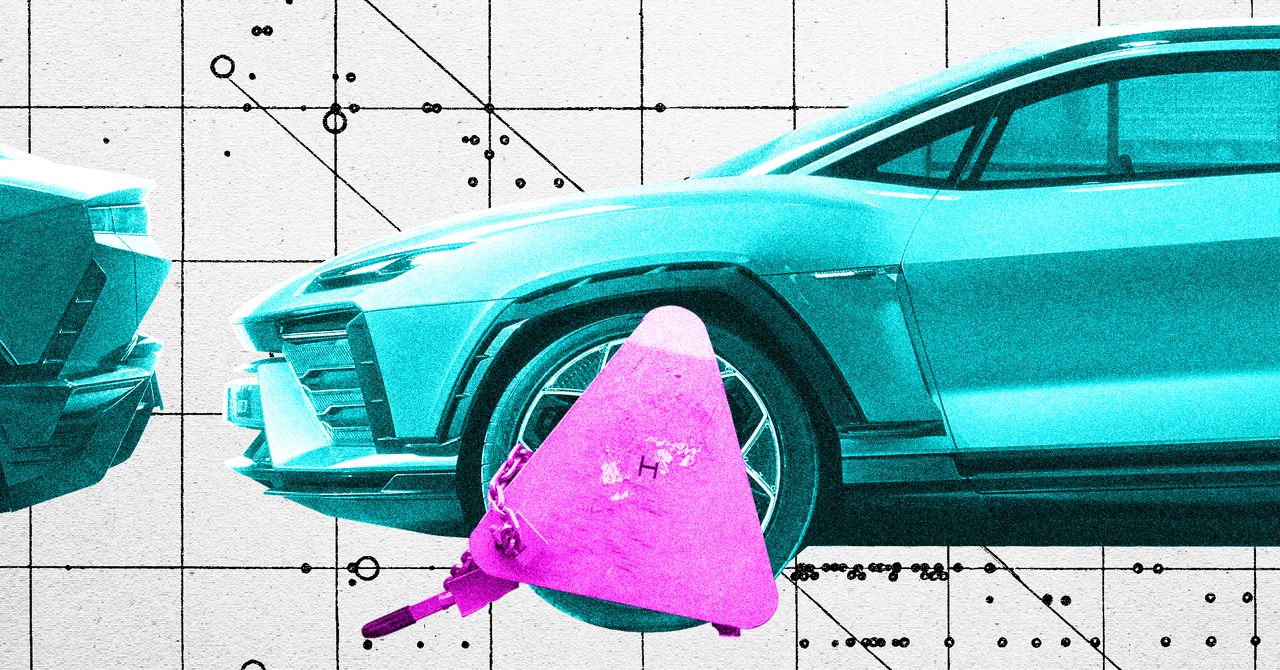
Back in 2023, Lamborghini promised us a spaceship. They unveiled the Lanzador — a 1,341-horsepower electric beast that was supposed to redefine the brand for a battery-powered future. Not just a clay model gathering dust in a design studio, either. It was a fully functional prototype with a finalized silhouette, entirely capable of tearing up public roads. The ultimate electric flex, wrapped in carbon fiber and ambition.
Reality, as it tends to do, had other plans.
According to WIRED, Lamborghini recently killed its first all-electric hypercar outright — shelving the Lanzador project right as production was supposed to be ramping toward a 2028 debut. Gone. Instead, the Italian automaker is pivoting hard in the other direction. By 2029, their next major powertrain isn’t pure electric at all. It’s a plug-in hybrid.
Stephan Winkelmann, the man steering Sant’Agata Bolognese, looked at the data and blinked. After spending the better part of a year talking to dealers and watching the market shift beneath his feet, he arrived at a conclusion the rest of the industry is only now willing to say out loud. The high-end buyer, as of early 2026, simply doesn’t want a full electric car. Not right now. Maybe not for a long time.
The Luxury EV Fantasy That Never Quite Landed
The picture looks wildly different depending on what tax bracket you’re shopping in. For everyday drivers, EVs are still moving. In 2025, global EV registrations grew by 20 percent, hitting roughly 20.7 million vehicles (per the International Energy Agency). China devoured them — pushing past 12 million registrations. Europe posted a 33 percent bump.
Even with the US market flatlining, and Tesla absorbing a visible hit with deliveries dropping 9 percent, the global trajectory for standard commuter EVs stayed pointed upward. People are perfectly happy buying an electric crossover for the school run and the office commute.
Cross the threshold into six-figure territory, though? The floor drops out entirely.
Europe saw something close to a rout for high-end electrics recently. The Lucid Air plummeted 49 percent compared to 2024. The Rolls-Royce Spectre shed 44 percent. The Mercedes EQS SUV fell 43 percent. The only real survivor in that rarefied segment was the BMW i7 — an outlier that, in practice, benefited from a loyal corporate fleet customer base that most pure luxury marques don’t have.
“Basically all but one of the models available in Europe last year posted declines,” Felipe Munoz, Car Industry Analysis
Lamborghini isn’t a lone dissenter here. The retreat is broad, coordinated, and accelerating. Bentley pushed its electric ambitions back half a decade, to 2035. Aston Martin hit pause. Genesis quietly discontinued the electric G80 in the US without so much as a press release. Mercedes abandoned its much-publicized “all-EV by 2030” pledge — calling it a “course correction” while quietly keeping combustion engines and hybrids anchored in the lineup. In Q1 of last year, Mercedes managed to move a meager 1,450 electric G-Wagens across all of Europe. Buyers clearly want the G-Wagen’s swagger. They just want it paired with a rumbling exhaust note they can actually hear.
When a $300,000 Car Becomes a Depreciating Gadget
So why the disconnect? Why will someone cheerfully sign off on a $40,000 electric sedan but flatly refuse to drop $300,000 on an electric supercar?
Two things: math, and the creeping dread of obsolescence.
Luxury cars have always bled value over time, but luxury EVs are cratering at a pace that makes traditional depreciation look quaint. Some high-end models shed $600 in value every single day they sit untouched in a climate-controlled garage — which, when you run the numbers, is the kind of figure that makes even wealthy buyers flinch. According to early 2026 data from Kelley Blue Book analysts, electric vehicles in the premium segment face steeper depreciation curves than any other automotive category. Full stop.
The obsolescence angle is the real gut-punch. Winkelmann articulated it clearly: ultra-wealthy buyers have started treating these cars like tech products. Consider your smartphone. Would you pay a steep premium for a five-year-old iPhone? Of course not. The battery is degraded, the chip is sluggish, the camera is three generations behind. Now transplant that exact logic into a quarter-million-dollar vehicle sitting in your driveway.
Buy a classic Ferrari or a limited-edition Lamborghini today, and you’re holding a mechanical artifact — something that might actually appreciate. Buy a luxury EV, and you’ve essentially purchased very expensive consumer electronics.
“There is the fact that technology, in the eyes of our customers, is going to be obsolete in 10 years from now,” Winkelmann admitted. Battery chemistry is advancing so rapidly that whatever rolls off the line today will look hopelessly primitive within a decade. The International Energy Agency projects battery energy density will increase substantially over the coming years while manufacturing costs continue to fall. Extraordinary news for the future of mass transit. An absolute death sentence for the resale value of any current-generation luxury EV.
Why Billionaires Still Buy $50,000 Watches That Can’t Send a Text
Then there’s the emotional case — and honestly, this one cuts deepest.
Glance at your wrist. A $20 digital watch keeps more precise time than a $50,000 Patek Philippe. A smartwatch does infinitely more — tracks your sleep, answers your messages, monitors your heart. Yet the market for high-end mechanical timepieces has never been more robust. Why? Because nobody buying a Patek is paying for utility. They’re paying for engineering as spectacle — for the sheer mechanical theater of 300 tiny components moving in calibrated harmony, assembled by hand over hundreds of hours.
Supercars operate on the exact same psychological frequency.
When you drop half a million dollars on a Lamborghini, you’re buying the theater. The sharp bite of high-octane fuel in a hot garage. The intricate metallic symphony of a naturally aspirated V12 climbing toward 8,500 RPM. The visceral, spine-rattling shudder of a hard downshift through a mountain pass. Strip all of that away — replace it with an electric motor’s instant, frictionless surge — and what remains is extraordinary engineering delivered in near-total silence.
Technically astonishing. Emotionally inert.
As Winkelmann noted with unusual candor, there is no rational need to buy a Lamborghini. None whatsoever. It is purely, entirely a want. And right now — hands-on reality being what it is — nobody seems to want a hypercar that whispers.
“Manufacturers throughout the automotive industry are reevaluating their electric vehicle plans as they weigh demand against current economic conditions. For luxury brands, which operate lower volumes and higher R&D costs, these challenges are even more pronounced.” Philip Nothard, Cox Automotive
The Charging Problem Nobody Wants to Talk About in Polite Company
Depreciation and emotional disconnect aside, there’s a third force dragging the luxury EV market underwater: the charging infrastructure that was supposed to support these cars simply isn’t there yet.
According to research published by the Pew Research Center, consumer anxiety about public charging reliability remains a primary barrier to EV adoption across all income brackets — not just the wealthy. But when the car in question costs $400,000 and the brand mythology is built around unbounded freedom and effortless grand touring, a 45-minute wait at a malfunctioning highway charger doesn’t just inconvenience you. It shatters the entire narrative the manufacturer spent decades constructing.
Winkelmann himself acknowledged he has no firm answer on whether fast-charging infrastructure and solid-state battery tech will even be ready by their revised 2029 deadline. In most cases, the technology and the lifestyle promise aren’t converging on the same timeline — and for a buyer spending a quarter-million dollars on a weekend toy, “probably ready soon” isn’t a compelling pitch.
The gap between the electric future these brands are selling and the charging reality their customers encounter daily? Still wide enough to drive a combustion-engined Urus through.
Ferrari’s Stubborn, Expensive Bet Against the Trend
All of which makes what’s happening in Maranello genuinely fascinating to watch.
Ferrari is pressing ahead with its first fully electric vehicle — the Luce — scheduled to reach customers later this year. A significant wager, made in full view of everything described above. Are Ferrari buyers fundamentally different from the crowd buying Lamborghinis and Bentleys? Probably not in any meaningful way. But Ferrari has pulled off category-defying moves before. The automotive world met the Purosangue SUV announcement with audible skepticism — a Ferrari SUV felt almost offensive to purists. Two years on, it’s reportedly one of the most profitable vehicles in the company’s lineup.
Can they replicate that trick with a silent supercar? Daniele Ministeri, a senior consultant at JATO, thinks there’s a plausible path. “Whether the new Luce will generate the same level of enthusiasm remains difficult to predict. Still, Ferrari has successfully drawn strong attention to the project.” Whether attention converts to purchase orders — at Ferrari prices, with Ferrari expectations attached — is the question the industry is watching in real time.
The Hybrid Buys Everyone Time — and That’s Exactly the Point
Plug-in hybrids, for all their mechanical complexity, solve almost every problem on this list simultaneously. Zero-emissions capability for urban driving — essential for threading through Europe’s expanding network of low-emission zones, which are tightening restrictions across most major cities. And then, the moment you hit the open road, a full combustion engine with all the acoustic drama that entails. The screaming V8 on the autobahn. The V12 echoing through an Alpine tunnel. None of it sacrificed.
No crippling range anxiety. No depreciation cliff driven by battery chemistry that’ll be two generations obsolete before the warranty expires. No existential compromise between the car’s emotional promise and its physical limitations.
By the close of this decade, Lamborghini’s entire lineup will be hybrid. The all-electric supercar dream isn’t permanently buried — solid-state batteries, when they actually arrive at scale, might plausibly solve the weight, range, and obsolescence problems in a single stroke. But that day isn’t 2026. It might not be 2029. And the hypercar world, typically, isn’t in the business of waiting on technology that might show up eventually.
For now, the internal combustion engine has won a hard-fought stay of execution at the very top of the automotive pyramid. And honestly? The driving purists — the ones who’ve been quietly furious about all this for years — are exhaling for the first time in a while.
Why did Lamborghini cancel the Lanzador?
Lamborghini canceled the all-electric Lanzador after market data revealed that demand for luxury EVs is essentially flatlining. CEO Stephan Winkelmann noted that buyers are concerned about rapid depreciation, lack of emotional engagement, and the fact that current battery technology will likely be obsolete in a few years.
Are all electric vehicles failing right now?
No. While the luxury EV sector is struggling heavily, the broader consumer market is still growing. In 2025, global EV registrations rose by 20 percent to 20.7 million, largely driven by massive adoption in China and steady growth in Europe, even as the US market remained flat.
What is Ferrari doing with electric cars?
Unlike Lamborghini and Bentley, Ferrari is pressing ahead with its first fully electric vehicle. The model, named the Luce, is slated to launch later this year. Industry analysts are watching closely to see if Ferrari can overcome the exact same market headwinds that forced its rivals to retreat.
Based on reporting from various media outlets. Any editorial opinion is that of the author.