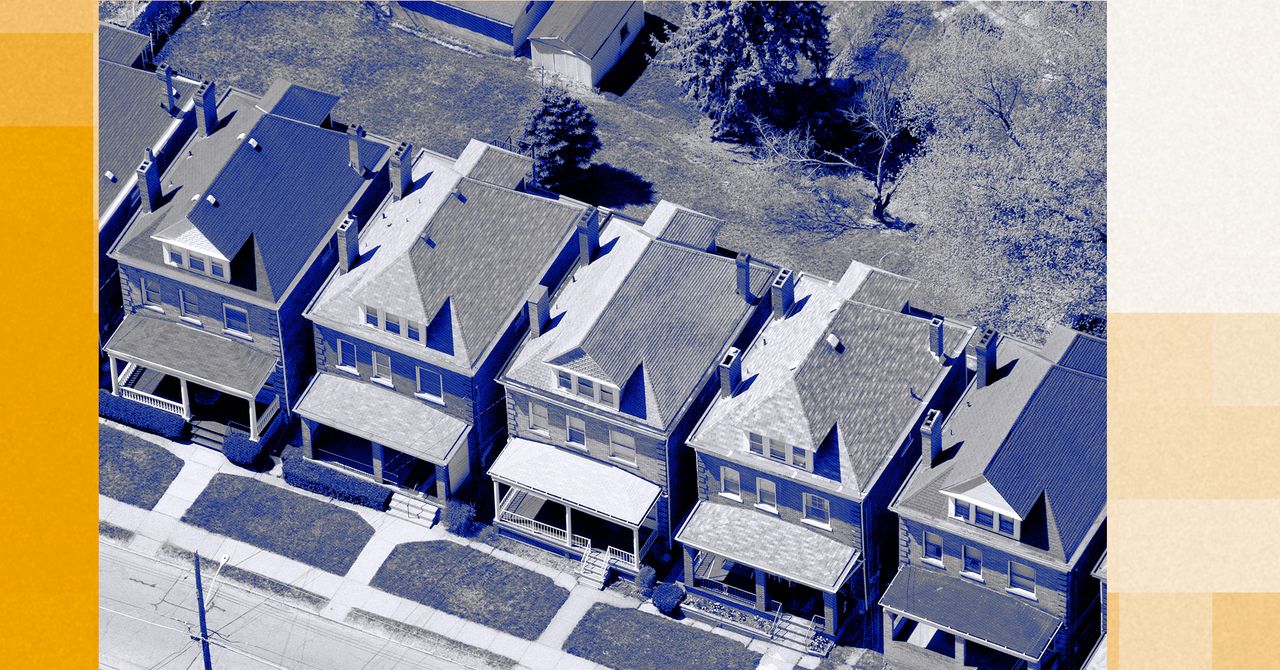
If you’ve spent any time lately doom-scrolling through real estate listings, you know the vibe. It’s a bit like wandering through a digital ghost town that’s been meticulously staged by a very talented, very expensive robot. The houses are there, the high-res photos are stunning, but those “For Sale” signs? They seem to be stuck in the mud. According to a recent piece in WIRED, Zillow CEO Jeremy Wacksman described the current home market as “bouncing along the bottom,” and honestly, that’s a polite way of putting it. It’s been a brutal ride for anyone trying to buy or sell, and for the platforms caught in the middle, the strategy has shifted from managing explosive growth to simply surviving a massive, structural shift in how we interact with the internet—and each other.
We’re sitting here in February 2026, and the “banner year” everyone was crossing their fingers for hasn’t quite materialized. Last year was, by almost every account, pretty dismal. While Wacksman is holding out hope for a marginal improvement this year, the data isn’t exactly screaming “recovery” from the rooftops. In a healthy, normal market, we’d expect to see somewhere between 5.5 and 6 million existing homes change hands. Last year? We hit about 4.1 million. That’s a massive, gaping hole in the economy, and it’s exactly why Zillow—a company that once felt like the unstoppable, undisputed king of real estate—is currently sitting at a valuation that’s about a quarter of its 2021 peak. When your stock drops 5 percent the day after you report increased earnings, you know the market is looking for more than just “steady as she goes.” It wants a revolution. Or at the very least, a sign that people are actually moving again.
“We think AI is actually an ingredient rather than a threat. In the last couple years, the LLM revolution has really opened all of our eyes to what’s possible.”
Jeremy Wacksman, Zillow CEO
Why the Housing Market is Still Stuck in the Mud (and Why Zillow is Panicking)
The numbers don’t lie, and they’re pretty sobering if you look at them for more than a second. According to the National Association of Realtors (NAR), 2023 saw the lowest level of home sales in nearly 30 years, and the hangover from that period lasted well into 2025. Even as we move through the early months of 2026, the “historic drop” in home sales we saw in January suggests that the recovery is going to be a slow, painful crawl rather than the sprint we were all hoping for. For a company like Zillow, which essentially built its empire on the addictive, late-night nature of “Zillow surfing,” this stagnation is a direct, existential threat to the bottom line. If nobody is moving, nobody is looking. And if nobody is looking, the ad revenue starts to dry up fast.
But Wacksman isn’t just sitting around in Seattle waiting for interest rates to behave themselves. He’s betting the entire farm on Artificial Intelligence. Now, to be fair, Zillow has always been an AI company at its core—the “Zestimate” was one of the first mainstream applications of machine learning that regular people actually cared about. It turned property valuation into a viral game you played with your neighbor’s house. But the new era of AI—the generative era—is something else entirely. It’s not just about guessing what your neighbor’s kitchen is worth anymore; it’s about fundamentally changing how you “see” and experience a home before you ever set foot on the property. It’s about removing the friction of the search entirely.
The reality is that Zillow has to evolve because the very nature of searching for things is changing under our feet. A 2025 Statista report highlighted that AI adoption in the real estate sector grew by over 40% year-over-year as companies scrambled to automate everything from customer service to 3D renderings. If Zillow doesn’t lead that charge, they risk becoming a legacy database—a digital filing cabinet—in a world of proactive AI agents that do the work for us. And in tech, “legacy” is just another word for “obsolete.”
Is ‘Gaussian Splatting’ the Future of Home Tours or Just a Really Expensive Filter?
One of the more fascinating—and honestly, slightly weird—technologies Zillow is pushing right now is something called “Gaussian Splatting.” I’ll admit, it sounds like something an indie band would name their debut album, but it’s actually a sophisticated way to turn drone footage into immersive 3D renderings. Through a feature called SkyTour, Zillow is trying to give buyers a sense of space and context that a flat photo gallery just can’t provide. Then there’s “Virtual Staging,” where AI populates an empty, echoing house with furniture and decor that doesn’t exist in the physical world. It makes a fixer-upper look like a Pinterest board with the click of a button.
This is where things get a little murky for me. There’s a fine line between “helping a buyer visualize a home” and “creating a digital hallucination.” If I’m looking at a house, I want to know what it actually looks like—chips in the paint and all—not what a high-end GPU thinks would look good in the living room. Wacksman is quick to point out that these images are watermarked and clearly disclosed, but as AI becomes the default way we consume all media, those lines are inevitably going to blur. Once you abandon the authenticity of the raw photo, you’re asking the consumer to trust the platform’s integrity in a way that feels a bit risky. Are we buying a house, or are we buying a render?
It’s also worth noting that not everyone is buying into this high-tech dream just yet. Zillow Immerse, their big foray into the Apple Vision Pro, launched two years ago with a massive amount of fanfare. It was supposed to be the “future of home tours,” allowing you to walk through a kitchen while sitting in your office. But let’s be real: the Vision Pro hasn’t exactly become a household staple. Wacksman admits that the platform hasn’t reached broad consumer prominence, which is just a polite, CEO-way of saying it’s a niche product for tech enthusiasts with deep pockets. It turns out that most people still prefer looking at their phones while sitting on their actual, non-virtual couches. Sometimes the simplest interface is the one that wins.
The Elephant in the Room: When Google Decides It Wants Your Lunch
While Zillow is busy refining its 3D tours and splatting its Gaussians, a much bigger shadow is looming over the entire industry. Google has been quietly experimenting with putting home listings directly into search results, bypassing the need for a third-party app altogether. They’ve been working with a company called HouseCanary to show listings, square footage, and photo galleries right there on the search page, complete with convenient links to schedule a viewing with an agent who is—you guessed it—advertising directly on Google. It’s a classic Google move: cut out the middleman by becoming the middleman.
This is the existential nightmare for Zillow. If Google can provide the “Zillow experience” without the user ever having to open the Zillow app, why would anyone bother? Wacksman seems surprisingly calm about this, at least in public. He argues that Zillow offers a “deeper, integrated experience” that a general search engine just can’t match. He believes that once you want to get pre-approved or start messaging agents, you’ll come back to the “house” that Zillow built. But history is littered with companies—Yelp comes to mind—that thought their “deep experience” would save them from Google’s reach. Once Google integrates something into the search bar, the “destination” sites usually start to see their traffic evaporate.
And then there’s the OpenAI factor. Zillow was one of the first to jump on the ChatGPT integration bandwagon, but the results have been a bit of a mixed bag. If you ask a chatbot for homes in a specific town, it might give you a Zillow link, or it might just as easily give you a link to Homes.com or Realtor.com. The “moat” that Zillow built around its data for two decades is being bridged by LLMs that don’t particularly care about brand loyalty. They just want to give the user the fastest answer possible. If the AI becomes the interface, the brand behind the data starts to matter a whole lot less.
What Happens When We Stop Using Apps Altogether?
The real question isn’t whether Zillow can make better 3D tours or prettier renders. It’s whether the “app” as we know it is dying. We’re moving rapidly toward a world of “super-factotums”—those omniscient AI agents that handle the heavy lifting of our digital lives. In that world, you don’t “go to Zillow.” You just tell your AI, “Find me a house near my kid’s school with a fenced-in yard for under $3,000 a month,” and it does the grunt work. It checks the listings, filters out the junk, reads the disclosures, and maybe even schedules the tour while you’re at lunch.
If that happens, Zillow’s role changes fundamentally. They go from being a consumer destination to being a back-end data provider. And let me tell you, that’s a much less profitable place to be. Wacksman’s hope is that the human element—the partnerships with local realtors and that elusive “human touch”—will keep them afloat. And he might be right. Real estate is arguably the most emotional, stressful, and expensive transaction most people will ever make. It’s hard to imagine handing that entire process over to a chatbot without some kind of human oversight to make sure the foundation isn’t actually crumbling.
However, Zillow’s own internal use of AI shows exactly where the wind is blowing. They’ve managed to keep their headcount flat while significantly increasing productivity, thanks to AI-powered coding and automated customer support. They’re becoming leaner, faster, and more automated every day. The irony, of course, is that the same technology they’re using to stay competitive is the very thing that might eventually make their primary interface—the app we all know and love—completely obsolete. They are building the tools that might eventually replace them.
How is AI actually changing the Zestimate?
While the Zestimate has always used machine learning to crunch numbers, these new generative AI models allow Zillow to incorporate “unstructured” data. Basically, the AI can now “look” at photos to analyze the quality of finishes or the layout of a home, providing a much more nuanced valuation than the old versions that just looked at square footage and zip codes.
Will AI eventually replace real estate agents?
Zillow’s leadership is adamant that AI is a tool for agents, not a replacement for them. Features like automated workflows and virtual staging are meant to help agents handle more clients at once, but the company still believes the sheer complexity of a real estate transaction requires a “licensed professional” to navigate the legal and emotional hurdles that a bot just can’t handle.
What is “Gaussian Splatting” in plain English?
It’s a fancy graphics technique used to turn 2D images into 3D scenes. Unlike traditional 3D modeling, which builds a “mesh,” this creates a “cloud” of points (the “splats”) that can be rendered incredibly fast. It allows for highly realistic, navigable 3D environments created from nothing more than simple drone or camera footage. It’s basically “Street View” but for the inside of a house.
The Final Word: Can Tech Save the American Dream?
Zillow is currently a company caught between two very different worlds. They are the undisputed leaders of the “App Era” of real estate, and they are trying desperately to colonize the “AI Era” before a startup or a tech giant beats them to it. Their focus on high-end, flashy features like SkyTour and Virtual Staging is a play for “presence”—an attempt to make the digital experience so compelling and sticky that users won’t want to go anywhere else. But in a market that’s “bouncing along the bottom,” those features can sometimes feel a bit like gold-plating a ship that’s taking on water.
The real test over the next few years will be whether Zillow can maintain its direct relationship with the consumer. If they become just another data feed for Gemini, ChatGPT, or whatever Google launches next, their 20-year history won’t save them. Wacksman is betting that the “integrated experience” is enough to keep us coming back. I’m not so sure. In a world where I can get everything I need from a single chat interface, the “depth” of an app starts to feel a lot like “friction.” And users hate friction.
For now, Zillow is doing exactly what it has to do: leaning hard into the tech, cutting the fat, and hoping that the American dream of homeownership eventually wakes up from its long, interest-rate-induced nap. “Maybe we’ll get more people to actually move again,” Wacksman says. It’s a prosaic goal, maybe even a humble one, but in the current climate, it’s the only one that really matters. Because at the end of the day, no matter how good your AI is, it doesn’t mean much if nobody is actually buying the house.
This article is sourced from various news outlets and industry reports. Analysis and presentation represent our editorial perspective on the intersection of tech and real estate.